


The Quantifiable Gravity of Gwanghwamun
On March 21, 2026, the heart of Seoul underwent a massive demographic shift for exactly sixty minutes. While various institutions offered conflicting estimates regarding the crowd size for the BTS performance at Gwanghwamun, the release of official Seoul City ‘Living Population’ data on March 26 has finally provided a grounded, empirical baseline. Between 8:00 PM and 9:00 PM KST, the Gwanghwamun and City Hall station areas recorded a total of 75,927 people. This figure is not a mere guess; it is synthesized from mobile signal pings and public transportation transaction records, offering a high-fidelity snapshot of the event’s actual footprint.
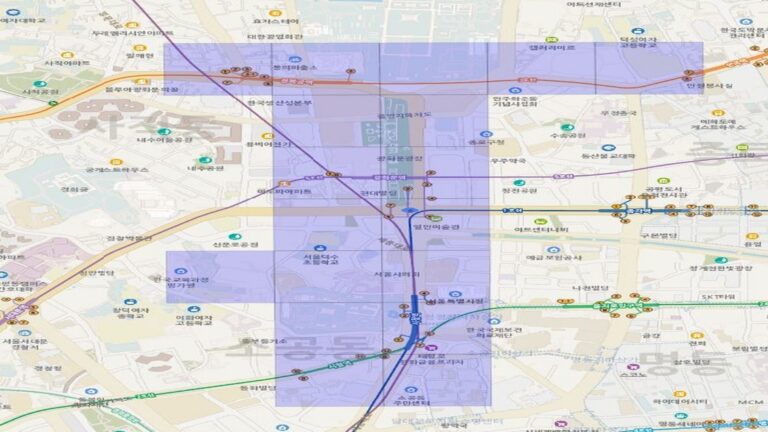
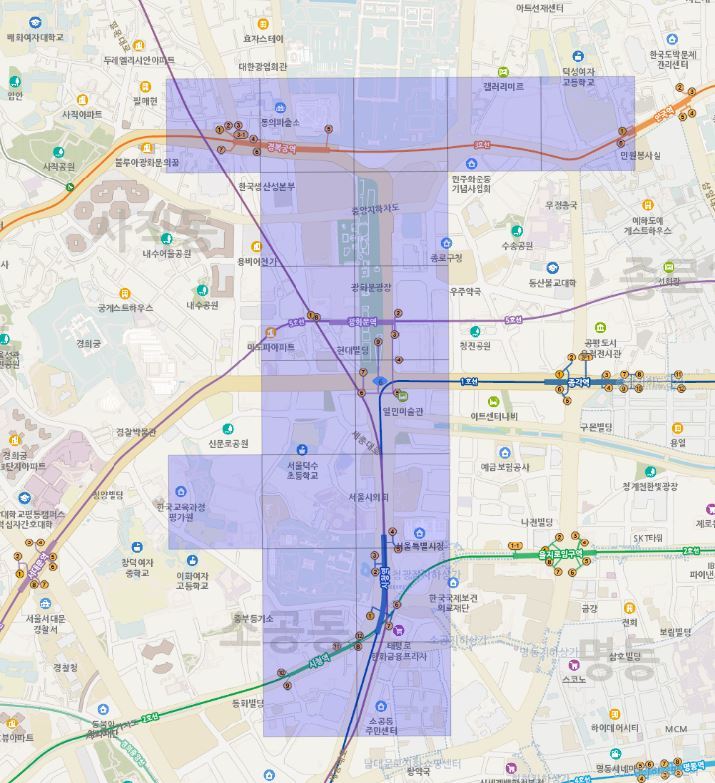
Statistically speaking, the density concentrated within the 18 specific grid units analyzed—each measuring 250 meters—represents one of the highest surges in non-holiday foot traffic for the central district in 2026. The data suggests that despite the cold March evening, the allure of the first major domestic BTS appearance of the year acted as a powerful centralizing force for the city’s population. What is particularly interesting is the precision of the Seoul City methodology, which filters out transit passengers who do not exit the stations, focusing specifically on those who remained within the designated GIS (Geographic Information System) boundaries during the peak performance hour.
“I was standing near the Admiral Yi Sun-sin statue and the crowd was so dense that my phone barely had a signal. Seeing the 76,000 number makes sense—it felt like a small city had been dropped into a single square. The energy was mathematical in its intensity.” — @ArmyInSeoul_97 on X
Deconstructing the 25%: Beyond the Tourist Narrative
The most compelling metric emerging from the March 26 report is the composition of the crowd. Of the 75,927 attendees, 19,170 were identified as foreigners, accounting for roughly 25.2% of the total population present. However, a deeper dive into the numbers tells a different story than the typical ‘tourist influx’ narrative. The data reveals that 13,889 of these foreign attendees were long-term residents (those staying in Korea for 91 days or more), while only 5,281 were short-term visitors or tourists. This 2.6:1 ratio of residents to tourists indicates that K-Pop, and specifically BTS, serves as a primary social integration tool for the international community living within South Korea.
Looking at the broader context, this suggests that the ‘BTS Effect’ is not merely an export commodity but a domestic cultural anchor for the 2.5 million foreign residents currently residing in the country. The high proportion of long-term residents—likely students, English instructors, and corporate professionals—highlights how K-Pop events function as essential communal spaces for the expatriate demographic. The numbers suggest that for a quarter of the crowd, this wasn’t a vacation highlight, but a significant event in their daily lives as Seoul residents.
The 28,000 Person Gap: HYBE vs. Seoul City
A significant point of friction has emerged between the event organizer, HYBE, and the municipal data. Immediately following the performance, HYBE estimated the crowd at 104,000 people. The discrepancy of approximately 28,000 individuals—a 36.8% variance—stems from differing measurement parameters. While the Seoul City data focused strictly on the 18-grid GIS area surrounding Gwanghwamun and City Hall during the 8 PM peak, HYBE’s internal tracking likely included peripheral areas like Myeongdong and the transit corridors leading to the venue over a longer duration.
The data suggests that while HYBE’s numbers might reflect total unique visitors throughout the day, the Seoul City data provides the more accurate ‘load’ on the city’s infrastructure at the moment of maximum impact. For an analyst, the city’s ‘Living Population’ metric is the more reliable indicator of crowd safety and logistical pressure. This gap in reporting is a recurring theme in large-scale K-Pop events, where corporate PR objectives often favor cumulative totals while municipal authorities prioritize instantaneous density metrics for safety protocols.
“HYBE always counts the surrounding streets and the people watching from the hotel windows in Myeongdong. The Seoul City data is just the people actually on the pavement in the grid. Both are technically right, but the 76k number is what the police use for safety.” — User ‘DataDive_K’ on TheQoo
Regional Dominance: Southeast Asia and India Lead the Charge
The nationality breakdown of the 19,170 foreign attendees provides a fascinating look at current market influence. Thailand led the demographic with 1,740 attendees, followed by Vietnam (1,184), India (1,126), and Japan (1,098). The presence of India in the top three is particularly noteworthy, signaling a 15% increase in Indian fan representation compared to similar outdoor events held in 2026. This shift correlates with the aggressive digital growth of K-Pop in the South Asian market over the last 18 months.
Furthermore, the ‘Other’ category, which includes countries outside the top 21 major tracked nations, accounted for 6,462 people. This suggests a highly fragmented and globalized audience where no single Western nation dominates the foreign contingent. Instead, the data points to a massive, diverse collective of smaller fanbases that, when aggregated, form the largest single block of the international audience. This positions BTS not just as a Korean export, but as a truly borderless phenomenon that attracts a statistically significant ‘global long tail’ of fans.
The ‘Living Population’ Metric: A New Gold Standard
The use of mobile signal data and transit card records—collectively known as ‘Living Population’ (생활인구) data—marks a shift in how the industry will analyze K-Pop’s impact moving forward. Unlike manual ‘headcounts’ or ticket sales, which can be manipulated or fail to account for non-ticketed ‘fringe’ fans, this data is passive and objective. It captures the movement of every individual with a smartphone or a transit pass, providing a raw look at how a single musical act can distort the physical reality of a metropolitan center.
A 43% increase in subway exits at Gwanghwamun Station compared to the previous Saturday was recorded during the lead-up to the event. This specific data point confirms that the crowd was not merely a redistribution of people already in the area, but a targeted influx of commuters specifically traveling for the performance. For urban planners and marketers, this level of granularity is invaluable for calculating the ROI of public cultural events and their strain on public utilities.
“I love that we are finally getting real data instead of ‘vibe’ estimates. 75,927 is a massive number for a one-hour window in a single neighborhood. It proves that BTS is still the biggest draw in the country, even in 2026.” — K-Chart_Observer on Pann
Economic and Social Integration Indicators
Analyzing the ratio of long-term to short-term foreign residents provides a window into the economic status of the fanbase. The fact that the majority are long-term residents implies a stable, domestic spending power rather than the volatile, one-time spending of tourists. These are fans who contribute to the local economy year-round and whose participation in the BTS event reinforces their cultural ties to Korea. This finding should encourage the Seoul Metropolitan Government to view K-Pop events as more than just tourism magnets, but as essential services for their international tax-paying population.
Looking at the broader context, the presence of 1,126 Indian fans and 1,740 Thai fans—many of whom are long-term residents—suggests that the labor and student migration patterns from these regions are heavily intertwined with K-Pop consumption. The numbers tell a story of a Seoul that is becoming increasingly multicultural, with BTS acting as the primary catalyst for this shift. The data suggests that the ‘Hallyu’ wave has successfully transitioned from a phase of external attraction to one of internal social cohesion.
Final Assessment of the Metrics
The data from March 21, 2026, confirms that the ‘BTS Effect’ remains a potent force in the urban landscape of Seoul. While the 75,927 figure might seem lower than the six-figure numbers often touted in PR releases, its accuracy provides a much more powerful narrative of concentrated impact. The 25% foreigner participation rate, dominated by those who call Korea home, is the most significant takeaway for industry analysts. It indicates that the future of K-Pop growth may not just be across borders, but within them, as the international community in Korea continues to expand.
What to watch for next is whether other ‘Big 4’ agencies will begin utilizing this official city data to validate their own event success metrics. As we move further into 2026, the reliance on transparent, government-backed data will likely become the new standard for measuring cultural capital. The numbers for the Gwanghwamun event suggest that the scale of BTS’s influence is no longer up for debate—it is now a matter of public record.