


The ‘Byeong-mat’ Summary Heard ‘Round the World
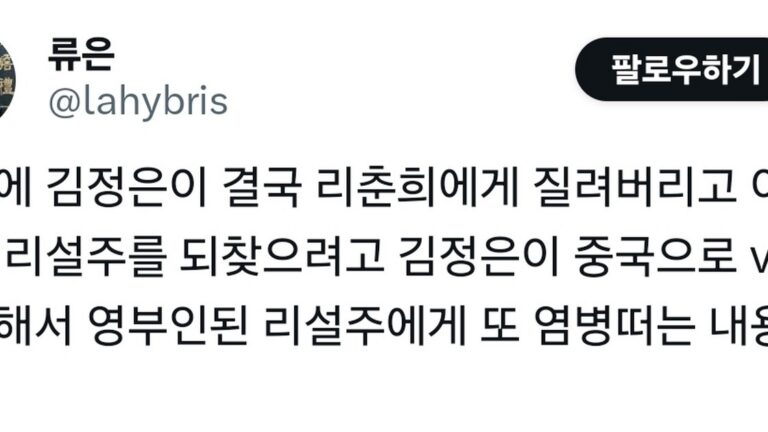
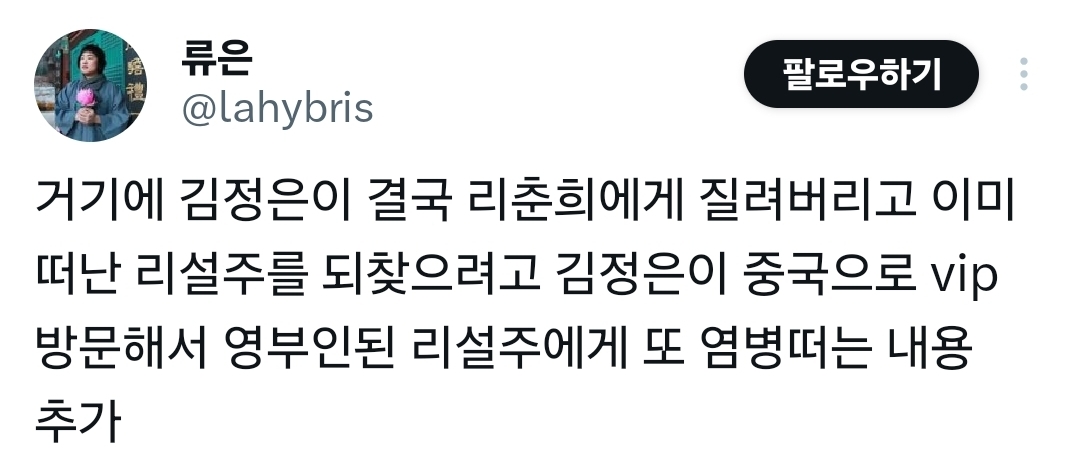
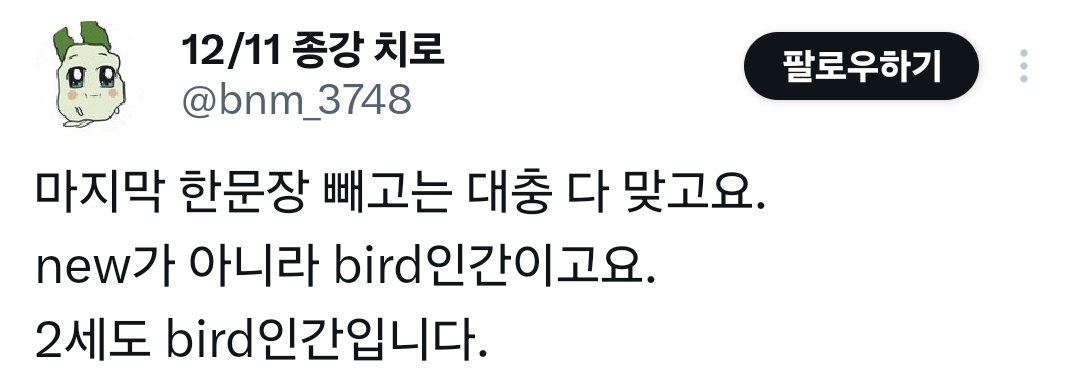
Cinematically speaking, few webtoon properties carry as much weight—or as much potential for disaster—as The Remarried Empress. The industry is currently buzzing with rumors regarding the long-awaited live-action adaptation. However, the conversation took a bizarre, almost surreal turn this week on the fan community platform theqoo. A post titled "I fainted while listening to a summary of The Remarried Empress from a Twitter friend" exploded, racking up over 33,300 views and 206 comments in a matter of hours. The content? A chaotic, "byeong-mat" (absurd) breakdown of the plot that somehow managed to be 100% accurate while sounding like a fever dream.
What elevates this specific viral moment is the sheer absurdity of the story when stripped of its lush, high-fantasy illustrations. When you describe a story about an Empress who divorces her cheating husband to marry a foreign prince who can transform into a golden bird, it sounds like a parody. Yet, as the original poster (OP) noted, "This is all actually true." The internet’s reaction has been a mix of collective trauma from the plot’s infamous "makjang" twists and a renewed, frantic excitement for how a director will handle the sheer audacity of the source material. For those of us who analyze narrative structure for a living, this viral summary serves as a reminder that The Remarried Empress isn’t just a romance; it’s a masterclass in high-stakes emotional manipulation.

"The summary is totally insane, but it’s all true lol. If you don’t want spoilers, go back now! But seriously, how is this actually the plot? I’m losing it."
Navier: The Stoic Heroine We Deserve
The writing in the original webnovel and webtoon by Alphatart succeeds because of one central pillar: Navier Ellie Trovi. In an era of K-dramas saturated with "healing" narratives and soft-spoken protagonists, Navier is a refreshing, ice-cold glass of water. She is the antithesis of the typical damsel in distress. Her character arc doesn’t revolve around finding love, but rather maintaining her dignity and sovereignty in the face of public humiliation. From a critic’s perspective, the challenge for the upcoming drama will be casting an actress who can convey a mountain of emotion through a single, stoic blink. The "remarriage" isn’t just a romantic win; it’s a political coup.
Unpopular opinion, but the drama’s success hinges entirely on the first three episodes. If the director fails to establish the oppressive weight of the Eastern Empire’s court, Navier’s eventual departure won’t feel like a triumph—it will feel like a convenience. We need to feel the suffocating atmosphere of Sovieshu’s betrayal. The cinematography must emphasize her isolation; think wide, lonely shots of the Empress in her sprawling chambers, contrasted with the cluttered, claustrophobic intimacy of Sovieshu and Rashta’s private quarters. This visual storytelling is what will separate a "masterpiece" from a "forgettable soap opera."
The Rashta Problem: Writing a Villain for the Modern Era
Let’s talk about the character everyone loves to hate: Rashta. In the viral theqoo thread, fans were already dreading the "Rashta-stress" that is inevitably coming. For a drama to work today, the writers need to be careful. In the original work, Rashta is often portrayed with a level of villainy that borders on the cartoonish. While that works for a weekly webtoon where you need a clear antagonist to root against, a live-action series requires more nuance. If the writing falters and makes her a one-dimensional "evil mistress," the show risks becoming a dated caricature of the genre.
The director’s choice in how to frame Rashta’s back-story will be pivotal. We know she was a runaway slave, a detail that provides a dark, systemic context for her desperation. A sophisticated adaptation would lean into the tragedy of her character—not to excuse her actions, but to make her a more formidable and terrifying opponent for Navier. When a villain has a logical, albeit twisted, reason for their malice, the conflict becomes exponentially more compelling. The chemistry between the two female leads will be the true engine of the show, far more than the romance with the "bird-man" Prince Heinrey.
"I’m already getting high blood pressure just thinking about Rashta on screen. If they cast someone too good at acting, I might actually break my TV."
The ‘Crack’ Casting: From Shin Min-ah to Fan Favorites
One of the most hilarious aspects of the viral post was the "crack" casting list provided by the OP. In a moment of pure internet chaos, fans began matching the characters with a mix of top-tier Hallyu stars and unexpected figures. The list mentioned names like Shin Min-ah for the lead, but then veered into the surreal. While obviously a joke, it highlights the "global scale" the fans associate with the story’s political intrigue.
More seriously, the fan-casting of Shin Min-ah as Navier or Ju Ji-hoon as a potential lead has some merit. Shin Min-ah has that rare ability to appear both fragile and indestructible, a requirement for Navier. Ju Ji-hoon, on the other hand, possesses the regal, slightly dangerous aura needed for a high-fantasy setting. However, the production team needs to look beyond just big names. This is a project that requires actors who can handle the "theatrical" nature of the dialogue without making it sound cringeworthy. The mise-en-scène of a Western-style fantasy empire played by an all-Korean cast is a delicate balancing act that has failed in the past (looking at you, Arthdal Chronicles).
Cinematography and the ‘Bird-Human’ Technicality
What elevates this scene—or rather, what could potentially ruin it—is the CGI. Prince Heinrey’s ability to transform into a golden eagle is a central plot point, not a gimmick. If the CGI looks like it belongs in a dated B-movie, the emotional weight of his and Navier’s secret meetings will vanish. The production budget for The Remarried Empress needs to be astronomical to pull this off. We’re talking Moving or Squid Game levels of investment in post-production. The feathers, the lighting on the wings, and the transition from bird to human need to be seamless.
Beyond the bird, the costume design will be a character in itself. Navier’s wardrobe shouldn’t just be "pretty"; it should be her armor. In the webtoon, her dresses are architectural marvels. In a live-action setting, these garments need to reflect her internal state. When she finally asks for that divorce, her outfit should be a declaration of war. The director needs to treat the fashion with the same respect a historian treats a primary source. This is a world where a misplaced silk ribbon could signal the fall of a dynasty.
"If Heinrey’s bird form looks like a fried chicken commercial, I’m out. They better spend that Netflix money wisely."
A Masterclass in Pacing or a Mid-Series Slump?
The writing falters when K-dramas try to stretch a concise webtoon plot into 16 or 20 hour-long episodes. The Remarried Empress has enough content for three seasons, but the first season must focus strictly on the road to the divorce. If the writers get bogged down in the secondary characters’ subplots—like the repetitive schemes of the court officials—they risk losing the audience’s momentum. The pacing needs to be relentless. Every episode should end on a note that makes the viewer feel like Navier is one step closer to the edge.
What makes this story a "healing drama" for some is the catharsis of the ending. But the journey there is grueling. The drama needs to embrace the "makjang" elements without losing its prestige-drama soul. It’s a fine line to walk. If they lean too far into the soap opera tropes, they lose the critics; if they lean too far into the "serious" political drama, they lose the fans who came for the juicy betrayal. The viral summary on theqoo proves that the audience is ready for the mess—they just want it to be a high-quality mess.
Final Verdict: Is the Hype Justified?
Based on the current trajectory of the production and the sheer intensity of the fan discourse, The Remarried Empress is poised to be the most talked-about drama of the year. My rating for the potential of this project is a solid 9/10, with the caveat that the CGI could easily drop that to a 6. It’s a high-risk, high-reward endeavor. The creative team has a gold mine in their hands, but as the viral theqoo post shows, the fans know the story too well to be fooled by a lazy adaptation.
Who is this for? It’s for the viewers who enjoyed the high-society backstabbing of The Penthouse but wished it had more dragons and better dresses. It’s for the people who want to see a woman lose everything and realize that "everything" wasn’t worth having in the first place. Whether the drama delivers on its promise or falls victim to its own ambition, one thing is certain: we will all be watching, and we will all have opinions. The era of Navier is coming, and I, for one, am ready to witness the divorce heard ’round the world.