


The Viral Spark: Why is the Duke Doing Taxes?
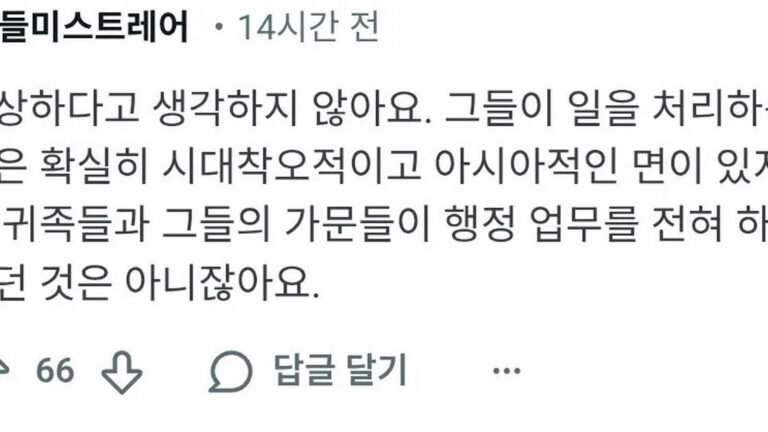
Cinematically speaking, the ‘Duke of the North’ is one of the most enduring archetypes in the current K-drama and webtoon landscape. He is usually tall, brooding, possesses a suspiciously modern skincare routine for a medieval setting, and—most importantly—he is perpetually buried under a mountain of paperwork. This week, a fascinating debate erupted on the community board Instiz, racking up over 6,000 views in a matter of hours. The topic? The fundamental cultural disconnect between Western and Korean fans regarding how nobility should spend their time. While Western fans (often referred to as ‘Yang-deok’ in Korean circles) find the image of a Duke obsessing over administrative reports bizarre, Korean fans find the alternative—a noble who does absolutely nothing—completely unpalatable.

Unpopular opinion, but this isn’t just a minor plot point; it’s a massive window into the sociological DNA of Korean storytelling. In the Western tradition, nobility is often defined by the ‘leisured class’—think Bridgerton or Downton Abbey, where the ultimate sign of status is that you never have to touch a pen for professional reasons unless you’re signing a marriage contract or a check. However, in the Korean Romance Fantasy (RoPan) genre, a Duke who isn’t seen working is viewed as incompetent, and in the hyper-competitive landscape of modern K-content, incompetence is the ultimate romance killer.
“I saw a thread on a Western forum where someone asked if the Duke was actually a CEO in disguise because he spent three chapters talking about grain distribution. As a Korean, I was like… well, yeah? If he doesn’t manage the grain, everyone starves. How is that not sexy?” — User ‘K-FantasyStarlight’ on Instiz
The Yangban Legacy: Bureaucracy in Silk Robes
To understand why our fictional male leads are so obsessed with tax reform and border security, we have to look back at the Joseon Dynasty. Unlike the European feudal system, where nobility was often tied to land and military service, the Korean ‘Yangban’ class were essentially scholar-officials. They were an elite administrative tier that had to pass grueling civil service exams to maintain their status. To a Korean audience, the highest form of ‘cool’ isn’t just being born rich; it’s being born rich *and* being the smartest, most hardworking person in the room. This historical ghost haunts every RoPan drama we see today.
The director’s choice to frequently frame the male lead behind a massive mahogany desk isn’t just about showing off a expensive set design. It’s about establishing his ‘merit.’ In the Korean psyche, power that isn’t maintained through constant labor feels unearned and, frankly, a bit suspicious. We don’t want a Prince Charming who just dances; we want a Prince Charming who can explain the intricacies of the fiscal budget while looking devastating in a velvet cape. This ‘Scholar-Warrior’ hybrid is the gold standard of Korean masculinity.

Competence as the Ultimate Aphrodisiac
What elevates a scene from a standard romance to a high-tier K-drama is often the ‘Competence Porn’ factor. There is a specific visual language used here: the loosened cravat, the rolled-up sleeves of a dress shirt (even if it’s 18th-century inspired), and the focused, slightly frustrated brow of a man solving a problem. It’s the ‘Office AU’ (Alternate Universe) trope, but dressed in the trappings of high fantasy. For the modern Korean viewer, who is likely overworked and stressed, a partner who takes their responsibilities seriously is the ultimate fantasy.
Look at the way recent adaptations handle these scenes. The cinematography often utilizes tight close-ups on the hands—fountain pens scratching against parchment, fingers rubbing temples. These aren’t just filler scenes. They are character beats that signal to the audience: ‘This man is a provider. He is stable. He is capable.’ Compare this to the Western ‘Rake’ archetype, whose charm lies in his unpredictability and lack of responsibility. To a Korean fan, a Rake isn’t a heartthrob; he’s a red flag with a trust fund.
“If a male lead in a drama just hangs out at balls and goes hunting all day, I lose interest. It feels like he’s a bum. Give me the guy who stays up until 3 AM fixing the territory’s irrigation system any day.” — Comment from the recent Instiz thread
The ‘Mise-en-scène’ of the Study
The study or the office has become the most important set in RoPan dramas, often surpassing the ballroom or the bedroom in narrative weight. The lighting is usually moody—lots of amber tones and candlelight—creating an intimate, ‘liminal’ space where the leads can interact away from the prying eyes of the court. In these scenes, the work becomes a bridge. The female lead often brings tea or assists with the paperwork, transforming a mundane administrative task into a deeply romantic shared experience. It’s a domesticity that feels earned.
However, the writing falters when this ‘work’ becomes a MacGuffin that never actually impacts the plot. We’ve all seen those dramas where the Duke claims to be ‘so busy’ but has plenty of time to follow the heroine around the market for three episodes. As a critic, I find this lazy. If you’re going to lean into the ‘Workaholic Duke’ trope, the work needs to have stakes. When the writing is sharp, the Duke’s administrative struggles mirror the emotional conflict of the romance. His inability to ‘fix’ a political situation reflects his struggle to express his feelings. That is where the real artistry lies.

The Global Disconnect: Why ‘Yang-deok’ are Confused
The Instiz post correctly identifies that Western fans often view these stories through the lens of European history. In the West, the ‘noble’ was the person who *didn’t* have to work. Working was for the merchant class and the peasantry. So, when a Western viewer sees a Grand Duke stressing over a ledger, it feels like a demotion. It breaks the ‘fantasy’ of being a royal. They want the escapism of total leisure, whereas Korean viewers find escapism in total competence.
This clash is particularly visible in the comments sections of global streaming platforms. While a Korean viewer might comment, ‘Wow, he’s so reliable, look at him managing those knights’ salaries,’ a fan from the US might ask, ‘Why doesn’t he just hire a secretary and go to the party?’ This cultural friction is what makes the current era of globalized K-content so fascinating to analyze. We are seeing a hybridization of tropes where Western settings are being injected with a distinctly Korean Confucian work ethic.
“Western fans want to be the Princess who dances all night. Korean fans want to be the Duchess who runs the estate like a Fortune 500 company. Both are valid, but the Duke’s paperwork is where these two worlds collide.” — Viral tweet referenced in the discussion
Final Verdict: The Meritocratic Fantasy
At the end of the day, the ‘Working Duke’ is a reflection of our own reality. Today, we live in a world where your value is often tied to your productivity. Korean dramas have simply taken that modern anxiety and wrapped it in silk and magic. Is it a bit ridiculous that a man with a dragon-slaying sword is worried about the price of wheat? Perhaps. But it’s also deeply grounding. It turns a distant, untouchable figure into someone we can understand—someone who also has a ‘boss’ (the Emperor) and ‘deadlines’ (the impending monster wave).
The writing is at its best when it acknowledges this absurdity with a bit of self-aware humor. The dramas that truly stand out are the ones that don’t just use the ‘work’ as a costume, but as a genuine character trait. It’s a masterclass in adapting a foreign setting to fit a local palate. Whether you find the paperwork boring or breathtaking, there’s no denying that the ‘Workaholic Duke’ is here to stay. He is the hero that the meritocracy-obsessed modern audience deserves.
Rating: 8.5/10
Who it’s for: Fans of ‘Competence Porn,’ lovers of slow-burn office romances in historical drag, and anyone who thinks a man looks his best when he’s stressed about a spreadsheet.
Watch recommendation: Any high-budget RoPan adaptation from the current season—just look for the guy with the most pens on his desk.