


The Keyring Takeover: My Vanity is a Zoo
Okay, real talk—if I see one more fuzzy bunny or a tiny silicone heart dangling from a lip tint box, I might actually lose my mind. But also? I’ll probably buy it. Last week, I walked into Olive Young just to grab some cotton pads, and I walked out with a new cushion foundation I didn’t need, solely because it came with a limited-edition silver cat keyring. My vanity is starting to look less like a professional curator’s workspace and more like a middle schooler’s backpack from years ago. And honestly? I’m not the only one struggling with this addiction.
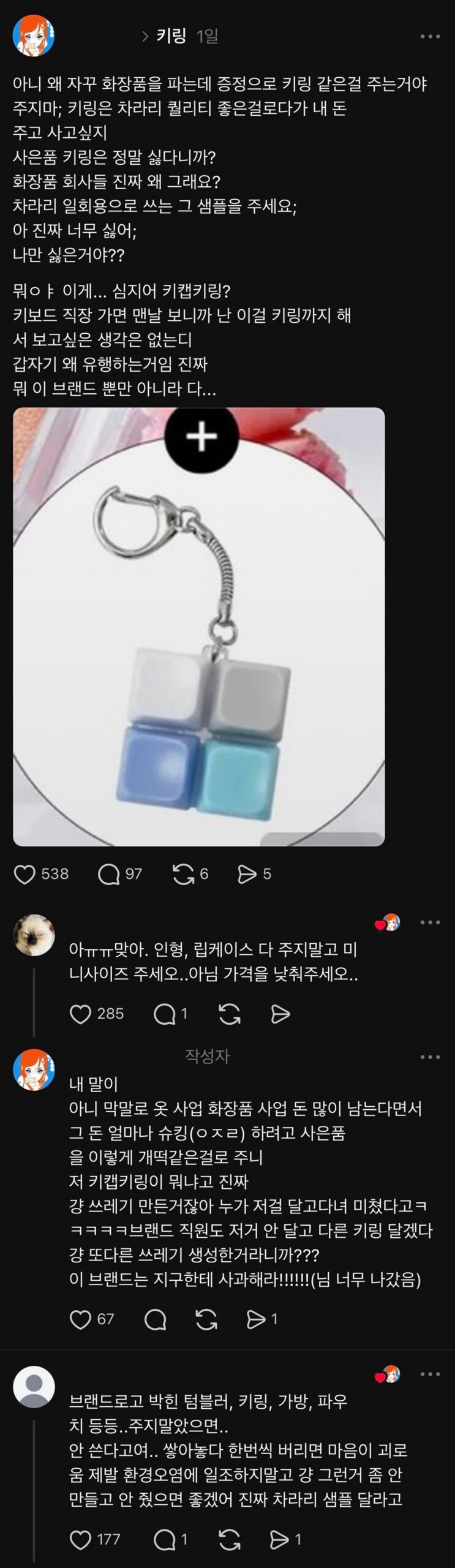
We’ve officially entered the era of the ‘Keyring Economy’ in K-Beauty. It’s no longer just about whether a tint is long-lasting or if a cushion has a glowy finish. Nowadays, the real question is: ‘What’s the GWP (Gift With Purchase)?’ Brands like fwee, Amuse, and Peripera have mastered the art of the ‘cute’ bait, and the internet is currently divided. A recent post on the community site TheQoo went viral with over 70,000 views, asking the question we’re all thinking: Why on earth do they keep giving us keyrings with our makeup?
Let’s break down why this is happening and whether we’re actually getting a good deal, or if we’re just being played by top-tier marketing teams. Trust me on this one, as someone who has a drawer full of ‘free’ plushies—there’s a method to the madness, and it’s deeply rooted in how we consume beauty today.
The ‘Bag-ku’ Phenomenon and the Accessory Pivot
To understand the keyring craze, you have to understand ‘Bag-ku.’ Short for ‘Bag-kku-mi-gi’ (decorating your bag), it’s the current evolution of the diary-decorating (Da-ku) trend that took over Korea a few years back. It’s not enough to have a designer bag or a trendy rucksack anymore; you need to personalize it with five different charms, three keyrings, and maybe a lace ribbon. K-Beauty brands realized that their target demographic—Gen Z and Millennials—are obsessed with this aesthetic. By offering a keyring that matches the ‘vibe’ of a new product launch, they aren’t just selling you a lipstick; they’re selling you an accessory for your lifestyle.
I’ve been testing these ‘sets’ for months, and the psychology is fascinating. When you see a cute charm hanging off a bag on Instagram, you don’t ask what foundation that person uses—you ask where they got the charm. When the answer is ‘Oh, it came with the new Amuse tint,’ that brand just earned a customer who might not have even been looking for a new lip product. It’s a genius way to bypass traditional advertising. Instead of paying for a billboard, the brand pays for a tiny piece of plastic or plush that you then hang on your bag and carry around as a walking advertisement.
“I’m so tired of this. I just want the refill at a cheaper price. My house is turning into a zoo with all these random plushies that I feel bad throwing away but have no use for. Can we go back to giving out extra puffs or actual skincare samples?”
That comment from TheQoo really hit home for some users. There is a growing fatigue among ‘practical’ shoppers who feel like the cost of these ‘free’ gifts is being baked into the product price. If a cushion costs ₩32,000 with a keyring, but could have been ₩26,000 without it, are we really winning? As your trusted unnie, I have to tell you: sometimes, the answer is no. We are paying for the ‘cute’ tax, whether we like it or not.
The fwee Factor: When the Gift Becomes the Product
You can’t talk about the current keyring meta without mentioning **fwee**. They basically changed the game with their ‘Pudding Pot’ keyrings. For those who missed the chaos, they released these tiny, colorful silicone containers that you could fill with their lip and cheek product. It wasn’t just a gift; it was a functional, miniaturized version of the product that you could clip onto your jeans or purse. It became a status symbol. I remember seeing lines outside their Seongsu flagship store that wrapped around the block, not for the makeup itself, but for the chance to pick a specific color of the keychain.
This shifted the entire industry. Suddenly, every brand felt the need to compete. If you didn’t have a ‘collab’ or a ‘collectible,’ you were invisible on the Olive Young shelves. We saw the rise of ‘Kidult’ culture reaching its peak—adults with disposable income spending it on items that trigger nostalgia. There’s a certain dopamine hit in unboxing a tiny, useless, but undeniably adorable item. It’s a momentary escape from the stress of modern life. But let’s be real: how many tiny silver hearts does one person actually need?
“I don’t even use the cushion I bought last month. I sold the actual makeup on Karrot Market for half price and kept the keyring. The keyring was the main character for me, the makeup was just the packaging it came in.”
This sentiment is surprisingly common. We’re seeing a secondary market on platforms like Karrot Market (Korea’s neighborhood marketplace) where the ‘gifts’ are sold for more than the actual cosmetics. It’s a bizarre flip of value. When the ‘freebie’ has more resale value than the ‘product,’ you know the market has reached a tipping point. Brands are now essentially toy manufacturers who happen to sell blush on the side.
Is the Quality Suffering? Mina’s Honest Take
Here is where I get a bit serious. As someone who reviews these products for a living, I’ve noticed a worrying trend. Sometimes, the focus on the ‘collab’ or the ‘keyring’ is so intense that the actual formula feels like an afterthought. I’ve tried several ‘limited edition’ palettes this year that looked stunning because they came with a designer charm, but the pigment was chalky and the fallout was a nightmare. It’s like the brands think we won’t notice the mediocre quality if they distract us with something shiny and jingling.
However, it’s not all bad. Brands like **Amuse** and **Rom&nd** generally keep their standards high. Their recent collaborations have managed to balance the ‘cute’ factor with formulas that actually work for sensitive skin. But for the newer, smaller brands trying to break into the market? They often lean too heavily on the gimmick. If you’re a K-Beauty beginner, my advice is this: look past the plushie. Check the ingredient list. Is there Centella Asiatica for your redness? Is the Hyaluronic Acid concentration high enough for your dry skin? Or are you just paying ₩30,000 for a piece of polyester shaped like a bear?
I’ve been testing the latest ‘Keyring Set’ from a popular brand for two weeks now. The tint is… okay. It’s a standard water-blur formula we’ve seen a hundred times. But the keyring? It’s a high-quality, weighted chrome heart that feels expensive. I find myself reaching for the tint just so I can show off the charm. It’s a psychological trap, and I’m walking right into it with a smile on my face. *Chef’s kiss* to the marketing teams, honestly.
The Environmental Elephant in the Room
We need to talk about the waste. Today, we’re supposed to be moving toward sustainable beauty, right? Refillable packaging, vegan formulas, eco-friendly shipping. But the ‘Keyring Economy’ is the exact opposite of that. It’s a massive production of small, non-recyclable plastic and synthetic fabric items that most people will throw away within six months. The irony of buying a ‘Vegan’ certified lip balm that comes wrapped in three layers of plastic and a non-biodegradable keychain isn’t lost on me.
Some fans on TheQoo pointed this out, and the debate got heated. One user commented:
“We talk about ‘Clean Beauty’ all day, but then we go crazy for these plastic trinkets that will sit in a landfill for 500 years. It’s so hypocritical. I wish brands would give us something useful, like a biodegradable hair clip or just a discount code for the next purchase.”
I have to agree. While I love a cute accessory, I’d much rather see brands innovate with gifts that actually enhance the skincare or makeup experience. Think about high-quality spatulas, reusable cotton pads, or even just better travel-sized versions of their bestsellers. The shift toward ‘disposable cuteness’ feels a bit regressive in the current climate.
The Verdict: To Buy or Not to Buy?
So, what’s the final word? Is the keyring trend a harmless bit of fun or a sign that K-Beauty is losing its way? My take is that it’s a bit of both. If you were already planning to buy a product and it happens to come with a cute charm—congrats, you got a win! But if you’re buying a ₩40,000 set just for a plushie you saw on TikTok, maybe take a breath and wait 24 hours. Ask yourself: ‘Will I still care about this cat keyring in two weeks?’
The ‘Keyring Economy’ is likely to stay for the foreseeable future, but I predict we’ll see a shift toward more ‘functional’ charms soon—think mini mirrors, lip balm holders, or even tech-integrated tags. Until then, enjoy the cuteness, but stay skeptical. Don’t let a fuzzy bear distract you from a formula that might break you out. Your skin doesn’t care about your bag accessories, trust me.
Mina’s Pro-Tip: If you’re desperate for a specific brand’s keyring but don’t want the makeup, wait two weeks after the launch. The ‘resale’ market will be flooded with people selling just the charms for a fraction of the price. Stay smart, stay glowy!
What do you think? Are you a collector of these K-Beauty trinkets, or are you over the clutter? Let me know in the comments below—I’ll be here, trying to find space on my bag for one more silver heart.