


Okay, real talk—if you told me five years ago that the hottest ticket in Seoul would be the Buddhist Expo, I probably would have laughed. But here we are in April 4, 2026, and the 2026 Buddhist Expo has officially become the most ‘hip’ event of the season. I spent my afternoon scrolling through my feed, and one specific booth has completely set the internet on fire. It wasn’t about temple stay programs or vegan temple food. It was a booth where a Bikuni (a Buddhist nun) was offering plastic surgery consultations based on physiognomy, or Gwan-sang.
I’ve been covering K-beauty trends for years, and I’ve seen some wild stuff, from salmon DNA facials to AI-driven skin analysis. But a religious figure giving advice on whether you should get a double eyelid procedure? That’s a whole new level of ‘only in Korea.’ The line for this booth was reportedly blocks long, with young people waiting hours just to hear what a nun had to say about their facial features. As someone who deeply values both self-care and the cultural roots of Korean beauty, I had to dive into the drama unfolding on Twitter right now.

The Booth That Launched a Thousand Tweets
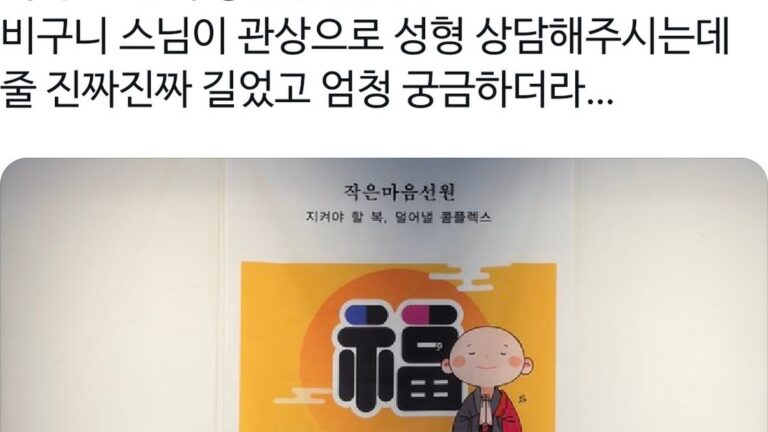
The controversy started when photos of the booth began circulating on April 2nd. The sign clearly read ‘Physiognomy Plastic Surgery Consultation,’ and inside, a nun was seen intently studying the faces of attendees. For the uninitiated, Gwan-sang is the ancient practice of reading a person’s character or future based on their facial features. In Korea, it’s not uncommon for people to visit a fortuneteller before getting surgery to ensure they aren’t ‘cutting away their luck.’ But seeing this inside a Buddhist Expo—an event meant to celebrate the teachings of the Buddha—felt like a massive clash of worlds for many.
Social media didn’t hold back. By April 4th, the discourse had split into two very loud camps. On one side, you have critics who feel that Buddhism, a religion centered on letting go of worldly desires and ‘suffering’ (Dukkha), is being used to fuel Korea’s already extreme beauty standards. One viral tweet really captured the frustration of the traditionalists. They argued that monks and nuns should be helping people find inner peace, not helping them decide which clinic offers the best V-line jaw surgery.
“What kind of nun gives plastic surgery consultations? A monastic who is supposed to save sentient beings from worldly desires is instead stimulating extreme look-based anxiety… I heard the Buddhist Expo had become commercialized, but I didn’t know it was this bad.” — @HeungrokCho, April 4, 2026
Is It Commercialism or Compassionate Counseling?
Just as the pitchforks were coming out, a different perspective emerged. A close acquaintance of the nun in question took to social media to clarify the actual intent behind the booth. According to them, the goal wasn’t to encourage surgery at all. In fact, it was the opposite. The nun apparently noticed that many young people today suffer from incredibly low self-esteem and feel pressured to get surgery they don’t actually need. The ‘consultation’ was designed to use Gwan-sang to highlight the natural beauty and ‘good luck’ already present in their faces, ultimately persuading them not to go under the knife.
This adds a fascinating layer to the story. If the goal is to use a religious platform to tell a 20-year-old that her natural nose is actually a ‘wealth-bringing’ nose, is that a form of spiritual therapy? In a country where plastic surgery is often viewed as a practical tool for career advancement, using traditional physiognomy to boost self-confidence is a clever, if controversial, move. It’s almost like a ‘beauty exorcism’—trying to cast out the demons of body dysmorphia using the language of tradition.

“The nun knows that young people have such low self-esteem and are getting too much surgery, so she planned this to raise their self-esteem and talk them out of it as much as possible.” — @herdaebak_, April 4, 2026
The 20,000 Won Question
Of course, the debate took another turn when it was revealed that these consultations weren’t free. Each session cost 20,000 KRW (roughly $15). For some, this was the smoking gun of commercialization. If the goal was purely to help the youth, why charge a fee? Others argued that 20,000 KRW is a standard ‘offering’ or ‘Bok-chae’ (fortune-telling fee) and that the expo itself requires funding to run such massive, high-tech installations. In the context of 2026, where even digital temple experiences cost a pretty penny, the price tag didn’t surprise me, but it certainly added fuel to the ‘Buddhism is becoming a business’ fire.
I’ve seen similar debates in the beauty world. Think about ‘clean beauty’ brands that charge a premium for a ‘spiritual’ experience. Is it a scam, or are you paying for the peace of mind? At the Buddhist Expo, the 20,000 KRW wasn’t just for a face reading; it was for the validation of a religious authority. For a young person struggling with their image, hearing a nun say ‘Your face is perfect as it is’ might be worth way more than $15. But the optics? The optics are definitely messy.
The ‘Hip’ Buddhism Trend of 2026
To understand why this is happening now, you have to look at how Buddhism has rebranded itself in Korea over the last year. We’ve moved past the image of Buddhism being just for the elderly in mountain temples. The 2026 Buddhist Expo is full of DJing monks, AI-meditation booths, and aesthetic merch that looks like it belongs in a Seongsu-dong pop-up shop. This ‘NewJeans-ification’ of the religion has successfully brought in the MZ generation, but it also creates these weird friction points where sacred traditions meet modern vanities.
This plastic surgery booth is the ultimate expression of that friction. It’s trying to meet young people where they are—which, sadly, is often in a state of worrying about their appearance. By using the ‘Plastic Surgery’ keyword, the organizers guaranteed a crowd. They used the language of the beauty industry to deliver a message of (supposedly) self-acceptance. It’s a risky marketing strategy, and as we can see from the Twitter fallout, it’s one that can easily backfire if the ‘healing’ message gets lost in the ‘consultation’ branding.

“I went in the afternoon and sadly couldn’t participate, but I was so curious about this booth… The line was really, really long and I was so intrigued by a nun giving surgery advice based on face reading.” — @yeomdamgom, April 2, 2026
Mina’s Honest Take: Is It Worth the Hype?
Let me break this down for you. As a beauty curator, I’m constantly telling you which serums to buy and which treatments are worth your hard-earned cash. But I also know that no amount of hyaluronic acid can fix a lack of self-love. If this nun is truly using her platform to tell girls they don’t need to shave their jawbones to be ‘lucky’ or ‘beautiful,’ then I’m all for it. We need more voices in the beauty space telling us to slow down and appreciate our unique features.
However, I totally get why people are side-eyeing this. The branding of ‘Plastic Surgery Consultation’ is incredibly triggering in a society that already feels like one big beauty pageant. Even with the best intentions, calling it a ‘surgery consultation’ validates the idea that our faces are projects to be managed rather than parts of our identity. If the goal was self-esteem, maybe ‘Natural Beauty Blessing’ would have been a better vibe? But then again, would the line have been that long? Probably not. And that’s the uncomfortable truth about K-beauty in 2026—you have to use the ‘surgery’ hook to get anyone to listen.
The Verdict on the Buddhist Expo Drama
So, was the booth a stroke of genius or a spiritual fail? It’s a bit of both. It successfully engaged a demographic that usually ignores religious events, and if the ‘self-esteem’ defense is true, it likely helped some individuals feel better about their natural faces. But it also highlighted the thin line between cultural relevance and commercial exploitation. For 20,000 KRW, you got a conversation that blurred the lines between ancient wisdom and modern insecurity.
If you’re heading to the expo this week (it’s still running!), my advice is to take everything with a grain of salt. Go for the cool vibes and the beautiful art, but don’t let a 10-minute face reading dictate your self-worth. Whether a nun tells you your forehead is ‘lucky’ or a surgeon tells you it needs filler, the only opinion that truly matters is yours when you look in the mirror at the end of the day. Trust me on this one—true ‘glow’ comes from a place that no scalpel can reach.
What do you guys think? Is this a cool way to modernize Buddhism, or has the K-beauty obsession gone too far? Let me know in the comments! I’ll be over here sticking to my sheet masks and trying to find my own zen. ✨