


The Allure of the Quilted Band and the Hidden Cost
Let’s be real for a second—who hasn’t scrolled through their feed and felt a little pang of envy at the sight of a Chanel Coco Crush ring? It’s basically the ‘it-girl’ uniform in Seoul right now. Whether you’re walking through Apgujeong or grabbing a latte in Hannam-dong, those iconic quilted gold bands are everywhere. They represent a certain level of ‘I’ve made it,’ a blend of timeless elegance and modern street style that Chanel just nails every single time. I’ve been eyeing one myself for months, saving up those extra won from my skincare hauls to finally pull the trigger on a beige gold small model.
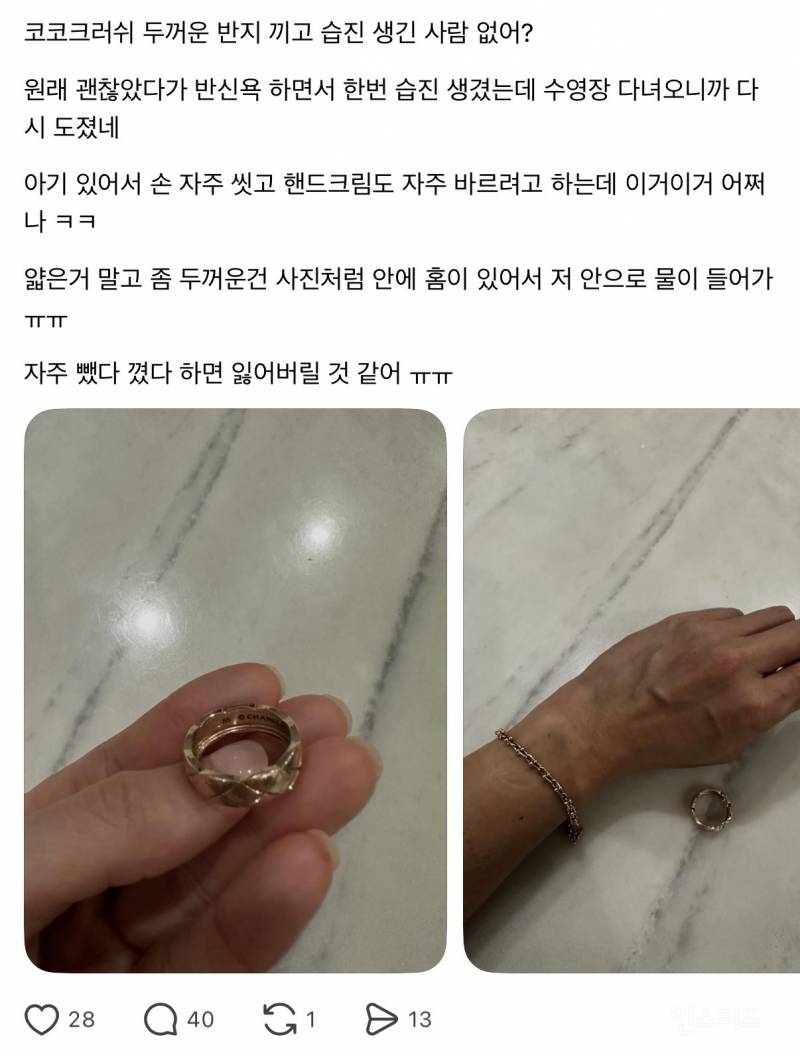
However, a massive conversation started bubbling up on Instiz recently that has me—and about 50,000 other people—rethinking our jewelry wish lists. A thread titled ‘People who got eczema after wearing Chanel rings’ went viral overnight, racking up nearly 50,000 views and dozens of frantic comments. This isn’t just one person with sensitive skin; it’s a growing collective of luxury owners who are finding that their multi-million won investment is leaving them with red, itchy, and peeling fingers. As your resident K-beauty curator, I couldn’t ignore this. We talk so much about what we put *on* our skin in terms of creams, but what about the accessories that sit on our skin for 24 hours a day?
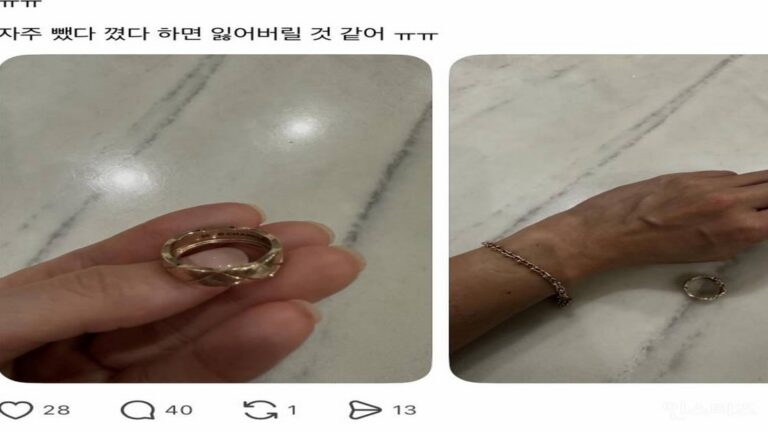
The images shared in the community are honestly a bit heartbreaking. You see these beautiful, shimmering rings—pieces of art, really—and right underneath them, the skin is raw and inflamed. It’s the ultimate fashion irony. You spend thousands of dollars to feel polished and luxurious, only to end up needing a prescription-grade steroid cream from the dermatologist. I’ve spent the last 24 hours digging into why this is happening specifically with these rings and whether it’s a design flaw or just a tragic case of bad timing for our skin barriers.
The Viral Instiz Thread: A Wake-Up Call for Luxury Lovers
The thread on Instiz serves as a stark reminder that luxury doesn’t always equal hypoallergenic. One user shared a photo of their finger looking completely blistered after just a few days of continuous wear. The comments section quickly turned into a support group. People started realizing they weren’t alone. For months, many of these owners thought it was just a personal allergy or perhaps a reaction to a new hand soap. But when you see dozens of people reporting the exact same symptoms under the exact same ring, you have to start looking for a common denominator.
“I thought I was the only one! I bought my Coco Crush and I’ve spent more on dermatologist visits this year than I did on the actual ring. It starts as a tiny itch and then my whole finger just peels. I’m devastated because I love the look so much.” — Instiz User ‘GoldLover99’
Another commenter pointed out that they’ve worn gold jewelry from other high-end houses like Cartier and Tiffany for years without a single issue. This suggests that there might be something specific about Chanel’s alloy or, more likely, the physical architecture of the ring itself. When a post hits 49,000 views in less than a day in the Korean community, you know it’s hitting a nerve. We take our skin health very seriously here, and seeing a ‘prestige’ item cause this much physical grief is sparking a lot of debate about whether we’re paying for quality or just the logo.
What’s particularly interesting is the timing. With the weather in Seoul finally warming up this March, we’re seeing more humidity and more sweat. This environmental shift often acts as a catalyst for skin issues that might have stayed dormant during the dry winter months. If you’ve been wearing your ring all winter without a problem and suddenly find yourself itching this week, the change in climate might be the ‘final boss’ your skin barrier couldn’t handle.
Why Your Luxury Ring Might Be Your Skin’s Secret Enemy
So, why is this happening? Let’s put on our detective hats. First, we have to talk about the ‘quilted’ design. The Coco Crush is famous for those deep, intersecting grooves that mimic Chanel’s classic handbag stitching. While it looks stunning and catches the light beautifully, those grooves are essentially tiny canyons where moisture, sweat, hand sanitizer, and soap love to hide. Every time you wash your hands—which, let’s face it, we all do more frequently now—a tiny amount of water and surfactant gets trapped in those crevices.
When that moisture stays trapped against your skin for hours, it softens the stratum corneum (your skin’s outer layer). This makes your skin much more permeable and vulnerable to irritation. This is a textbook case of Irritant Contact Dermatitis. It’s not necessarily that the gold is ‘bad,’ but rather that the ring is creating a micro-environment on your finger that is perpetually damp and chemically reactive. Think about it: you’re basically marinating your skin in a mixture of old soap residue and sweat every single day.
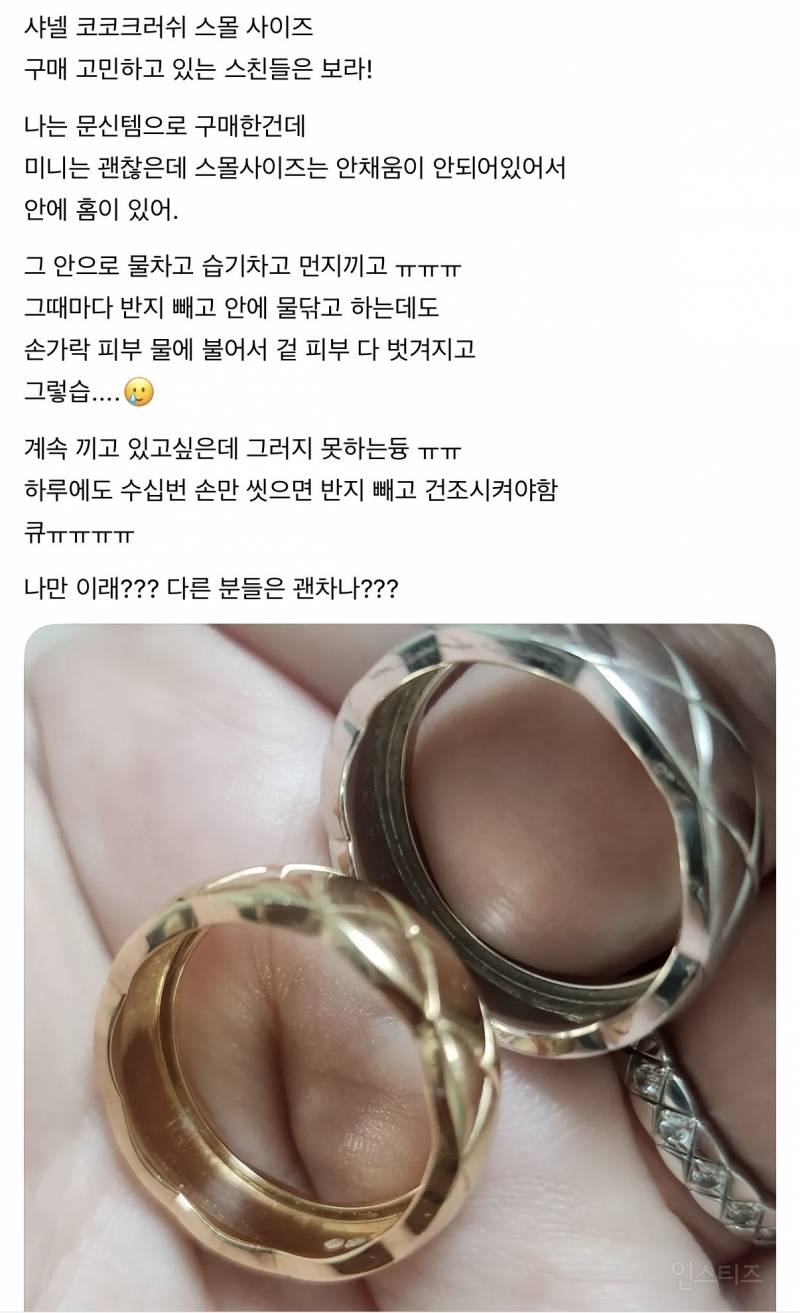
Then there’s the metal itself. Even 18k gold isn’t 100% pure gold—it’s an alloy. To get those specific shades like Chanel’s signature ‘Beige Gold,’ other metals like copper, silver, or even trace amounts of nickel are mixed in. If the ‘trap effect’ mentioned above weakens your skin barrier, your body might start reacting to these alloy metals even if you’ve never had a metal allergy before. Your skin is basically screaming, ‘I can’t breathe!’ and the resulting eczema is its way of protesting the constant irritation.
Real Voices: “My 5 Million Won Rash”
The frustration in the Korean online community is palpable. For many, these rings are milestone purchases—graduation gifts, wedding bands, or self-rewards for a promotion. To have that celebration turned into a medical annoyance is a bitter pill to swallow. I saw one comment that really stuck with me: a user mentioned they felt ‘guilty’ for not being able to wear their ring because it was a gift from their mother. They were literally taping their finger or wearing a band-aid underneath just to make it work. That’s some dedication, but girl, your skin health comes first!
“Every time I put it on, it’s like a countdown until the itching starts. I’ve tried cleaning it with ultrasonic cleaners, I’ve tried drying my hands with a hair dryer… nothing works. It’s sitting in my jewelry box now. 4.5 million won just gathering dust.” — Instiz User ‘ChanelSadness’
There’s also a subset of users who are questioning the brand’s responsibility. In the comments, people are asking if Chanel offers any kind of ‘skin-safe’ coating or if they’ve changed their alloy composition recently. While there’s no official word from the brand (and let’s be honest, luxury houses are notoriously slow to admit to these kinds of things), the sheer volume of complaints on a major platform like Instiz usually forces some kind of internal review. We’ve seen this before with other brands where a specific batch or design leads to a quiet ‘refinement’ in the manufacturing process.
It’s not just about the money, though. It’s about the disappointment. In the K-beauty world, we talk about ‘glass skin’ and ‘honey skin,’ and having a scaly, red ring-shaped rash on your hand is the opposite of that aesthetic. It ruins the ‘vibe.’ Some users are even suggesting a ‘boycott’ of the specific quilted designs until the brand addresses the moisture-trapping issue, though I doubt that will stop the die-hard fans.
Moisture, Metal, and the “Hidden” Irritants
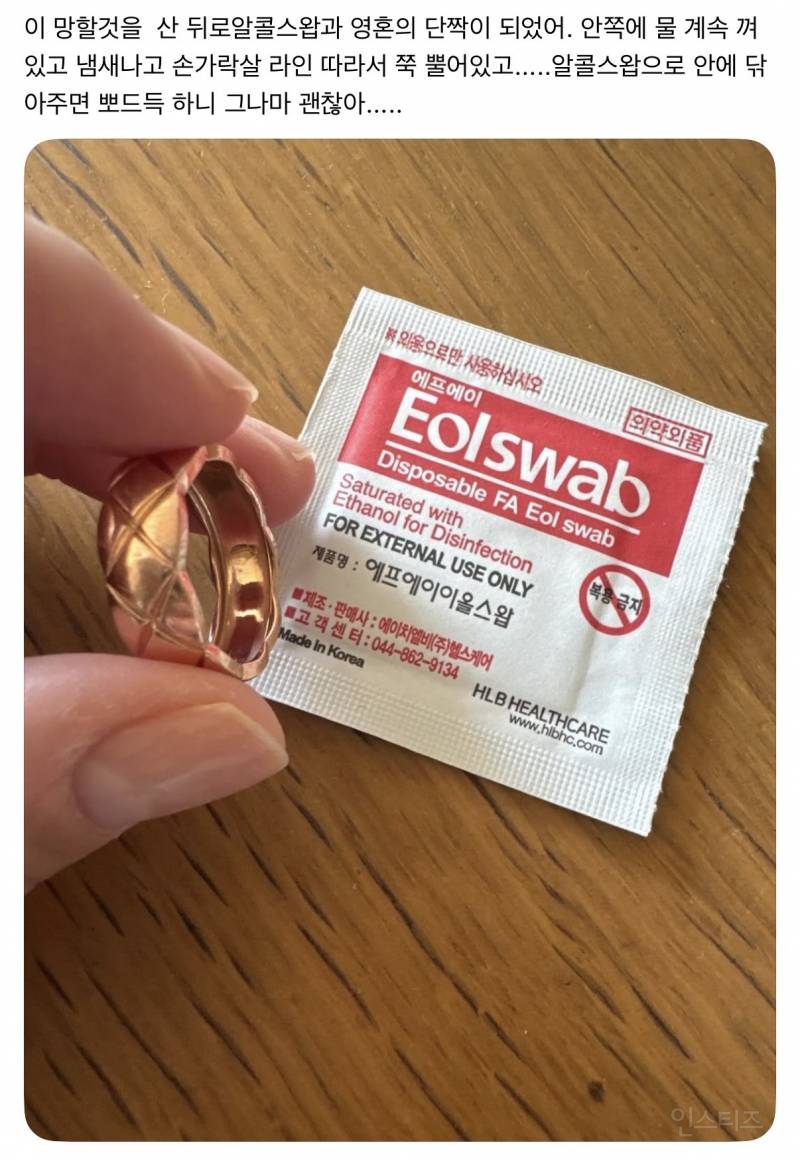
Let’s dive a bit deeper into the science of why this March is particularly bad for this ‘luxury eczema.’ We’re currently in that awkward transition period in Korea where the heaters are still on in some buildings, but the outdoor air is getting humid. This ‘thermal shock’ makes our skin more reactive. Furthermore, the ingredients in our hand creams might be interacting with the metal. Many of us use heavy, ceramide-rich creams to keep our hands soft, but those creams can also get gunked up in the quilted patterns of a Chanel ring, becoming rancid over time or trapping bacteria.
I’ve noticed that people who use high-alcohol hand sanitizers are reporting the worst reactions. Alcohol is a solvent; it can actually help ‘leach’ trace metals from jewelry or, at the very least, drive irritants deeper into the skin that has been softened by the ring’s occlusion. If you’re a Coco Crush owner, you might want to rethink your sanitizing routine. Maybe switch to a gentle wash and—most importantly—take the ring off every single time you dry your hands.
“I went to my dermatologist in Gangnam and the first thing he asked was, ‘Are you wearing a quilted ring?’ Apparently, he’s seen five cases this week alone. He told me it’s ‘Jewelry Dermatitis’ and that the design is a perfect trap for irritants.” — Instiz User ‘SkinFirst’
The ‘occlusive effect’ is something we usually want in skincare—think of a sheet mask trapping essence against your skin. But when a ring does it with sweat and soap, it’s a disaster. The skin under a ring is often several degrees warmer than the rest of your hand, which speeds up chemical reactions and bacterial growth. If you have sensitive skin, your finger is basically a petri dish under that gold band. It’s a tough truth to face when you’ve spent months dreaming of that specific sparkle.
Mina’s Practical Guide to Wearing Fine Jewelry Safely
Okay, real talk: if you already own one of these rings and you’re starting to see red spots, don’t panic. You don’t necessarily have to sell it on Karrot Market just yet. Here is my honest advice as someone who deals with skin reactions for a living. First, the ‘Hair Dryer Method’ is your new best friend. Whenever you wash your hands, you must ensure the skin *and* the inside of the ring are bone dry. A quick wipe with a towel isn’t enough for those quilted grooves. Use a hair dryer on the ‘cool’ setting to blast out any trapped water.
Second, consider a ‘barrier’ approach. I know it sounds a bit DIY for a luxury item, but some people swear by applying a tiny bit of clear, medical-grade silicone or even a very thin layer of specialized jewelry ceramic coating to the *inside* of the band. This creates a physical barrier between the metal/trapped moisture and your skin. However, be careful—you don’t want to ruin the resale value or the finish of the gold. Always test a tiny spot first or consult a professional jeweler.
Lastly, give your skin a ‘fast.’ Don’t wear your rings to sleep. Your skin needs those 7-8 hours to breathe and recover from the day’s occlusion. If you’re at home doing chores or working out, take the ring off. The ‘always-on’ jewelry trend is great for photos, but it’s terrible for skin physiology. Treat your luxury jewelry like a statement piece for outings, not a permanent part of your anatomy. Your skin barrier will thank you, and you’ll likely find that the eczema clears up without needing heavy medication.
The Verdict: Is the Coco Crush Still Worth It?
So, what’s the final take? Is the Chanel Coco Crush a ‘do not buy’? Not necessarily. But it is a ‘buyer beware’ for anyone with a history of sensitive skin or eczema. The design is undeniably beautiful, but it’s a high-maintenance piece of jewelry. It requires more care than a smooth, flat band. If you’re the type of person who wants to put a ring on and forget about it for five years, this might not be the piece for you. You have to be diligent about hygiene and drying.
Honestly, I still think they’re gorgeous. But seeing the photos on Instiz has definitely cooled my ‘must-buy’ fever. If I do get one, I’ll be opting for a size slightly larger than usual to allow for more airflow, and I’ll be religious about taking it off the second I get home. We have to remember that luxury is supposed to make us feel good—not just look good. If an item causes you physical pain or skin damage, it loses its luxury status immediately, no matter how famous the logo is.
If you’re currently suffering from ‘Chanel Eczema,’ please stop wearing the ring immediately and see a doctor. Don’t try to ‘power through’ the itch. Once your skin is sensitized, it only gets worse. Let your finger heal completely—I’m talking 2 to 4 weeks of zero contact—before you even think about putting it back on. And when you do, follow the drying steps I mentioned. Your health is the ultimate luxury, and no piece of gold is worth a chronic skin condition. Stay glowy, stay safe, and keep those fingers dry!