


The Long-Awaited Arrival of Ryland Grace
Cinematically speaking, we’ve been waiting for a hard sci-fi film that doesn’t just treat the audience like children or, conversely, like PhD candidates. After years of development hell and the mounting pressure of adapting Andy Weir’s beloved bestseller, Project Hail Mary has finally landed on Korean shores. The first general audience previews, which took place on March 10 and 11, 2026, have ignited a firestorm across social media, particularly within the ‘Yong-a-maek’ (Yongsan IMAX) community. As someone who approached this with a healthy dose of skepticism—because let’s be honest, capturing the internal monologue of a lone scientist in deep space is a nightmare for any director—I find myself pleasantly surprised. The film manages to balance the cold, clinical reality of astrophysics with a warmth that I haven’t seen in the genre since The Martian. It’s a rare feat to make the vacuum of space feel like a place where the human spirit can actually breathe.
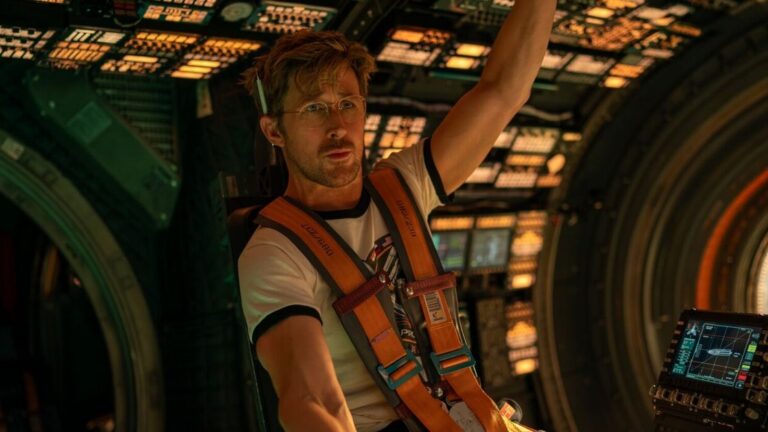
Early reactions from the Seoul screenings have been overwhelmingly positive, with many viewers highlighting the film’s ability to translate complex scientific concepts into visual poetry. The ‘eye-candy’ factor, or ‘nun-ppong’ as we call it here, is off the charts. But beyond the glitter of the stars, there’s a narrative engine here that purrs with precision. The story follows Ryland Grace, a middle-school science teacher turned accidental astronaut, who wakes up on a spaceship with no memory of who he is or how he got there. As his memories return, the stakes become clear: he is humanity’s last hope. It’s a classic setup, but the execution feels fresh, largely due to the film’s willingness to embrace the ‘healing’ aspect of the story—a trend that continues to dominate the Korean cultural landscape in 2026.
“Project Hail Mary is a guaranteed Yong-a-maek item! The full IMAX ratio is overwhelming and the space scenes are blindingly beautiful… I had to cover my mouth because Rocky was so cute!” — @weakkwing, March 11, 2026

Ryan Gosling: A Solo Performance for the Ages
The success of this film rests almost entirely on the shoulders of Ryan Gosling. For a significant portion of the runtime, he is the only human on screen, and his performance is nothing short of a masterclass in physical acting. Gosling has always been a master of the ‘stare,’ but here, he uses his entire body to convey the disorientation of muscle atrophy and the frantic energy of a man solving a puzzle where the pieces are light-years apart. His portrayal of Ryland Grace is a departure from his more stoic roles; he’s vulnerable, funny, and deeply relatable. The director’s choice to keep the camera tight on Gosling’s face during the more intense scientific breakthroughs allows us to feel the intellectual rush alongside him. It’s not just about the ‘what’ of the science, but the ‘how’ it feels to discover it.
What elevates this performance is the chemistry Gosling manages to create with… well, nothing. Or rather, with a character that isn’t human. The way he navigates the isolation of the ship, talking to himself and eventually to his unexpected companion, prevents the film from ever feeling static. Critics often talk about ‘one-man shows’ as a gimmick, but here, it’s a necessity. Gosling captures the descent from panic to pragmatism with a nuance that reminds us why he remains one of the most compelling actors of our generation. He doesn’t just play a scientist; he plays a man who finds his purpose in the most improbable of circumstances, and that emotional arc is what anchors the high-concept physics.
The ‘Rocky’ Revelation: CGI with a Soul
Unpopular opinion, but I was terrified of how the production team would handle Rocky. In the book, the alien is described in a way that could easily have become a Cronenberg-esque nightmare or, worse, a generic CGI blob. Instead, the VFX team has created something that is somehow both alien and undeniably ‘cute’ (or ‘gwi-yeop-da’ in the words of every single person on my timeline). The movement of Rocky is fluid and rhythmic, almost dance-like, which fits the musical nature of the character’s communication. It’s a triumph of character design that prioritizes personality over shock value. The way Rocky interacts with the environment—tapping on the hull, moving with a spider-like grace—makes him feel like a tangible presence in the room.
“I watched Project Hail Mary… Thumbs up, thumbs up, thumbs up. Crying, crying, crying! If possible, watch it in IMAX… let’s wander the scary and beautiful universe together.” — @luvtugwar, March 11, 2026
The relationship between Grace and Rocky is the beating heart of the film. It transcends the typical ‘first contact’ tropes of conflict and fear, opting instead for a story of mutual curiosity and shared survival. The ‘fist bump’ scenes, which were already iconic in the novel, translate beautifully to the screen, serving as a visual shorthand for a bond that defies biology. This is where the writing shines; the dialogue between the two (translated through Grace’s software) is witty and poignant. It’s a testament to the script that we care just as much about a five-legged alien’s well-being as we do about the fate of Earth. The ‘Rocky’ factor is what will make this movie a repeat-watch for many.

IMAX or Bust: The Visual Grandeur of Deep Space
If you aren’t planning to see this in IMAX, specifically the 1.43:1 ratio at Yongsan if you can snag a seat, you’re doing yourself a disservice. The cinematography by the production team is designed for the largest possible canvas. The use of scale is breathtaking; the way the ship looks like a tiny speck against the backdrop of a dying sun or a nebula is a constant reminder of the stakes. The ‘eye-candy’ mentioned in the audience reviews isn’t just about pretty colors; it’s about the depth of field and the clarity of the stars. In the IMAX format, the blackness of space feels heavy and infinite, creating a sense of claustrophobia that contrasts sharply with the vastness outside.
Color grading plays a massive role in the storytelling here. The flashback scenes on Earth are saturated with warm, natural light—greens, blues, and ambers—which contrast sharply with the sterile, clinical whites and the harsh, high-contrast shadows of the ship. This visual dichotomy reinforces the sense of loss and the longing for home that permeates the narrative. The director’s choice to use long takes during the spacewalk sequences allows the audience to settle into the silence, making the sudden bursts of sound and action even more jarring. It’s a visceral experience that demands the best possible technical environment to truly land.
Translating Andy Weir: Science Meets Sentiment
The writing falters occasionally when it leans too heavily into exposition, but that’s a common pitfall for any adaptation of Andy Weir’s work. The book is essentially a series of math problems, and while the film tries to streamline this, there are moments where the pacing slows down as we wait for the next ‘aha!’ moment. However, the script compensates for this by leaning into the emotional stakes. The structure of the film, jumping between the present-day mission and the flashbacks to the ‘Project Hail Mary’ task force on Earth, provides a necessary break from the isolation of the ship. It also allows for the introduction of a supporting cast that brings a different kind of energy to the film, grounding the cosmic mission in human politics and desperation.
“Review: Even my heart can be in a state of zero gravity. My mood keeps floating so I’ve decided to hold onto this work for a long time.” — @mongsgood, March 10, 2026
What makes this adaptation successful is its faithfulness to the spirit of the source material. It doesn’t shy away from the ‘nerdiness’ of the story. It celebrates intelligence and cooperation. In an era where so many blockbusters rely on cynical ‘chosen one’ narratives, Project Hail Mary is a refreshing ode to the scientific method and the idea that problems can be solved if we just work together. The ‘healing’ quality that Korean audiences are raving about comes from this inherent optimism. It’s a film that tells us that even in the face of extinction, we can find a friend and a way forward.

Minor Gripes in a Major Achievement
No film is perfect, and Project Hail Mary does have its moments of friction. The CGI in some of the more chaotic action sequences near the third act feels a bit rushed—a common casualty of modern post-production schedules. There’s a specific scene involving a hull breach that lacked the weight and ‘crunch’ I was expecting, given the high quality of the rest of the film’s visuals. Additionally, some of the characters in the flashback sequences feel a bit like caricatures of ‘tough government officials,’ lacking the depth of Ryland Grace. These are minor complaints, but they do occasionally pull you out of the immersive experience the film works so hard to create.
The OST, while effective, feels a bit derivative of Hans Zimmer’s work on Interstellar. It uses the same swelling organs and ticking clocks to build tension. While it works perfectly in the moment, it doesn’t quite have a ‘signature’ theme that stays with you after you leave the theater. That said, the sound design—the clanking of the ship, the muffled silence of the vacuum, the musical tones of Rocky’s speech—is impeccable. It’s the kind of film where the silence is just as important as the music, and the audio team clearly understood that balance.
Final Verdict: A New Sci-Fi Standard?
Is Project Hail Mary a masterpiece? It’s certainly the best sci-fi film we’ve seen in the last few years. It manages to do what few films in this genre achieve: it makes you think, it makes you laugh, and it makes you feel deeply for a character that looks like a giant rock-spider. For the Korean audience, who have shown a consistent appetite for high-concept space dramas like Victory Ship and The Moon, this film feels like the natural evolution of that interest. It’s a sophisticated, heart-wrenching, and visually stunning piece of cinema that justifies every bit of the hype surrounding its IMAX release.
Rating: 9/10
Who it’s for: Fans of hard sci-fi, Ryan Gosling devotees, and anyone who needs a reminder that the universe isn’t just a cold, empty place. If you loved the book, you will be satisfied. If you haven’t read it, prepare for a wild, emotional ride. Just make sure you book those IMAX tickets early—they’re going to be the hardest get of the spring season.