



The Morning After the Gold Rush: A Historic Night for K-Content
Cinematically speaking, the 98th Academy Awards held on March 18, should have been a moment of unadulterated triumph for the Korean creative industry. When Netflix’s K-Pop Demon Hunters (affectionately dubbed ‘K-DE-HUN’ by fans) secured both Best Animated Feature and Best Original Song, the collective roar from Seoul could be heard across the Pacific. It wasn’t just a win for a streaming giant; it was a validation of K-pop’s aesthetic dominance and the technical prowess of Korean-led animation pipelines. We saw the cast and crew on that stage, bathed in the golden light of the Dolby Theatre, looking like the pinnacle of global soft power.
However, the honeymoon period was short-lived. By March 18, the narrative shifted from artistic achievement to a heated debate over cultural identity and historical sensitivity. The catalyst? A seemingly innocuous ‘Life-Changing Films’ interview with Letterboxd. While the world was still humming the Oscar-winning lead single, the film’s voice cast found themselves at the center of a digital firestorm that has since racked up over 40,000 views and 500 scathing comments on community boards like TheQoo. As a critic, I find the intersection of global prestige and domestic sentiment fascinating, if not a little exhausting.
The Letterboxd Slip: When Artistic Honesty Clashes with PR
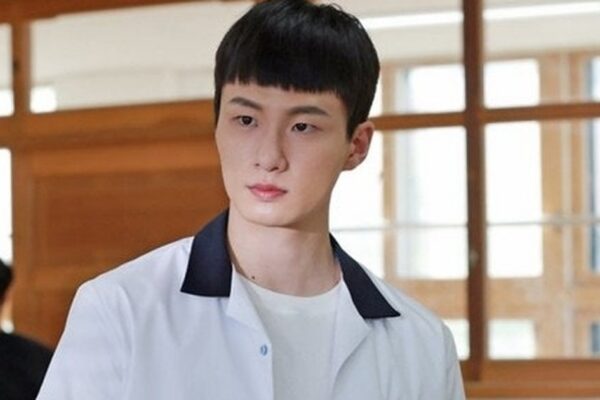
The controversy stems from an interview clip released on March 18, featuring Yu Ji-young, the voice behind the fierce Huntress Joy, and Ahn Hyo-seop, who voiced Jin-woo. When asked to name films that shaped their perspective or influenced their work on K-Pop Demon Hunters, Yu Ji-young didn’t hesitate. She cited Akira Kurosawa’s 1954 masterpiece, Seven Samurai, stating that the classic Japanese film had a significant impact on the structure and spirit of ‘K-DE-HUN.’ Almost immediately, the mood in the Korean comments sections soured. To a global film student, Kurosawa is a foundational text; to a Korean netizen, bringing up Japanese influence during the peak of a ‘K-branded’ victory feels like a betrayal of the brand itself.
“Why on earth would you bring up a Japanese movie right after winning an Oscar for a film that literally has ‘K-Pop’ in the title? It’s like she’s trying to pour cold water on our own celebration. Does she need a history lesson?” — Top comment on TheQoo (4132744639)
Unpopular opinion, but I understand where Yu Ji-young is coming from as an artist. K-Pop Demon Hunters is, at its core, an ensemble piece about a group of disparate warriors coming together to protect a village—or in this case, a fandom—from an external threat. That is the Seven Samurai blueprint. Every team-up movie from The Avengers to A Bug’s Life owes a debt to Kurosawa. But in the hyper-sensitive ecosystem of Korean entertainment, timing is everything. Mentioning a Japanese director as the DNA of a Korean cultural landmark, especially during the celebratory week of the 98th Oscars, was a PR nightmare waiting to happen.
The Ahn Hyo-seop Contrast: Playing the ‘Safe’ Card
In the same interview, Ahn Hyo-seop provided what many are calling the ‘textbook’ response. When prompted with the same question, he pivoted toward the titans of Korean cinema: Bong Joon-ho’s Parasite and Mother. His choices were strategically brilliant. By rooting his performance in the lineage of Bong Joon-ho, he reinforced the ‘K’ in K-Pop Demon Hunters. He didn’t just talk about acting; he talked about the Korean sensibility of ‘Han’ and the social commentary that defines our best works. The contrast between the two actors couldn’t be sharper, and the public’s reaction reflects that.
Ahn’s response acted as a shield, while Yu’s became a lightning rod. Netizens were quick to praise Ahn for ‘remembering his roots’ while accusing Yu of being ‘thoughtless.’ From a critical standpoint, both are likely telling the truth. K-Pop Demon Hunters is a hybrid. It has the social grit of Bong Joon-ho’s work—especially in how it portrays the grueling trainee system—but it also possesses the epic, rhythmic pacing of a classic samurai epic. The tragedy here is that we can’t seem to acknowledge both influences without it becoming a zero-sum game of national pride.
Cinematically Speaking: Is the Influence Actually There?
Let’s look at the mise-en-scène of the film’s climactic battle. The director’s choice to use heavy rain and high-contrast shadows during the final demon showdown is a direct visual nod to Kurosawa’s rain-soaked finale in Seven Samurai. The framing of the five hunters standing against the horizon? That’s pure western-samurai iconography. Yu Ji-young wasn’t hallucinating the influence; she was observing the technical reality of the film’s direction. The animation style itself, while unique, utilizes a kinetic energy that owes a lot to the ‘sakuga’ culture of Japanese animation, even if the heart of the story is quintessentially Korean.
“I don’t care if the director liked Kurosawa. As a voice actress representing a Korean project on the world stage, you should have the tact to highlight Korean creators. Ahn Hyo-seop knew the assignment. Yu Ji-young failed it.” — User ‘K-DramaLover88’ on Naver
The writing in K-Pop Demon Hunters actually falters when it tries to be too many things at once, but its visual storytelling is where it earned those Oscars. The ‘K-Pop’ element isn’t just a gimmick; it’s the emotional engine. The way the choreography of the demon hunting mimics idol stage formations is a masterclass in creative fusion. To deny that this fusion includes elements of Japanese cinema history is to deny how modern art works. However, the domestic audience isn’t looking for a lecture on film history; they are looking for a celebration of their own cultural sovereignty.
The K-Brand Paradox: Soft Power and Sensitivity
Why does this hurt so much? Because K-Pop Demon Hunters was supposed to be the ultimate ‘K’ product. The ‘K-‘ prefix is a billion-dollar industry. It’s a shield against cultural erasure and a badge of quality. When a lead actress suggests that this shield was forged using Japanese tools, it triggers a visceral reaction rooted in a century of complex history. The backlash isn’t just about a movie; it’s about the fear that Korean creativity is still being viewed through a colonial or derivative lens by the West.
We saw this same tension during the festival circuit with several other co-productions. The reality is that the animation industry is now a borderless web of talent. A film can be storyboarded in Seoul, animated in Vancouver, and directed by someone who grew up on a diet of French New Wave and Japanese Ghibli films. But the marketing of these films remains stubbornly nationalistic. K-Pop Demon Hunters was sold as a ‘Korean win,’ and Yu Ji-young’s ‘Seven Samurai’ comment broke the marketing spell.
The Digital Firestorm: Analyzing the 500 Comments
Looking through the 499 comments on the viral TheQoo post, the sentiment is roughly 85% negative. The most liked comments focus on ‘historical education’ and ‘tact.’ There is a sense that Yu Ji-young ‘spoiled’ the party. It’s fascinating to see how a technical observation about film structure can be reinterpreted as a political statement. In the age of social media, there is no such thing as a ‘purely artistic’ interview. Every word is weighed against the current geopolitical climate.
“We finally get an Oscar for an animation about our culture, and the lead actress says ‘Actually, it’s based on a Japanese movie.’ Do you realize how that sounds to international fans? It makes us look like we can’t create anything original.” — Comment from Naver News (Article 609/0001104936)
This fear of looking ‘unoriginal’ is the driving force behind the vitriol. But as a critic, I’d argue that K-Pop Demon Hunters is brilliant precisely because it synthesizes these influences into something entirely new. The ‘originality’ is in the remix. The way the film handles the OST—which won the second Oscar of the night—is a perfect example. It blends traditional Korean instruments with hyper-modern synth-pop. Is it ‘pure’? No. Is it brilliant? Absolutely.
Final Verdict: A Masterpiece Marred by Discourse
What elevates K-Pop Demon Hunters isn’t just its pedigree or its awards; it’s the fact that it’s a genuinely daring piece of cinema. It takes the idol industry—something often dismissed as superficial—and turns it into a high-stakes supernatural epic. The performances by Yu Ji-young and Ahn Hyo-seop are career-defining. Yu’s portrayal of Joy is layered with a weariness that makes the character’s eventual sacrifice feel earned. It’s ironic that her deep understanding of the character’s ‘samurai-like’ stoicism is exactly what led her to make the comment that the public now hates.
The writing: ⭐⭐⭐⭐☆
The direction: ⭐⭐⭐⭐⭐
The acting: ⭐⭐⭐⭐⭐
The controversy: 🤬/10
The bottom line is that K-Pop Demon Hunters is a 9/10 masterpiece that deserves better than to be buried under a week of ‘cancel culture’ discourse. Yu Ji-young made a tactical error in a high-stakes interview, but her artistic assessment wasn’t wrong. As we move further, the Korean industry needs to decide if it wants to be a closed loop or a global leader. Being a leader means having the confidence to acknowledge influences without fearing that they diminish your own light. Watch the movie for the stunning animation and the heartbreaking performances. Just maybe stay off the comment sections for a few days.
Watch if: You want to see the future of animation and don’t mind a bit of healthy (or unhealthy) cultural debate.
Skip if: You’re looking for a ‘pure’ experience untainted by the complexities of modern PR and historical tension.