



Official Naming of ‘Doolysaurus’ Following Discovery in Sinan
In a significant development for both the scientific community and Korean cultural history, a newly discovered dinosaur species from Sinan County, Jeollanam-do, has been officially named after one of South Korea’s most iconic animated characters. On March 19, 2026, a joint research team from Chonnam National University’s Korea Dinosaur Research Center and the University of Texas at Austin announced the classification of Doolysaurus huhmini. The findings were published in the international academic journal Fossil Record, marking a rare intersection between rigorous paleontology and national pop culture heritage.
The new species, a small herbivorous or omnivorous dinosaur, was identified from fossils recovered in the Ilseongsan Formation on Abhae Island (Abhae-do). Dr. Jung Jong-yoon, the lead and corresponding author of the paper, confirmed that the naming was a deliberate tribute to ‘Dooly the Little Dinosaur,’ a character created by cartoonist Kim Soo-jung in 1983. According to the research team, the decision to use the name ‘Dooly’ stems from the character’s status as a cultural touchstone that spans multiple generations in Korea, mirroring the fossil’s own identity as a ‘baby’ or juvenile specimen.
Biological Profile: A Juvenile Turkey-Sized Omnivore
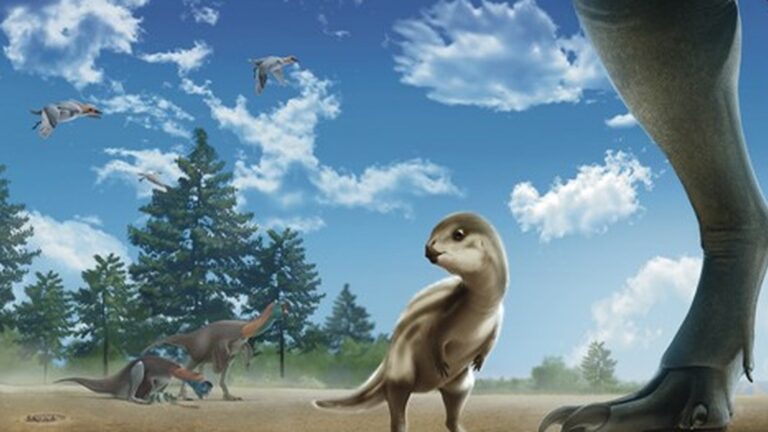
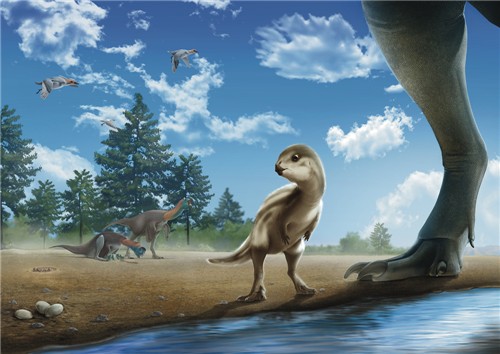
The specimen identified as the holotype for Doolysaurus huhmini provides a unique glimpse into the early life stages of the Thescelosaurid family. Histological analysis and anatomical examinations revealed that the individual was between zero and two years old at the time of its death. While the current fossil measures approximately the size of a modern turkey, researchers estimate that a fully grown adult would have reached roughly double that size. This specific growth trajectory is a key point of interest for paleontologists studying the ontogeny of bipedal dinosaurs in East Asia during the mid-Cretaceous period.
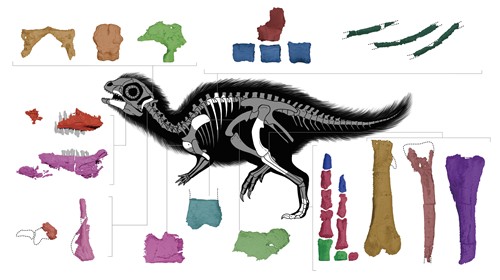
One of the more fascinating details revealed during the excavation was the presence of gastroliths, or stomach stones, within the abdominal cavity of the fossil. The discovery of these small, polished pebbles suggests that Doolysaurus possessed a specialized digestive system designed to grind down tough plant matter. However, the team also noted that the dental structure and environmental context indicate an omnivorous diet, likely consisting of a mix of vegetation, insects, and perhaps small vertebrates. This dietary flexibility would have been essential for survival in the diverse ecosystem of the Ilseongsan Formation approximately 94 to 113 million years ago.
“I never thought I’d see the day Dooly became scientifically canon. My childhood is literally a fossil now, and it’s incredible to see our cultural icons recognized on a global scientific stage like this.” — User on Instiz, March 19, 2026
Honoring the ‘Father of Korean Dinosaurs’
The specific epithet of the species, huhmini, serves as a formal tribute to Professor Huh Min, the founder of the Korea Dinosaur Research Center at Chonnam National University. Currently serving as the head of the National Heritage Administration, Professor Huh has dedicated over three decades to the study of Korean paleontology. His work was instrumental in the conservation of various fossil sites across the peninsula and played a pivotal role in collaborating with UNESCO to recognize Korea’s prehistoric heritage. The research team stated that naming the species after him was a natural choice given his foundational contributions to the field.
The discovery itself dates back to 2026, when Dr. Cho Hye-min, then a member of the research center and now associated with the Gwangju National Science Museum, first located the remains in the mid-Cretaceous layers of Sinan. The time following the initial find was spent in meticulous preparation, cleaning, and comparative analysis to ensure the specimen was indeed a new genus and species. The resulting paper in Fossil Record provides the first comprehensive description of the taxon, placing it firmly within the phylogenetic tree of the Thescelosauridae.
Global Scientific Implications and Evolutionary Context
The classification of Doolysaurus as a Thescelosaurid is significant because it expands our understanding of how these bipedal dinosaurs migrated and evolved between East Asia and North America. During the mid-Cretaceous, land bridges and shifting climates allowed for a faunal exchange that has long been a subject of intense study. Doolysaurus exhibits several primitive traits that distinguish it from its North American relatives, suggesting a localized evolutionary path within the Korean peninsula and surrounding regions.
Furthermore, the presence of ‘fiber-like structures’—essentially a form of primitive downy feathers—on the specimen adds to the growing body of evidence regarding the integument of non-theropod dinosaurs. While many people still envision dinosaurs as strictly scaly reptiles, Doolysaurus likely had a soft, fuzzy appearance, much like the ‘baby’ persona of its namesake. This detail not only aids in scientific accuracy but also enhances the public’s connection to the prehistoric creature, bridging the gap between cold data and a relatable biological entity.
“The fact that it’s a baby dinosaur makes the name Doolysaurus so much more meaningful. Dr. Jung and the team clearly understood the assignment when it comes to honoring Korean heritage.” — K-Culture enthusiast on Twitter/X, March 20, 2026
Domestic Reception and the ‘Dooly’ Fever of 2026
The news has sparked a wave of nostalgia and pride across South Korean social media platforms. On community sites like Theqoo and Instiz, users have shared fan art and clips from the original Dooly the Little Dinosaur series alongside the scientific reconstructions. The coincidence of the fossil being a juvenile specimen has been cited by many as a ‘perfect’ alignment of science and art. For many Koreans, Dooly is more than just a cartoon; he represents a period of rapid cultural growth and the enduring spirit of Korean animation.
Industry analysts within the Hallyu sector have also noted that this naming convention represents a sophisticated form of cultural branding. By linking a scientific breakthrough to a beloved character, the research team has ensured that the discovery receives far more public attention than a standard taxonomic announcement. This ‘Dooly fever’ is expected to drive increased interest in regional museums, particularly the Gwangju National Science Museum and the Sinan fossil sites, as families and students flock to see the remains of the ‘real’ Dooly.
“South Korea’s soft power even reaches the Cretaceous period. It’s not just about music and dramas anymore; our scientific identity is becoming just as recognizable and uniquely Korean.” — Comment from a Seoul-based researcher, March 20, 2026
The Future of Paleontological Research in Jeollanam-do
The successful identification of Doolysaurus huhmini underscores the immense potential of the Ilseongsan Formation and other geological sites in the Jeollanam-do province. Often referred to as a ‘treasure trove’ of the Cretaceous, this region has consistently yielded high-quality fossils, including dinosaur eggs, tracks, and now, significant skeletal remains. The Korea Dinosaur Research Center has indicated that further excavations are planned for the Abhae-do area, with the hope of finding adult specimens of Doolysaurus to complete the species’ biological profile.
As of March 20, 2026, the National Heritage Administration is reportedly considering a special exhibition to showcase the Doolysaurus fossils alongside a retrospective of Kim Soo-jung’s original artwork. This initiative would aim to educate the public on the scientific process of naming and classification while celebrating the creative history that inspired the name. For now, Doolysaurus stands as a unique monument to the fact that in Korea, even the ancient past is deeply intertwined with the stories we tell today. No additional details regarding the exhibition schedule have been released at this time, but representatives from the Chonnam National University team have stated that the fossils will eventually be made available for public viewing under strict conservation guidelines.
This discovery marks a new chapter for Korean science, one where the rigorous standards of international research meet the heartfelt resonance of national identity. While the scientific world focuses on the phylogenetic implications of a new Thescelosaurid, the public is simply happy to welcome ‘Dooly’ back to the land he once roamed millions of years ago.
