

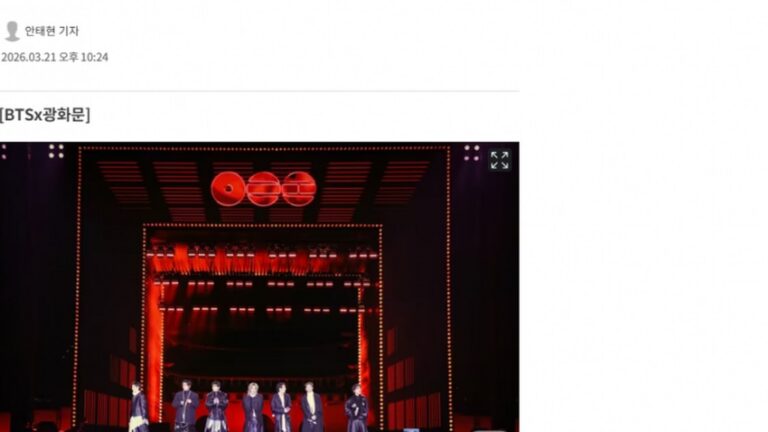
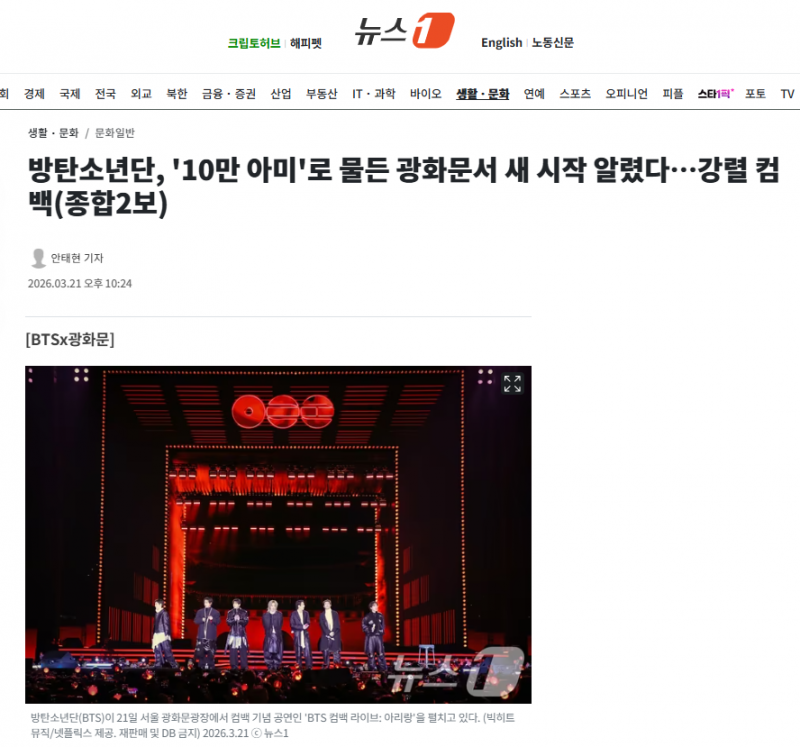
The Historic Scale of the ‘New Start’ at Gwanghwamun
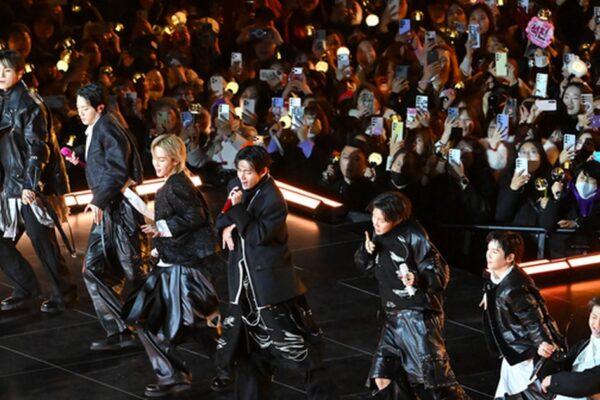
In a display of cultural dominance that effectively brought the heart of Seoul to a standstill, BTS officially declared the beginning of their 2026 era. On the evening of March 21, the group held their ‘New Start’ performance at Gwanghwamun Square, a location synonymous with Korea’s historical and political identity. According to official estimates provided by the event organizers, the seated capacity accounted for 22,000 attendees, but the total crowd size—including those gathered in the surrounding plazas and streets—swelled to a staggering 104,000 people. This massive assembly transformed the central district of the capital into a sea of purple light, marking the group’s first major domestic appearance of the year.
The logistics of the event required unprecedented cooperation between HYBE, BIGHIT MUSIC, and the Seoul Metropolitan Government. Traffic was diverted from the main thoroughfares starting early in the afternoon to accommodate the influx of global fans, known as ARMY. Unlike typical stadium concerts, the open-air nature of Gwanghwamun Square allowed for a unique integration of the city’s skyline into the performance’s visual narrative. The juxtaposition of the Gyeongbokgung Palace gates against the high-tech LED stages served as a visual metaphor for the group’s career: a bridge between Korean tradition and global modernity.
“Seeing the Seven together at Gwanghwamun felt like a historical coronation, not just a concert. The energy in the square was something I have never experienced in ten years of being a fan.” — @PurpleSeoul26 on X (formerly Twitter)
The choice of Gwanghwamun was not incidental. Industry analysts point out that by selecting the symbolic center of the nation, BTS is positioning their 2026 activities as a ‘national homecoming’ and a reset of their global trajectory. The event was not merely a promotional showcase but a statement of intent, signaling that the members have fully transitioned into their next chapter following the completion of their collective military obligations. This ‘New Start’ branding has been teased for months, but the scale of this live performance exceeded all industry expectations.
For those unable to secure a spot in the square, the performance was broadcast live globally via Netflix. This partnership represents a significant shift in K-pop distribution strategy. While the group has traditionally utilized their own platform, Weverse, for live streaming, the move to Netflix ensured a massive, high-fidelity reach to general audiences worldwide. The stream featured real-time subtitles in over 30 languages, reflecting the truly global nature of the event. Data from the streaming platform indicated that millions tuned in simultaneously, further cementing the event’s status as a global cultural moment rather than a localized fan meeting.
Musical Evolution: The 2026 ‘Arirang’ Arrangement
The centerpiece of the evening was a reimagined performance of ‘Arirang,’ the quintessential Korean folk song. This 2026 version incorporated a heavy blend of traditional Korean instruments, such as the gayageum and haegeum, with the group’s signature hip-hop and pop production. The performance began with a solo dance segment that utilized the architectural lines of Gwanghwamun, eventually building into a full-group explosion of sound and color. This specific arrangement of ‘Arirang’ is expected to be the lead track for their upcoming project, serving as a sonic bridge between their roots and their future.
Vocal performances were notably refined, with members showcasing a maturity that comes from years of solo exploration and life experience. The rap line—RM, Suga, and J-Hope—delivered verses that felt more grounded and reflective, while the vocal line—Jin, Jimin, V, and Jungkook—maintained the high-energy delivery fans have come to expect. The setlist was a curated journey through their discography, but every older track was re-arranged to fit the ‘New Start’ theme, giving the music a cohesive, cinematic feel that resonated through the massive outdoor sound system.
“The Netflix stream was flawless. Seeing the 4K quality of the Arirang intro made me feel like I was standing right next to the Admiral Yi Sun-sin statue. The arrangement was hauntingly beautiful.” — Global ARMY on Weverse
Observers noted that the choreography for the new tracks appeared more sophisticated and less reliant on sheer athletic intensity, focusing instead on storytelling and stage presence. This shift in performance style suggests a long-term strategy for the group as they enter their second decade together. By focusing on artistry and cultural resonance over the frantic pace of typical idol promotions, BTS is carving out a space that is uniquely their own in the global music landscape. The ‘New Start’ is as much about musical growth as it is about their return to the stage.
The Business of the ‘New Start’ Era
From a business perspective, the Gwanghwamun event is a masterclass in brand management. HYBE has successfully navigated the complex transition period of the group’s military hiatus, and this performance serves as the definitive end to that period of uncertainty. The ‘New Start’ campaign is expected to drive significant revenue through the upcoming album cycle, world tour, and exclusive content deals. The Netflix partnership alone is rumored to be one of the most lucrative live-event contracts in the platform’s history, highlighting the high market value BTS continues to command.
Furthermore, the economic impact on the city of Seoul cannot be ignored. Local businesses in the Jongno and Jung districts reported record-breaking sales as fans from across the globe descended on the area. Hotels were at near-total occupancy, and the ‘BTS effect’ was visible in everything from increased public transit usage to a surge in visits to nearby cultural heritage sites. This synergy between the group and the city’s tourism board suggests a continued role for BTS as the preeminent ambassadors of Korean culture.
“104,000 people in one square… only BTS could turn the heart of the capital into a private festival grounds without a single major incident. The organization was incredible.” — User on K-media forum
The ‘New Start’ manifesto, which was shared during the group’s closing remarks, emphasized themes of resilience, continuity, and the unbreakable bond between the artists and their audience. RM, speaking on behalf of the group, stated that this era is about ‘finding the home within ourselves and sharing that home with the world.’ This philosophical approach to their career suggests that the 2026 era will be less about chasing chart records and more about establishing a lasting legacy that transcends the typical life cycle of a pop group.
Logistics and Public Safety Success
Managing a crowd of 104,000 in a public square is a logistical nightmare, yet the ‘New Start’ event proceeded with remarkable order. The Seoul Metropolitan Police Agency and private security firms deployed over 5,000 personnel to manage crowd flow and ensure safety. Dedicated ‘Purple Zones’ were established for fan assistance, and the use of digital queuing systems helped prevent the chaotic scenes often associated with large-scale free events. The success of this operation provides a blueprint for future large-scale cultural events in urban centers.
The integration of technology was also evident in the crowd’s participation. The official light sticks (ARMY Bombs) were synchronized via satellite to create massive light displays that could be seen from aerial cameras. These patterns were choreographed to match the rhythm of the songs, turning the 104,000 attendees into a living, breathing part of the stage design. This level of technical synchronization in an open-air, non-stadium environment is a first for the industry and sets a new bar for live performance production.
The event concluded with a massive fireworks display over the Gyeongbokgung Palace, lighting up the night sky as the members took their final bows. For those in attendance, it was more than just a concert; it was a communal experience that reaffirmed the group’s place at the center of the cultural conversation. As the crowds dispersed into the Seoul night, the message was clear: the ‘New Start’ has officially begun, and the world is watching closely.
Industry Outlook: What Comes Next?
With the Gwanghwamun performance now complete, the focus shifts to the group’s upcoming studio album. While BIGHIT MUSIC has been tight-lipped about specific release dates, the ‘Arirang’ performance is widely believed to be the first taste of the new sound. Industry insiders suggest that the album will be a multi-part project, potentially spanning the entirety of 2026. This would allow the group to maximize their impact and maintain a consistent presence in the global charts throughout the year.
The ‘New Start’ era also marks a significant moment for the K-pop industry as a whole. As the genre’s biggest act returns to full activity, it is expected to provide a ‘halo effect’ for other artists and agencies. The success of the Netflix live stream may also encourage other labels to explore similar high-profile streaming partnerships, potentially changing how K-pop content is consumed globally. The 2026 BTS era is not just a win for the group, but a revitalization of the entire Korean entertainment sector.
As a reporter who has covered this group since their early days, I can state that the atmosphere at Gwanghwamun was unlike any other comeback. There was a sense of gravitas and maturity that replaced the frenetic energy of their younger years. This is a group that no longer has anything to prove, yet they continue to push the boundaries of what is possible for a musical act. The ‘New Start’ is a promise of longevity, and if tonight was any indication, that promise is being kept with absolute conviction. The 2026 era of BTS has arrived, and it is every bit as historic as anticipated.