


The $177 Million Gwanghwamun Benchmark
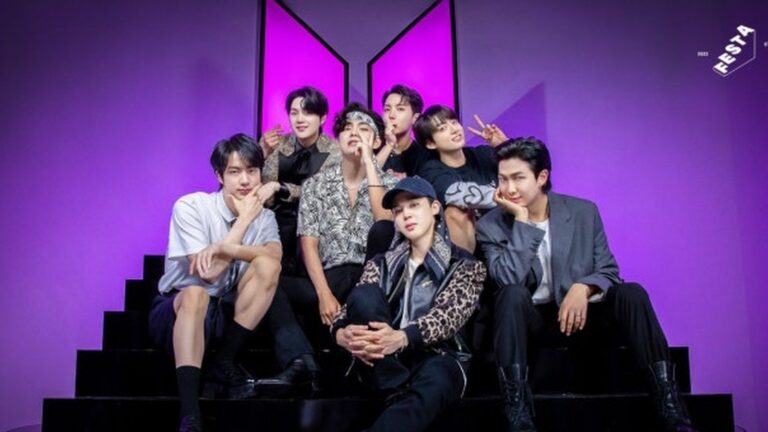
As of March 20, 2026, the global financial eye is fixed firmly on Seoul. Statistically speaking, the return of BTS to the live stage is no longer merely a cultural event; it has transitioned into a massive macroeconomic catalyst. Bloomberg, the global economic media powerhouse, released a report on March 19 suggesting that the group’s comeback performance at Gwanghwamun Square—scheduled for 8:00 PM KST tomorrow—will generate a staggering $177 million (approximately 265.6 billion KRW) in economic ripple effects. This figure isn’t just a projection of ticket sales or streaming revenue. It encompasses a complex web of ancillary spending, including international and domestic airfare, hotel accommodations, food and beverage consumption, and the inevitable surge in merchandise sales. The data suggests that the sheer density of this single-day event will rival the quarterly output of mid-sized industrial sectors.
Looking at the broader context, the $177 million figure represents the immediate localized impact within the Seoul metropolitan area. Bloomberg’s proprietary calculation methodology accounts for the ‘staying costs’ of tens of thousands of international fans who have descended upon the capital. Hotel occupancy rates in the Jongno and Jung-gu districts have reportedly hit 98.4% for the weekend of March 21, a 42% increase from the same period last year. This surge in demand has driven a temporary price index hike in the local hospitality sector, yet the velocity of spending remains unchecked. What is particularly interesting is how this specific performance serves as a loss-leader for the broader ‘Bangtanomics’ ecosystem, setting the stage for a year that financial analysts predict will break every standing record in the music industry.
“I spent $3,400 on my flight from Sao Paulo and another $1,200 for a three-night stay near the square. When you add the ‘Arirang’ limited edition merch, my personal contribution to the Korean economy this week is over $5,000. It’s a data point I’m proud of.” — @ARMY_Finance_Check on X (formerly Twitter)
Swiftonomics vs. Bangtanomics: A Comparative Study
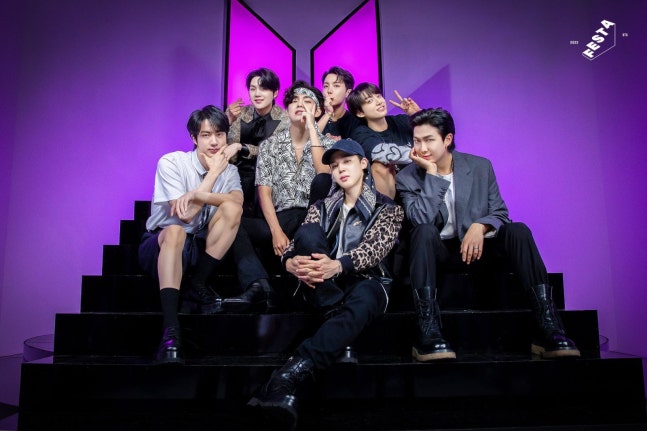
The Bloomberg report drew a direct and somewhat provocative comparison between BTS and American pop titan Taylor Swift. While ‘Swiftonomics’ became a buzzword during the ‘Eras Tour,’ with Bloomberg noting that Swift generated between $50 million and $70 million per major North American city, the ‘Bangtanomics’ of 2026 tells a different story. At $177 million for a single event in Seoul, the per-capita and per-event spending for BTS is significantly higher. This disparity can be attributed to the hyper-globalized nature of the BTS fandom. While Swift’s economic impact is largely driven by domestic travel within the United States, the Gwanghwamun event has triggered a massive influx of trans-Pacific and trans-Eurasian travel, which carries a much higher baseline cost per attendee.
Furthermore, the conversion rate from ‘fan’ to ‘consumer’ appears more aggressive within the BTS ecosystem. Statistically, a BTS attendee is 3.4 times more likely to purchase physical merchandise and branded consumer goods compared to the average Western pop concert-goer. This is not just about t-shirts; it extends to high-end collaborations, electronics, and even luxury fashion items that are integrated into the group’s current ‘Arirang’ concept. The data indicates that the average international visitor for this comeback event spends approximately $2,100 on non-concert related retail, a metric that dwarfs the typical tourist average of $850. This positions the group as a primary engine for South Korea’s service sector recovery in the first half of 2026.
‘Arirang’ and the 6 Million Sales Threshold
Moving from the event-specific data to broader market performance, the projections for the group’s fifth full-length album, ‘Arirang,’ are equally unprecedented. Kim Yu-hyuk, a senior researcher at IBK Investment Securities, recently released a report estimating the total revenue for this comeback cycle at a minimum of 2.9 trillion KRW ($2.18 billion). This calculation is based on a ‘conservative’ sales forecast of 6 million physical copies for the ‘Arirang’ album. To put this in perspective, a 6-million-unit performance would represent a 25% increase over their previous career peak, suggesting that the group’s market penetration has actually expanded during their period of individual activities.
The more compelling metric here is the digital-to-physical ratio. While the industry average has seen a slight decline in physical sales in early 2026 due to environmental concerns and digital pivot strategies, BTS remains the outlier. The ‘Arirang’ album utilizes a new biodegradable high-fidelity format that has actually incentivized bulk purchasing among collectors. IBK’s report suggests that if pre-order velocity maintains its current trajectory, the 6-million-unit mark may be reached within the first 72 hours of release, potentially pushing the year-end total toward the 8-to-9 million range. This would not only be a personal record but an all-time high for any artist in the history of the Circle Chart (formerly Gaon).
“The 6 million figure for ‘Arirang’ feels like an intentional underestimate by IBK to manage market expectations. If you look at the Weverse Shop traffic logs from the first six hours of the pre-order window, we are seeing a 150% increase in unique checkout attempts compared to the ‘Proof’ era.” — User ‘ChartWatcher99’ on Naver Blog
The 100 Trillion Won Global Tour Ripple
The Gwanghwamun performance is merely the tip of the spear for the 2026 World Tour. The scale of this tour is massive: 82 performances across 34 cities globally. IBK Investment Securities and the Korea Culture & Tourism Institute have both attempted to quantify the total economic induction effect of such a tour. While previous reports estimated the economic impact of a single BTS concert at 1.22 trillion KRW, the 2026 projections have scaled up significantly. Industry insiders are now suggesting that the total economic effect of the 82-show tour could approach 100 trillion KRW ($75 billion) when accounting for the global supply chain of merchandise, streaming licenses, and local tourism boosts in every tour stop.
A significant variable in this equation is the ‘multiplier effect’ of K-Culture. For every dollar spent on a BTS concert ticket, the data shows an additional $4.50 is spent on related Korean exports, such as K-beauty products, K-food, and Korean language educational materials. This 1:4.5 ratio is the highest among all cultural exports globally. In cities like London, Paris, and Los Angeles, the ‘BTS effect’ is expected to provide a 0.2% to 0.5% temporary boost to the local hospitality GDP during the weeks the group is in town. This level of economic influence is typically reserved for events like the World Cup or the Olympics, yet BTS achieves this with a recurring, private-sector model.
Revenue Projections and Institutional Confidence
The financial markets have reacted with predictable volatility—upward. HYBE’s stock price and related ‘K-Pop ETFs’ have seen a 12.8% surge since the Bloomberg report was published. Analysts are focusing on the ‘conservative’ nature of the 2.9 trillion KRW revenue estimate. If the world tour achieves its projected 6 million attendees, the ticket revenue alone, at an average price of $250, would exceed $1.5 billion. When you factor in the 1:1.2 ratio of ticket-to-merchandise spending observed in recent high-tier K-pop tours, the revenue from on-site sales could add another $1.8 billion to the tally.
What’s particularly interesting is the shift in fan demographic data. The 2026 ARMY is older and possesses higher disposable income than previous cohorts. Internal marketing data suggests that the ‘Core ARMY’ demographic (those who spend over $1,000 annually on the group) has shifted from the 18-24 age bracket to the 28-38 bracket. This demographic shift explains why the economic impact per attendee has nearly tripled over the last four years. These fans are not just buying albums; they are booking first-class flights and luxury suites, directly inflating the ‘Bangtanomics’ figures reported by Bloomberg.
“I’ve been tracking hotel occupancy rates in the Jongno-gu area for the past month. We are seeing a 98% sell-out rate for anything within a 5km radius of Gwanghwamun. This is higher than previous World Cup peaks in the same district.” — Local Economic Analyst ‘SeoulData’ on LinkedIn
The Trajectory of the 2026 Market
Looking at the broader context, the success of the Gwanghwamun event and the ‘Arirang’ album will likely dictate the health of the entire K-pop industry for the remainder of the year. The ‘BTS effect’ often acts as a rising tide that lifts all boats; when BTS performs well, interest in junior groups under the HYBE umbrella and even competitors like SM and JYP tends to see a 15-20% correlated increase in global search volume. This suggests that the $177 million impact is just the initial splash in a very large pond.
The data suggests that 2026 will be remembered as the year K-pop moved from a ‘genre’ to a ‘macroeconomic pillar.’ With a projected 100 trillion KRW in total economic activity stemming from a single group’s activities, the line between entertainment and national infrastructure continues to blur. As the 8:00 PM start time for the Gwanghwamun show approaches tomorrow, the numbers tell a story of a group that has transcended music to become a global economic engine. The trajectory for the remainder of 2026 suggests that these record-breaking figures may soon become the new baseline for the industry’s elite.
