



OMG you guys!! I’m literally screaming right now because I just fell down the rabbit hole of this INSANE viral post on TheQoo, and honestly? It’s giving me goosebumps! Not me staying up until 3AM scrolling through community posts, but when I saw this, I HAD to share. We need to talk about "The Spread of Writing" video that’s blowing up — it’s literally a world map showing how different writing systems evolved across the globe, and the moment Korea changes color? CHILLS. 😱
This post, which has racked up over 56,000 views and almost 500 comments on TheQoo, is literally making Korean fans lose their collective minds, and honestly? I’m right there with them, spiraling into a glorious fit of national pride! This isn’t just some dusty old history lesson; it’s a vibrant, visual representation of Korea’s absolutely unique cultural identity. And the way that map shifts? It’s giving major ‘main character energy’ and a total ‘chef’s kiss’ moment for our history books. All of this epicness is thanks to one legendary king and a writing system that’s still absolutely slaying in 2026. This is not a drill, people, this is a monumental flex for Korean history and culture that we NEED to celebrate!
The OG Vibe: Red All Over (Kinda)
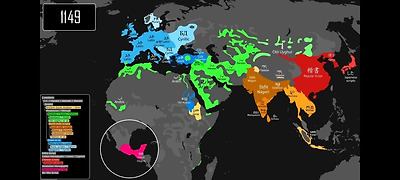
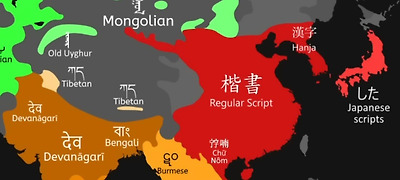
Okay, so picture this: the video starts way back in time, like before the 1400s. You’re watching this animated map, and it’s showing the spread of writing systems across continents. For centuries, East Asian countries – China, Korea, Japan, Vietnam – they’re all kinda lumped together in this reddish, subtly varying hue. It’s not totally uniform, like, Japan’s got a slightly different shade, but the message is crystal clear: the overwhelming influence of Chinese characters (Hanja) was, like, everywhere. Countries were adapting them, sure, making them work for their own languages, but they were still fundamentally operating within that Hanja framework. It’s giving "different flavors, same base ingredients," you know?
It’s like, you know how sometimes K-Pop groups have different concepts but they’re still under the same major company? That’s kinda what it was giving. Everyone was doing their own thing, developing unique pronunciations and even some characters, but the foundational ‘script’ was still Chinese characters. Even with unique adaptations, the core essence remained. It visually represented a shared linguistic heritage, a common ground where the roots of their written communication intertwined with Hanja. This wasn’t necessarily a bad thing, but it definitely highlighted a lack of distinctiveness on a global scale, especially when compared to completely different writing systems emerging in other parts of the world. It’s like everyone was speaking a dialect of the same language, rather than a totally new one.
The Plot Twist: Enter King Sejong, Our Main Character!
But then, you guys. THEN. The map gets to the mid-15th century, and everything changes. This is where King Sejong the Great, our absolute legend, steps onto the scene. He literally looked at the situation and was like, "Nah, we need something better for our people." His famous words, "나랏말싸미 듕귁에 달아" (Our country’s language is different from China’s), weren’t just a statement; they were a declaration of independence for the Korean language, a monumental moment in history.
He saw that the common people were struggling with Hanja. It was complicated, hard to learn, and kept a lot of folks from literacy, essentially gatekeeping knowledge for the elite. King Sejong, being the visionary that he was, understood the power of accessible communication. He wasn’t just thinking about academics or the privileged few; he wanted everyone, from farmers to merchants, to be able to read and write easily. And that, my friends, is how Hunminjeongeum, the original name for Hangul, was born. He didn’t just tweak an existing system or borrow bits and pieces; he invented a whole new one from scratch, based on unique phonetic principles that were both logical and easy to grasp. It was truly revolutionary!
The Map’s Epic Glow-Up: From Red to a STUNNING Purple!
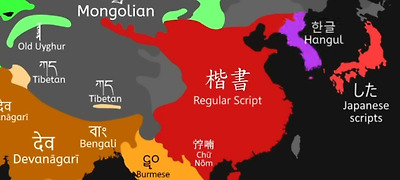
And THIS is the moment that literally made me gasp watching the video. Around 1446, when Hunminjeongeum was officially promulgated (fancy word for announced to the public), the map does this incredible, mind-blowing thing. While Japan still kinda stays in its reddish-orange spectrum, showing its continued connection to Hanja derivatives, Korea? BOOM. The entire Korean peninsula bursts into this vibrant, totally unique shade of purple! Like, it’s not a subtle shift; it’s a full-on, undeniable, "we’re different now, thank you very much" kind of glow-up that screams cultural independence.
The reason for the purple? It’s not just a random color choice. It signifies that Hangul isn’t some modified version of Chinese characters. Nope. It’s a completely independent, phonemic script, created with its own scientific principles and structure. It’s like everyone else was remixing a track, and Korea dropped a whole new album with a never-before-heard sound, a total game-changer. The visual impact on the map is so powerful because it immediately tells you, without a single word, that something fundamentally different and revolutionary happened on the Korean peninsula. It’s giving national pride, it’s giving innovation, it’s giving: "Korea just leveled up in a BIG way!"
Hangul’s OG Impact: More Than Just for the Masses!
Now, some people might think, "Oh, so Hangul was just for the common folk, right?" WRONG. While it was definitely designed to be easy for everyone, its impact wasn’t limited to just everyday people struggling with literacy. Of course, during the Joseon Dynasty, Hanja was still heavily used, especially in formal documents, by scholars, and for official state affairs. That’s just how the system worked back then, and it wasn’t an overnight switch. But Hunminjeongeum started making waves in other, more personal ways, proving its versatility and widespread appeal.
Imagine this: kings, the top of the social ladder, the literal rulers of the nation, were writing letters in Hangul! Not just peasants, but the most powerful individuals were embracing this new script for personal correspondence, for communicating with their families, and even for official edicts intended for wider public understanding. That’s HUGE. It shows that Hangul wasn’t seen as "lesser" or just a "commoner’s script" by everyone. It was practical, it was efficient, and it allowed for a more direct and heartfelt form of communication. King Sejong’s vision wasn’t some pipe dream; it was actively being used and appreciated across different social strata, proving its undeniable value. It’s like, even the main characters in a historical drama are using the hot new tech because it’s just THAT good!
The comments on TheQoo were totally vibing with this, too. One fan dropped this gem:
"It’s wild how even kings were using Hangul for letters! Sejong really changed the game for everyone, not just the common people. What a visionary. 👑 This proves it wasn’t just a ‘folk script.’"
And honestly? Same. It really puts into perspective how revolutionary this invention was. It wasn’t just about creating a new alphabet; it was about empowering an entire nation, slowly but surely, to communicate in their own unique voice, breaking down barriers that had stood for centuries.
Modern Day Slay: Hangul Still Ruling in 2026!
Fast forward to today, March 8, 2026. What does that map look like now? Still purple, baby! The Korean peninsula proudly remains that distinct, vibrant shade, a testament to Hangul’s enduring legacy. In the 21st century, especially with the internet, smartphones, and the global spread of K-Culture, Hangul’s convenience and scientific design shine even brighter. It’s like it was built for the digital age, centuries before anyone even dreamed of a computer!
Think about it: how easy is it to type in Korean on your phone or computer? Super easy! It’s phonetic, logical, and just flows. This makes it incredibly user-friendly for everything from texting your friends to creating viral TikTok captions, or even writing complex academic papers. Our ancestors, thanks to King Sejong, literally got a cheat code for communication. It’s not just a cool historical fact; it’s something that genuinely impacts our daily lives and makes things so much smoother. The scientific structure of Hangul, where each character represents a sound and combines into syllables, is just *chef’s kiss* for digital communication, making it one of the most efficient writing systems out there!
Another fan on TheQoo perfectly captured this modern-day appreciation:
"Imagine trying to type Hanja on your phone every day? No thank you! 💀 Hangul is literally the GOAT for the internet age. Sejong was truly ahead of his time! 💻📱"
They’re not wrong! The ease of use, the logical structure – it’s all designed for speed and clarity, which is exactly what we need in our fast-paced, interconnected world. Hangul didn’t just survive; it thrived, evolving into the perfect tool for modern communication.
The Genius of King Sejong: Beyond Just Creating!
But here’s the REAL tea, the part that truly blew my mind and had TheQoo comments going absolutely wild. King Sejong wasn’t just a genius for creating Hangul; he was a strategic mastermind, a forward-thinker who saw centuries into the future. In the very first paragraph of the Hunminjeongeum Haeryebon (the detailed explanation and philosophy behind Hangul’s creation), he explicitly stated, "나랏말싸미 듕귁에 달아" – "Our country’s language is different from China’s."
This wasn’t just a casual observation or a simple preamble. This was a mic drop of epic proportions. This was him, hundreds of years ago, preemptively shutting down any future arguments or attempts to say Hangul was just a derivative of Hanja, or somehow inferior because it wasn’t Chinese. He cemented Hangul’s independent status right from the jump, ensuring that its unique origins and purpose would never be questioned. It’s like he knew exactly what kind of historical debates and political squabbles would inevitably pop up, and he was like, "Nope, already covered it, next!" The foresight is absolutely astounding, honestly. It’s giving "future-proofed" before future-proofing was even a thing!
One fan comment on TheQoo perfectly summed up this level of genius, and honestly, I’m deceased by how insightful it is:
"Sejong the Great: ‘Oh, that’s me!’ Looking at the scientific nature of Hangul, his creative genius is astonishing, but his wisdom in explicitly stating ‘Our country’s language is different from China’ in the first paragraph of the Hunminjeongeum Haeryebon to block any future noise is truly amazing. I wonder if it was his way of letting out pent-up frustration about Joseon’s limitations, always being constrained by China."
I mean, CAN YOU IMAGINE? The level of thought and strategic planning to not only create something so revolutionary but also to secure its legacy against potential challenges for centuries to come? That’s not just a king; that’s a visionary who understood the geopolitical landscape and his nation’s place in it with profound clarity. It’s almost like a quiet act of rebellion, a profound statement of self-determination etched into the very foundation of a new writing system, ensuring Korea’s linguistic sovereignty.
The Enduring Legacy: Hangul’s Unstoppable Slay!
The fact that this YouTube video, and the subsequent TheQoo post, is still generating so much buzz and passionate discussion in 2026 just proves how deeply proud Koreans are of Hangul. It’s not just an alphabet; it’s a living, breathing symbol of independence, innovation, and national identity. It’s a powerful reminder that even when you’re surrounded by powerful cultural and political influences, finding your own voice and creating something truly unique and accessible is possible, and incredibly powerful.
This isn’t just about some old historical event that happened centuries ago; it’s about the enduring spirit of a nation, and a legacy that continues to inspire. It’s about a king who cared so much for his people that he literally changed the world map for them, creating a tool that empowers millions to this day. And honestly? That’s the kind of energy, foresight, and national pride we need to carry forward into the future. It’s a moment of cultural pride that transcends time, connecting us to our past while propelling us into the future with a distinct identity. Absolutely legendary!
So, what do you guys think about this incredible shift on the world map of writing? Does it make you feel all warm and fuzzy with national pride too? Let me know your thoughts in the comments! 👇✨