



A Landmark Discovery in Sinan-gun
On March 19, 2026, the international scientific community and the Korean public received news of a discovery that bridges the gap between rigorous paleontology and national cultural identity. A research team led by Dr. Jeong Jong-yoon, affiliated with both the Chonnam National University Korea Dinosaur Research Center and the University of Texas at Austin, officially announced the naming of a new dinosaur species discovered in the Aphaedo region of Sinan-gun, Jeollanam-do. The species has been formally designated as Doolysaurus huhmini, a name that pays homage to South Korea’s most iconic animated character, Dooly the Little Dinosaur.
The findings were published in the international academic journal Fossil Record, marking a significant milestone for Korean paleontology. According to the research paper, the fossil specimens were originally recovered from a site known for its rich deposits of Mesozoic remains. While Sinan-gun has long been recognized for its prehistoric significance—most notably for the discovery of large-scale dinosaur egg nests in previous decades—this specific find represents a distinct taxonomic breakthrough. The team confirmed that the specimen belongs to a previously unknown genus, necessitating a new name that would resonate both scientifically and culturally.
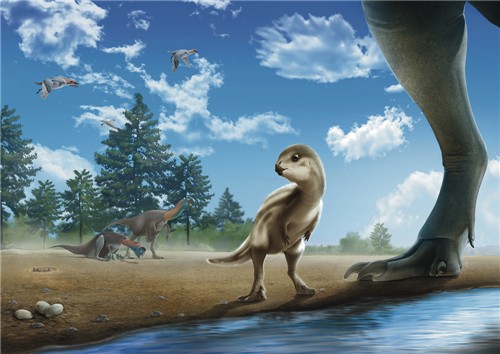
Dr. Jeong, serving as the lead and corresponding author of the study, emphasized the deliberateness behind the naming process. In an official statement, he noted that the specimen represents a juvenile individual, mirroring the ‘baby’ status of the cartoon character Dooly. The decision to integrate pop culture into formal taxonomy is not unprecedented globally, but it marks a rare and high-profile instance within the South Korean scientific landscape. The announcement has quickly gained traction across digital platforms, drawing attention to the often-insular world of fossil research.
The Taxonomy and Physical Characteristics of Doolysaurus
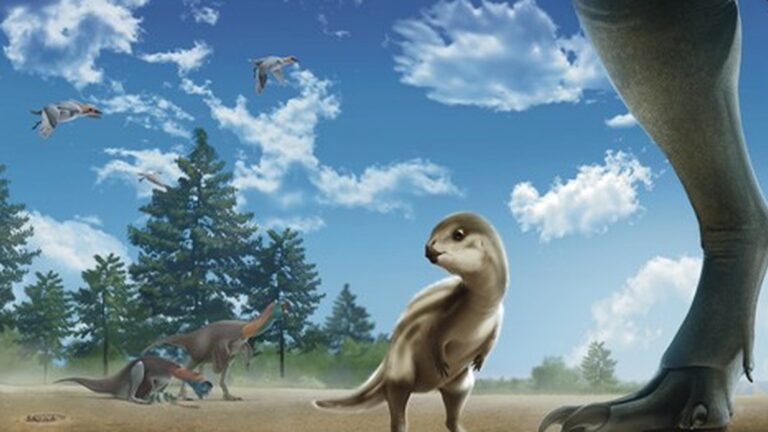
Anatomical analysis reveals that Doolysaurus huhmini was a relatively small dinosaur, roughly the size of a modern turkey. The research team categorized the specimen as a juvenile, which provided unique insights into the growth patterns of this specific lineage. The skeletal remains indicate a bipedal posture and structural features consistent with small theropods or ornithopods common to the late Cretaceous period in the Korean Peninsula. Because the specimen is not a fully grown adult, researchers believe it offers a rare glimpse into the developmental biology of prehistoric life in the region.
The geological context of Aphaedo in Sinan-gun played a crucial role in the preservation of the remains. The sedimentary layers in this area have consistently provided high-quality fossils due to the specific environmental conditions present millions of years ago. The discovery of a turkey-sized dinosaur in this strata suggests a complex ecosystem where smaller species coexisted with the larger titanosaurs and hadrosaurs previously documented in the Jeollanam-do province. The precision of the preservation allowed Dr. Jeong’s team to conduct detailed morphological comparisons, eventually concluding that the specimen did not fit into any existing taxonomic categories.
“I never thought I’d see the day when Dooly became a scientific fact. This is the most Korean discovery ever. It’s fitting that a baby dinosaur found in our soil carries the name of the character we all grew up with.” — Anonymous user on the community platform Theqoo
The technical description in Fossil Record highlights several autapomorphies—unique physical traits—that distinguish Doolysaurus from its relatives. These include specific orientations of the pelvic structure and limb proportions that suggest a high degree of agility. While the ‘turkey-sized’ description serves as an accessible comparison for the general public, the scientific implications involve a deeper understanding of biodiversity during the Cretaceous period in East Asia, a region that is increasingly becoming a focal point for global paleontological research.
Cultural Resonance: Why Dooly Matters in 2026
The choice of the name ‘Dooly’ is far from a mere marketing gimmick. Created by cartoonist Kim Soo-jung and first serialized in 1983, Dooly the Little Dinosaur is a foundational element of South Korean pop culture. The character, a baby dinosaur who was trapped in a glacier and woke up in modern-day Seoul, has remained a symbol of innocence and nostalgia for over four decades. By naming the new species Doolysaurus, the research team has ensured that the discovery remains accessible to a public that might otherwise overlook academic announcements.
Dr. Jeong explained the rationale during a press briefing, stating that Dooly is a character recognized by every generation in Korea. From the ‘Baby Boomer’ generation to Gen Z, the green dinosaur is a ubiquitous figure in television, film, and educational materials. The fact that the fossil specimen is an ‘어린 개체’ (young individual) made the connection undeniable. This naming strategy serves a dual purpose: it honors a national cultural icon and promotes scientific literacy by generating widespread interest in the country’s natural history.
This intersection of science and culture reflects a broader trend in global taxonomy where researchers name species after influential figures or characters to draw attention to conservation and research. However, in the Korean context, the move is particularly poignant. Dooly is often viewed as a wanderer seeking his mother, a narrative that mirrors the paleontologist’s quest to reconstruct the lost history of ancient organisms from fragmented remains. The naming has sparked a wave of nostalgia across social media, with many users expressing a renewed interest in visiting the Sinan-gun fossil sites.
Honoring the Legacy of Commissioner Huh Min
The specific epithet of the species, huhmini, carries its own weight of professional significance. It is named after Huh Min, the current Commissioner of the Korea Heritage Service (formerly the Cultural Heritage Administration) and the founder of the Korea Dinosaur Research Center at Chonnam National University. For over 30 years, Commissioner Huh has been a pivotal figure in South Korean paleontology, leading the efforts to have Korea’s dinosaur fossil sites recognized by UNESCO and ensuring the preservation of the nation’s geological heritage.
Colleagues of Commissioner Huh point to his tireless work in the field as the primary reason for the current flourishing of dinosaur research in the country. Before his efforts, much of Korea’s prehistoric record was under-researched or poorly preserved. Under his leadership, the Korea Dinosaur Research Center became a hub for international collaboration, bringing in experts from institutions like the University of Texas to apply modern analytical techniques to Korean specimens. The naming of Doolysaurus huhmini is a formal recognition of his lifetime of service to the field.
“Naming it after Commissioner Huh Min is well-deserved. He’s basically the father of Korean paleontology. Without his work in Sinan and Boseong, we wouldn’t have these world-class research facilities today.” — Comment from a verified academic forum
The designation of huhmini also underscores the institutional support necessary for such discoveries. The Korea Heritage Service has been instrumental in funding excavations and protecting sites from urban development. By naming the species after a sitting official who is also a scholar, the research team highlights the essential link between administrative protection and scientific discovery. It serves as a reminder that without the legal frameworks established by individuals like Huh, many of these fossils would have been lost to time or construction.
The Scientific Significance of Juvenile Specimens
While large, adult dinosaur fossils often garner the most headlines, juvenile specimens like Doolysaurus are arguably more valuable to researchers. They provide critical data on ontogeny—the development of an organism from the earliest stage to maturity. By studying the bone structure and growth rings (LAGs) of the Doolysaurus specimen, Dr. Jeong’s team can estimate the age at which the dinosaur died and how quickly its species reached adult size. This information is vital for reconstructing the life histories of extinct animals.
The discovery also adds a new layer to the ‘Sinan Dinosaur Egg’ narrative. For years, Sinan has been famous for its massive nests, but the identity of the dinosaurs that laid those eggs has often been a matter of speculation. While the research team has not yet definitively linked Doolysaurus to the specific egg nests found in Aphaedo, the presence of a juvenile of a new species in the same vicinity provides a compelling lead for future investigations. It suggests that the region was not just a passing ground, but a significant nesting and nursery site for various dinosaur species.
Furthermore, the small size of Doolysaurus challenges the public perception of dinosaurs as exclusively giant monsters. The ‘turkey-sized’ dinosaur represents the diversity of the Cretaceous ecosystem, where smaller niches were filled by agile, smaller-bodied animals. Understanding these smaller players is essential for a complete picture of the food web and environmental pressures of the time. The Fossil Record paper provides a detailed breakdown of the specimen’s limb morphology, suggesting that Doolysaurus was likely a swift runner, possibly utilizing its speed to evade the larger predators of the Jeollanam-do region.
Public Reception and the ‘Theqoo’ Phenomenon
The news of Doolysaurus has achieved a level of viral success rarely seen for paleontological news. On the popular community site Theqoo, a post detailing the discovery amassed over 38,000 views and 310 comments within hours of the announcement. The reaction has been overwhelmingly positive, with many users praising the research team for their creativity and national pride. The juxtaposition of a high-level academic publication and a beloved childhood character has created a unique ‘buzz’ that transcends traditional news categories.
“The fact that it’s a baby dinosaur makes the name Dooly actually scientifically appropriate. I can already see the museum exhibits with Dooly plushies next to the fossils. This is how you get kids interested in science.” — Social media reaction on X (formerly Twitter)
Market analysts and cultural observers note that this discovery could lead to a significant boost in regional tourism for Sinan-gun. The ‘Dooly’ brand is powerful, and the association with a real, scientifically recognized dinosaur provides a new angle for the Sinan Dinosaur Museum and related educational centers. The public’s emotional connection to the character has effectively humanized the scientific process, making the abstract concept of ‘taxonomic naming’ something that people can celebrate and debate.
However, the professional tone of the reportage remains crucial. While the public enjoys the cultural connection, the underlying science is rigorous. The 310 comments on Theqoo reflect a mix of humor and genuine curiosity, with some users asking detailed questions about the dinosaur’s diet and its relationship to other species found in Korea. This level of engagement demonstrates that when science is presented through a familiar cultural lens, it can stimulate a much deeper level of public inquiry.
Editorial Analysis: Science Reaching the Public Consciousness
From a journalistic perspective, the naming of Doolysaurus huhmini represents a masterclass in science communication. In an era where academic research often struggles to find a foothold in a crowded media landscape, Dr. Jeong and his team have found a way to make their work indispensable to the national conversation. By tapping into the collective memory of the Korean people, they have ensured that Doolysaurus will be a household name, far outlasting the typical news cycle of a scientific paper.
There is also a subtle, perhaps unintentional, commentary on the nature of Korean identity within this discovery. Dooly is a character who is fundamentally ‘out of time’—a relic of the past trying to navigate the present. In many ways, this is the essence of paleontology. The researchers are bringing a ‘baby’ from the Cretaceous period into the year 2026, giving it a name and a place in our modern understanding of the world. The synergy between the cartoon’s themes and the scientific reality is remarkably coherent.
As we look forward, the success of Doolysaurus may encourage other researchers to consider the cultural impact of their naming choices. While the primary goal of taxonomy is scientific clarity, the secondary goal of public engagement cannot be ignored. Doolysaurus huhmini stands as a testament to what can be achieved when academic excellence meets cultural awareness. It is a discovery that belongs to the scientists, the historians, and, most importantly, the public who grew up waiting for Dooly to find his way home. For now, it seems he has found a permanent home in the annals of Korean science.