

The Tea is Scalding: Gwanghwamun Goes Purple (and Problems Follow)
So… my little birds have been BUSY today, and honestly? The tea I’m about to spill is absolutely SCALDING. 🍵 We all knew that the return of BTS as a full group in 2026 was going to be the biggest event of the decade. After three years and nine months of waiting through military enlistments and solo eras, the OT7 comeback is finally here. But instead of just pure celebration, the streets of Seoul are currently buzzing with a very different kind of energy. We’re talking about the massive Gwanghwamun Square performance scheduled for March 21st, and let me tell you, the drama behind the scenes is reaching a boiling point. While fans are polishing their lightsticks, the actual residents and workers of central Seoul are feeling the squeeze in ways that have the internet absolutely divided.
Now, I’m not just talking about a bit of traffic. We are looking at a full-scale lockdown of one of the most historic and busiest areas in South Korea. Reports are coming in that the area surrounding Gwanghwamun will be under tight control for a staggering 33 hours. For those of you who don’t live here, that’s not just a concert window; that’s an entire weekend of the city’s heart being carved out for a private event. Allegedly, the scale of this production is unlike anything we’ve seen before, which sounds exciting until you realize that 31 major buildings in the vicinity are being subjected to strict entry and exit protocols. My sources say even the delivery drivers are throwing up their hands in frustration because Jongno-gu is basically becoming a no-go zone. If you were hoping for your Friday night fried chicken delivery, you might want to lower your expectations.
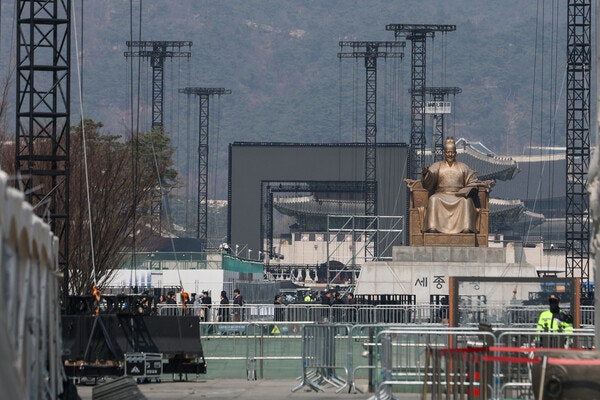
The Purple Lockdown: Gwanghwamun on Pause
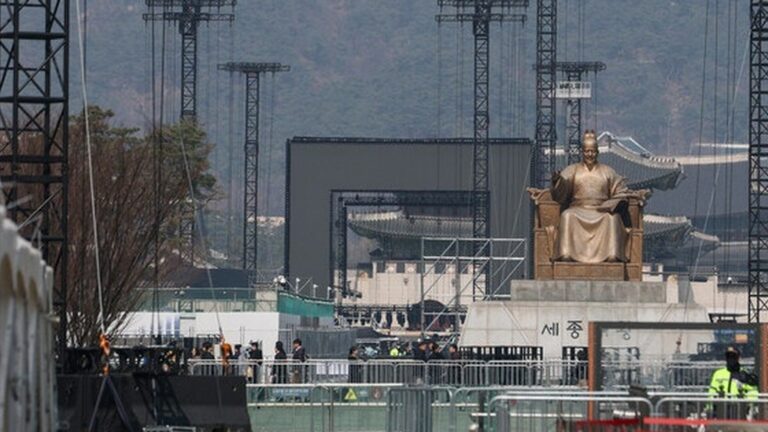
Let’s get into the logistics, because this is where it gets messy. The 33-hour traffic block isn’t just a minor detour. It’s a total halt of the city’s nervous system. From the eve of the concert on March 20th until the early hours of the 22nd, the main arteries of Seoul are being rerouted. Why? Because this isn’t just a concert—it’s a massive commercial production. Rumors are swirling that the production value is reaching heights we’ve never seen, but the cost to the average citizen is becoming impossible to ignore. Eyewitnesses near the square have reported massive metal barricades going up, cutting off pedestrian paths that thousands of office workers use every single day. It’s one thing to host a national festival, but when the gates go up for a specific fandom, the ‘public’ part of the public square starts to feel like a memory.
Startling reports from local community boards suggest that even the subway exits are being managed with an iron fist. Imagine trying to get to your 9-to-5 job and being told you have to take a 20-minute detour because a stage is being built for a Netflix special. Yes, you heard that right—the ’10 billion won deal’ is the phrase on everyone’s lips. If the rumors are true, this performance is being filmed as a centerpiece for a global streaming exclusive. This raises the question that has local politicians like Kwon Young-guk of the Justice Party fuming: Why is a private corporation (HYBE) profiting to the tune of billions while the city of Seoul provides the venue, the security, and the inconvenience for free? Or worse, at the taxpayers’ expense?
“I’ve worked in this building for ten years and I’ve seen protests, parades, and festivals, but I’ve never seen them block the actual office entrances like this. It feels like the city has been sold to an entertainment agency for the weekend.” – Anonymous Office Worker in Jongno
Forced Vacations and the ‘Gapjil’ Scandal
This is where the tea gets really bitter. According to the labor rights group ‘Workplace Gapjil 119,’ the situation has moved beyond ‘inconvenience’ and straight into ‘labor rights violation’ territory. My little birds have shared stories of companies in the Gwanghwamun area allegedly ‘suggesting’—and by suggesting, I mean forcing—their employees to use their precious annual leave on Friday and Monday. The logic? Since the traffic will be so bad that no one can get to the office anyway, the bosses decided it’s easier to just make everyone stay home on their own dime. This is a classic case of ‘gapjil’ (power abuse) that has the younger generation of workers absolutely livid. You shouldn’t have to burn your vacation days because a pop group decided to take over the street.
The legal reality is that companies cannot legally force you to use your annual leave, but we all know how the corporate world works in Seoul. When your manager ‘recommends’ a day off, it’s rarely a suggestion. The 상담 (consultation) logs at labor centers are reportedly filling up with complaints from workers who feel like they’re being penalized for a concert they might not even want to attend. It’s a bizarre intersection of K-pop global dominance and local workplace toxicity. While the world sees the glitz and glamour of the purple lights, the reality for the person sitting in a cubicle in Jongno is a lost day of pay or a stolen day of rest.
The 10 Billion Won Netflix Elephant in the Room
Now, let’s talk about the money, because in the world of gossip, the money always tells the real story. The word on the street—and by the street, I mean the high-level industry insiders—is that this Gwanghwamun stage is the crown jewel of a massive content deal with Netflix. We are talking about a figure in the neighborhood of 10 billion won (approx. $7.5 million USD) just for the rights to this specific comeback performance. If that figure is even remotely accurate, it reframes the entire event. This isn’t just a ‘gift to the fans’ or a ‘celebration of the military return.’ This is a high-stakes, high-profit commercial product. And that is exactly why people are getting salty about the city’s role in it.
Kwon Young-guk, the leader of the Justice Party, didn’t hold back when he took to social media to call out the Seoul Metropolitan Government. He basically asked: ‘Who is this for?’ While he made sure to congratulate BTS on their return (because let’s be real, you can’t survive in Korean politics if you’re a total hater), he pointed out the glaring inequality of the situation. The citizens endure the traffic, the workers lose their leave, and the small business owners lose their Saturday revenue, but the billions in streaming profit go straight into HYBE’s pockets. It’s a valid point that has sparked a massive debate on platforms like TheQoo and Nate Pann. Is Gwanghwamun a public square for the people, or is it a backlot for the highest bidder?
Small Business vs. Big Entertainment: Who Pays the Price?
Speaking of small businesses, the situation for local shop owners is looking pretty dire. Gwanghwamun is a hub for small cafes, restaurants, and convenience stores that rely on the steady flow of office workers and weekend tourists. But with 31 buildings being restricted and the entire square barricaded, many of these owners are being forced to shut their doors for the weekend. For a small business owner, losing a Saturday and Sunday in a prime location like Gwanghwamun is a financial blow that can’t be easily recovered. And unlike HYBE, they don’t have a multi-billion won safety net to catch them.
Part-time workers are also feeling the burn. If a shop closes, the hourly workers don’t get paid. It’s as simple and as brutal as that. I’ve heard whispers of college students who rely on their weekend shifts in Jongno being told not to come in, leaving them short on rent money for the month. This is the ‘human cost’ of the comeback that doesn’t make it into the glossy teaser trailers. While the ‘Army’ (BTS fans) will undoubtedly flood the area and buy out every snack in sight once the gates open, the lead-up and the surrounding restrictions are creating a temporary economic dead zone for the people who actually keep the neighborhood running.
“I support BTS and I’m happy they’re back, but why does my livelihood have to be the sacrifice? I’m losing two days of revenue and my part-timers are losing their wages. Does the city care about us at all?” – Owner of a small cafe near Gwanghwamun
Netizen Fury: Is this a Public Square or a Private Stage?
The internet, of course, is a battlefield. On one side, you have the fans who argue that BTS brings in billions for the Korean economy and that a little inconvenience is a small price to pay for the global prestige they bring to Seoul. They point out that major cities like London or New York often shut down for massive events. But on the other side, the ‘locals’ (non-fans who just live and work there) are tired of being treated like extras in a movie they didn’t audition for. The comment section on the viral TheQoo post—which has already racked up nearly 30,000 views—is a mess of conflicting opinions and heated arguments.
Some users are calling for Seoul City to provide compensation to the businesses and workers affected. Others are questioning why the concert couldn’t be held in a stadium like the Seoul Olympic Stadium or the Sangam World Cup Stadium, which are designed to handle large crowds without paralyzing the entire city center. The answer, of course, is ‘the aesthetic.’ Gwanghwamun provides a backdrop of traditional Korean power and modern urban life that is priceless for a Netflix special. But at what point does ‘aesthetic’ cross the line into ‘exploitation’? That’s the question that’s going to haunt this comeback long after the last firework goes off.
“If HYBE is making 10 billion won from the Netflix deal, they should be the ones paying for the traffic control and compensating the local shops. Why is the city government acting like their PR agency?” – Top comment on TheQoo
The Political Heat: Kwon Young-guk Steps In
The involvement of a political figure like Kwon Young-guk has elevated this from a ‘fandom vs. locals’ spat into a genuine policy debate. He’s not just complaining; he’s asking for a structural change. He pointed out that while we should celebrate BTS’s contribution to culture, we shouldn’t ignore the ‘structure’ where the public bears the burden and the private sector takes the profit. This is a sentiment that resonates with a lot of young Koreans who are already feeling the pressure of an unequal economy. They see the ‘Gwanghwamun Lockdown’ as a physical manifestation of that inequality.
As we head into the weekend of March 21st, all eyes will be on Gwanghwamun. Will the performance be so spectacular that everyone forgets the frustration? Or will this be remembered as the moment when the ‘K-pop machine’ finally pushed the city of Seoul too far? One thing is for sure: the tea is boiling, and I’ll be here to catch every drop. Whether you’re a fan waiting in line or a worker stuck in a detour, this is one comeback that nobody is going to forget—for better or for worse.
Stay tuned, my little birds. I have a feeling the fallout from this weekend is going to be just as dramatic as the concert itself. 🤫
*This article contains unconfirmed reports and should be treated as rumor until officially confirmed. SYNC SEOUL does not make claims about the personal lives of celebrities beyond what is reported by credible sources.*
So, what’s your take? Is the Gwanghwamun lockdown a fair price for a historic comeback, or has HYBE gone too far this time? Let me know in the comments—but keep it classy, besties! 🍵👀