


The Red Bowl Ritual: Why We Can’t Quit Yeop-tteok
Okay, real talk—if you’ve lived in Seoul for more than five minutes, you know that the sight of a giant red plastic bowl is enough to make anyone’s mouth water and their stomach slightly nervous at the same time. We’re talking about Dongdaemun Yeopgi Tteokbokki, or as we affectionately call it, Yeop-tteok. It’s not just food; it’s a cultural phenomenon, a stress-relief ritual, and a litmus test for your friendship group’s spice tolerance. As we head into the spring, the obsession hasn’t faded one bit. In fact, with new variations popping up every season, the debate over which menu item reigns supreme has never been more heated.
I remember my first encounter with the ‘Original’ spice level back in my university days. I thought I was tough. I thought I could handle the heat. Three liters of milk and a very red face later, I realized that Yeop-tteok is a beast that must be respected. But that’s the charm, isn’t it? It’s that addictive, capsaicin-heavy punch that keeps us coming back for more. Whether you’re celebrating a promotion or crying over a breakup, there’s a specific Yeop-tteok menu for every mood. Let’s dive into the current lineup and see what’s actually worth your hard-earned won this year.
Every time I open the app to order, I find myself staring at the screen for at least ten minutes. Do I go for the nostalgia of the original? Or do I lean into the creamy comfort of the Rose? The community over at Instiz has been buzzing lately about their favorites, and it’s clear that while the classics remain, our palates are becoming increasingly sophisticated—or maybe just more adventurous. One user recently lamented that their go-to Mara flavor felt a bit weaker lately, sparking a massive debate about consistency and the ‘perfect’ numbing sensation.
The “Big Five”: Navigating the Menu
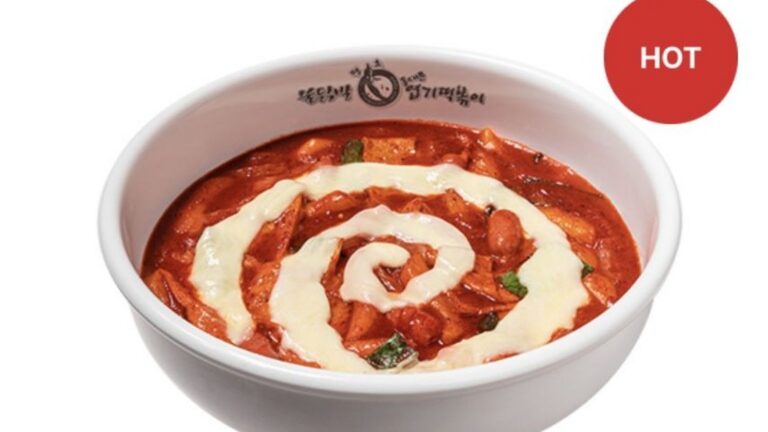
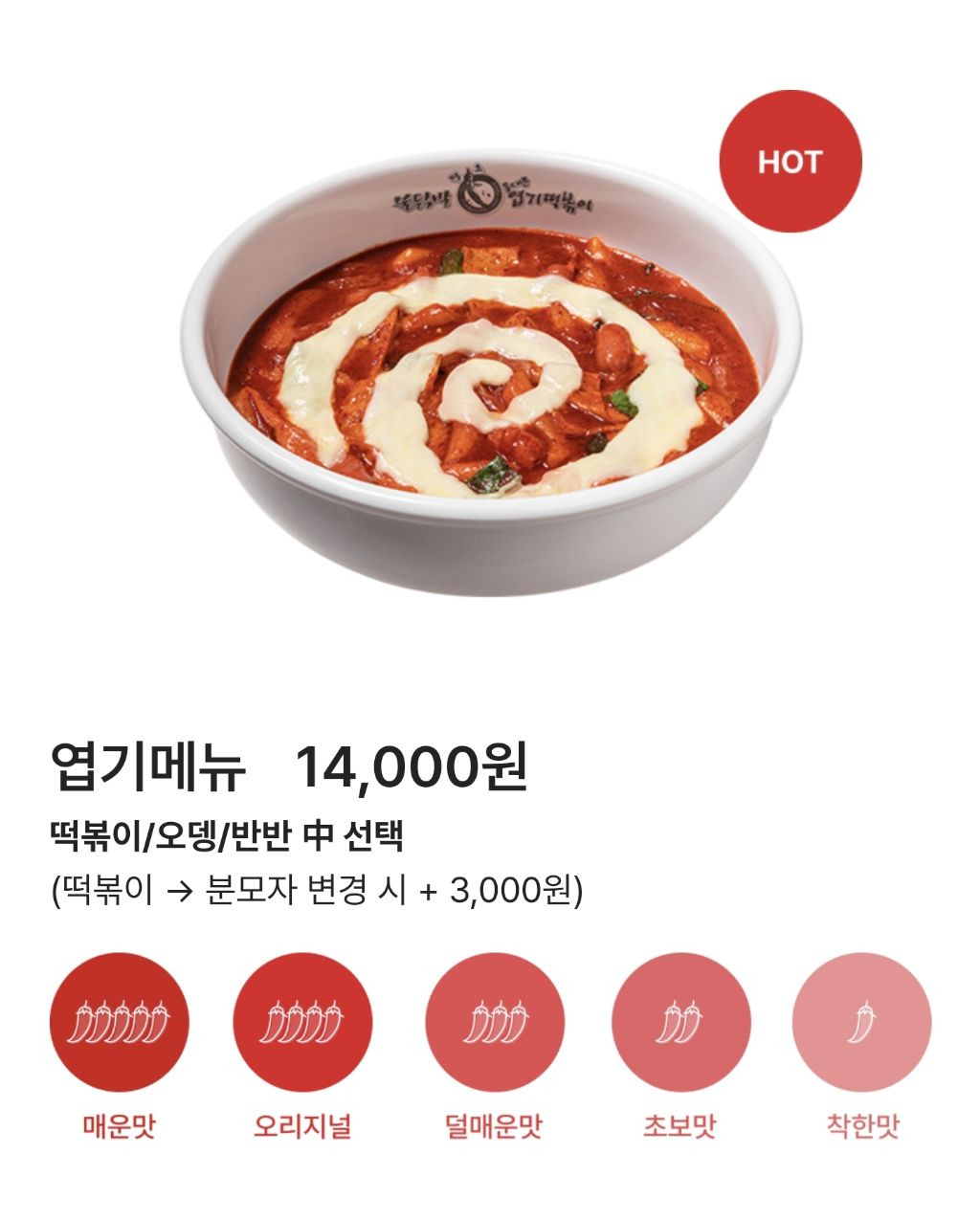
Let’s break down the heavy hitters. First up, the **Basic Yeop-tteok**. This is the blueprint. It’s chewy rice cakes, fish cakes (eomuk), sausages, and that signature thick, spicy sauce topped with a swirl of mozzarella. If you’re a purist, this is your home. It comes in various spice levels, from ‘Mild’ (which is still spicy for most humans) to ‘Challenge,’ which I’m convinced is just liquid fire. The ‘Original’ level remains the gold standard for those who want that authentic, sweat-inducing experience.
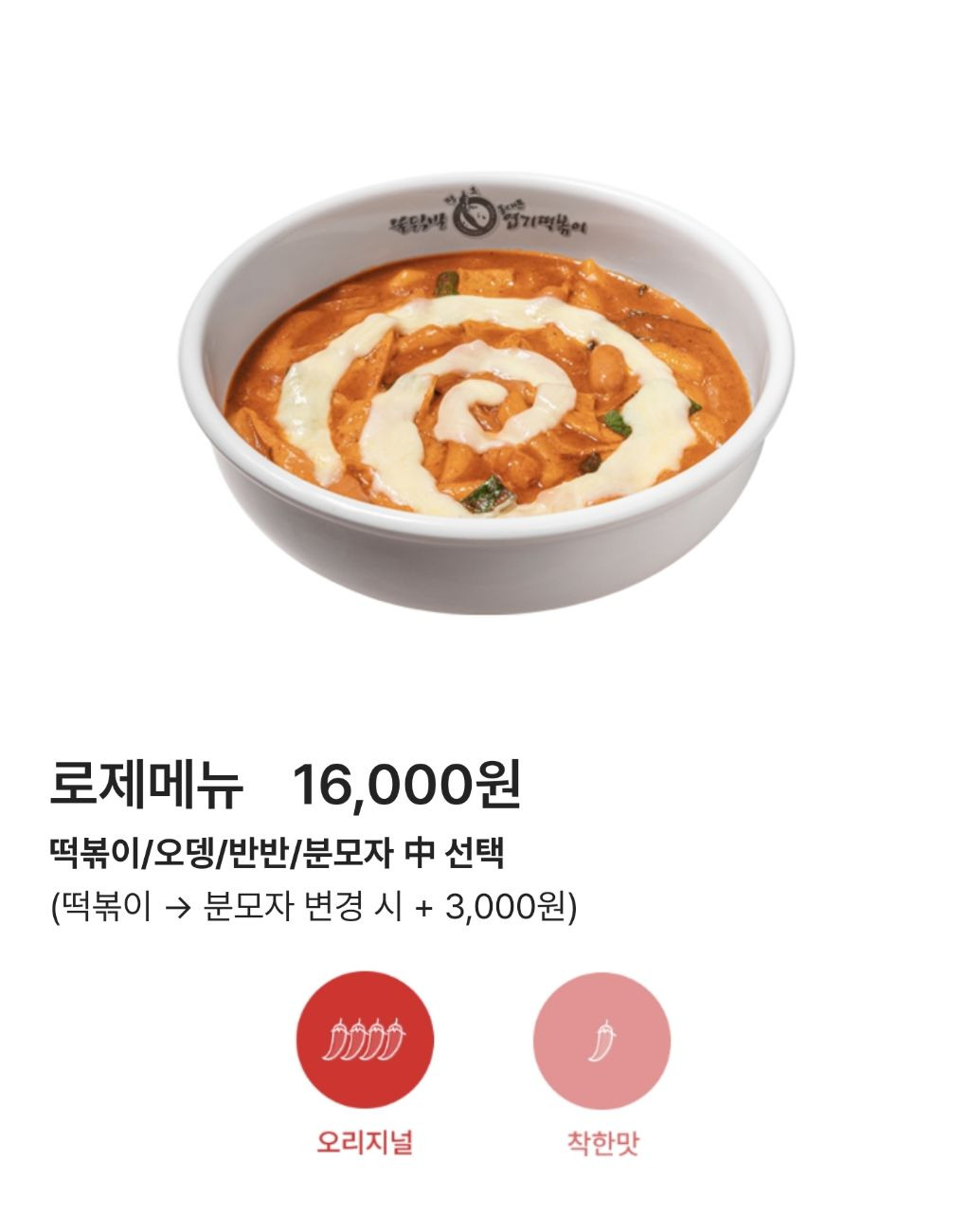
Then we have the **Rose Yeop-tteok**. This was the game-changer a few years back, and it’s still a top-tier choice for anyone who wants the flavor without the third-degree burns. By adding cream to the spicy base, they created something velvety and rich. It’s the ultimate comfort food. If the Original is a heavy metal concert, the Rose is a smooth jazz remix—still got the soul, but much easier on the ears (and the tongue). It’s particularly popular among those who find the standard sauce a bit too sharp or acidic.
“Rose Yeop-tteok is the only way I can handle the heat without crying in front of my coworkers during lunch. It’s creamy, it’s savory, and it doesn’t ruin my afternoon.” — Kim Ji-soo, Seoul office worker
Next on the list are the **Mara** and **Mara Rose** variants. These took the city by storm and haven’t let go. The Mara Yeop-tteok brings that Szechuan peppercorn ‘ma’ (numbing) and ‘la’ (spicy) to the party. It’s oily, it’s fragrant, and it’s packed with extra ingredients like fried tofu skin (yubu) and beef. However, as one fan pointed out on social media this week, there’s a growing concern that the ‘numbing’ factor is being toned down to appeal to a wider audience. Trust me on this: if you want that true Mara kick, you might need to ask for extra spice or hope your local branch is feeling generous with the peppercorns.
The Mara Dilemma: Is the Hype Fading or Just Evolving?
Speaking of the Mara flavor, we need to talk about the **Mara Rose**. This is arguably the most ‘Gen-Z’ item on the menu. It’s a chaotic, beautiful mess of flavors—creamy, spicy, and numbing all at once. It’s heavy, it’s caloric, and it’s absolutely delicious. This has become the go-to for ‘mukbang’ creators and late-night study sessions. It feels like a luxury version of tteokbokki. But is it better than the standard Mara? That’s where the community is split. Some feel the cream masks the complexity of the Mara spices, while others think it’s the only way to make Mara palatable for a long sitting.
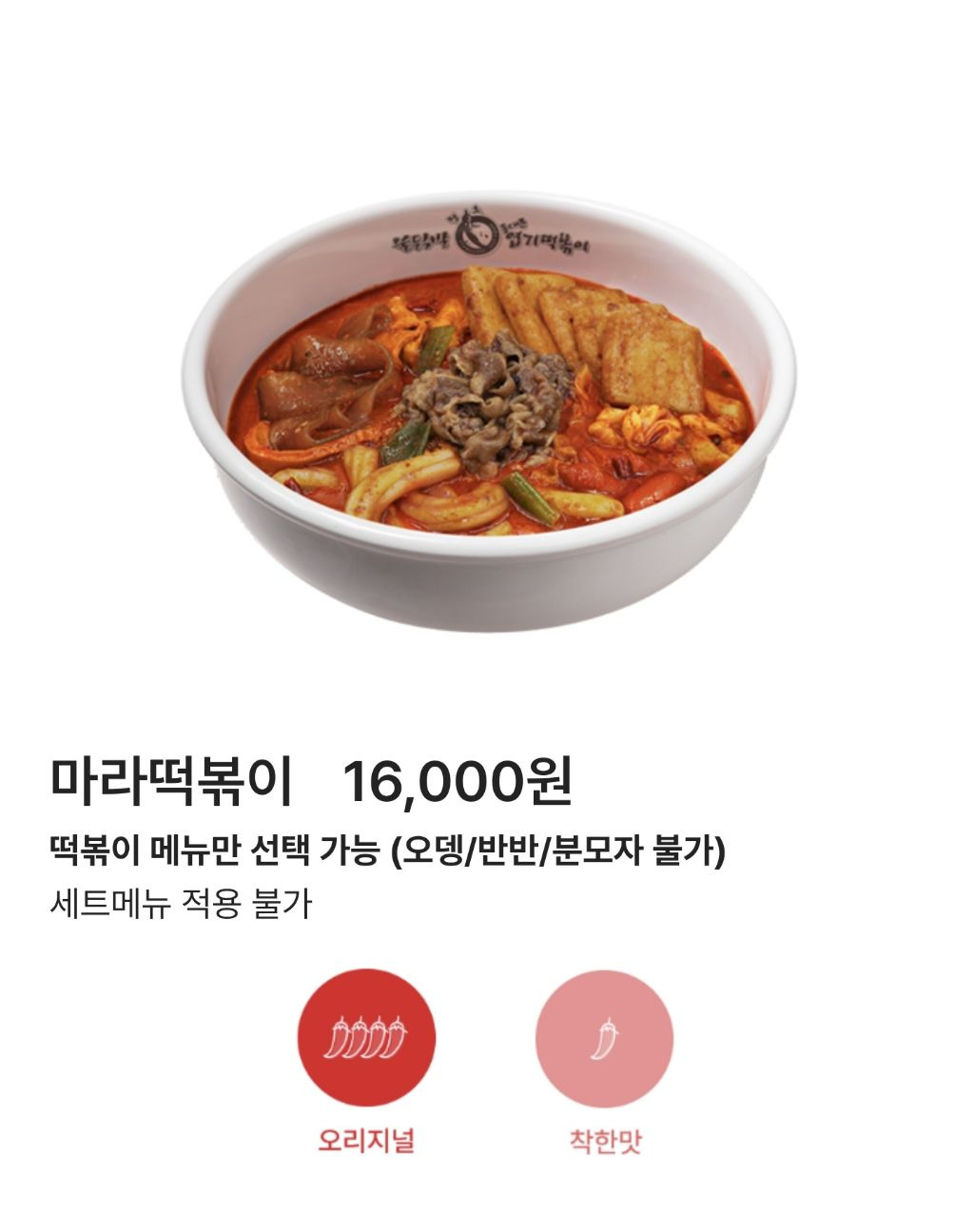
The frustration shared by some fans about the weakening Mara flavor is something I’ve noticed too. Previously, the Mara Yeop-tteok felt like a punch to the face (in a good way). Nowadays, it feels a bit more… polite? If you’re a ‘pig’ for spice like the original poster mentioned, this shift is heartbreaking. We want that tingling sensation that makes you reach for the Danmuji (yellow pickled radish) every two seconds. When a brand starts ‘balancing’ a flavor that was meant to be extreme, it loses a bit of its soul.
“I’m just a regular foodie who’s sad that my favorite Mara Yeop-tteok is losing its edge. The Mara flavor is definitely weaker than it was six months ago. Please bring back the pain!” — Anonymous Instiz User
Despite these complaints, the Mara series remains a dominant force. The addition of ingredients like ‘bun-mo-ja’ (thick potato starch noodles) and ‘kko-chi-eomuk’ (skewered fish cakes) into the Mara base has kept the menu feeling fresh. It’s less about a simple snack now and more about a full-blown hot pot experience delivered in a plastic bowl. If you haven’t tried the Mara Rose with a side of fried squid, you’re missing out on one of the peak culinary experiences.
Toppings are the Main Character: The Art of the Add-on
Let’s be honest: the rice cakes are just the canvas. The toppings are the actual masterpiece. If you order Yeop-tteok without any add-ons, you’re doing it wrong. The most essential, non-negotiable addition is **Chinese Glass Noodles (Dangmyeon)**. These thick, translucent noodles soak up the sauce like a sponge. By the time you get to them, they are flavor bombs that explode in your mouth. In the Mara versions, they are even more critical because they catch all that numbing oil.
Then there’s the cheese. While every bowl comes with a bit of mozzarella, many veterans swear by the ‘Double Cheese’ strategy. There is something incredibly satisfying about pulling a long string of cheese through a spicy pool of sauce. It provides a much-needed fat content to balance the capsaicin. And don’t forget the **Bacon**. Adding bacon to the Rose or Mara Rose versions adds a smoky saltiness that elevates the whole dish from ‘street food’ to ‘gourmet meal.’ It’s a bit of an indulgence, but hey, you’re already eating 2,000 calories, so why stop now?
For the sides, the **Self-Fist Rice (Jumeok-bap)** is a mandatory requirement. You get a bowl of rice, seaweed flakes, and sometimes fish roe or tuna, and you ball them up yourself. Pro tip: don’t just eat them separately. Dip them halfway into the sauce, or better yet, crush them into the leftover sauce at the end. It’s the Korean way of ensuring not a single drop of that precious spicy nectar goes to waste. The crunch of the seaweed against the soft rice and the spicy sauce? *Chef’s kiss*.
“If you aren’t adding Chinese glass noodles to your Mara Yeop-tteok, are you even eating? It’s the law. Also, the fried mandu (dumplings) must be soaked in the sauce for at least five minutes before eating.” — @tteok_lover26
Beyond the Rice Cake: The Cult of Yeopgi Dak-bokkeum-tang
Now, let’s talk about the dark horse of the menu: **Yeopgi Dak-bokkeum-tang** (Spicy Braised Chicken). A lot of people forget that Yeop-tteok actually makes a killer chicken dish. It uses the same base sauce but simmers it with succulent pieces of chicken, potatoes, and carrots. It’s heartier and feels more like a ‘proper’ dinner than the tteokbokki. In fact, there’s a whole subculture of Yeop-tteok fans who *only* order the chicken.
The chicken version is particularly good if you’re planning to have leftovers. While rice cakes can get a bit hard or mushy when reheated, the braised chicken actually tastes better the next day as the spices penetrate deeper into the meat. It’s a bit pricier than the standard tteokbokki, but the portion size is massive. If you’re feeding a group of three or four, the Dak-bokkeum-tang is often the more economical and satisfying choice. It’s the ‘grown-up’ version of the Yeop-tteok experience.
Why is it so good? It’s the potatoes. They get so soft that they almost melt into the sauce, thickening it and adding a starchy sweetness that you don’t get from the rice cakes alone. If you’re feeling adventurous, try ordering the chicken dish at the ‘Original’ spice level and pairing it with a cold bottle of Soju. It’s the ultimate Korean ‘Anju’ (drinking snack). Just make sure you have plenty of water nearby, because the heat from the chicken seems to linger even longer than the tteokbokki.
Surviving the Heat: A Pro-Curator’s Guide to Spice Levels
I get asked this all the time: “Mina, which spice level should I actually get?” Here is my honest breakdown. If it’s your first time, **do not** go above ‘Mild’ (Sun-han-mat). Even the mild version has a kick that will surprise you. If you’re someone who enjoys spicy ramen like Shin Ramyun, you can probably handle the ‘Less Spicy’ (Yeop-tteok-cho-bo) level. This is the sweet spot for most people—it’s spicy enough to give you that endorphin rush but not so spicy that you can’t taste the food.
The ‘Original’ level is for the seasoned veterans. This is where the pain starts to become part of the flavor profile. You’ll need the ‘Coolpis’ (a peach-flavored milk drink) that usually comes with the order. The sugar and dairy in the Coolpis are scientifically designed to coat your tongue and neutralize the spice. Don’t try to be a hero and drink water; it only spreads the capsaicin around. Trust me on this one, the Coolpis is your best friend.
Finally, for the ‘Challenge’ level… well, you’re on your own there. That’s for the people who have lost all sensation in their taste buds or those filming a viral video. It’s less of a meal and more of a physical endurance test. We’re seeing a slight trend toward people moving back down to the ‘Less Spicy’ levels because they want to actually enjoy the nuances of the Rose and Mara flavors. There’s no shame in the mild game!
The Verdict: Mina’s Ultimate Recommendation
So, after all the testing and all the spicy nights, what is my final verdict? If I had to choose one last meal from the Yeop-tteok menu, it would be the **Mara Rose Yeop-tteok** with extra Chinese glass noodles, bacon, and a side of Jumeok-bap. It represents the pinnacle of the brand’s evolution—taking a traditional snack and turning it into a complex, multi-layered feast that hits every taste bud.
Is it worth the hype? Absolutely. Even with the occasional consistency issues or the ‘weakening’ Mara flavor, Yeop-tteok remains the undisputed king of spicy tteokbokki in Korea. It’s a brand that knows its identity and isn’t afraid to lean into the extreme. Whether you’re a spice seeker or a cream-lover, there’s a bowl waiting for you. Just remember to order the glass noodles, keep the Coolpis close, and maybe warn your stomach in advance. Happy eating, everyone!
If you’re looking for a budget-friendly alternative, some local neighborhood spots are trying to mimic the Rose flavor for under 10,000 won, but they rarely capture that specific ‘Yeop-tteok’ funk. Sometimes, you just have to pay the premium for the real deal. Stay spicy!