


There are milestones, and then there are moments that redefine a career. For actor Yoo Ji-tae, a veteran presence in Korean cinema known for his piercing gaze and commanding gravitas, March 6, 2026, marks such an occasion. His latest historical epic, “The Man Who Lived with the King” (왕사남, Wangsanam), officially surpassed 10 million cumulative viewers, etching his name into the exclusive club of ‘천만 배우’ (10 Million Actors) for the very first time in his 28-year illustrious journey. This isn’t just a win for Yoo Ji-tae; it’s a triumph for meticulous filmmaking and the enduring power of a compelling, albeit dark, narrative.
This achievement, coming a brisk 31 days after its highly anticipated release, makes Wangsanam the 34th film in Korean cinematic history, and the 25th homegrown production, to cross this formidable threshold. It’s a significant cultural moment, especially considering it’s the first Korean film to hit this mark since “The Roundup 4” did so approximately two years ago in 2024. As a critic for SYNC SEOUL, I’ve watched countless films chase this elusive number, and few manage it with the artistic integrity and thematic depth that Director Jang Hang-jun’s vision, anchored by Yoo Ji-tae’s transformative performance, brings to the screen. It’s a stark reminder that even in an era dominated by streaming and tentpole franchises, powerful storytelling still has the capacity to draw millions to the cinema.
**[Minor Spoilers Ahead for The Man Who Lived with the King]**
—
**Film:** The Man Who Lived with the King (왕사남)
**Release Date:** February 3, 2026
**Distributor:** Showbox
**Genre:** Historical Drama, Political Thriller
**Starring:** Yoo Ji-tae
**Director:** Jang Hang-jun
**Rating:** 9/10
—
The Premise: Power, Betrayal, and a King’s Demise
“The Man Who Lived with the King” plunges audiences into the tumultuous political landscape of Joseon, centering on the figure of Han Myeong-hoe, a historical power broker whose machinations irrevocably shaped the kingdom’s destiny. The film meticulously details his pivotal role in the dethronement of the young King Danjong, a narrative steeped in ambition, loyalty, and the brutal realities of court politics. It’s a historical drama, yes, but cinematically speaking, it leans heavily into the realm of political thriller, where every whispered word carries the weight of a sword, and every glance is a strategic maneuver. The historical context of Danjong’s tragic reign, marked by intense power struggles and the rise of ambitious officials, provides a fertile ground for such a gripping tale.
Director Jang Hang-jun, known for his sharp storytelling and ability to extract nuanced performances, takes on a challenging period piece here, eschewing romanticized portrayals for a gritty, unvarnished look at power. The film doesn’t shy away from the moral ambiguities of its characters, particularly Han Myeong-hoe, presenting him not as a one-dimensional villain but as a complex architect of power, driven by a blend of personal ambition and what he perceives as a duty to the realm. The tone is somber, reflective of the grave stakes involved, yet punctuated by moments of chilling clarity that reveal the ruthless logic of survival in a cutthroat court. This isn’t a healing drama; it’s a stark, unblinkling examination of the cost of power, a theme that resonates far beyond the Joseon era.
Yoo Ji-tae’s Masterclass: Embodying Han Myeong-hoe
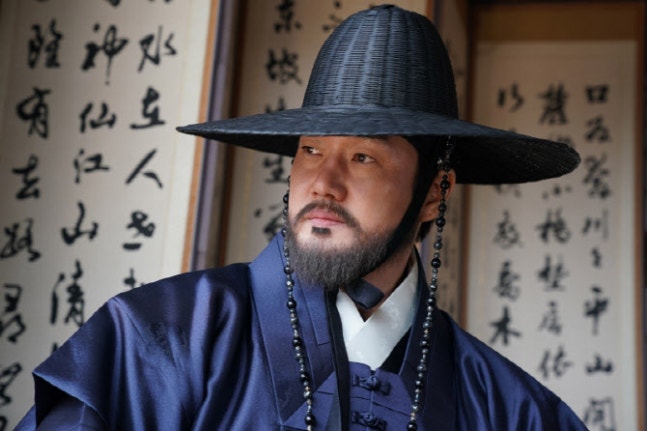
What truly elevates “The Man Who Lived with the King” from a mere historical retelling to a captivating cinematic experience is Yoo Ji-tae’s transformative portrayal of Han Myeong-hoe. From the moment he appears on screen, there’s an undeniable gravitas, a chilling presence that commands attention without needing a single line of dialogue. His very posture, the way he holds himself, speaks volumes about the character’s internal fortitude and external authority. Director Jang Hang-jun’s casting choice was inspired, reportedly stemming from historical accounts describing Han Myeong-hoe as having a “towering physique that people looked up to.” Yoo Ji-tae, with his imposing stature and intense gaze, embodies this description with unsettling accuracy, making the historical figure feel palpable and immediate.
This wasn’t a role Yoo Ji-tae simply walked into; it was a character he meticulously sculpted, demonstrating his profound commitment to his craft. He reportedly gained approximately 5 kilograms, not for vanity, but to craft a more “overbearing physique” that physically manifested Han Myeong-hoe’s formidable presence. This physical transformation was just the beginning. The subtle changes in his facial expressions, the way his eyes narrow when assessing a threat, the deliberate cadence of his speech – these are not accidental. He even suggested specific character settings, emphasizing a cold, fierce atmosphere through his “raised eyebrows and strong impression.” It’s a masterclass in how an actor can contribute to character development beyond the script, shaping the very essence of their role through detailed physical and psychological embodiment. His performance is a stark contrast to his earlier, more romantic roles, showcasing an incredible range that few actors possess.
“유지태 배우가 한명회 한다고 했을 때 솔직히 좀 의아했는데, 영화 보니까 왜 감독님이 그를 택했는지 알겠더라. 그 눈빛 하나로 권력의 냉혹함이 다 느껴짐. 진짜 대단하다!”
— @MovieLover77, TheQoo comments
The intensity Yoo Ji-tae brings to Han Myeong-hoe is reminiscent of his earlier iconic performances, such as in “Oldboy,” where he also portrayed a character driven by complex, often dark, motivations. However, here, the malevolence is far more calculated, rooted in political pragmatism rather than personal vendetta. He meticulously controls his expressions, revealing just enough to hint at the formidable intellect and ruthless ambition simmering beneath the surface. This controlled intensity is what makes his Han Myeong-hoe so terrifyingly effective and utterly compelling to watch. It’s not about grand gestures; it’s about the quiet menace that emanates from every pore, a testament to his long-honed ability to convey immense power through subtle means.
Direction and Cinematography: A Visually Striking Joseon
Jang Hang-jun’s direction is precise and deliberate, creating a visually rich and emotionally taut historical world. The cinematography, rather than simply documenting events, actively participates in the storytelling, serving as a silent narrator of power and vulnerability. Long takes are employed strategically, particularly in crucial court scenes, allowing the tension to build slowly and organically, immersing the audience in the suffocating atmosphere of political intrigue. The framing often isolates characters, emphasizing their solitude in the face of immense power, or positions them against vast, opulent but ultimately cold palace backdrops, underscoring the impersonal nature of the throne and the insignificance of individual lives within its grasp.
The mise-en-scène here is impeccable. Every costume, every prop, every set piece feels authentic and purposeful, contributing to the film’s immersive quality. The attention to historical detail is commendable, from the intricate patterns on the hanboks to the architectural accuracy of the palace interiors. Color grading plays a crucial role too; the palette often leans towards muted, earthy tones, occasionally punctuated by rich, deep hues that signify power or impending conflict, such as the deep reds of official robes or the stark whites of mourning. This deliberate choice avoids the overly vibrant, sometimes anachronistic, aesthetic seen in some historical dramas, opting instead for a gritty realism that grounds the narrative. The director’s choice to not romanticize the period, but to present its stark brutality through sophisticated visual language, is a testament to his artistic vision.

The Narrative Arc: Pacing and Political Chess
The writing, while dense, is largely effective in unraveling the complex web of political alliances and betrayals that defined Danjong’s reign. The narrative doesn’t rush; it takes its time to establish the various players and their motivations, allowing the audience to understand the intricate political chess game being played. The dialogue, steeped in formal historical Korean, is delivered with clarity and impact, avoiding the overly verbose exposition that can sometimes plague period pieces. Instead, much of the exposition is skillfully woven into character interactions and visual cues, trusting the audience to piece together the larger political picture.
However, an unpopular opinion, but the initial pacing might test the patience of some viewers accustomed to more immediate gratification. While the deliberate build-up is essential for establishing the gravity of the events and the slow burn of political machinations, there are moments in the first act where the intricate political maneuverings, while historically accurate, feel a tad too drawn out. The writing shines brightest when it focuses on the psychological warfare between characters, particularly the silent battles waged through glances and subtle shifts in posture. What elevates these scenes is the way the screenplay allows Yoo Ji-tae’s Han Myeong-hoe to dominate without needing to be the loudest voice in the room, letting his strategic brilliance and ruthless efficiency speak for themselves.
“왕사남 보면서 한명회가 왜 그렇게 권력을 탐했는지 좀 더 이해하게 됨. 단순한 악역이 아니라 자기 신념이 있는 사람이더라. 유지태 연기 덕분에 몰입감 최고.”
— @HistoryBuff_K, Naver Movies
Beyond the Box Office: A Critical Examination of Production
While the 10 million viewer count is undoubtedly a cause for celebration, it’s crucial to analyze “The Man Who Lived with the King” not just as a commercial success, but as a piece of cinematic art. The film excels in its historical immersion, transporting viewers to a pivotal era with meticulous detail. The production design, from the grand palace sets to the intricate textiles of the costumes, is simply breathtaking. It’s clear that a substantial budget was allocated, and every won appears to have been utilized to create an an authentic and visually stunning world that feels lived-in and historically accurate. This commitment to verisimilitude is a hallmark of truly great historical dramas, reflecting extensive research and dedication from the entire production team.
The supporting cast, while naturally overshadowed by Yoo Ji-tae’s tour de force, delivers solid performances that effectively anchor the narrative. Their reactions, often subtle and understated, serve to amplify the immense power wielded by Han Myeong-hoe and the fear he inspires. The emotional weight of King Danjong’s predicament, though not always at the forefront, is poignantly conveyed through the performances around him, reflecting the tragedy of a young monarch caught in a ruthless power struggle. The director’s choice to focus on the orchestrator rather than solely the victim provides a fresh, albeit darker, perspective on a well-known historical event, forcing the audience to grapple with the complexities of ambition and survival.
“유지태 배우 필모에 드디어 천만 영화가 생겼다는 게 너무 기쁘다. ‘올드보이’ 때부터 팬이었는데, 왕사남 연기는 진짜 레전드다. 한명회 그 자체였어.”
— @OldBoyFanatic, Twitter (X)
A Few Quibbles: Where the Writing Falters
No film is without its flaws, and “The Man Who Lived with the King,” despite its many strengths, has a few minor quibbles that prevent it from being a perfect masterpiece. As mentioned, the initial setup, while necessary for context, could have been condensed slightly without sacrificing narrative depth. The writing occasionally falters when it leans too heavily on assumed historical knowledge, potentially alienating international viewers or those less familiar with the specific nuances of Joseon politics. While challenging for any historical drama, a slightly more accessible introduction to the various political factions and their motivations could have broadened its appeal further without ‘dumbing down’ the intricate plot.
Furthermore, while the film is a triumph for Yoo Ji-tae, the development of some secondary characters feels somewhat underdeveloped. They serve their purpose in furthering Han Myeong-hoe’s story, acting as crucial cogs in his political machinery, but their individual arcs are less pronounced, making them feel more like pawns than fully fleshed-out individuals with their own complex motivations. This is a common pitfall in character-driven historical epics that prioritize a central figure, but a little more attention to their personal stakes could have added another layer of emotional complexity to the already rich tapestry of the film, making the political machinations even more impactful.
“솔직히 중간에 살짝 지루할 뻔 했는데, 유지태 연기랑 영상미가 다 했음. 특히 그 권력 다툼 씬들은 숨 쉬는 것도 잊을 정도. 근데 초반 전개는 좀 느리긴 했어.”
— @DramaCritic_L, DC Gallery
The Final Verdict: A Reigning Success
“The Man Who Lived with the King” is not just a film; it’s a monumental achievement for Korean cinema and, more specifically, for Yoo Ji-tae, cementing his status as one of the industry’s most versatile and compelling actors. It’s a testament to the power of dedicated craftsmanship, both in front of and behind the camera, proving that a historically rich narrative, when executed with precision and passion, can still capture the hearts and minds of millions. The film offers a compelling, often chilling, exploration of ambition, power, and the human cost of political maneuvering, making it a powerful and thought-provoking cinematic experience.
The meticulous direction by Jang Hang-jun, stunning cinematography, and a truly career-defining performance from Yoo Ji-tae make this a must-watch for anyone interested in historical dramas, political thrillers, or simply exceptional acting. It’s a film that demands your attention and rewards it with a profound, albeit dark, look into a pivotal moment in Korean history. This isn’t just a box office success; it’s a critical darling that deserves every bit of its 10 million viewer crown, solidifying its place as a significant entry in the canon of Korean historical epics. It stands as a powerful example of how a well-told story, backed by incredible talent, can transcend genre and appeal to a broad audience.
Rating: 9/10
Watch if: You appreciate nuanced historical dramas, intense political intrigue, and transformative acting performances. Fans of complex character studies and films that delve into the darker aspects of human ambition will be particularly enthralled.
Skip if: You prefer lighthearted fare, struggle with slower, more deliberate pacing in historical epics, or are not keen on narratives with morally ambiguous protagonists.
What did you think of Yoo Ji-tae’s Han Myeong-hoe? Did his performance captivate you as much as it did me? Let me know your thoughts in the comments — spoiler warnings appreciated!