


The Duality of Terror: Jang Seung-jo’s Career-Defining Turn
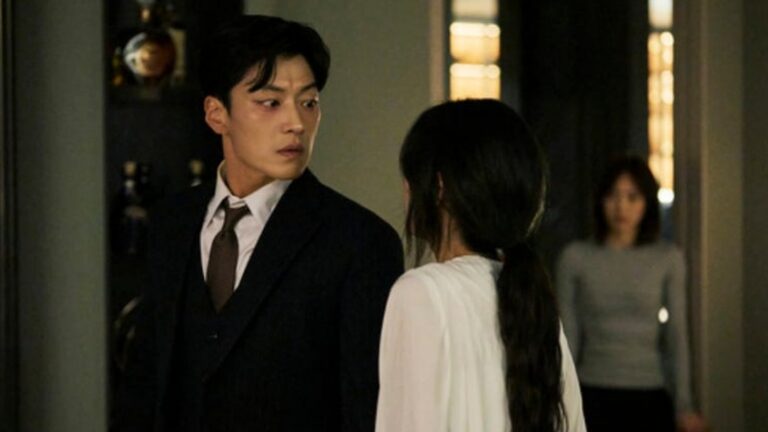
Cinematically speaking, the year has already delivered some heavy hitters, but nothing quite prepares you for the sheer visceral discomfort of Netflix’s latest original, You Killed (당신이 죽였다). While the premise of domestic thrillers often leans on tired tropes of ‘the husband with a secret,’ director Lee Chang-hee flips the script by placing the weight of the narrative on a performance so transformative it borders on the grotesque. Jang Seung-jo, an actor who has spent years perfecting the ‘clean-cut gentleman’ archetype, has officially shattered that mold. His portrayal of two diametrically opposed characters—a sociopathic domestic abuser and a Joseon-jok (ethnic Korean from China) illegal immigrant—is a masterclass in psychological horror that has left the Korean internet, particularly communities like Instiz, in a state of collective shock.
What makes this performance particularly ‘살벌’ (chilling) isn’t just the physical transformation, but the way Jang manipulates the viewer’s sense of safety. As the husband, he presents a version of toxic masculinity that is terrifyingly recognizable: the ‘love-bomber’ who uses affection as a cage. He plays the obsessive, possessive husband with a predatory stillness. When he is on screen, the air feels thin. Then, in a jarring pivot that showcases his incredible range, he appears as an undocumented worker, adopting a completely different vocal register, posture, and gaze. It is a dual role that doesn’t just show off his acting chops; it serves as the very engine of the drama’s suspense, forcing the audience to look for the monster in the familiar and the human in the marginalized.
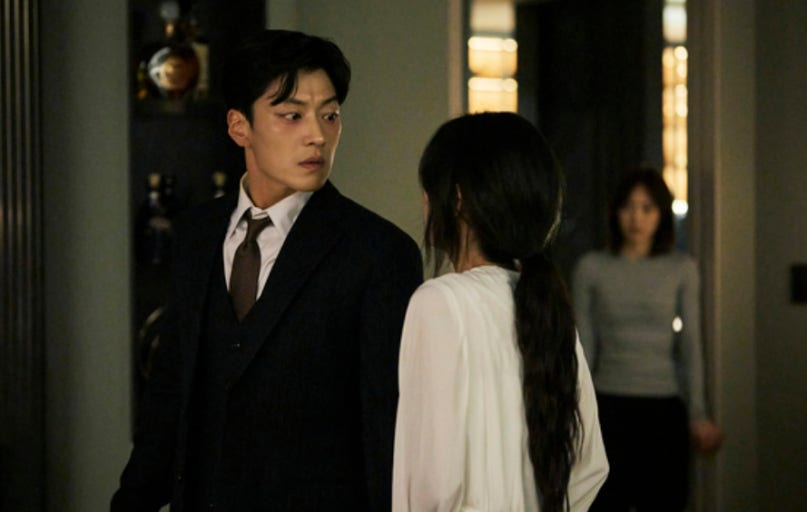
“I literally had to turn off the lights and sit in silence after episode three. Jang Seung-jo’s eyes… they aren’t the eyes of the actor I knew from his previous roles. He looks like he’s actually possessed. The way he switches from a doting husband to a monster in seconds made my skin crawl.” – Instiz User
A Narrative of Violence: Why ‘You Killed’ Isn’t Your Typical Thriller
The writing in You Killed falters when it tries to engage with the broader police procedural elements, but it excels whenever it focuses on the claustrophobic reality of domestic abuse. This is a ‘healing drama’ in reverse—it’s a wounding drama. It exposes the scars that society prefers to keep covered. The script doesn’t shy away from the gritty details of systemic failure, showing how characters are trapped not just by individual villains, but by a lack of social safety nets. By centering the story on domestic violence, the creators have issued a bold, albeit triggering, statement on the current state of gendered violence in Korea. It’s a difficult watch, and the ‘PTSD warning’ circulating on social media is not hyperbole; it is a necessary precaution for a work this unflinching.
Beyond the central conflict, the drama explores the themes of identity and ‘the other’ through the illegal immigrant subplot. Here, the writing finds its most poignant moments. We see the intersection of class, race, and legality, and how these factors strip a person of their humanity before they even commit a crime. Jang Seung-jo’s second character serves as a mirror to his first; while the husband is a monster protected by his social status and ‘perfect’ exterior, the immigrant is a man treated as a monster despite his desperation. This thematic layering elevates You Killed from a standard binge-watch to a piece of social commentary that demands a seat at the table of serious film criticism.
The Aesthetics of Pain: Analyzing the Cinematography
The mise-en-scène in You Killed is deliberately suffocating. The director’s choice to use tight, medium-close shots during the domestic scenes creates a sense of entrapment that mirrors the protagonist’s experience. The color grading is equally intentional. While many recent thrillers opt for a high-contrast, neon-noir look, You Killed utilizes a sickly, desaturated palette—lots of bruised purples, jaundiced yellows, and cold, clinical greys. It feels like you’re watching the story through a layer of grime, which perfectly complements the moral ambiguity of the characters. Even the lighting in the couple’s ‘perfect’ home is harsh and artificial, suggesting that their domestic bliss is merely a stage play.
Technically, the transition between Jang’s two roles is handled with impressive subtlety. There are no flashy, high-budget CGI transformations here; it’s all in the actor’s physicality and the way the camera captures his micro-expressions. In the scenes where the two characters ‘interact’ through the narrative structure, the editing is seamless, never drawing too much attention to the technical wizardry. Instead, it allows the psychological weight of the duality to sink in. The production value is clearly high, but it’s a quiet wealth—invested in textures, sound design, and atmosphere rather than explosive set pieces. The sound of a door clicking shut has never sounded more ominous.
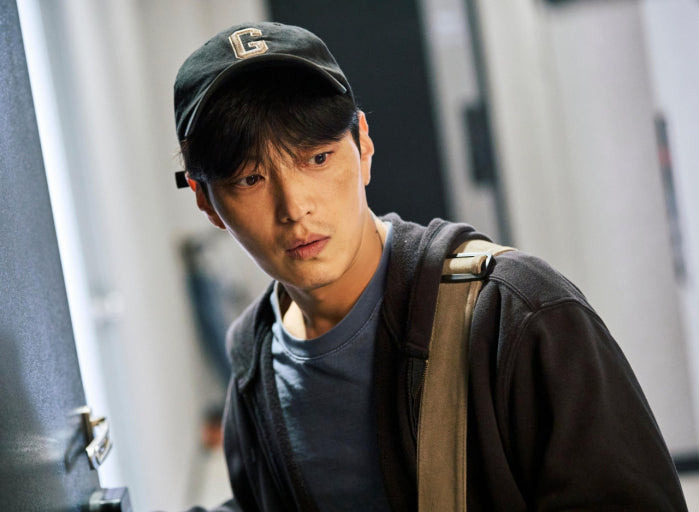
“Watching this as someone who usually loves Jang Seung-jo is a trip. I hate him so much in this role, which I guess is the highest compliment I can pay him. The Joseon-jok character’s accent and the way he carries his shoulders… it’s a complete transformation. Warning to everyone: the domestic violence scenes are extremely realistic.” – Anonymous Viewer on K-Drama Forum
Social Media Erupts: The PTSD Warning and Viewer Reactions
Since its release, You Killed has dominated the trending charts on Netflix Korea, but the conversation surrounding it is markedly different from the usual fan-girling over lead actors. On platforms like Instiz and various drama cafes, the primary sentiment is one of awe mixed with genuine distress. Users are sharing ‘survival guides’ for watching the show, advising others to take breaks and skip specific timestamps. This isn’t just because of the gore—of which there is plenty—but because of the emotional accuracy of the abuse. The drama captures the gaslighting, the isolation, and the cyclical nature of violence with a precision that is rare for the genre.
Unpopular opinion, but I believe this level of intensity is exactly what the K-drama industry needed. For too long, we’ve sanitized ‘bad guys’ by giving them tragic backstories or making them conventionally attractive to the point of distraction. In You Killed, Jang Seung-jo’s ‘husband’ character is handsome, yes, but the camera never lets you forget that his beauty is a weapon. It’s a deconstruction of the ‘perfect male lead’ trope that has defined Hallyu for decades. Fans are noticing this shift, with many commenting that they can no longer look at Jang’s previous romantic roles the same way. This is the mark of a truly successful antagonist—he has permanently altered the audience’s perception of the actor.
Breaking the ‘Flower Boy’ Mold
Jang Seung-jo’s trajectory to this point has been fascinating to watch. From his early days in musical theater to his breakout roles in dramas like The Good Detective and Strangers Again, he has always possessed a certain sharpness. However, You Killed represents a total abandonment of vanity. To play the illegal immigrant character, he reportedly lost a significant amount of weight and spent weeks working with dialect coaches to ensure the accent was authentic without falling into caricature. This dedication pays off in every frame. It’s a masterclass in how an actor can use their body as a tool of storytelling, shifting from the rigid, entitled posture of a wealthy abuser to the wary, hunched-over stance of a man living in the shadows.
The chemistry—if you can call it that—between Jang and the female lead is the dark heart of the series. Their scenes together are a choreography of fear and control. Every time he touches her, even in a seemingly ‘loving’ way, the tension in the room spikes. It’s a testament to the direction that these moments feel more dangerous than the actual action sequences. By casting an actor known for his charm, the production team tapped into a specific kind of horror: the monster who looks like a prince. This subversion of expectations is what makes the drama so addictive, even as it makes your stomach turn.
“The scene where he’s pretending to be the perfect lover in front of her friends, but then you see his expression change the moment they turn their backs… I actually gasped. Jang Seung-jo is definitely winning the Baeksang for this role. It’s not even a question.” – Twitter/X User @kdramalover
The Final Verdict: Is It Worth the Emotional Toll?
What elevates this series above the crowded field of Netflix originals is its refusal to provide easy catharsis. You Killed doesn’t offer a simple ‘happily ever after.’ Instead, it forces the viewer to sit with the consequences of violence and the difficulty of escape. The OST is sparse, relying more on ambient noise and discordant strings than melodic ballads, which keeps the audience in a constant state of unease. While the subplot involving the illegal immigrant occasionally feels like it belongs in a different movie, the thematic resonance eventually brings the two worlds together in a final act that is as devastating as it is inevitable.
If you have a high tolerance for dark themes and want to see an actor at the absolute peak of his powers, You Killed is essential viewing. However, if you are currently struggling with your mental health or have personal experience with domestic violence, please heed the warnings. This is not ‘entertainment’ in the traditional sense; it is an interrogation of the darkness that lives next door. Jang Seung-jo has delivered the performance of a lifetime, but it comes at a cost to the viewer’s peace of mind. Rating: 9/10—a masterpiece of discomfort that will be talked about for years to come.
Drama: You Killed (당신이 죽였다)
Episodes: 8/8
Network: Netflix
Genre: Psychological Thriller, Crime, Noir
Cast: Jang Seung-jo, Lee Som, Park Ji-hwan
Director: Lee Chang-hee
Writer: Kim Bo-ra
Rating: 9/10