


Na Hong-jin’s ‘Hope’: A 10 Million Viewer Gamble?
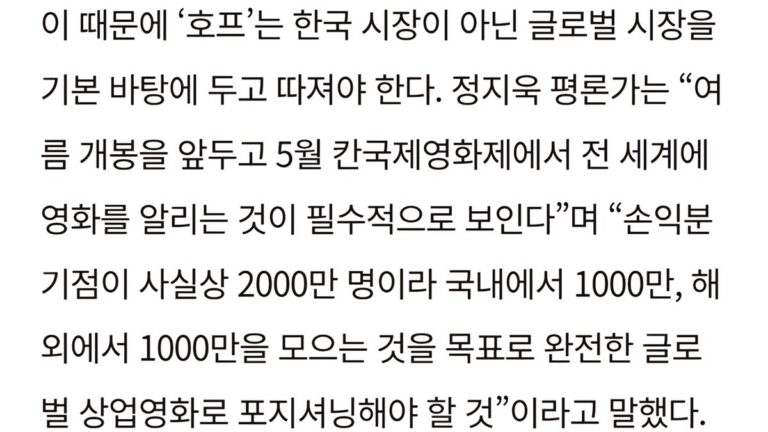
The Korean film industry is no stranger to high stakes, but whispers surrounding Na Hong-jin’s upcoming feature, ‘Hope’ (호프), suggest a gamble of unprecedented proportions. News circulating online, particularly on platforms like TheQoo, indicates that this highly anticipated project is estimated to require an astonishing 10 million theatrical admissions just to break even. For context, reaching that milestone is akin to striking cinematic gold, a feat achieved by only a handful of films in Korean box office history. It begs the question: is this a testament to the director’s ambition or a terrifyingly risky bet on an already strained market?
As a critic, I’m always intrigued by the intersection of art and commerce. However, the sheer audacity of this reported break-even point for ‘Hope’ is frankly dizzying. It’s a number that sends shivers down the spine of even the most seasoned industry veterans. While Na Hong-jin’s name alone carries immense weight and promise, demanding such an astronomical return before even a single won of profit can be considered is a heavy burden to place on any film, regardless of its pedigree. The buzz is palpable, but so is the underlying anxiety. Cinematically speaking, the pressure on this project must be immense, and it raises crucial questions about the sustainability of such large-scale productions.
Na Hong-jin: A Director’s Legacy of Darkness
Na Hong-jin isn’t just a director; he’s a cinematic force of nature, a storyteller who drags audiences into the abyss and leaves them breathless. His filmography is a masterclass in visceral tension and psychological dread. His 2008 debut, ‘The Chaser’ (추격자), didn’t just announce a new talent; it exploded onto the scene, redefining the serial killer thriller with its relentless pace and gritty realism. Then came ‘The Yellow Sea’ (황해) in 2010, an equally brutal and sprawling crime epic that cemented his reputation for unflinching violence and intricate plotting.
But it was ‘The Wailing’ (곡성) in 2016 that truly solidified his place as a visionary. That film transcended genre, blending folk horror, supernatural mystery, and existential dread into a dizzying, unforgettable experience. Critics raved, audiences were terrified, and it became a global phenomenon, proving that Korean cinema could deliver sophisticated, terrifying narratives unlike anything seen before. His signature style—meticulous direction, stunning cinematography that often uses natural, oppressive landscapes, and a knack for extracting raw, primal performances from his actors—is unmistakable. Given this track record, it’s understandable why expectations for ‘Hope’ are stratospheric, yet the financial demands still feel like an entirely different beast.
The Astronomical Benchmark: 10 Million Viewers
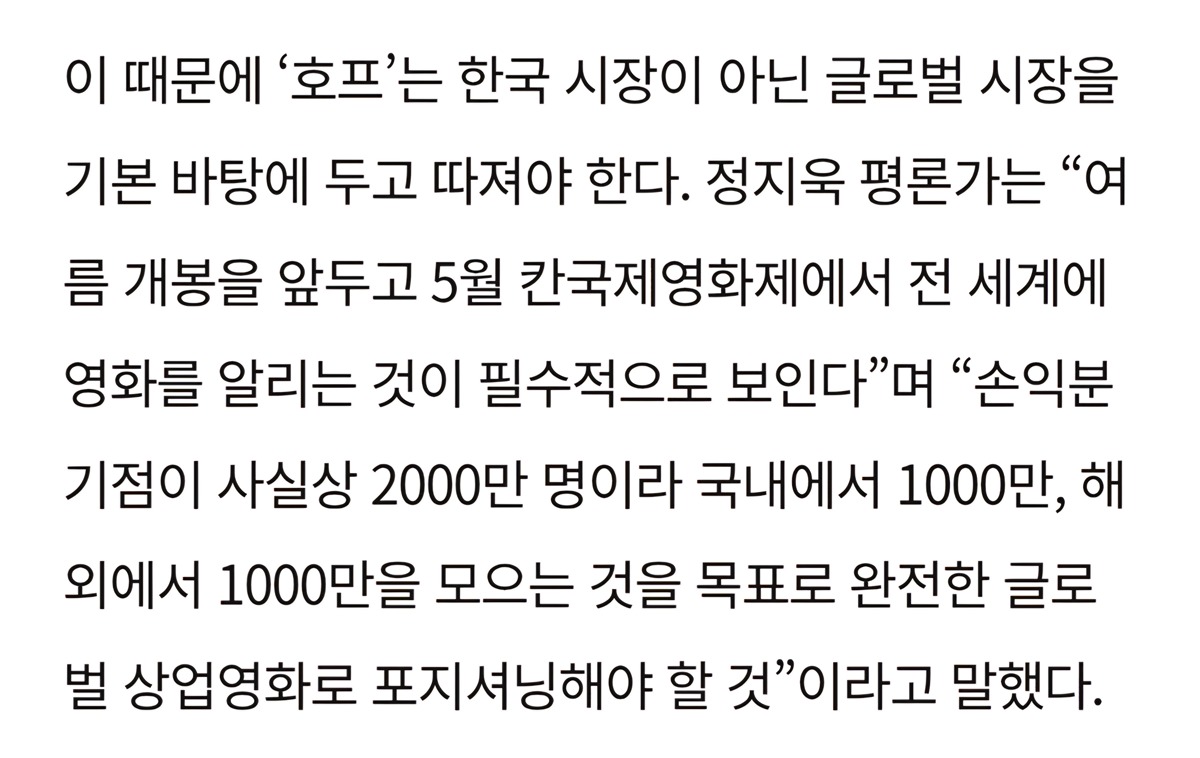
To put 10 million viewers into perspective for the Korean film market: it’s not just a big number; it’s a legendary one. Achieving this milestone places a film in an exclusive club, alongside titans like ‘Roaring Currents,’ ‘Extreme Job,’ and ‘Parasite.’ These films are cultural touchstones, events that captured the national imagination and often spawned years of discussion. They typically feature compelling narratives, widespread appeal, and often, exceptional word-of-mouth that propels them far beyond initial projections. This isn’t just about critical acclaim; it’s about becoming a phenomenon.
The vast majority of successful Korean films, even those that are critically lauded and financially successful, rarely breach the 5-million mark. To double that figure requires a perfect storm of elements: a compelling story, stellar performances, brilliant direction, effective marketing, and often, a touch of pure luck. The Korean box office, while robust, is also highly competitive. Every weekend sees new releases vying for audience attention, and sustaining momentum for weeks on end to reach 10 million viewers is an arduous journey. This isn’t simply a matter of making a good film; it’s about crafting an undeniable cultural event.
The Anatomy of a Blockbuster Budget
Why would ‘Hope’ need such an astronomical break-even point? The answer, undoubtedly, lies in its production budget. While specific figures are under wraps, a 10-million-viewer target suggests a production cost easily soaring into the tens of billions of Korean won, possibly even approaching the 30 billion won mark or higher. Such a budget could be attributed to a confluence of factors: A-list talent, extensive international location shoots, groundbreaking CGI, or a prolonged and meticulous post-production process that aligns with Na Hong-jin’s perfectionist tendencies.
Considering Na Hong-jin’s previous works, which often feature elaborate action sequences, intricate practical effects, and a commitment to creating immersive, often terrifying, worlds, a high budget isn’t entirely surprising. ‘The Wailing,’ for instance, involved complex makeup effects, detailed set pieces, and a cast that delivered physically demanding performances. For ‘Hope,’ if it leans into similar genre territory – which seems likely given the director – the cost of realizing his vision could indeed be immense. Production values are a hallmark of his films, but this level of financial commitment demands not just quality, but undeniable, universal appeal.
Fan Frenzy and Industry Pressure
The news of ‘Hope’s’ projected break-even has sent ripples through online communities. On platforms like TheQoo, discussions are buzzing with a mix of excitement, trepidation, and outright disbelief. Fans of Na Hong-jin are simultaneously thrilled by the prospect of his return and anxious about the immense pressure on the film. Here’s a snapshot of the sentiment:
“1000만이라니… 나홍진 감독님 작품은 무조건 보겠지만, 이 숫자 들으니 어깨가 너무 무겁네요. 영화는 영화로 봐야 하는데 자꾸 손익분기점이 생각날 것 같아.”
(“10 million? I’ll definitely watch Director Na Hong-jin’s film, but hearing that number, my shoulders feel heavy. I want to just enjoy the movie, but I think I’ll keep remembering the break-even point.”) – TheQoo user
“곡성 때도 장난 아니었는데, 이번엔 진짜 역대급 스케일인가 보다. 감독님 이름값 생각하면 가능할 수도 있지만, 요즘 극장가 분위기가… 쉽지 않을 듯.”
(“Even ‘The Wailing’ was no joke, but this time it seems like a truly unprecedented scale. Considering the director’s reputation, it might be possible, but given the current cinema climate… it won’t be easy.”) – TheQoo user
The industry, too, is watching closely. Every major studio and independent production house will be scrutinizing ‘Hope’s’ performance. A success could embolden similar large-scale investments, potentially pushing the boundaries of what’s financially viable in Korean cinema. Conversely, if ‘Hope’ struggles to meet its target, it could lead to a more conservative approach to funding ambitious, high-budget projects, especially those outside of established franchises. The stakes extend far beyond the film itself; they touch upon the future direction of Korean commercial filmmaking.
Leah’s Unpopular Opinion: Art vs. Commerce, A Dangerous Dance
Unpopular opinion, but I find this 10 million viewer target for ‘Hope’ deeply concerning. While Na Hong-jin is undeniably a brilliant filmmaker, this kind of financial pressure risks stifling the very artistic innovation that makes his work so compelling. Directors like him thrive on creative freedom, on pushing boundaries and challenging conventions. When a film is burdened with such an enormous financial hurdle from the outset, every creative decision, every narrative beat, every casting choice becomes scrutinized not just for artistic merit, but for its potential to appeal to the broadest possible audience. That’s a dangerous dance between art and commerce.
What elevates a Na Hong-jin film is often its uncompromising vision, its refusal to pander or simplify. Will the need to attract 10 million people dilute that edge? Will the studio demand certain narrative concessions or character arcs designed for mass appeal rather than artistic integrity? The writing falters when it becomes too focused on marketability. I hope ‘Hope’ proves me wrong, but the sheer weight of expectation here could easily crush the very essence of what makes a Na Hong-jin film a Na Hong-jin film. It’s a tightrope walk with very little room for error.
The Cinematic Gamble: Implications for K-Film
The outcome of ‘Hope’ will serve as a significant barometer for the Korean film industry. In recent years, we’ve seen a trend towards bigger budgets for genre films, particularly thrillers and action epics, often fueled by global streaming platforms eager for high-quality content. However, the theatrical market remains crucial for establishing a film’s cultural impact and profitability. ‘Hope’ represents the apex of this trend in the domestic theatrical space.
If ‘Hope’ manages to hit its 10-million-viewer target, it will be a resounding affirmation of Na Hong-jin’s star power and the audience’s appetite for grand-scale Korean thrillers. It could usher in an era where more audacious, high-budget projects are greenlit, confident in their ability to draw massive crowds. However, if it falls short, it might trigger a period of introspection and caution, perhaps pushing the industry back towards more moderately budgeted, character-driven dramas or smaller, experimental films that rely less on sheer spectacle. The director’s choice to embark on such a financially demanding project is not just a personal challenge; it’s a test case for the entire ecosystem of Korean commercial cinema.
“솔직히 나홍진 감독님이면 믿고 보는데, 천만은 진짜… 넘사벽 숫자 아닌가? 걱정되면서도 너무 기대돼. 제발 성공해서 한국 영화사에 또 한 획을 그어주시길.”
(“Honestly, with Director Na Hong-jin, I trust him completely, but 10 million… isn’t that a truly insurmountable number? I’m worried but also so excited. I really hope it succeeds and marks another milestone in Korean film history.”) – TheQoo user
Final Verdict: Awaiting the Unveiling
‘Hope’ is shaping up to be more than just a film; it’s a cultural event, a financial tightrope walk, and a litmus test for the future of Korean blockbusters. Na Hong-jin’s reputation for delivering intense, meticulously crafted cinema is undeniable, and the prospect of his next vision is thrilling. But the shadow of that 10-million-viewer break-even point looms large, adding a layer of suspense that transcends the narrative on screen.
As critics, we often champion artistic integrity, but we also understand the harsh realities of the market. ‘Hope’ is the embodiment of this tension. Will it be a masterclass in blockbuster filmmaking that defies the odds, or a cautionary tale of ambition outstripping financial viability? Only time will tell once the film is released, but one thing is certain: all eyes will be on Na Hong-jin and ‘Hope’ in 2026. This isn’t just a movie; it’s a monumental moment for Korean cinema.