


The Viral Debate: Who is the Ultimate ‘Hard’ Boss?
Every K-drama fan has, at some point, fantasized about working in one of those high-ceilinged, glass-walled offices in Seoul. We imagine the sleek suits, the dramatic elevator exits, and the high-stakes meetings. But a recent viral post on a major Korean community board has brought us back to earth with a terrifyingly relatable question: Which actor would be the most exhausting, soul-crushing, yet ultimately rewarding boss to work for? With nearly 5,000 views and a flurry of passionate comments within hours, the consensus wasn’t about who is ‘mean,’ but rather who is so incredibly competent that you’d be forced to level up your own game just to survive the day. We are talking about the ‘learn while crying’ tier of mentorship.
Cinematically speaking, the ‘tough boss’ is a staple trope, but what these netizens are discussing goes deeper than script-level archetypes. They are looking at the aura, the diction, and the sheer professional gravity of actors like Kim Mu-yeol, Lee Sung-min, and Go Hyun-jung. These aren’t just bosses who yell; these are bosses who see through your half-baked PowerPoint presentation with a single glance. As a critic who has spent years analyzing the power dynamics of K-drama hierarchies, I find this fascination fascinating. It’s a testament to how these actors have blurred the lines between their most iconic authoritative roles and their real-world public personas.
“If Kim Mu-yeol looked at my report and just went ‘Is this the best you could do?’, I would literally evaporate. But then I’d stay up all night fixing it because I wouldn’t want to disappoint him twice. That’s the trap.” — Anonymous netizen on TheQoo
The Ice Queens: Go Hyun-jung and Lee Bo-young
Starting at the top of the ‘Intimidation Tier,’ we have Go Hyun-jung. Even today, her performance as Mishil in Queen Seondeok remains the gold standard for calculated, terrifying authority. But it’s her more modern roles—characters who navigate the corporate or social ladders with surgical precision—that make her a top pick for this list. Working for a Go Hyun-jung type of boss means your desk must be spotless, your research must be flawless, and you must anticipate her needs before she even knows she has them. You’d probably cry in the bathroom at least twice a week, but by the end of the year, you’d be the most efficient person in the industry.
Then there’s Lee Bo-young. Her characters often possess a sharp, whip-smart intellect that doesn’t suffer fools. Think back to the steely resolve she showed in Agency. She’s the kind of boss who doesn’t raise her voice; she just lowers the temperature in the room. Her criticism would be clinical and undeniably correct. It’s that ‘undeniably correct’ part that hurts the most. You can’t even be mad at her because she’s right. Analyzing her performance style, Lee Bo-young uses micro-expressions to convey disappointment, which is far more effective than any shouting match. It’s the high-level psychological warfare of the corporate world.
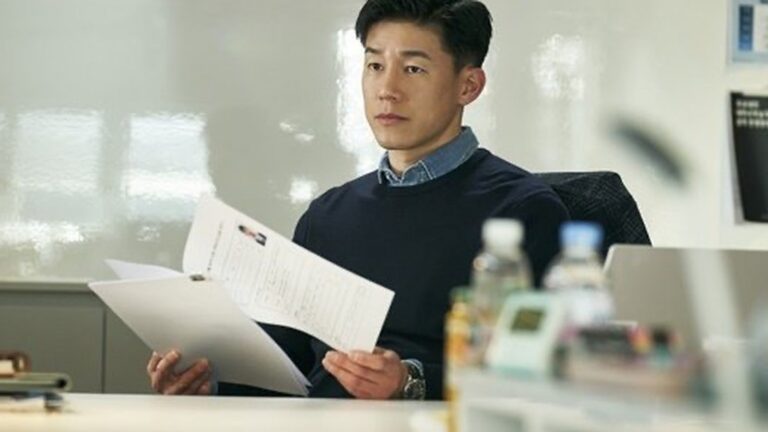
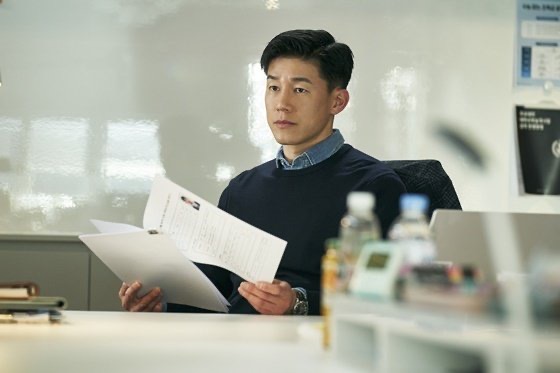
The Workaholic Powerhouses: Kim Mu-yeol and Yoo Ji-tae
Kim Mu-yeol has this specific energy—a mixture of elite education, physical fitness, and zero patience for inefficiency. Whether he’s playing a judge or a high-stakes lawyer, his diction is so sharp it could cut glass. Netizens frequently point out that he looks like the type of boss who would be at the office at 6:00 AM after a 10km run, expecting you to be just as energized. The ‘bbak-se-gi’ (intensity) here comes from the sheer pace. You aren’t just learning; you are sprinting to keep up with a man who seems to have 28 hours in his day.
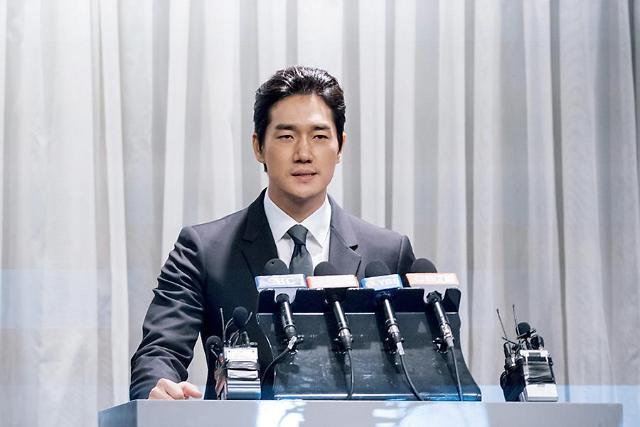
Yoo Ji-tae, on the other hand, brings a more imposing, physical presence to the boss archetype. His broad shoulders and deep, resonant voice create a natural gravity. In Money Heist: Korea or even his older, darker roles, there’s a sense that he’s always three steps ahead of everyone else. Working for him would feel like being part of a grand chess match. You’d learn the art of the ‘big picture,’ but the pressure of not being a weak link in his master plan would be immense. It’s a masterclass in strategic thinking, provided you don’t collapse from the stress of his expectations first.
“Lee Sung-min wouldn’t even have to say anything. He’d just give you that look from ‘Misaeng’ or ‘Reborn Rich’ and you’d know you’re a failure. But then he’d probably buy you a drink after work and tell you how to fix it. That’s the most dangerous kind of boss.” — K-Drama fan comment
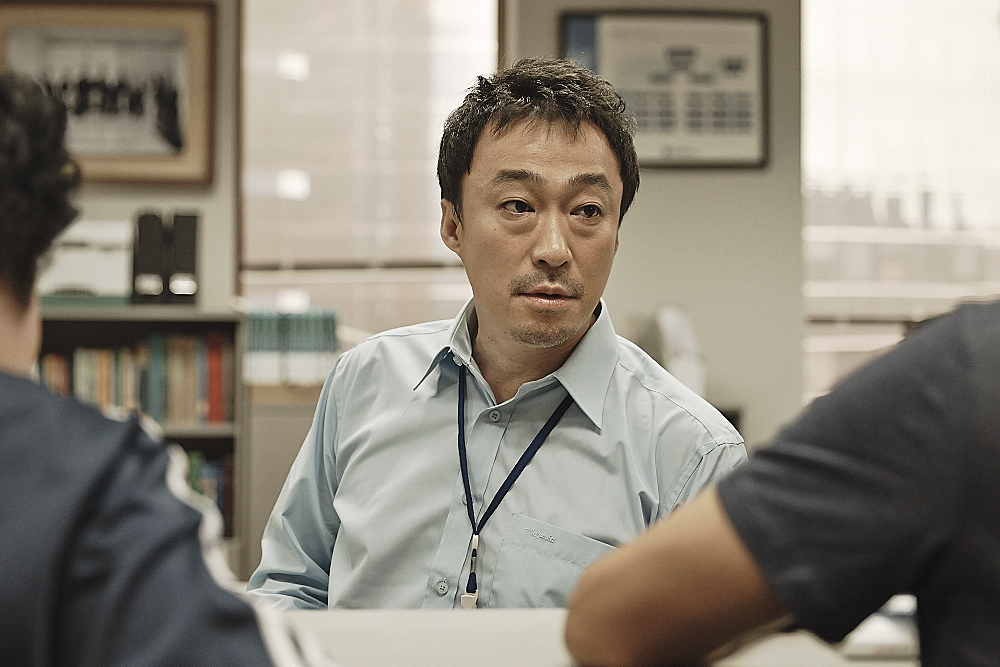
The Veteran Mentors: Lee Sung-min and Kwon Hae-hyo
Lee Sung-min is perhaps the most ‘realistic’ entry on this list. His portrayal of Oh Sang-sik in Misaeng redefined the ‘K-boss’ for a generation. He’s the boss who is overworked, perpetually tired, and incredibly demanding, yet he possesses a core of integrity that makes you want to follow him into battle. In his more recent projects, he’s continued to refine this ‘grumpy but brilliant’ persona. The intensity here isn’t about ego; it’s about the work. He’s the boss who will rip your draft to shreds but then stay late to help you rewrite it. It’s a brutal, exhausting form of love that produces the best workers in the business.
Kwon Hae-hyo is the ‘Final Boss’ of industry experience. He has this effortless way of delivering lines that make him sound like he’s seen everything and is impressed by nothing. His characters often serve as the moral or professional compass of a drama. Working for him would be like an apprenticeship with a master craftsman. The ‘hard’ part isn’t that he’s mean—it’s that his standards are so high because he truly respects the craft. You’d be learning from decades of institutional memory, and he’d spot a shortcut or a lie before you even finished speaking. It’s the kind of mentorship that changes your entire career trajectory.
The Chaotic Geniuses: Ra Mi-ran and Hwang Seok-jeong
Not all tough bosses are cold or stoic. Ra Mi-ran represents the ‘Tiger Boss’ who is loud, fast-paced, and incredibly charismatic. She’s the boss who would have a million ideas a minute and expect you to execute all of them by lunch. Her energy is infectious but draining. The learning curve here is about adaptability. You’d have to learn how to filter the genius from the chaos, and you’d have to do it while laughing at her jokes. It’s a high-energy environment where the ‘crying’ comes from sheer exhaustion and the fear of missing a beat.
Hwang Seok-jeong is the ultimate wildcard. Known for her eccentric and highly detailed character work, a boss modeled after her would be unpredictable. One day she’s focused on the smallest aesthetic detail, the next she’s overhauling the entire company strategy. You’d learn how to think outside every possible box. It’s not a traditional corporate ‘hardness,’ but a creative intensity that demands total mental flexibility. As a critic, I’ve always admired how Hwang can dominate a scene with just her presence; imagine that presence directed at your quarterly reports.
Why We Crave This Kind of ‘Hardship’
Why did this post resonate so much with the public? In a world of quiet quitting and workplace boundaries, there is still a deep-seated respect for the ‘Master’ (Myeong-in). We live in an era where mediocrity is often shielded by politeness, but these actors represent a fantasy of brutal honesty and excellence. The ‘cry-learn’ phenomenon is about the desire for growth. We want the boss who is ‘hard’ because they care about the output, not because they enjoy the power trip. We see in these actors the embodiment of professional perfection.
Unpopular opinion, but I think we need more of this ‘Lee Sung-min energy’ in the real world. Not the toxic overwork, but the uncompromising commitment to doing a job well. When we watch these actors, we aren’t just seeing a character; we are seeing the result of their own ‘cry-learning’ in the acting industry. You don’t get to be a Go Hyun-jung or a Yoo Ji-tae by taking the easy path. Their ‘boss energy’ is authentic because it’s backed by their own career-long discipline. That’s why we’d be willing to work for them—because we know they’ve already done the work themselves.
“The difference between a bad boss and a ‘hard’ boss is the ‘why.’ These actors always play characters who have a reason for their intensity. I’d take a year of crying under Ra Mi-ran over a lifetime of boredom under a nice, lazy boss.” — Top liked comment on the viral thread
Final Verdict: Who Would I Choose?
If I had to pick my ‘poison’ from this elite list, I’d have to go with Kim Mu-yeol. There’s something about his clinical approach to excellence that appeals to the critic in me. It would be a nightmare of spreadsheets and early morning briefings, but the sheer intellectual growth would be unparalleled. Plus, the mise-en-scène of that office would be incredible. However, for those who need a bit more heart with their hardship, Lee Sung-min remains the sentimental favorite. He’s the one who breaks you down only to build you back up into something stronger.
Ultimately, this viral debate highlights a shift in how we view leadership today. We are moving away from the ‘chaebol’ fantasy of unearned power toward a respect for earned authority. These actors represent the pinnacle of that earned authority. Whether you’re a fan of the icy precision of the ‘Ice Queens’ or the grizzled wisdom of the veterans, one thing is clear: we don’t just want a boss who is nice. We want a boss who is worth the tears. And in the world of K-drama, these eight are the undisputed gold standard of professional intimidation.