


K-Beauty’s Latest Stir: When Self-Care Meets Public Scrutiny
Okay, real talk – sometimes the smallest beauty choices can ignite the biggest conversations, especially here in Korea. We’re a society that values appearance, often with incredibly high standards, and it’s not just about looking good for yourself. It’s about how your choices are perceived by others. Recently, a seemingly innocuous K-beauty product, the humble nail strengthener, found itself at the center of a very public debate, stirring up discussions not just about beauty, but about professionalism, personal freedom, and societal expectations. It all started with a kindergarten teacher, a concerned parent, and a transparent coat on her nails. Let me break this down for you, because this isn’t just about polish; it’s about a much bigger picture of how we view beauty and responsibility.
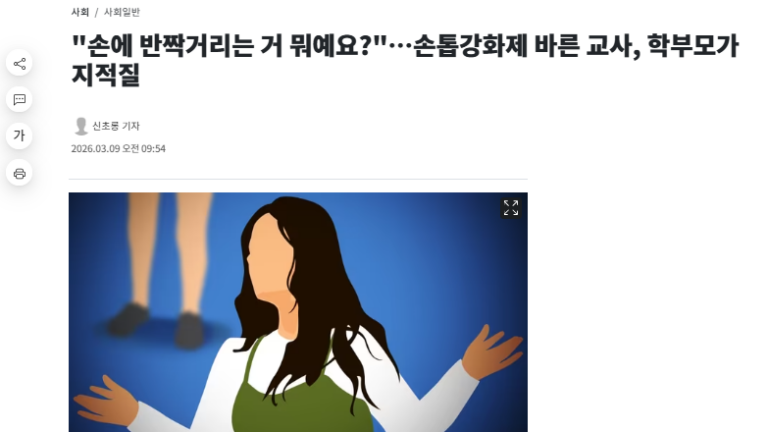
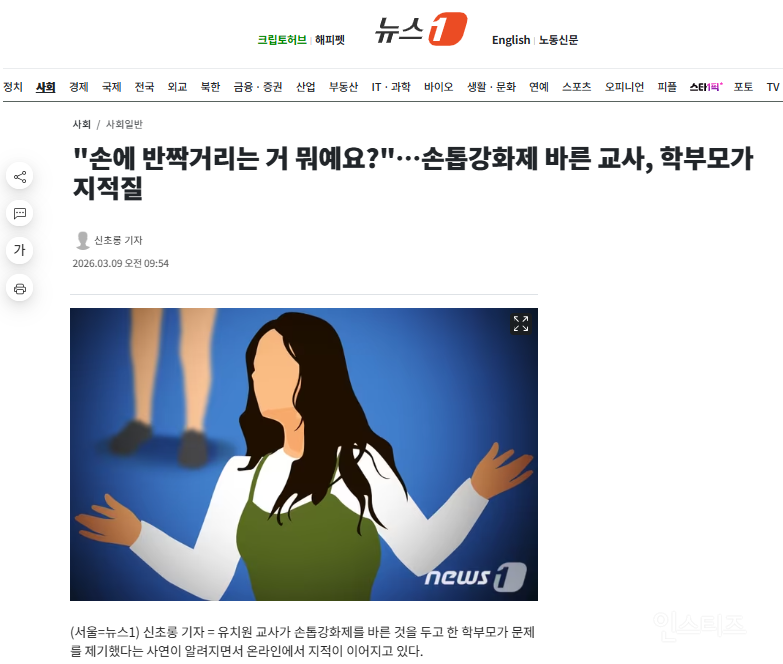
The incident, which quickly went viral after being posted on an online community on March 8, 2026, involved a kindergarten teacher, identified only as ‘A’, who had applied a clear nail strengthener to her short nails. Teacher A, like many of us, suffers from brittle nails that tend to break easily. To protect them, she used a transparent nail strengthener – a common, often recommended solution for nail health. However, a parent noticed the subtle sheen on her nails and decided to confront her. The parent questioned if it was a chemical product, implying it was inappropriate for someone who handles children daily. The parent even stated they hadn’t worn nail art for five years, setting a personal standard that they then projected onto the teacher. Teacher A expressed feeling like an "unconscionable teacher" who didn’t consider the children, despite her nails being short and the product being a strengthener, not decorative nail art. This confrontation quickly escalated online, drawing strong reactions from thousands of netizens.
Mina’s Honest Take: Why Nail Strengtheners Are Essential
If you have nails that chip, peel, or break just by looking at them, you already know the struggle is real. Trust me on this one, I’ve been there! Nail strengtheners are a holy grail for many, including myself. They’re formulated to fortify the nail plate, often with ingredients like keratin, calcium, or various polymers that create a protective barrier. Unlike traditional nail polish, which is primarily for aesthetics, strengtheners are designed for health. They’re transparent or have a very subtle tint, meant to be discreet while working their magic. I’ve been testing various strengtheners for years, especially after my nails took a beating from too much gel polish. They’re not about glamour; they’re about basic nail care. To equate a clear strengthener with vibrant, chemical-laden nail art feels like a fundamental misunderstanding of the product’s purpose. It’s like comparing a tinted moisturizer to a full-coverage foundation – both are makeup, but their intent and impact are vastly different.
Seriously, for those of us with weak nails, a good strengthener is a game-changer. It prevents painful snags and breaks, which can actually be a hygiene issue in themselves if nails are jagged or torn. Many professionals, like healthcare workers or food handlers, are required to keep their nails short and unpolished for hygiene reasons. A clear strengthener adheres to these rules while still allowing for basic self-care. It’s about maintaining a healthy, functional nail, not making a fashion statement. The idea that a clear, health-focused product would be deemed inappropriate highlights a significant disconnect between practical reality and perhaps an idealized, unachievable standard of "natural" appearance.
The Core Conflict: Perceived Hygiene vs. Personal Choice
At its core, this debate highlights a tension between perceived hygiene standards and an individual’s right to personal expression and self-care, particularly within a professional context. The parent’s concern, while perhaps misguided in its specific target (nail strengthener), likely stems from a genuine desire for their child’s safety and well-being. In Korea, there’s a strong emphasis on cleanliness and minimizing potential risks, especially when it comes to children. However, this concern often bleeds into areas that are less about actual risk and more about optics or deeply ingrained societal expectations. For a teacher, the expectation is often one of unblemished purity, both literally and figuratively. Any deviation from a completely natural, unadorned appearance can sometimes be seen as unprofessional or even neglectful, regardless of the actual product or its purpose. Teacher A wasn’t sporting glitter nails or intricate designs; she was simply protecting her nails. Yet, the perception was that any product on her nails was a "chemical product" that could somehow harm the children.
This isn’t just about the chemicals; it’s about the implied message. The parent’s statement, "I haven’t worn nail art for five years," implicitly set a standard of sacrifice, suggesting that the teacher should also forgo any personal aesthetic choice for the sake of the children. This kind of judgment, often coming from parents towards educators, creates an environment where teachers feel constantly under scrutiny, where their personal lives and choices are fair game for public commentary. It blurs the line between professional conduct and personal autonomy, making it incredibly difficult for teachers to simply exist as individuals with their own needs and preferences outside of their demanding roles.
Cultural Nuances and the Burden of the "Perfect Image"
Korean society, while incredibly modern and forward-thinking in many ways, still carries certain traditional values and expectations, particularly for those in caregiving or educational roles. Teachers, in particular, are held to a very high standard, often expected to embody a selfless, almost ascetic image. This isn’t just about what they do, but how they present themselves. The idea that a teacher might prioritize her own "beauty routine" – even if it’s for nail health – over the absolute pristine cleanliness expected when interacting with children, can be a point of contention for some. This incident isn’t isolated; we’ve seen similar debates around teachers’ hairstyles, makeup, or even clothing choices. It reflects a broader cultural lens through which personal appearance is not just a private matter but a public statement, especially for those in positions of trust. The desire for a "perfect" image, even at the cost of personal comfort or basic self-care, is a heavy burden many professionals in Korea face.
Consider the immense pressure on teachers in Korea. They’re not just educators; they’re often seen as moral compasses, surrogate parents, and public servants all rolled into one. Every aspect of their life, from their teaching methods to their personal appearance, can become a subject of intense public and parental scrutiny. This "perfect image" expectation is exhausting and frankly, unrealistic. It denies teachers their humanity and individuality. When a simple, transparent nail strengthener can trigger such a strong reaction, it speaks volumes about the microscopic lens through which these professionals are viewed, and the often-unspoken rules they are expected to follow, even if those rules are arbitrary or based on misunderstanding.
The Online Reaction: A Flood of Support for Teacher A
Unsurprisingly, the online community reacted with a massive outpouring of support for Teacher A, and a significant amount of criticism for the parent. The post garnered over 72,000 views and 93 comments, with the vast majority siding with the teacher. Many netizens found the parent’s remarks to be an overreach, an example of "gapjil" (abusive exercise of power by those in superior positions) or simply an excessive sense of entitlement. It really struck a nerve with people, highlighting the increasing pressure faced by service professionals, especially teachers, from demanding parents. The sentiment was overwhelmingly one of frustration with what many perceived as unreasonable demands and a lack of empathy.
Reading through the comments, it was clear that this specific incident resonated deeply with many people who have experienced similar unreasonable expectations, either personally or through others. The online community became a platform for collective venting and solidarity, particularly for those in service industries. It’s a powerful reminder that while individual incidents can be frustrating, they often tap into a larger, shared experience of societal pressure and unfair judgment. People are tired of seeing professionals, especially those dedicated to educating children, being treated with such disrespect over trivial matters.
"Honestly, this is just too much. Nail strengthener isn’t even nail polish, it’s for health. Are teachers not allowed to take care of themselves anymore?" – Netizen @K_BeautyLover23
"I’m a teacher too, and my nails are constantly breaking from hand sanitizer. I use strengthener, and no one has ever said anything. This parent is being ridiculous." – Netizen @EduPro_Seoul
"This isn’t about chemicals; it’s about control. Some parents just look for anything to complain about. Our teachers deserve better." – Netizen @TruthTeller_KR
"Next, they’ll complain about the teacher’s hand cream. Where does it end? Let teachers be human beings!" – Netizen @NoMoreGapjil
Balancing Professionalism and Self-Care: Finding the Middle Ground
So, where do we draw the line? How can professionals, particularly those in sensitive roles like teaching, balance the need for professionalism with their own personal well-being and basic self-care? It’s a tricky tightrope walk. On one hand, parents have a right to expect a safe and appropriate environment for their children. On the other hand, teachers are individuals with their own needs and personal lives. A transparent nail strengthener, designed to prevent painful breaks and maintain nail health, hardly seems to cross any reasonable boundary of hygiene or professionalism. Perhaps what’s truly needed are clearer, more standardized guidelines from educational institutions about what is and isn’t acceptable in terms of appearance, rather than leaving it up to individual parents’ subjective interpretations. This would protect both teachers from unfair scrutiny and parents from genuine but perhaps misdirected anxieties. It’s about fostering an environment of mutual respect and understanding, rather than suspicion and complaint.
Establishing clear, reasonable policies would provide a framework for both teachers and parents, reducing ambiguity and preventing these kinds of unnecessary confrontations. Instead of vague expectations, specific guidelines could address actual safety or hygiene concerns, distinguishing them from purely aesthetic judgments. This isn’t about giving teachers a free pass to ignore professionalism; it’s about defining professionalism in a way that respects their individuality and basic self-care needs. Moreover, it encourages open dialogue rather than confrontational accusations, which ultimately benefits the entire educational community, fostering a more positive and collaborative atmosphere for everyone involved. It’s time we moved beyond superficial judgments and focused on what truly matters: quality education and the well-being of both students and their dedicated educators.
The Verdict: More Empathy, Less Scrutiny, Please
Here’s my honest take: this entire incident is a reminder that beauty isn’t always just about vanity. Sometimes, it’s about self-care, about maintaining basic health and comfort. For Teacher A, her nail strengthener was a practical solution to a common problem, not a fashion statement. The backlash she received, and the subsequent online uproar, really highlight the intense pressure professionals in Korea face, and how quickly personal choices can become public battlegrounds. It’s easy to judge from the outside, but we need more empathy and less scrutiny. Let’s remember that behind every role, there’s a person trying their best, often under immense pressure. Instead of nitpicking at small, harmless details, maybe we should focus on supporting our educators and fostering environments where both children and their caregivers can thrive. What do you think, SYNC SEOUL readers? Where do we draw the line between appropriate professional appearance and unreasonable demands? I’d love to hear your thoughts in the comments below.
Ultimately, this isn’t just a "beauty" story; it’s a "people" story. It’s about understanding, communication, and the often-unseen struggles that professionals face daily. As K-beauty enthusiasts, we celebrate self-care and personal expression. It’s important to extend that same understanding and respect to everyone, regardless of their profession. Let’s champion a culture where basic self-care isn’t seen as a luxury or a point of contention, but as a fundamental right that helps people perform their best and live healthier, happier lives. Because at the end of the day, a healthy teacher is a happier, more effective teacher, and that benefits everyone.