


The Irony of the K-Beauty Fountain of Youth
Okay, real talk—we spend an absolute fortune every year trying to chase the ‘fountain of youth.’ Between the 10-step routines, the retinal serums, and the endless search for the perfect sunblock, the K-beauty world is basically obsessed with one thing: Dong-an (동안), or the legendary ‘baby face.’ We want to look 25 when we’re 40, and we want to look like we’ve never seen a day of stress in our lives. But what happens when looking too young actually becomes a professional hurdle? I stumbled upon a viral post today that really made me pause and rethink our collective obsession with youth.
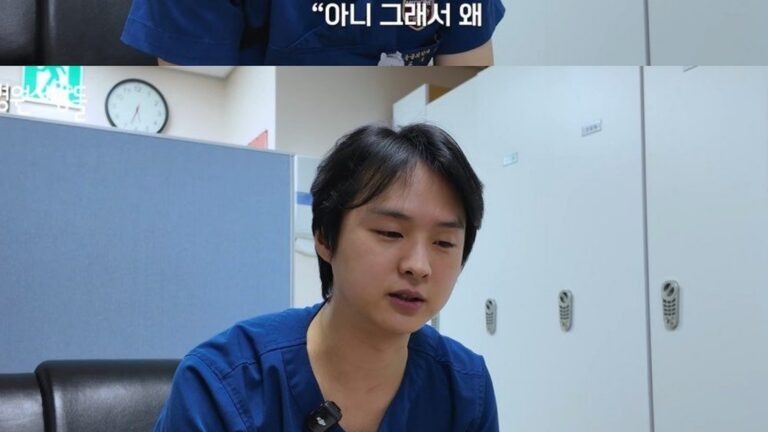
Over on the community board theqoo, a post about an Emergency Medicine professor at Korea University Ansan Hospital has been blowing up, racking over 66,000 views and hundreds of comments in just a few hours. The topic? This doctor is actually struggling because he looks too young for his position. Imagine being a highly trained specialist in one of the most high-pressure environments on earth—the ER—and having patients look at you like you’re a med student who got lost on his way to anatomy class. It’s a fascinating flip on the usual beauty standards we discuss here at SYNC SEOUL, and honestly, it’s a perspective we rarely consider.

When ‘Dong-an’ Becomes a Professional Barrier
In the medical field, especially in South Korea, seniority and experience are often visually equated with authority. When you’re in the ER, you want the person holding the scalpel or making the life-saving calls to look like they’ve seen it all. This doctor, despite his title as a professor and his years of grueling training, possesses the kind of clear skin and soft features that most of us would literally pay millions of won for. For him, however, it’s a source of stress. He’s reportedly expressed that he wishes he looked older just so patients would take his expertise more seriously at first glance.
I’ve been testing skincare products for years, and I’ve seen how much emphasis we put on ‘erasing’ the signs of time. We talk about fine lines as if they’re failures rather than markers of experience. But for this doctor, those missing lines are a missing piece of his professional ‘armor.’ It’s a classic case of ‘the grass is always greener.’ While we’re applying snail mucin to get that bouncy, youthful glow, he’s probably wishing for a few stress lines to prove he’s put in the work. It’s a heavy reminder that beauty standards don’t exist in a vacuum—they intersect with our careers and how the world perceives our competence.
“I saw him in person and I genuinely thought he was a volunteer or a student intern. When he started giving orders, my brain had a 3-second lag. He’s incredibly handsome, but I can see why it’s a struggle in a hospital setting!” — Comment from theqoo user ‘K-Health-Fan’
The Psychology of the ‘Baby-Face’ in High-Stakes Careers
There is actually a lot of psychological research behind this. People with ‘baby faces’—large eyes, round faces, and smooth skin—are often perceived as more trustworthy and warm, but less dominant or authoritative. In a classroom or a creative studio, that’s great. In an Emergency Room at 3:00 AM? You might want someone who looks ‘tough.’ This doctor’s dilemma highlights a weird quirk in our society: we worship youth in celebrities and idols, but we demand ‘age’ from our experts. It’s a double standard that’s hard to navigate, especially when your genetics simply won’t cooperate with the ‘weathered expert’ look.
If you have a skin type like mine—combination and prone to occasional redness—you know that achieving that ‘perfect’ calm complexion is a full-time job. This doctor seems to have been born with the kind of skin barrier we dream of. No dark circles (how is that even possible for an ER doctor?), no visible pores, and a jawline that looks like it belongs in a K-drama. But instead of being a ‘cheat code’ for life, his appearance forces him to work twice as hard to establish authority. He has to be more assertive, more vocal, and more precise just to overcome the initial ‘he looks so young’ bias from his patients.
Is K-Beauty Working Too Well for Us?
Let’s talk about the K-beauty routine for a second. We’ve reached a point where ‘glass skin’ is the baseline. With the advancements in dermatology we’ve seen lately, it’s easier than ever to maintain a youthful appearance well into our 40s and 50s. But are we prepared for a world where everyone looks 25? This doctor is like a living experiment of that future. If we all successfully ‘anti-age,’ we lose the visual cues that help us navigate social hierarchies. It sounds a bit dystopian, doesn’t it? But it’s a real conversation happening in the comments of that viral post.
I’ve been testing a few ‘pro-aging’ or ‘mature’ styling techniques lately—not because I want wrinkles, but because sometimes you want to command a room. For people like this doctor, the K-beauty ‘glow’ might actually be the enemy. Instead of the dewy, reflective finish that’s been trending lately, someone in his position might benefit from a more matte, structured look. It sounds crazy to suggest ‘dulling’ your skin, but in the world of professional aesthetics, sometimes ‘vibrant’ translates to ‘inexperienced.’ It’s all about context, and right now, the context of a university hospital demands a certain level of visual gravitas.
“Honestly, if I were him, I’d just wear fake glasses and grow a beard. But he’s so clean-cut that even a beard might just look like a costume. He’s cursed with being too cute!” — Comment from theqoo user ‘Ansan-Resident’
Mina’s Honest Take: The Burden of Pretty Privilege
Here’s my honest take: we often talk about ‘pretty privilege,’ and there’s no doubt that being attractive helps in many areas of life. But there’s also a ‘maturity privilege’ that we don’t talk about enough. Looking like an adult—someone with a history, someone who has survived things—carries its own kind of power. When I first started as a curator, I used to wear very heavy eyeliner and dark blazers because I was terrified people wouldn’t trust my reviews if I looked like the ‘new girl.’ I eventually grew out of that, but seeing this doctor’s story reminded me of that initial hustle for respect.
Trust me on this one: your skin is a canvas, but it’s also a communication tool. This doctor is communicating ‘youth’ and ‘vitality’ when he needs to be communicating ‘stability’ and ‘decades of study.’ It’s a mismatch between his internal reality and his external presentation. For those of you out there who feel like you aren’t taken seriously because you look ‘too young,’ know that you aren’t alone—even top-tier surgeons at Korea University are feeling the same way. It’s not about changing who you are, but perhaps adjusting how you ‘frame’ your face through styling or even just a change in posture.
How to Pivot Your Look for Professional Authority
If you find yourself in a similar boat—maybe you’re a young professional or a ‘baby-faced’ manager—there are ways to use K-beauty principles to look more ‘mature’ without actually damaging your skin. First, ditch the high-gloss lip tints. A blurred, matte lip in a muted rose or taupe shade adds instant sophistication. Second, focus on structure rather than ‘bounciness.’ Use a subtle contour to define your cheekbones and jawline, which mimics the natural fat loss that occurs as we age. It’s ‘reverse engineering’ the youth we usually crave.
Another tip? Eyebrows. In K-beauty, we love the straight, ‘youthful’ brow. But a slightly more arched, defined brow can make you look more focused and authoritative. It’s a small tweak, but it changes the entire geometry of the face. For the doctor in the viral post, something as simple as a different haircut—moving away from the ‘comma hair’ or soft bangs toward a more exposed forehead—could make a world of difference. It’s about moving the visual focus from ‘softness’ to ‘strength.’
“314 comments and half of them are people asking for his skincare routine while the other half are sympathizing with his struggle. The duality of the internet is amazing.” — Comment from theqoo user ‘BeautyLogic’
Final Thoughts: Finding the Balance
Is it worth the hype to look this young? For most of us, the answer is a resounding ‘yes.’ But this viral story is a great reality check. It reminds us that beauty isn’t a one-size-fits-all goal. The ‘perfect’ face is the one that helps you live the life you want to lead. For this ER professor, the perfect face would probably have a few more crow’s feet and a little less ‘glow.’ For the rest of us, we’ll keep patting in our essences and hoping for the best. But let’s try to be a bit more mindful of the ‘burden’ that comes with the standards we set.
At the end of the day, whether you’re a doctor in Ansan or a student in Seoul, your skin tells a story. This doctor’s story is one of incredible discipline and brilliance hidden behind a youthful mask. Maybe the solution isn’t for him to look older, but for us as a society to stop judging competence based on how many wrinkles someone has. But until that day comes, I’ll be here, curating the best of both worlds—whether you want to look like a baby or a boss. Stay glowing (or matte, if that’s your thing!), and I’ll see you in the next review!
