



Let’s break this down because my inbox has been absolutely exploding since a particular post went viral on the Korean community site TheQoo this week. If you’ve been scrolling through your feed lately, you’ve likely seen the headlines claiming a “miracle hair loss drug” has finally cleared its most significant hurdle. We’re talking about a post that racked up over 44,000 views and hundreds of comments in a matter of hours, sparking a mixture of desperate hope and intense skepticism. As your resident ingredient specialist here at SYNC SEOUL, I knew I had to put on my lab coat and dig into the actual data. Is this the end of balding as we know it, or just another case of overblown marketing? Let’s look at the science of what’s actually happening in the world of trichology this March 2026.
The Viral Spark: Why Everyone is Talking About This Now
The buzz started when a user shared a summary of a recent clinical breakthrough involving a new topical treatment that has successfully navigated Phase 3 trials. For those not familiar with the grueling marathon of drug development, Phase 3 is the “make or break” moment where a treatment is tested on a large group of humans to prove it’s both effective and safe for the general population. Seeing a hair loss treatment pass this stage is incredibly rare; the road is littered with the corpses of failed “miracle” creams that worked on mice but did absolutely nothing for human scalps. The sheer volume of engagement on the original post—over 250 comments—shows just how much of a pain point this is for the K-beauty community and beyond.
What caught my eye wasn’t just the claim of success, but the specific questions being asked by the community. People weren’t just asking “does it work?”—they were asking about the biological mechanism, the safety profile, and whether it could revive hair on a scalp that’s been smooth for a decade. One commenter on TheQoo captured the mood perfectly:
“I’ve spent enough on ‘miracle’ shampoos to buy a small car in Gangnam. If this is another ‘maybe’ or ‘it works on mice,’ I’m going to lose my mind. But Phase 3? That actually sounds like there’s a light at the end of the tunnel.”
This sentiment is exactly why we need to separate the hype from the histology.
Understanding the Enemy: What is DHT Anyway?
To understand why this new drug is causing such a stir, we have to talk about the primary villain in the story of male and female pattern baldness: Dihydrotestosterone, or DHT. From a formulation standpoint, DHT is an androgen—a sex hormone—that is synthesized from testosterone by an enzyme called 5-alpha reductase. While DHT is crucial for development, in the scalp of someone genetically predisposed to hair loss, it acts like a slow-acting poison for hair follicles. It binds to androgen receptors in the follicles, causing them to shrink in a process we call “miniaturization.” Over time, the hair produced becomes thinner, shorter, and eventually, the follicle stops producing visible hair altogether.
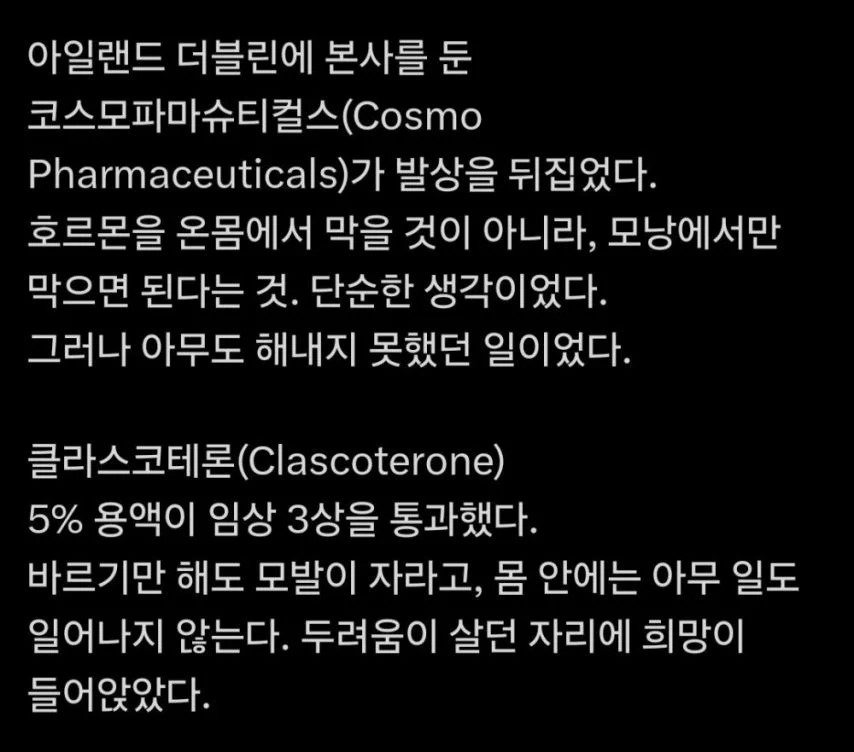
Most existing treatments on the market, like Finasteride, work by inhibiting that 5-alpha reductase enzyme to lower the overall levels of DHT in your body. This is effective, but it’s a systemic approach—you’re changing your body’s chemistry to save your hair. The breakthrough mentioned in the viral report focuses on a different strategy. Instead of lowering your hormone levels globally, it seeks to block the DHT from ever docking at the androgen receptor in the first place. Think of it like this: the hormone is the key, and the receptor is the lock. Previous drugs tried to melt down the keys; this new treatment simply puts a piece of tape over the lock.
The Phase 3 Milestone: More Than Just Hype
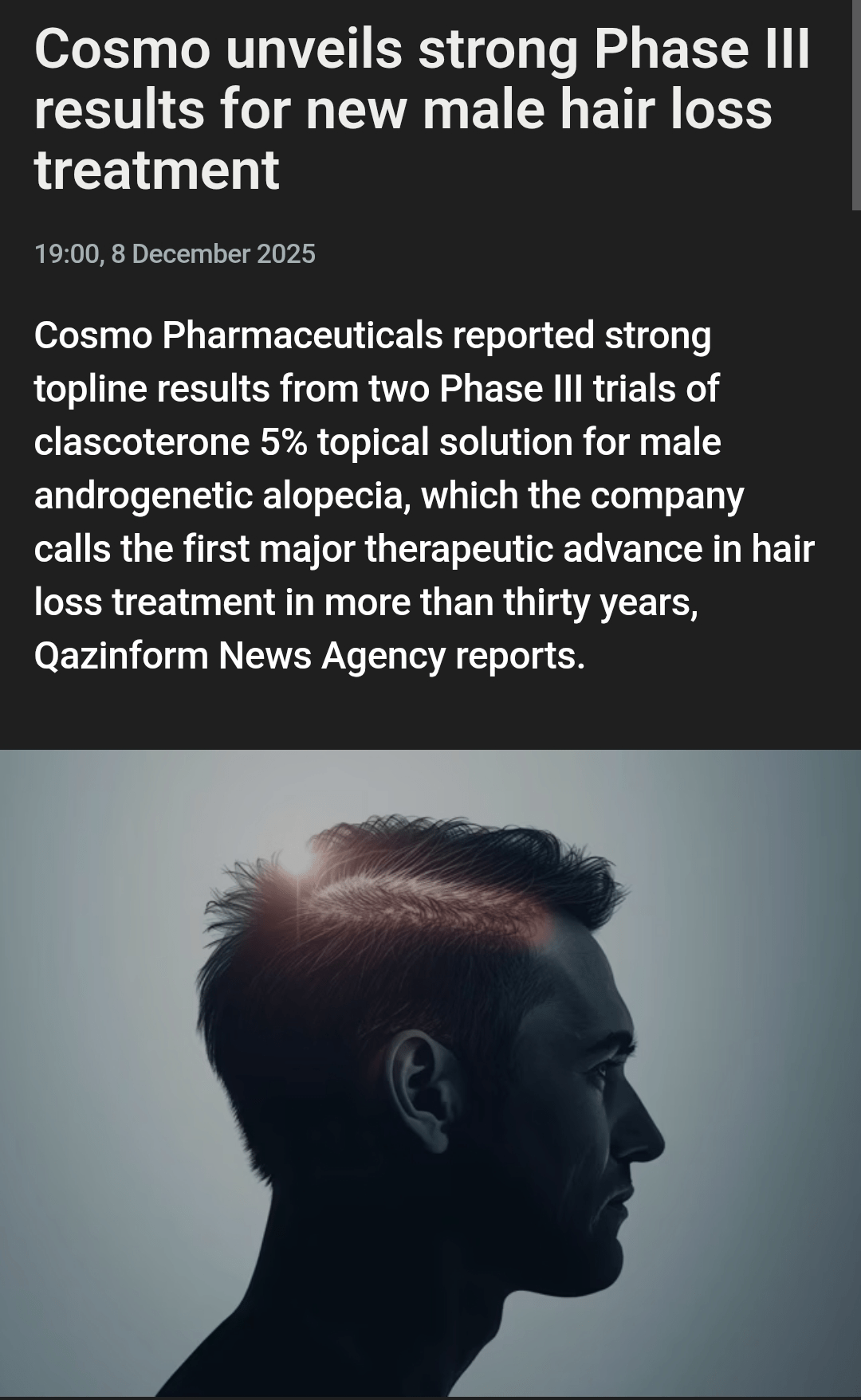
I cannot stress enough how significant a Phase 3 success is in 2026. Usually, when we see “miracle” claims, they are based on pre-clinical data (animal testing) or Phase 1 (safety testing on a tiny group). Phase 3 involves thousands of participants and rigorous double-blind protocols. According to the data being discussed, this treatment has demonstrated a statistically significant increase in hair count and hair thickness compared to a placebo group over a sustained period. This isn’t just a subjective “I think my hair looks fuller” result; it’s backed by high-resolution macro-photography and manual hair counts by researchers who don’t know which patient got the real drug.
The science is clear on this: passing Phase 3 means the drug has a predictable efficacy profile. One of the biggest hurdles in hair loss research is the “placebo effect,” where people actually grow a bit of hair just because they think they’re being treated (stress reduction can do wonders for the scalp!). For a drug to clear Phase 3, it has to beat that placebo effect by a wide margin. This suggests that the DHT-receptor blocking mechanism isn’t just theoretical—it’s actually happening in human tissue under real-world conditions. A user in the original thread noted:
“We’ve seen so many ‘Phase 2’ successes that never made it to market. Seeing a confirmed Phase 3 completion feels like we’re finally at the doorstep of the FDA/K-FDA approval.”
Mechanism of Action: Blocking the Lock, Not the Key
Let’s get into the nitty-gritty of the formulation. The core of this “miracle” is its ability to target the androgen receptor specifically. By applying this treatment topically, the active ingredients penetrate the stratum corneum and travel down the hair shaft to the dermal papilla. Once there, they compete with DHT for space on the androgen receptors. Because the drug has a higher affinity for these receptors than DHT does, it effectively crowds out the hormone. This stops the miniaturization process in its tracks. If the follicle hasn’t completely atrophied yet, it can begin to recover, producing thicker and healthier terminal hair instead of the fine, peach-fuzz “vellus” hair associated with balding.
A common misconception is that this drug is “reviving dead cells.” I want to be very firm here: from a biological standpoint, once a hair follicle has completely fibrosed—meaning it has turned into scar tissue—it is gone. No cream, pill, or serum in 2026 can bring a dead follicle back to life. However, many people who think they are “completely bald” actually have thousands of miniaturized follicles that are still alive but just producing hair so thin it’s invisible to the naked eye. This drug targets those struggling follicles, giving them the breathing room to function properly again by removing the hormonal pressure of DHT.
The “Side Effect” Elephant in the Room
If you’ve ever researched hair loss drugs, you know the number one fear: sexual dysfunction. Because traditional oral medications lower systemic DHT, they can sometimes interfere with other functions where DHT plays a role. This has led to the infamous “limp” fear that keeps many men away from effective treatment. The viral post specifically addresses this, and the science supports the claim: because this is a topical treatment designed with a specific molecular weight to stay localized in the skin, systemic absorption is minimal. In clinical terms, the drug doesn’t “go systemic” in a high enough concentration to affect your hormone balance elsewhere in the body.
This is a game-changer for compliance. Most people stop using hair loss treatments because they’re worried about their long-term health or specific side effects. If you can achieve the same—or better—results by just applying a serum to your scalp without worrying about your libido or mood, why wouldn’t you? One funny but telling comment on the thread said:
“I was ready to trade my sex life for a full head of hair, but if I don’t have to choose, this is literally the greatest invention since the smartphone. My girlfriend and my barber are both going to be happy.”
While that’s a bit of a “hot take,” it reflects the very real anxiety that has surrounded this field for decades.
Expectations vs. Reality: Who Can Actually Benefit?
As much as I love the science here, we need a reality check. This drug is a shield, not a magic wand. As the source data points out, this is primarily a “prevention” and “maintenance” drug. If your scalp is as smooth as a bowling ball and has been for five years, this drug likely won’t do much for you. The follicles need to be present and somewhat functional for the DHT-blocker to have something to protect. This is why early intervention is the most important factor in K-beauty hair care. The moment you notice your part widening or your hairline receding is the moment you should be looking at these Phase 3 breakthroughs.
Furthermore, we have to consider the “shedding phase.” Almost every effective hair loss treatment causes an initial period of shedding where old, weak hairs are pushed out to make room for new, stronger ones. Many people panic during this phase and stop the treatment, thinking it’s making their balding worse. If this drug hits the market later this year or in 2027, users will need to be educated on the “long game.” You are essentially resetting the growth cycle of your hair, and that takes months, not days. Patience is an ingredient that isn’t listed on the bottle, but it’s the most important one for success.
Sera’s Verdict: Is This the Holy Grail?
So, what does the science actually say? We are looking at a highly sophisticated, targeted topical treatment that has survived the most rigorous testing phase in the medical world. It addresses the root cause of androgenic alopecia (DHT binding) without the systemic risks of oral medication. Is it a “miracle”? In the sense that it’s a massive leap forward in biotechnology, yes. In the sense that it will grow hair on a brick? No. This is a tool for the proactive, the ones who are catching their hair loss in the early to mid-stages and want a scientifically backed way to freeze time.
My personal take? I’m cautiously optimistic but incredibly impressed by the Phase 3 data. In the world of ingredient analysis, we rarely see such a clean win for a topical formulation. The fact that it doesn’t mess with your systemic hormones while effectively shielding the follicle is the “holy grail” we’ve been searching for. Another user summed it up perfectly:
“I’ve been checking for updates on this every day. Even if it just lets me keep what I have for the next 20 years, it’s a total victory.”
That is the mindset we should have. Don’t wait for the miracle; use the science to protect what you’ve got. We’ll be keeping a close eye on the K-FDA approval timeline as we move through 2026.
The science is clear: the era of “guessing” if a hair product works is coming to an end. We are entering the era of targeted, receptor-level intervention. If you’re currently worried about thinning, now is the time to start a gentle scalp care routine to keep those follicles healthy while we wait for this drug to hit the shelves. Remember, a healthy scalp is the foundation for any treatment, miracle or otherwise. Stay skeptical of the marketing, but stay informed on the science—that’s the SYNC SEOUL way.
