

The Tweet That Broke the K-Pop Internet
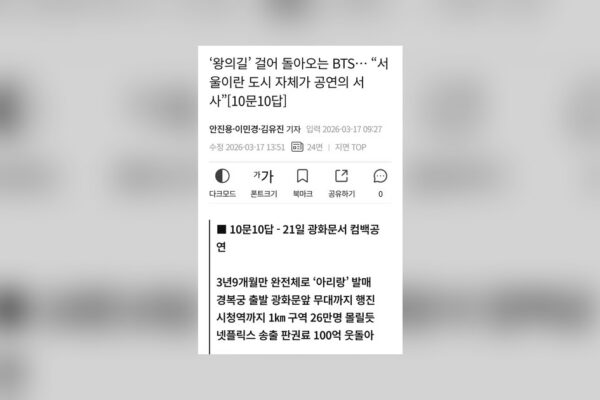
OMG you guys!! 😱 I am literally shaking as I write this because the TL is absolutely spiraling right now. So, it’s 1 AM on a Saturday in Seoul, and instead of sleeping like a normal person, I was doing my ritualistic 3 AM deep-dive into TheQoo (don’t judge, it’s where the real tea is). I stumbled upon a post that is currently sitting at over 31,000 views and nearly 800 comments, and let me tell you, the vibes are… complicated. We all know BTS is having their massive 2026 comeback—which, hello, we’ve been waiting for forever—but the choice of venue is sparking a literal civil war among K-Netz. They’re planning to take over Gwanghwamun Square, and while half of us are screaming ‘SLAY’, the other half is basically ready to riot over the traffic.
The whole drama started when music critic Jung Min-jae posted a tweet that went nuclear. He basically called out the organizers, saying that if you’re gonna perform in the literal heart of the city, you have to plan it so it doesn’t ruin everyone’s day. He didn’t hold back, saying the current vibe feels less like a well-coordinated event and more like a ‘notification’ that we all just have to suffer through because it’s BTS. I’m not gonna lie, I felt that in my soul. Like, I love the boys more than life itself, but have you tried getting a bus through Gwanghwamun on a weekday? It’s giving ‘stuck in a nightmare’ for anyone just trying to get to work. The critic’s point is that just because it’s a global sensation doesn’t mean the basic convenience of Seoul citizens should be tossed out the window.
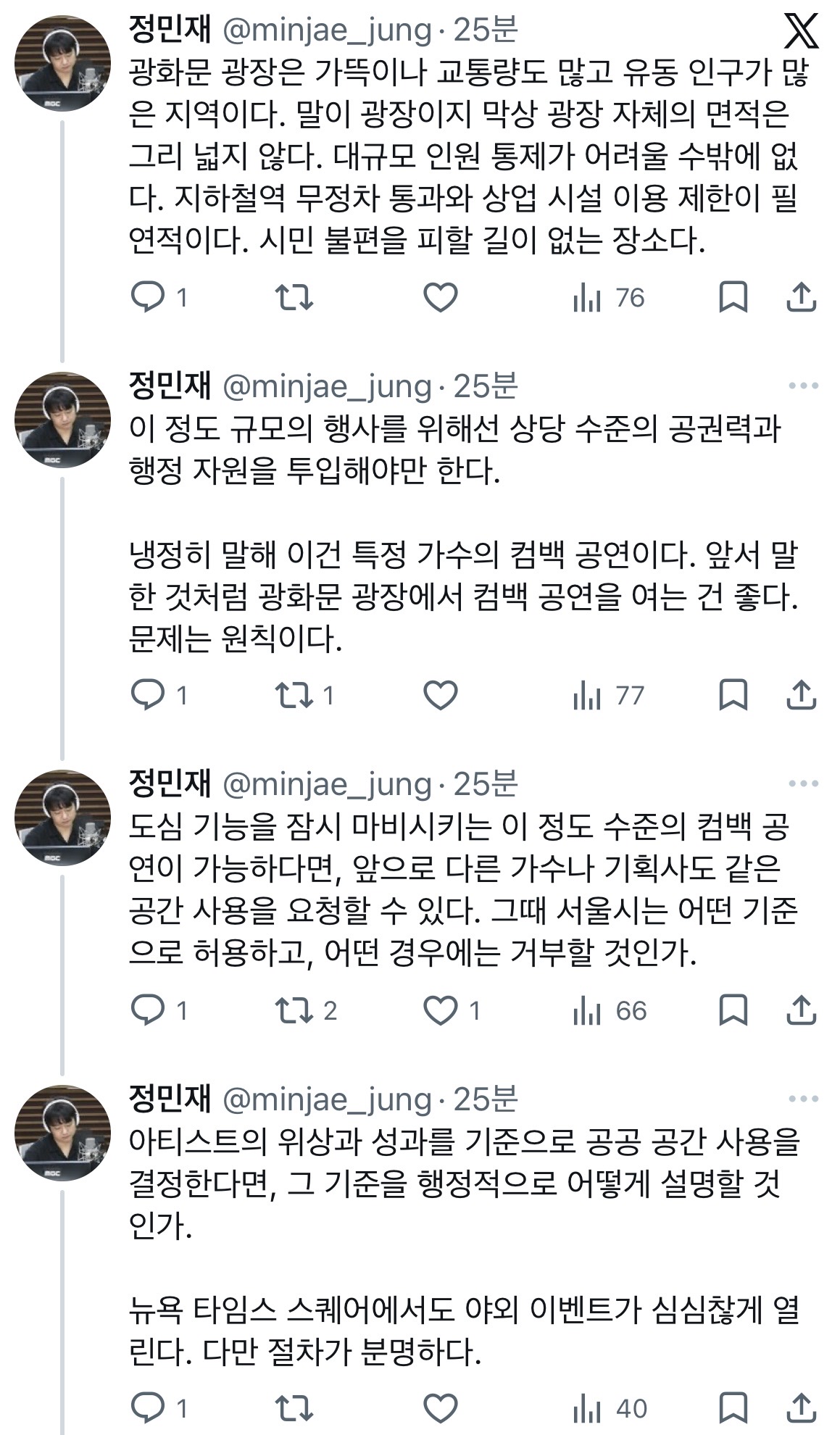
Honestly, the way I RAN to check the comments on this was record-breaking. People are really divided on whether this is a ‘National Pride’ moment or just ‘Corporate Greed’ disguised as a gift to fans. When you look at the scale of the stage they’re building, it’s actually insane. We’re talking about a structure that practically swallows the King Sejong statue whole. I get that for a 2026 comeback, you want the most iconic spot in Korea, but at what cost? The logistics of shutting down one of the busiest intersections in the world is a literal fever dream for the city’s transport department. And the fans? We’re caught in the middle of wanting to see our faves and not wanting the entire city to hate our fandom even more.
Gwanghwamun: The Heart of Seoul or a Private Stage?
Let’s talk about the location for a second because it’s not just any square. Gwanghwamun is the soul of Seoul. It’s where history happens, where protests happen, and where the city breathes. Usually, when big events happen here, there’s months of public notice and clear detour routes. But according to the buzz, this feels very ‘last minute’ and ‘forced.’ One fan on TheQoo mentioned that they didn’t even know about the road closures until they saw the barricades going up. That’s the ‘notification-style’ planning the critic was talking about. It’s like the organizers just assumed everyone would be cool with it because, well, it’s BTS. But newsflash: not everyone in Seoul is an Army (I know, shocking, right?).
The sheer audacity of the setup is what’s really getting to people. If you look at the photos being leaked from the site, the barricades extend way beyond the square itself. It’s creating this massive bottleneck that’s turning a 10-minute commute into an hour-long ordeal. I saw a TikTok of a delivery rider literally crying because he couldn’t get through the cordoned-off area. It’s these little things that make the ‘cultural pride’ argument feel a bit hollow to the locals who are just trying to live their lives. It’s one thing to have a concert at a stadium; it’s another thing to turn the city’s main artery into a private VIP zone without proper consensus.
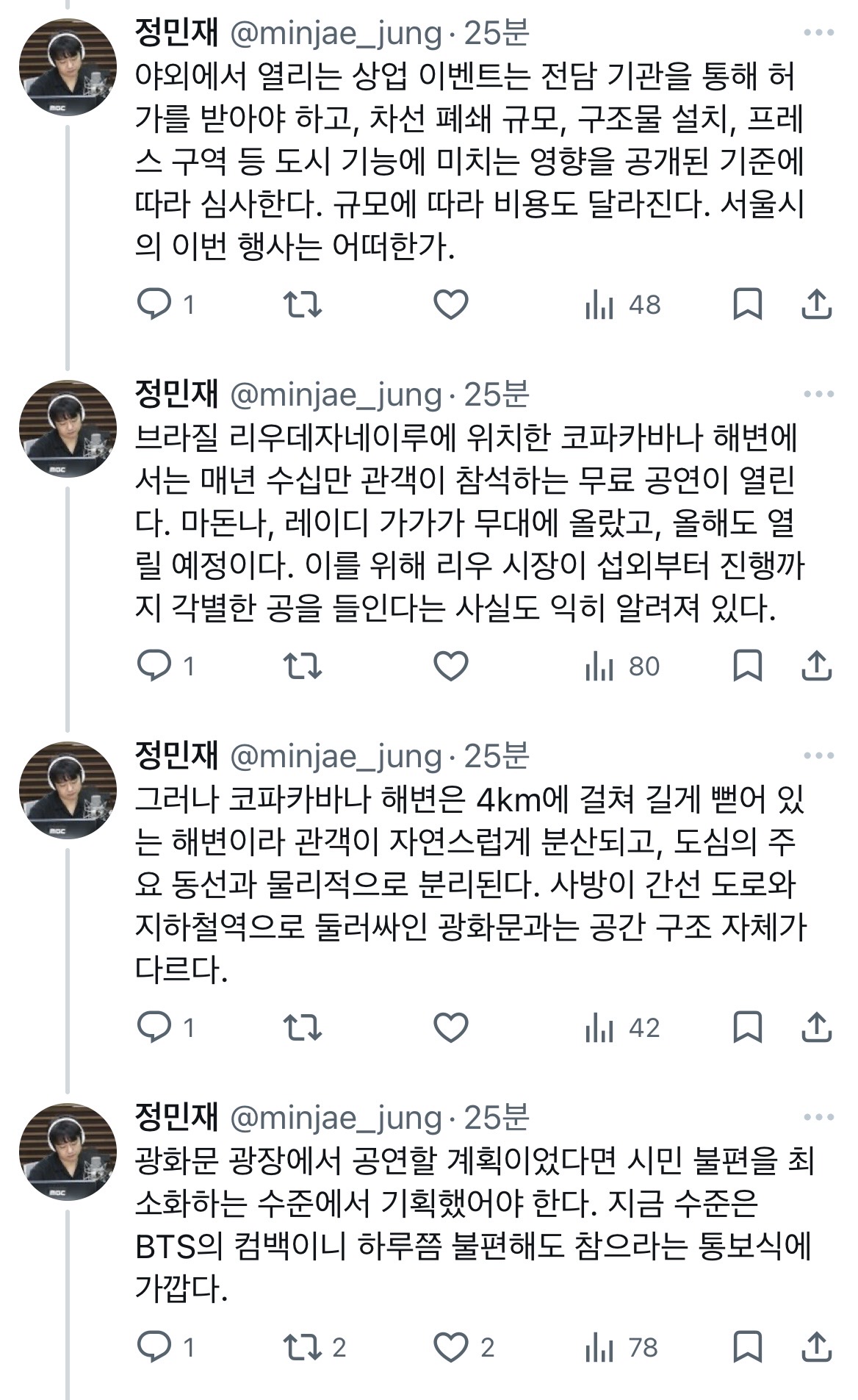
And don’t even get me started on the noise levels. Residents in the nearby Jongno area are already filing complaints about the sound checks. Imagine trying to work or study while ‘Dynamite’ is blasting at 110 decibels right outside your window for the fifth time today. It’s iconic, sure, but it’s also a lot. The critic Jung Min-jae really hit the nail on the head when he said that the planning should have focused on minimizing citizen discomfort. Instead, it feels like the city just handed over the keys to the kingdom and told everyone else to ‘deal with it.’ This ‘notification’ culture in K-pop events is getting a bit out of hand, and this might be the breaking point.
“It’s a Notification, Not a Request” — Breaking Down the Critic’s Take
I need to deep-dive into this specific phrase because it’s literally all over my feed. “A notification, not a request.” It sounds so dramatic, but it’s so true! In the past, even for the biggest events, there was a sense of ‘asking’ the public for their patience. But in 2026, it feels like the power dynamic has shifted. Big Hit and the city government seem to be operating on the assumption that the economic impact and the global ‘clout’ of a BTS Gwanghwamun stage automatically override any local complaints. It’s like they’re saying, ‘Hey, we’re doing this cool thing for the country, so you’re welcome, and also, don’t use the subway today.’ It’s the lack of humility in the planning that’s rubbing people the wrong way.
“If you’re going to use a public space that belongs to everyone, you don’t just ‘tell’ them it’s happening. You plan for the people who aren’t there for the music. This isn’t a BTS-only city.” – A top-voted comment on TheQoo
This comment had me screaming because it’s so blunt. It’s not about hating the artists; it’s about respecting the space. When you treat a public square like a closed set, you alienate the very people who live there. The critic’s tweet resonated because it articulated what a lot of people were feeling but were too afraid to say because they didn’t want to get dragged by the fandom. But honestly? Even within the fandom, there’s a lot of ‘wait, this is a bit much’ energy. We want the boys to have the best comeback ever, but we don’t want it to be associated with people’s bad memories of being stuck in traffic for three hours.
K-Netz Are Throwing Hands in the Comments
The comment section on that TheQoo post is a literal warzone, and I am here for all the drama. There are over 700 comments now, and the debate is getting spicy. You’ve got the ‘National Treasure’ crowd who thinks any inconvenience is worth it to show the world Korea’s cultural power. Then you’ve got the ‘Realist’ crowd who is just tired of the city being treated like a playground for idols. It’s a fascinating look at where Korean society is at in 2026. We’re so proud of our Hallyu stars, but we’re also starting to demand better urban management and respect for public life.
“I’m a fan, but I had to walk three blocks to find a subway entrance that wasn’t blocked off. This is actually insane. They should have just used the Olympic Stadium if they wanted this much space.” – Anonymous user
“People complaining about BTS are so short-sighted. Do you know how much tourism revenue this brings? One day of traffic is nothing compared to the global exposure Seoul is getting right now. Stop whining.” – Army supporter
The back-and-forth is endless. One user pointed out that during the World Cup or major festivals, the city is just as crowded, so why is BTS being singled out? The counter-argument to that is usually that those events are ‘public’ in nature, whereas a comeback performance—no matter how big—is still a promotional event for a private company. It’s a fine line, and right now, it feels like the organizers tripped over it. The scale of the backlash is a sign that the ‘BTS pass’ might not be as all-encompassing as it used to be. People are starting to value their daily peace just as much as global prestige.
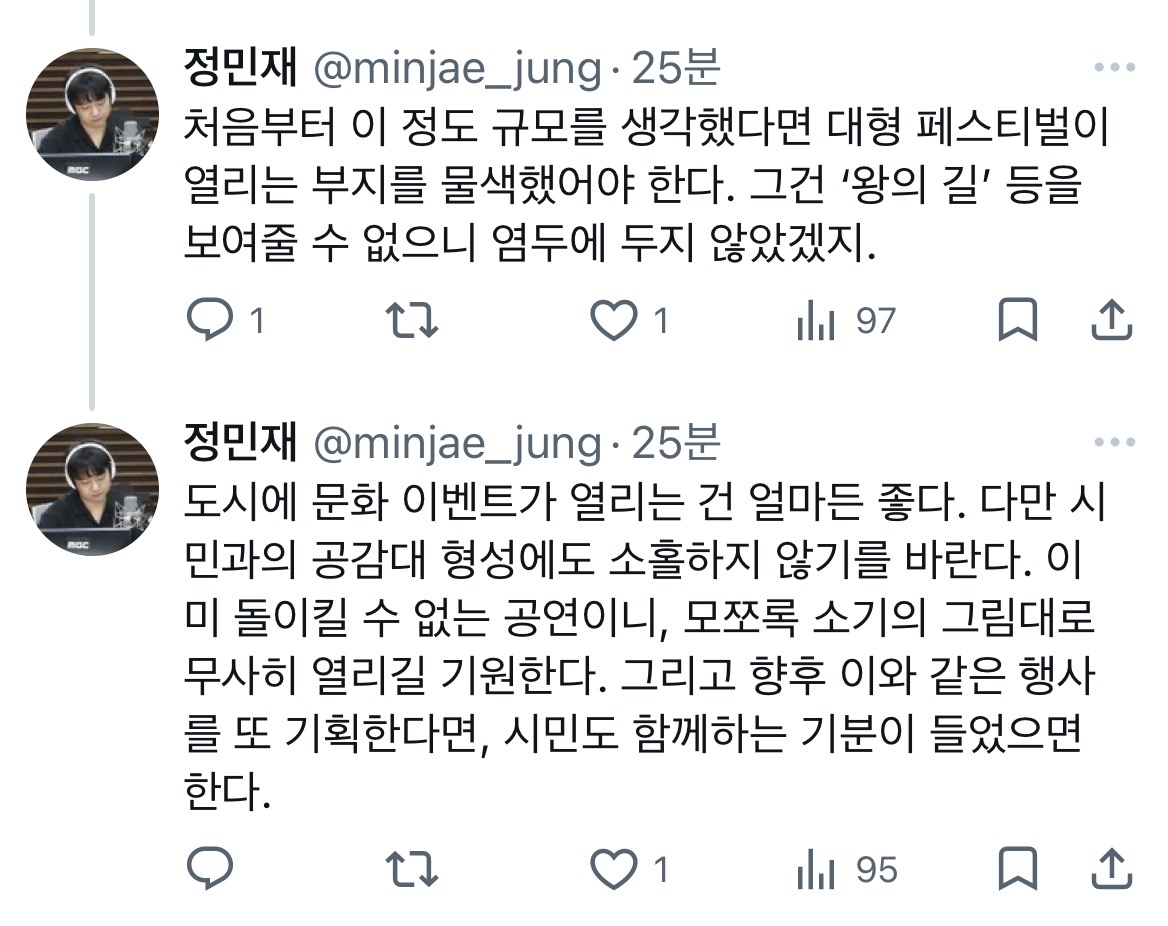
Looking at the third image, you can really see the density. It’s not just the fans; it’s the security, the staff, the press, and the confused tourists all mashed together. It’s a safety hazard waiting to happen if not managed perfectly. And that’s the scary part—if something goes wrong because the planning was too focused on the ‘vibe’ and not the ‘logistics,’ the fallout would be catastrophic for everyone involved. The critic’s warning isn’t just about traffic; it’s about the responsibility that comes with being this big. You can’t just show up and expect the world to bend to your will without doing the legwork to keep things safe and orderly.
Is Cultural Pride Enough to Excuse the Chaos?
This is the million-dollar question, isn’t it? In 2026, K-pop is no longer just music; it’s a pillar of the Korean economy and a major part of its soft power. So, when BTS performs at Gwanghwamun, it’s seen as a victory for the whole country. But we have to ask: at what point does the ‘soft power’ start feeling like ‘hard pressure’ on the citizens? I’ve seen so many posts from people who are genuinely proud of BTS but are also just… exhausted. They want to be able to go to the grocery store without being blocked by ten layers of security guards in black suits.
There’s also the environmental impact to consider. The amount of trash and energy used for a one-day pop-up of this scale is mind-boggling. If the planning was truly ‘citizen-centric,’ there would be more focus on sustainability and post-event cleanup. But right now, all we see are the massive LED screens and the steel beams. It feels very ‘temporary’ and ‘disposable,’ which contrasts weirdly with the ‘eternal’ history of Gwanghwamun. It’s a clash of cultures—the fast-paced, high-consumption world of K-pop vs. the slow, steady heartbeat of the city. And right now, K-pop is winning, but the victory feels a bit loud and messy.
Ultimately, the debate isn’t going to stop the show. The stage is built, the fans are lined up, and the ‘notification’ has been sent. But I think this is a huge wake-up call for HYBE and other big labels. You can’t just assume the public will always be on your side. As the fandom grows and the events get bigger, the responsibility to the ‘non-fans’ grows too. You have to earn that public space every single time. You can’t just take it for granted because you’re the biggest group in the world. The ‘National Treasure’ label is a gift, but it’s also a heavy burden that requires a lot of grace to carry.
My Hot Take: Can We Just Find a Middle Ground?
Okay, here’s my personal take because I know y’all are waiting for it. I am literally the biggest Army ever, but I totally see where the critics are coming from. We can’t just be blind to the reality of city living. I think the solution isn’t to stop these iconic performances—because, let’s be real, a BTS Gwanghwamun stage is going to look LEGENDARY—but to change how they’re handled. Why not make it a multi-day festival where the traffic is rerouted in a more organized way? Why not involve the local businesses more so they benefit from the crowd instead of just being blocked off? There are so many ways to make this a ‘win-win’ instead of a ‘win-lose’ situation.
The critic Jung Min-jae isn’t a ‘hater’ for pointing this out. In fact, he’s doing the industry a favor by highlighting the growing friction between mega-events and public life. If we ignore these issues, the public sentiment will eventually turn sour, and that’s the last thing we want for our faves. We want BTS to be loved by everyone, not just the people inside the barricades. So, let’s take the criticism as a chance to level up. Let’s make the 2026 comeback not just a musical milestone, but a standard for how global stars can respect and enhance the cities they call home.
Anyway, I’m still gonna be watching the livestream with my lightstick ready, but I’ll also be sending some good vibes to everyone stuck in that Gwanghwamun traffic. If you’re in Seoul right now, stay safe, bring water, and maybe avoid the King Sejong statue unless you have ten hours to spare! It’s going to be a night to remember, for better or for worse. But seriously, the drama is half the fun of a comeback, right? Let me know what you guys think in the comments! 👇
Would you be mad if your commute was ruined for a BTS stage, or would you just hop out of the car and join the crowd? I’m honestly torn! Let’s talk about it! 💄✨😱🔥