

The Great Debate: Which Performance Defines Park Ji-hoon?
Walk into any cafe in Seongsu-dong this week, and you’re bound to overhear the same heated discussion. It’s the kind of debate that keeps the servers at TheQoo busy and the servers in real life occupied with endless refills of iced Americanos. We are, of course, talking about Park Ji-hoon. As of March 13, 2026, the industry is officially divided. On one side, you have the purists who insist that his turn as Yeon Si-eun in Weak Hero Class 1 remains an untouchable pinnacle of gritty, youth-noir acting. On the other, a growing legion of critics and fans are pointing toward his current tour de force in The King’s Man (왕과 사는 남자) as the moment he truly transcended his idol origins to become a heavyweight of the screen.
Cinematically speaking, these two roles represent the polar opposites of the human experience. One is a claustrophobic study of repressed rage in a decaying school system; the other is a sprawling, high-stakes historical drama where every whisper carries the weight of a kingdom. Yet, both are anchored by a performer who seems to have traded his ‘wink boy’ persona for something far more haunting and substantial. I’ve spent the last forty-eight hours re-watching key sequences from both series, and the contrast in his physical language is nothing short of staggering. It isn’t just about the costumes or the setting; it’s about how Park Ji-hoon occupies space.
“I’ve watched both three times now. While his performance in The King’s Man is undeniably more ‘mature’ and polished, there’s a raw, unrefined desperation in Weak Hero that he might never be able to replicate. It was lightning in a bottle.” — User ‘mxbluudxy’ on X (formerly Twitter)
Looking back at Weak Hero Class 1, which feels like a lifetime ago but remains a foundational text for his career, the brilliance lay in his silence. Yeon Si-eun was a character who weaponized his intellect because his body was a liability. Park Ji-hoon’s choice to play him with ‘dead eyes’—a glazed-over look that only sparked into terrifying clarity during moments of violence—was a masterclass in subverting expectations. Most idol-actors try too hard to look pretty even when they’re being beaten up. Park, however, leaned into the ugliness. He allowed his face to become a canvas for bruises and exhaustion, proving that he was more interested in the truth of the scene than the preservation of his brand.
The Weight of the Crown: Analyzing ‘The King’s Man’
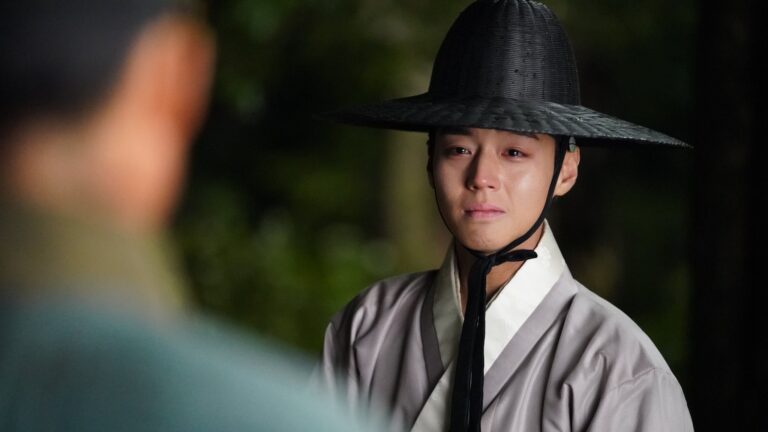
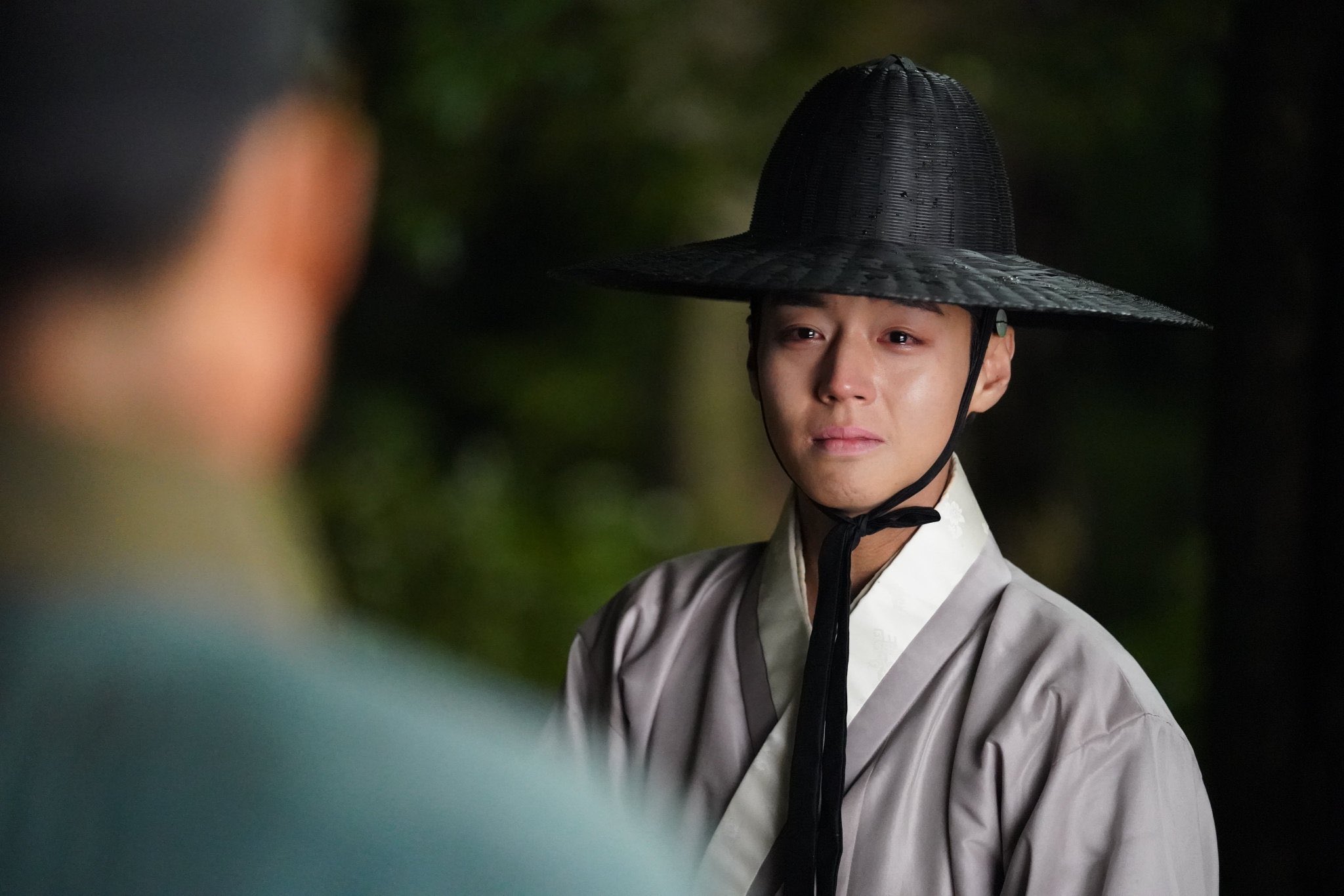
Fast forward to 2026, and we see a completely different beast in The King’s Man. If Weak Hero was about the internal explosion of a marginalized student, his current role is about the external pressure of a man trapped by destiny and duty. The mise-en-scène here is lavish, almost suffocatingly so. The director’s choice to use deep, saturated reds and heavy shadows in the palace corridors mirrors the psychological state of Park’s character. Unlike the shaky, handheld camerawork that defined the frenetic energy of his school-based thriller, the cinematography in this sageuk is static and deliberate, forcing Park to convey everything through micro-expressions.
The writing in The King’s Man is significantly more dense, requiring a command of sa-geuk-to (historical speech patterns) that has tripped up many of his peers. What elevates this performance is his vocal control. He has lowered his register, finding a resonance that commands the room without needing to raise his voice. It’s a subtle shift, but it’s the difference between a boy playing dress-up and a man owning the frame. When he stares down his political rivals in the throne room, you don’t see a former Produce 101 contestant; you see a sovereign whose soul is slowly being eroded by the crown. The production value is clearly through the roof, but no amount of gold leaf can compensate for a weak lead. Thankfully, Park is anything but weak here.
“The way he uses his eyes in the latest episode of The King’s Man actually gave me chills. It’s not just anger; it’s a mix of betrayal and profound loneliness. He’s outgrown the ‘idol’ label entirely.” — Comment from TheQoo (View count: 5,188)
Technical Breakdown: The Art of the Gaze
Unpopular opinion, but I believe Park Ji-hoon’s greatest tool isn’t his dialogue delivery—it’s his gaze. In film studies, we often talk about the ‘Kuleshov Effect,’ where the audience projects emotion onto an actor’s face based on the surrounding context. Park, however, seems to reverse this. He dictates the context of the scene through his eyes. In Weak Hero, his gaze was a shield. He looked through people, treating them as variables in a physics equation he needed to solve to survive the next ten minutes. It was cold, analytical, and deeply unsettling.
In contrast, his gaze in The King’s Man is a weapon of seduction and manipulation. There is a specific scene in the fourth episode—a quiet moment in the library—where he looks at the female lead with such a complex mixture of longing and suspicion that the air in the room seems to thicken. The director lingers on this close-up for nearly fifteen seconds, a bold choice that only works because Park is capable of sustaining that emotional intensity without blinking. This is where he has truly evolved. He has learned the power of the ‘long take’ and the importance of holding the audience’s attention through stillness rather than movement.
The writing falters when the political subplots become too convoluted, occasionally dragging the pacing of the middle episodes. However, whenever the camera returns to Park, the energy recalibrates. He has that rare quality—much like a young Im Si-wan or D.O.—where he can make a mediocre script feel like Shakespeare just by the way he reacts to a line of dialogue. It’s about the chemistry he builds with the lens, a relationship that has clearly matured over the last four years of his career.
Production Values and the OST Factor
We cannot discuss these two works without mentioning the sonic landscapes that define them. The OST for Weak Hero was a gritty, synth-heavy masterpiece that felt like a heartbeat in a panic attack. It pushed the narrative forward, emphasizing the urban decay and the isolation of the characters. It was modern, edgy, and perfectly aligned with Park’s youth-rebel image at the time. It provided a rhythmic backbone to his fight scenes, making every punch feel visceral and earned.
On the other hand, the musical direction for The King’s Man relies heavily on traditional Korean instruments—the haegeum and daegeum—blended with a full orchestral sweep. This creates a sense of grandeur and tragedy that suits Park’s more regal presence. There’s a recurring theme that plays whenever his character is alone, a melancholic melody that highlights his isolation within the palace walls. While some might find the OST a bit too conventional for a 2026 production, it serves its purpose: it frames Park Ji-hoon as a tragic hero of epic proportions. The production doesn’t just want you to watch him; it wants you to mourn for him.
“I still find myself going back to the Weak Hero OST when I need to get hyped. But the theme song for The King’s Man is what I play when I want to cry. Ji-hoon’s range isn’t just in his acting; it’s in the vibes of the projects he chooses.” — Fan comment on SYNC SEOUL forum
The costume design in his current project also deserves a shout-out. The weight of the silk robes, the intricate embroidery, and the traditional headwear all contribute to his physical performance. You can see how the weight of the garments affects his posture—he stands taller, his movements are more deliberate, and his gestures are more controlled. In Weak Hero, he was a kid in a baggy school uniform, trying to disappear into the background. Here, he is a man who must stand out, even when he wants to hide. The transformation is complete, and it’s a testament to his dedication to the craft.
The Verdict: A Masterclass in Career Longevity
So, where does this leave the debate? If you look at the numbers on TheQoo—168 comments and counting—the consensus is surprisingly split. There are those who will always prefer the raw, indie energy of his earlier work. They miss the ‘dirt under the fingernails’ realism of Weak Hero. And then there are those who are mesmerized by the sophisticated, high-drama execution of The King’s Man. Personally, I find the comparison itself to be proof of his success. The fact that we are even debating which of these two distinct, high-quality performances is his ‘life’s work’ shows that he has already won.
Park Ji-hoon has successfully navigated the most treacherous waters in the Korean entertainment industry: the transition from a teen idol to a respected actor. He didn’t do it by playing it safe. He didn’t choose generic rom-coms or easy ‘flower boy’ roles. He chose characters that were broken, complicated, and often unlikeable. He chose projects that challenged the audience as much as they challenged him. Whether you prefer the gritty hallways of a high school or the lethal corridors of a palace, one thing is undeniable: Park Ji-hoon is the real deal.
What elevates The King’s Man in my eyes is the sheer difficulty of the task. Sageuk is where idol-actors go to be judged, and Park hasn’t just survived the judgment; he has set a new standard for his generation. He has proven that he can handle the heavy lifting of a leading man in a primetime drama while maintaining the nuance of a film actor. It’s a rare balance, and one that suggests his best work might still be ahead of him. If 2026 is any indication, we are witnessing the mid-career bloom of a future legend.
Final Rating and Recommendation
Writing: ⭐⭐⭐⭐☆
Direction: ⭐⭐⭐⭐⭐
Acting: ⭐⭐⭐⭐⭐
Production: ⭐⭐⭐⭐⭐
OST: ⭐⭐⭐⭐☆
Overall: 9.2/10
For those who haven’t started The King’s Man yet, you are missing out on one of the most visually stunning and emotionally resonant dramas of the year. While Weak Hero Class 1 will always be a cult classic that redefined a genre, his current work is a testament to growth and artistic maturity. It’s a must-watch for anyone who appreciates the craft of acting. Park Ji-hoon isn’t just a star; he’s a storyteller, and I, for one, can’t wait to see what chapter he writes next. Whether he returns to the grit of the modern world or stays in the elegance of the past, he has earned our undivided attention.
