

The 12-Million Milestone: A New Record for 2026
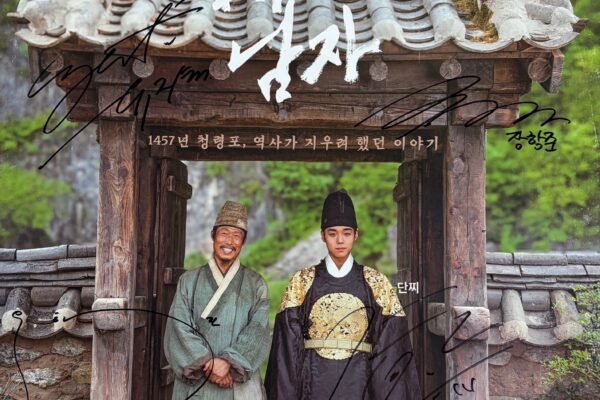
Walking through central Seoul this afternoon, the energy was palpable. It is March 12, 2026, and the Korean film industry has officially found its first true phenomenon of the year. We aren’t just talking about a modest success or a critical darling that fizzles out after three weeks. We are witnessing the absolute dominance of The King and the Man (왕과 사는 남자). As of 5:00 PM today, the film has officially surpassed 12 million admissions, a number that seemed almost impossible for a historical satire in the current streaming-heavy climate. Director Jang Hang-jun, often affectionately teased as the ‘luckiest man in Korea’ or simply ‘Kim Eun-hee’s husband,’ has finally cemented his own legacy with a work that balances biting social commentary with heart-wrenching humanism.
Cinematically speaking, hitting the 12-million mark in 2026 carries more weight than it did a decade ago. With ticket prices stabilizing and the audience becoming increasingly selective about what warrants a trip to the theater, The King and the Man had to offer something visceral. Jang Hang-jun didn’t just deliver a movie; he delivered an event. The atmosphere at the Seoul Shinmun Square today, where the director held a ‘reverse tribute’ coffee event, felt less like a promotional junket and more like a victory parade for a man who has spent years being the industry’s most beloved underdog. Seeing him hand out coffee to the masses, it’s clear that his connection with the public is what fueled this box office run.
“I came here at 9 AM just to see him. Usually, directors stay behind the camera, but Jang Hang-jun feels like that funny uncle who somehow made a masterpiece. 12 million is huge, but he still looks like he’s just happy to be here.” — Park Su-jin (24), attendee at Seoul Shinmun Square.
Satire Wrapped in Silk: Analyzing the Film’s Core
Unpopular opinion, but I initially went into The King and the Man expecting another lighthearted Jang Hang-jun romp. I was wrong. The film is a masterclass in tonal shifts. It starts with the director’s signature wit—sharp, fast-paced dialogue that pokes fun at the absurdity of palace life—but slowly descends into a claustrophobic exploration of power and isolation. The writing, while credited to a collaborative team, bears the unmistakable marks of Jang’s perspective: a deep, abiding empathy for those caught in the gears of systems they didn’t create. It’s this emotional core that resonated with the 12 million people who bought tickets over the last few months.
What elevates this work above his previous filmography is the visual language. The mise-en-scène in the final third of the film—specifically the sequence where the ‘Man’ (played with haunting restraint by the lead) confronts the ‘King’ in the rain—is breathtaking. The director’s choice to use long takes during the most tense emotional beats forced the audience to sit with the discomfort of the characters. It wasn’t just about the plot; it was about the space between the words. For a director who has often been criticized for prioritizing dialogue over visual storytelling, this film is a loud, confident rebuttal. The color grading, moving from vibrant, saturated court colors to a cold, desaturated grey as the tragedy unfolds, tells the story as much as the script does.
The ‘Eohwa-dung-dung’ Moment: A Viral Masterclass in PR
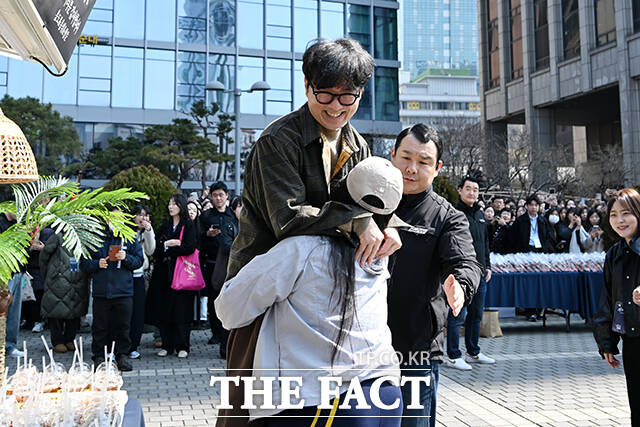
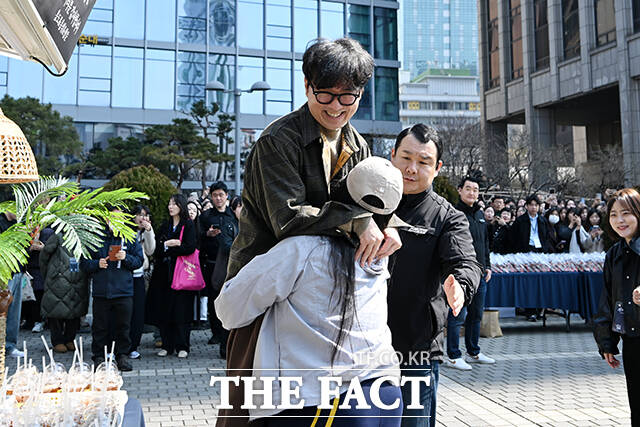
The highlight of today’s celebration wasn’t just the free lattes. It was the moment a fan, overwhelmed with excitement, literally picked Director Jang up and cradled him like a child—a move known in Korea as ‘Eohwa-dung-dung.’ The photo has already clocked over 40,000 views on community boards like TheQoo within an hour. It captures the essence of why this 12-million-viewer milestone feels so personal to the public. Jang Hang-jun isn’t an untouchable auteur; he is a director who celebrates with his audience. In an industry often accused of being elitist or disconnected, this level of raw, goofy interaction is refreshing. It’s the kind of organic viral marketing that money simply cannot buy.
“Look at his face! He looks genuinely terrified and happy at the same time. This is why we love Jang Hang-jun. He’s the only ’10-million director’ who would let a random citizen pick him up like a sack of potatoes in the middle of Seoul.” — Anonymous comment on TheQoo (Post #4123663007).
Reflecting on the event, it’s interesting to see how the ‘reverse tribute’ (역조공) culture has shifted from idols to creators. Usually, we see K-pop stars giving out snacks to fans, but for a film director to spend his afternoon pouring coffee for citizens at Seoul Shinmun Square speaks to the changing dynamics of fame in 2026. Jang knows that his success is a gift from the ’12-million-man’ collective. By stepping out of the VIP lounges and into the public square, he’s acknowledging that the film’s life exists in the conversations of the people, not just in the ledger of the production house.
Breaking the ‘Writer’s Husband’ Curse
For years, Jang Hang-jun has leaned into the self-deprecating joke that he is merely the ‘husband of world-renowned writer Kim Eun-hee.’ It was a bit that worked for variety shows, but it often overshadowed his actual craft. With The King and the Man, that narrative has officially shifted. While Kim Eun-hee’s influence on the industry remains gargantuan, this film belongs entirely to Jang’s vision. The way he handles the ensemble cast—extracting career-best performances from both the veterans and the rookies—proves that he has a directorial eye for talent that is second to none. He didn’t need a high-concept thriller to win; he won with a story about people.
“I used to just think of him as the funny guy on ‘Hangout with Yoo,’ but after seeing ‘The King and the Man’ three times, I realized he’s a genius. The way he framed the betrayal scene… I haven’t stopped thinking about it for weeks.” — User ‘MovieBuff99’ on a local film forum.
The performances in this film are particularly noteworthy. The chemistry between the leads felt lived-in and weary, avoiding the melodramatic traps that often plague historical dramas. Jang’s direction allowed for silence, a rarity in modern blockbusters. He trusted his actors to convey the weight of the 12-million-viewer expectations without over-acting. This restraint is what allowed the film to cross over from a genre hit to a national phenomenon. It appealed to the youth through its satirical bite and to the older generation through its classical tragic structure. It is, quite simply, a film for everyone.
Technical Breakdown and Minor Criticisms
No film is perfect, and even a 12-million-viewer hit has its cracks. The writing falters slightly in the second act, where the pacing slows down a bit too much for the sake of political exposition. There are moments where the dialogue feels a bit too modern for the setting—a common trope in Jang’s work that sometimes pulls the viewer out of the immersion. However, these are minor gripes when compared to the overall production value. The costume design, in particular, deserves an award. The way the fabric moved during the action sequences was captured with such clarity that you could almost feel the texture of the silk.
| Category | Rating | Notes |
|---|---|---|
| Writing | ★★★★☆ | Sharp satire, slight mid-film drag. |
| Direction | ★★★★★ | Career-defining visual choices. |
| Acting | ★★★★★ | The ensemble cast is flawless. |
| Production | ★★★★★ | Top-tier costume and set design. |
| Overall | 9.2/10 | A 2026 masterpiece. |
The cinematography by the team that previously worked on several dark thrillers brought a much-needed grit to the palace. Instead of the usual bright, flat lighting we see in many ‘Sageuk’ (historical) dramas, The King and the Man utilized natural light and deep shadows to create a sense of impending doom. This technical prowess, combined with Jang’s humanistic touch, is the secret sauce. It’s a film that looks expensive but feels intimate. That is a difficult balance to strike, but Jang Hang-jun made it look effortless.
The Verdict: Why This Film Matters for K-Cinema
As we look at the landscape of Korean cinema in early 2026, The King and the Man stands as a beacon of hope. It proves that original stories—not just sequels or webtoon adaptations—can still command a massive audience if they are told with sincerity and skill. Jang Hang-jun has evolved from a ‘lucky’ director into a formidable storyteller who understands the pulse of the nation. The coffee truck event today wasn’t just about celebrating a number; it was about celebrating the return of the ‘theatrical experience’ as a communal cultural event.
“12 million people didn’t just watch a movie; they shared an emotion. Jang Hang-jun reminded us why we go to the cinema in the first place. Also, seeing him get carried like that made my day.” — Social media reaction from today’s event.
If you haven’t seen The King and the Man yet, you are officially in the minority. It is a work that demands to be seen on the big screen, not just for the visuals, but for the collective gasps and laughs of the audience. Jang Hang-jun has set a high bar for the rest of 2026. Whether he’s being cradled by a fan or standing behind a camera, he is currently the king of the Korean box office. And for once, no one is talking about who his wife is—they’re talking about his masterpiece.
Watch if: You appreciate sharp satire, incredible acting, and want to be part of the biggest cultural conversation of 2026.
Skip if: You have an irrational hatred for historical dramas or if you prefer your movies without any emotional weight.