



The 15-Second Awkwardness: Why Everyone is Talking About Elevators
So… my little birds have been busy, and this time they aren’t chirping about a secret date in Hannam-dong or a hidden tattoo on a rookie idol. No, the tea is actually brewing inside the most mundane place imaginable: the apartment elevator. You know the vibe. You step in, the doors slide shut, and suddenly you’re trapped in a 2×2 meter box with a complete stranger who lives exactly three floors above you. Do you look at your shoes? Do you pretend your phone is the most interesting thing in the world? Or do you actually—heaven forbid—say hello? This isn’t just a minor social hiccup anymore; it’s become a full-blown national debate that’s currently tearing through community boards like wildfire. I’m seeing posts everywhere, but one specific thread on TheQoo has absolutely exploded, garnering over 23,000 views in just a few hours. It seems like the ‘elevator greeting’ is the new litmus test for whether you’re a decent human being or a ‘socially awkward MZ-er’ in 2026.
What’s actually wild is how much passion people are bringing to this topic. We aren’t just talking about a simple ‘hi.’ We are talking about the fundamental breakdown of community spirit in modern Seoul. Some people are calling for a return to the days of ‘Jeong,’ where neighbors were like family, while others are practically begging for a law that mandates total silence from the lobby to the penthouse. The original poster on TheQoo started a fire by asking a simple question: ‘When you guys get on the apartment elevator and there’s someone there, do you greet them?’ The responses have been a chaotic mix of regional pride, social anxiety, and hilarious linguistic failures that honestly make me feel a little better about my own awkward social life. Let’s just say, the struggle is very, very real, and the comments are going INSANE right now.
The Regional Breakdown: Chungcheong-do vs. The World
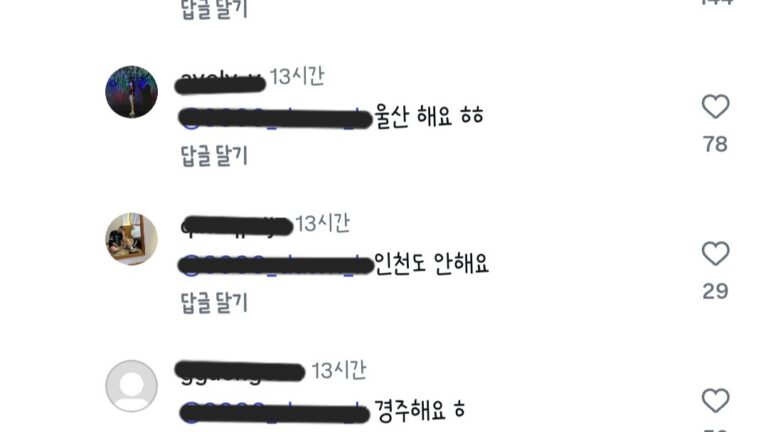
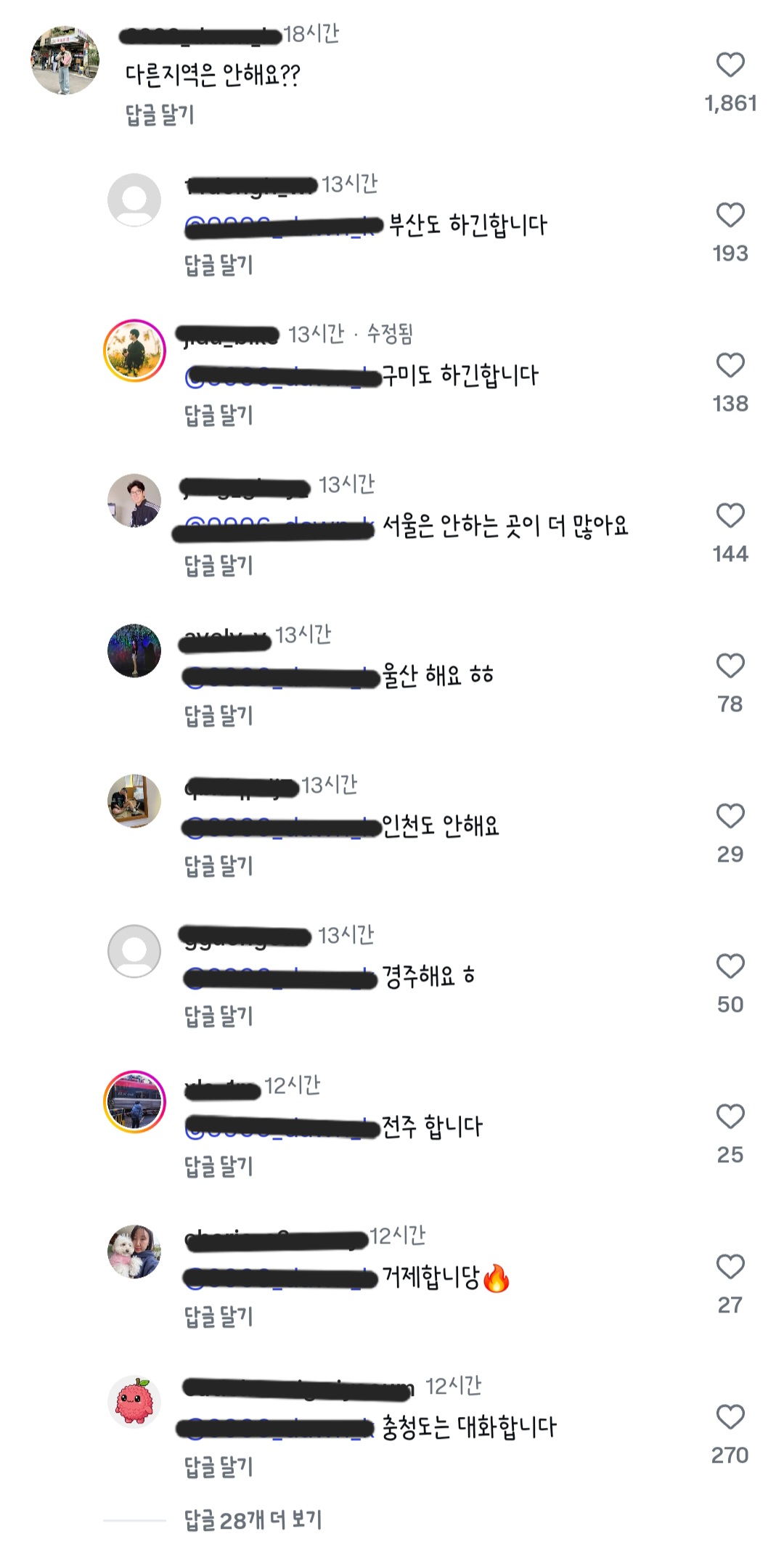
Now, I’m not saying names, but we all know that where you grew up in Korea dictates exactly how you handle these 15 seconds of terror. The thread points to a viral Instagram reel that’s been circulating (and honestly, it’s a mood), which highlights the legendary ‘Chungcheong-do style’ of communication. Apparently, in Chungcheong-do, people don’t just say hello; they launch into a full-length investigation of your life. They’ll ask where you’re going, what you bought for groceries, and why your mother hasn’t visited lately—all before the elevator hits the 7th floor. It’s a level of social bravery that most of us in Seoul can’t even fathom. Meanwhile, the original poster, who lives in Daegu, shared their own struggle, admitting that while they try to be polite, the execution is… questionable. They mentioned that they always try to say hello, but it usually comes out as a weird, mumbled ‘An-nyeong-h… yo~’ that fades into nothingness because they’re too shy to commit to the full sentence. I felt that in my soul.
“I live in Daegu and I always say hi, even when I’m getting off. But I usually just mumble the end… annyeong-h… yo~ (blurring it out). Sometimes I accidentally say ‘Please stay healthily’ (annyeong-hi gye-se-yo) to the person staying in the elevator when I’m the one leaving, and I want to die of embarrassment every single time.”
This ‘mumbling’ technique is actually a fascinating cultural phenomenon of 2026. It’s the perfect compromise for the modern Korean who wants to be perceived as polite but is absolutely terrified of actual human interaction. By blurring the end of the greeting, you satisfy the social requirement of making a noise without actually having to project confidence. It’s the linguistic equivalent of a ghosting someone in person. But it also leads to those legendary ‘elevator slips’ where your brain short-circuits and you use the wrong honorific or, as the Daegu resident mentioned, you tell a stranger to ‘stay’ when you’re the one who should be saying ‘goodbye.’ It’s these tiny, cringey moments that make the elevator the most high-stakes room in any building.
The ‘Earbud’ Shield and the Death of Small Talk
Let’s talk about the elephant in the room—or rather, the AirPods in the ears. In 2026, the universal sign for ‘do not perceive me’ is a pair of noise-canceling earbuds. I’ve noticed a lot of commenters arguing that the ‘elevator greeting’ is an outdated relic of a pre-digital age. For many Gen Z and Alpha residents, the elevator is a transition zone—a liminal space where they are mentally shifting from ‘work mode’ to ‘home mode.’ Being forced to acknowledge another human being during this transition is seen by some as an invasion of privacy. I’ve seen people on X (formerly Twitter) claiming that they specifically wait in the lobby until the elevator is empty just to avoid the possibility of a 10-second interaction. Is it that deep? Allegedly, for some, the answer is a resounding yes. The ‘earbud shield’ is a powerful tool, but it’s also creating a new kind of social friction with the older generation who see it as a blatant sign of disrespect.
There’s also the ‘Phone-Stare’ defense, which is a classic for a reason. You walk in, you immediately pull out your phone, and you scroll through your gallery or check the weather for the fifth time today just to avoid making eye contact with the person in the corner. But here’s the kicker: we all know what you’re doing. The person standing next to you knows you aren’t actually reading a very important email at 11:45 PM on a Tuesday. The tension created by two people pretending not to see each other is often much louder than a simple ‘hello’ would be. According to some community posts, this ‘forced ignorance’ is actually making apartment living feel more lonely than ever. We are living closer together than any generation in history, yet we are becoming experts at being invisible to one another.
The Pro-Greeting Camp: Is It Really That Hard?
On the flip side, there is a very vocal group of netizens who think the ‘no-greeting’ trend is just plain rude. They argue that a simple nod or a quick ‘hello’ doesn’t cost anything and makes the environment feel safer and more human. One top comment on the thread pointed out that in a world where we are increasingly isolated, these micro-interactions are the only thing keeping us grounded in a community. They aren’t asking for a 20-minute chat about your taxes; they just want a sign that you acknowledge their existence as a neighbor. And honestly? I kind of see their point. There’s something deeply depressing about standing in a metal box with someone who lives 10 feet away from you and pretending they are a piece of furniture.
“If we can’t even say hello to the people we share a building with, what’s next? I always say hi, especially to the kids. It’s how you build a neighborhood. If you’re too ‘socially anxious’ to say two syllables, maybe you’re the problem, not the elevator.”
This ‘tough love’ approach is gaining traction, especially among residents in larger apartment complexes where anonymity is the norm. Some complexes have even started ‘Greeting Campaigns’ with posters in the lobby encouraging people to say hello. Can you imagine? We’ve reached a point where we need government-adjacent intervention just to get people to acknowledge each other. But as one user pointed out, the ‘Greeting Campaign’ posters usually just get ignored or, even worse, covered in stickers by bored teenagers. It’s a battle of wills between the old-school proponents of ‘Jeong’ and the new-school defenders of ‘Personal Space.’
The ‘Accidental’ Insult: A Linguistic Minefield
One of the funniest parts of this whole debate is the linguistic struggle inherent in the Korean language. Because we have different levels of politeness and different words for ‘goodbye’ depending on who is staying and who is leaving, the elevator is a literal minefield. If you’re getting off on the 4th floor and the other person is going to the 10th, you have to use ‘An-nyeong-hi gye-se-yo’ (Stay peacefully). If you’re both getting off, it’s ‘An-nyeong-hi ga-se-yo’ (Go peacefully). But what if the door opens and you aren’t sure if they’re getting off too? The panic sets in, your brain freezes, and you end up saying something like ‘Gye-se-ga-yo’—a nonsensical hybrid that leaves both of you confused. This linguistic pressure is a huge reason why people choose silence. It’s easier to say nothing than to accidentally insult your neighbor’s entire bloodline with a misplaced verb ending.
I’ve heard stories of people who were so embarrassed by an elevator greeting gone wrong that they took the stairs for the next week just to avoid a repeat encounter. Let’s be real: the stakes are high. If you mess up a greeting with a stranger on the street, you’ll never see them again. But if you mess up with your neighbor on the 12th floor, you’re going to be seeing that person—and their judgment—for the next five years. It’s a recurring nightmare that plays out in high-speed vertical motion. No wonder the ‘mumble’ is the preferred method of the masses.
“The worst is when you say hi, and they just stare at you. That 5-second wait for the door to open after a rejected greeting feels like a lifetime. I once said hello to a guy in my building and he just looked at me like I was trying to sell him a cult membership. Never again.”
Sua’s Hot Take: The ‘Vibe Check’ Protocol
Okay, here’s my take, and I know some of you might not like it. I think the ‘mandatory greeting’ is a bit much, but the ‘total silence’ is just weird. We need a middle ground—a ‘Vibe Check’ protocol, if you will. If someone makes eye contact, give them a little head nod. It’s low effort, high reward. It says ‘I see you, I acknowledge you are a human, but I also respect that you probably haven’t had your coffee yet and don’t want to talk about the weather.’ If they have headphones in? Leave them alone. They are in their own world, and you are just a supporting character in their personal movie. But if it’s an elderly neighbor? You better say that ‘An-nyeong-ha-se-yo’ loud and clear, or you’re going to be the subject of the next ‘Rude Young People’ rant at the local community center.
The tea is scalding today because this isn’t just about elevators; it’s about how we’re changing as a society. In 2026, we are more connected than ever through our screens, but we’re losing the ability to handle the simplest physical interactions. We’re so worried about being ‘cringe’ or ‘awkward’ that we’ve forgotten how to just be neighbors. So, next time you’re in that 2×2 meter box, maybe try a little nod. Worst case scenario? You end up as a funny anecdote on a TheQoo thread. Best case? You actually feel like you live in a community instead of a high-rise filing cabinet.
“Honestly, the best people are the ones who just do a quick ‘half-bow’ and look back at the floor numbers. It’s the perfect amount of social interaction. We don’t need to be besties, we just need to not be ghosts.”
So, where do you stand? Are you a ‘mumble-hello’ veteran, or are you firmly in the ‘earbuds-on-eyes-down’ camp? The comments on the original post are still flying in, and the divide doesn’t seem to be narrowing anytime soon. Some are even suggesting that developers should start installing ‘silent’ and ‘social’ elevators in new apartment complexes. Can you imagine the chaos of trying to pick which one to get into? ‘Oh, I’m feeling social today, let me wait for the chatty elevator.’ Yeah, right. In reality, we’re all just trying to get to our front doors with our dignity intact. Stay tuned, because I’m sure this debate will reach a boiling point before the next lunar New Year. Until then, watch your honorifics and maybe… just maybe… try a little smile. 🍵
—
*This article contains community reports and social commentary based on trending topics. SYNC SEOUL provides coverage of public discourse and does not claim these opinions represent the entirety of any demographic.*