


The Square Piece of Controversy in Your Ramen Bowl
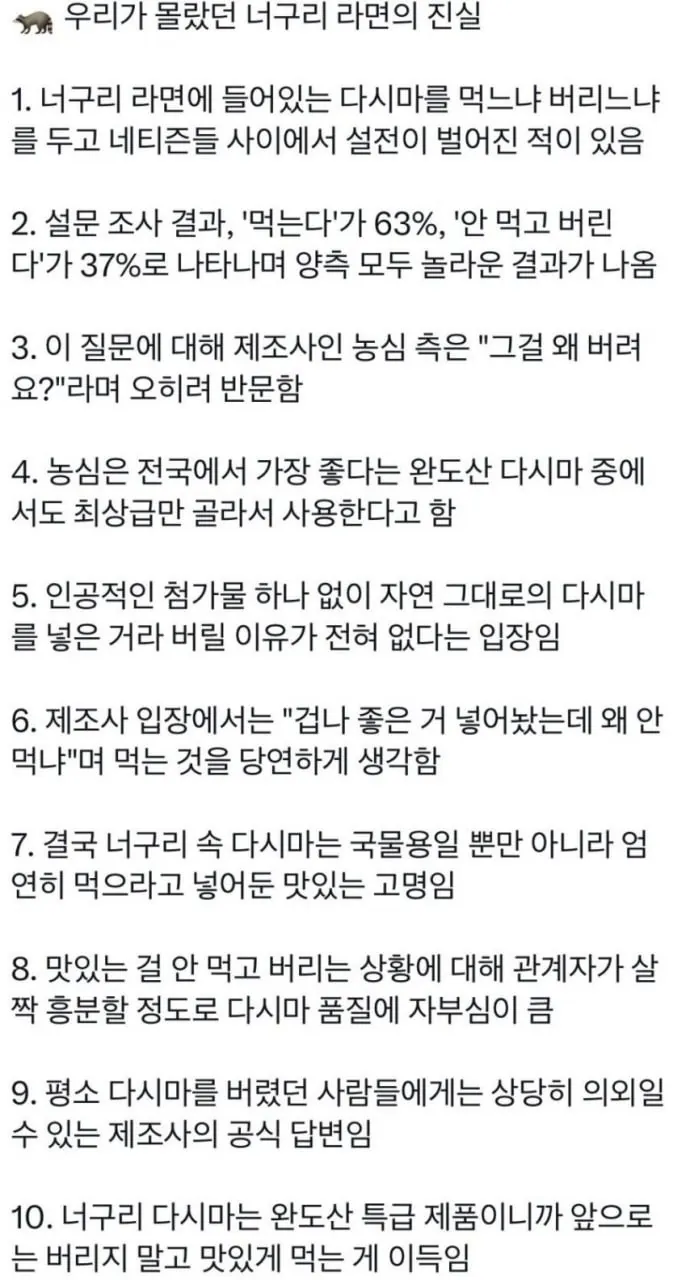
Okay, real talk—we’ve all been there. You’re standing in the aisle of a GS25 or Olive Young’s snack section on a chilly March night in 2026, and your eyes land on that iconic spicy seafood package. Neoguri. It’s a classic for a reason. But as soon as you tear open that lid and see that single, thick square of dark dried kelp (dashima), the internal struggle begins. Do you leave it in? Do you throw it away after boiling? Or do you—as the purists suggest—actually eat it? This morning, while I was scrolling through my feed with an iced americano in hand, I stumbled upon a massive thread on TheQoo that has the K-food community absolutely losing it. With over 53,000 views and nearly 500 comments, the debate over ‘the truth about Neoguri kelp’ is officially the hottest topic in Seoul right now.
For those of you who might be new to the K-ramen world, Neoguri is famous for its thick, udon-style noodles and its deep, oceanic broth. But its true claim to fame is that solitary piece of kelp. It’s not just a garnish; it’s a cultural touchstone. I’ve seen friendships nearly end over this. I’ve seen couples argue in convenience stores. One side claims the kelp is strictly for flavor infusion—a disposable tea bag of the sea. The other side? They view that rehydrated, slippery square as the ultimate prize, the ‘chef’s kiss’ at the bottom of the bowl. Let’s dive into why this tiny piece of seaweed is causing such a stir in 2026.
Team ‘Throw It Away’ vs. Team ‘It’s the Best Part’
The divide is deeper than you think. On the ‘Toss It’ side, the logic is purely functional. These folks argue that once the water has reached a rolling boil and the kelp has released its glutamates into the broth, its job is done. They find the texture of the rehydrated kelp to be a bit too rubbery or ‘slimy’ for their liking. I’ve heard friends say it feels like eating a soggy piece of paper. They treat it like a bay leaf in a stew—essential for the process, but not meant for the plate. If you’re a texture-sensitive eater, I totally get where you’re coming from. Sometimes, when I’m in a rush, I’ve been guilty of just pushing it to the side of the lid.
“I honestly didn’t know people actually ate that thing. I always thought it was just a flavor enhancer like a tea bag! My roommate looked at me like I was a criminal when she saw me throw it in the food waste bin.” — User ‘RamenLover99’ on TheQoo
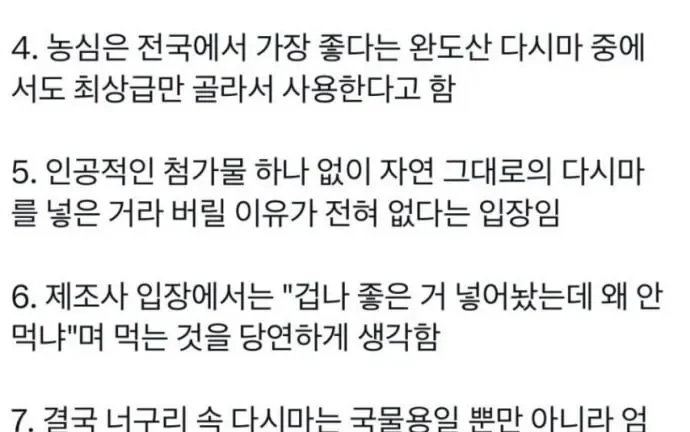
Then we have the ‘Eat It’ camp. To these enthusiasts, the kelp is the heart and soul of the Neoguri experience. They wait for that piece of dashima to soak up the spicy, seafood-infused broth until it’s plump and tender. They argue that eating the kelp provides a necessary nutritional boost and a unique umami explosion that rounds out the meal. In the trending TheQoo post, the sentiment was overwhelmingly in favor of eating it. The title of the post, ‘The truth about Neoguri ramen we didn’t know,’ was followed by a caption that simply said, ‘Why would you throw it away? ㅠ,’ capturing the collective heartbreak of the pro-kelp community.
The Wando Connection: Why This Kelp Actually Matters
Here’s a bit of insider knowledge that might change your perspective. Nongshim, the giant behind Neoguri, doesn’t just pick any random seaweed. They have a long-standing relationship with the fishermen in Wando, an archipelago in South Jeolla Province famous for producing Korea’s finest kelp. Every year, the company purchases hundreds of tons of high-quality kelp from this region. This isn’t just corporate fluff; it’s a major part of the local economy in Wando. When you see that square in your bowl, you’re looking at a carefully sourced ingredient that has been part of the brand’s identity since 1982.
As someone who values the story behind what I eat, knowing that this kelp supports local Korean fishing communities makes me want to appreciate every bite. In 2026, we’re seeing a huge shift toward ‘conscious eating,’ even when it comes to instant noodles. People want to know where their food comes from. The fact that Neoguri has maintained this commitment for over four decades is actually pretty impressive. It’s not just ‘trash’—it’s a premium ingredient hidden inside a budget-friendly meal. Trust me on this one: once you realize the effort that goes into sourcing that single piece of dashima, throwing it away feels like a waste of a tiny piece of culinary history.
“Wait, people are really throwing it out? That’s the most expensive part of the ingredients! Wando kelp is top-tier stuff. You guys are literally throwing away money and nutrition.” — User ‘K-Foodie_Seoul’
The Science of Umami: What Happens When You Boil It?
Let’s get a little technical for a second, but I’ll keep it simple. Kelp is naturally packed with MSG—the good kind, found in nature. When you boil that square of dashima, it releases glutamic acid, which is the chemical responsible for that savory, mouth-watering ‘umami’ flavor. This is why Neoguri broth tastes so much deeper and richer than your standard beef-flavored ramen. If you remove the kelp too early, you’re cutting the flavor profile short. I’ve tested this myself: a bowl of Neoguri boiled without the kelp (don’t ask why I did that, it was a dark time) tastes surprisingly flat.
But what about the texture? By the time your noodles are perfectly al dente, the kelp has softened just enough to have a pleasant ‘snap’ to it. It’s a contrast to the chewy noodles that I personally find really satisfying. If you’re still on the fence, try cutting the kelp into thin strips with kitchen shears while it’s in the pot. This distributes the flavor even more and makes the texture less intimidating. It’s a total game-changer for my ‘Team Toss It’ friends who are trying to convert. It integrates into the meal rather than sitting there like a giant, intimidating sea-monster leaf.
What the 466 Commenters are Saying Right Now
The comment section on the viral TheQoo post is a goldmine of Korean cultural nuances. Many users expressed genuine shock that ‘Team Toss It’ even exists. Some users shared childhood memories of fighting over the kelp with their siblings. In the 80s and 90s, getting the ‘double kelp’ pack (a rare manufacturing quirk where two pieces of kelp end up in one bag) was considered a sign of extreme good luck—the 20th-century equivalent of winning the lottery. Even now in 2026, finding two pieces of dashima in your Neoguri is a ‘post-to-Instagram-immediately’ moment.
“I once found three pieces in one bag and I felt like the universe was telling me I’d pass my exams. I ate every single one of them. If you throw them away, you’re throwing away your luck!” — User ‘LuckyStudent26’
However, there’s a small but vocal minority that stands their ground. One commenter noted, ‘I just can’t do the texture. I acknowledge the flavor it gives the soup, and I’m grateful for the Wando fishermen, but it stays in the bowl when I’m done.’ This led to a hilarious sub-thread about ‘Kelp Etiquette’—is it okay to leave it in the bowl if you’re eating at a friend’s house, or is that considered rude to the cook (and the kelp)? The consensus? As long as you don’t throw it in the trash before the soup is done, you’re mostly forgiven.
Mina’s Ultimate Neoguri Routine (2026 Edition)
If you want to experience Neoguri the way a true curator does, you have to level up your routine. I’ve been perfecting this for years, and it never fails. First, don’t just throw everything in at once. Put the kelp in the water *before* it starts boiling. This gives it extra time to rehydrate and release those precious minerals. Once the water hits a rolling boil, add your soup base and the vegetable flakes. Only then do you add the noodles. This ensures the broth is at peak umami by the time the noodles are ready.
For a truly ‘chef’s kiss’ experience, I like to add a few extras. Since we’re in 2026, I’m currently obsessed with adding a splash of oat milk at the very end—it creates a creamy, seafood-chowder vibe that is out of this world. And of course, a soft-boiled egg is non-negotiable. But the star remains the kelp. I eat it last, like a little savory dessert. It’s soaked up all the spicy oil and the creaminess of the broth. It’s honestly the best part of the meal, and I will die on this hill. If you’ve been throwing it away, I’m begging you: just try one bite next time. You might just find your new favorite part of the bowl.
The Final Verdict: To Eat or Not to Eat?
At the end of the day, food is personal. But here’s my honest take: the kelp is what makes Neoguri *Neoguri*. Without it, you’re just eating spicy noodles. With it, you’re partaking in a 40-year-old tradition that connects you to the sea, the history of Wando, and the collective memories of millions of Koreans. The ‘Great Kelp Debate’ might never be fully resolved, but the fact that we’re still talking about it with such passion in 2026 shows just how much we love our comfort food.
So, the next time you rip open a pack of Neoguri, look at that little dark square with a bit more respect. It’s worked hard to get to your bowl. Whether you choose to eat it or leave it behind, just make sure you appreciate the flavor it gave its life for. And hey, if you really don’t want it… feel free to pass it over to my bowl. I’ll never say no to extra dashima. What about you? Are you Team Eat or Team Toss? Let me know in the comments, and let’s keep this debate going!