



👀 So… my little birds have been busy, and the tea is SCALDING today! 🍵
You won’t believe what just dropped on TheQoo and has the entire Korean internet buzzing. It’s not about a celebrity dating scandal this time, but something far more fundamental, something that touches the very fabric of Korean society. We’re talking about marriage, birth rates, and who’s doing the dishes. Yes, really.
A post titled, "Korean men are one of the most passive groups in the world in terms of housework, and as a result, the burden is excessively concentrated on women. This imbalance is a decisive factor making Korean women reluctant to marry and have children – according to Nobel laureate Professor Goldin’s analysis," has absolutely exploded online. With over 29,406 views and 348 comments, it’s clear this isn’t just a casual chat; it’s a full-blown societal discussion that’s got everyone talking.
The post itself, shared widely across various online communities, directly challenges a peculiar narrative that has been gaining traction in some corners: the idea that Korean men are somehow "cleverly" avoiding marriage with Korean women. The author of the TheQoo post doesn’t mince words, calling this claim "complete nonsense." Instead, they argue that the reality is quite the opposite: women are making a "rational choice" to opt out of marriage and childbirth because they are disproportionately burdened with both professional careers and the entirety of household chores and childcare.
The Nobel Laureate’s Eye-Opening Analysis: A Global Mirror
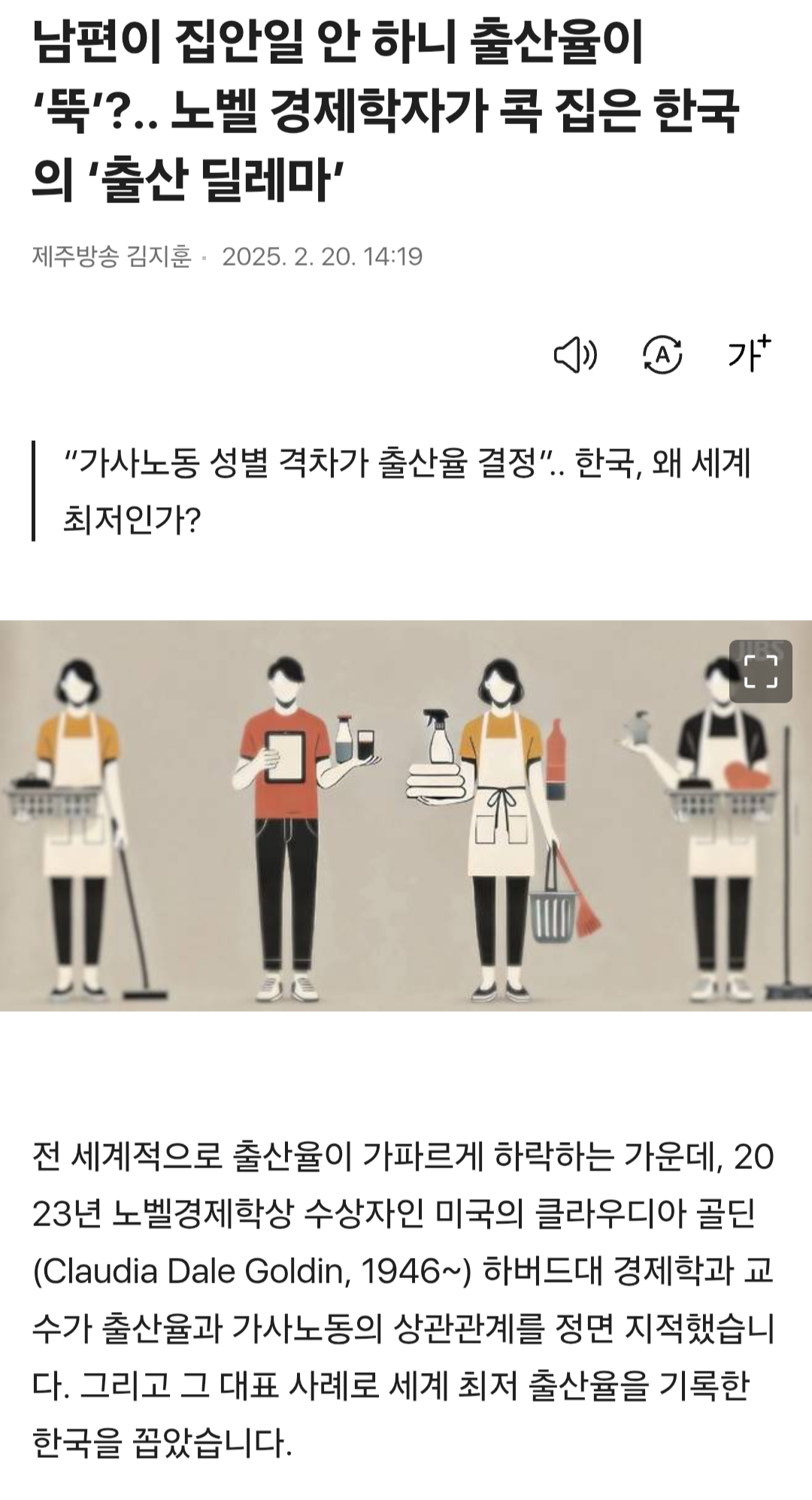
Now, who exactly is this "Professor Goldin" whose insights are stirring such a pot? We’re talking about Claudia Goldin, a Nobel Prize-winning economist from Harvard University. Her research, particularly on women in the labor market and the gender pay gap, has earned her global recognition. And apparently, her analysis extends directly to the dynamics playing out in Korean households, offering a powerful, data-driven explanation for the country’s plummeting marriage and birth rates.
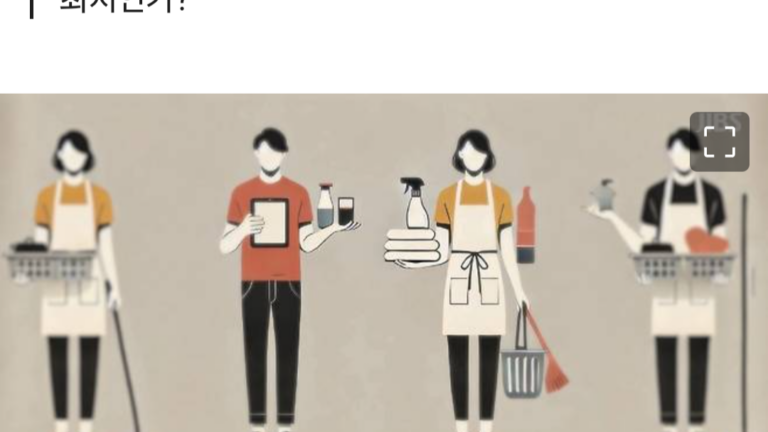
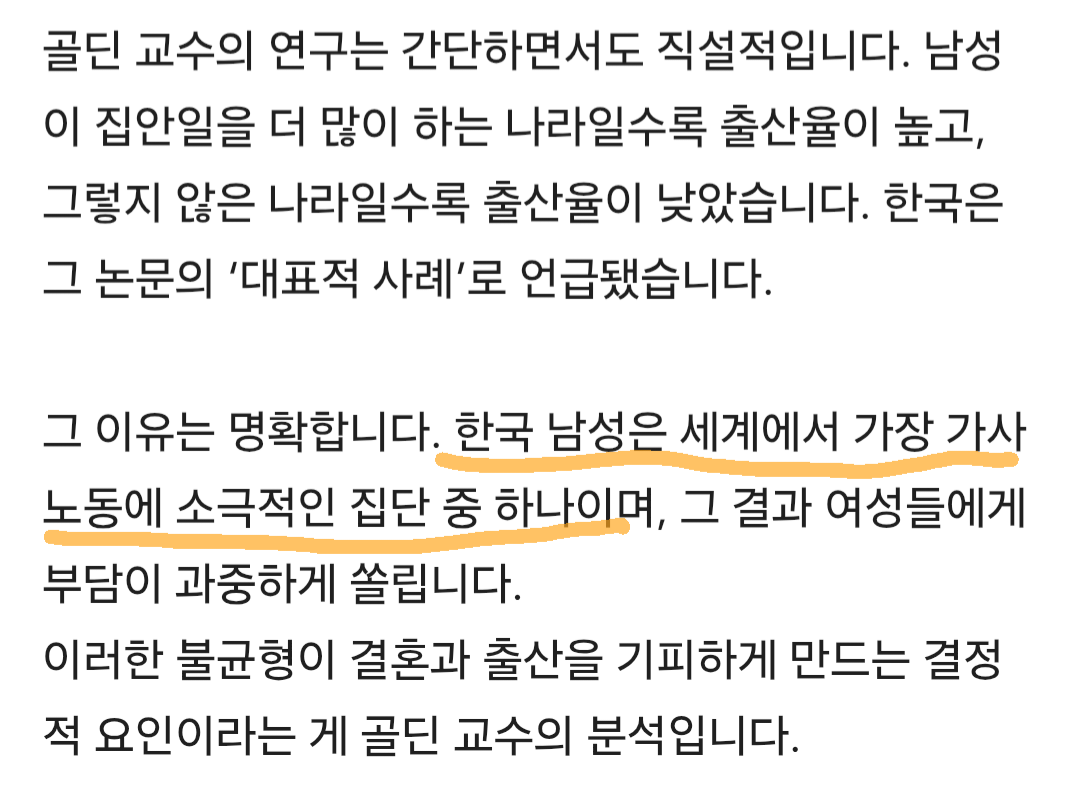
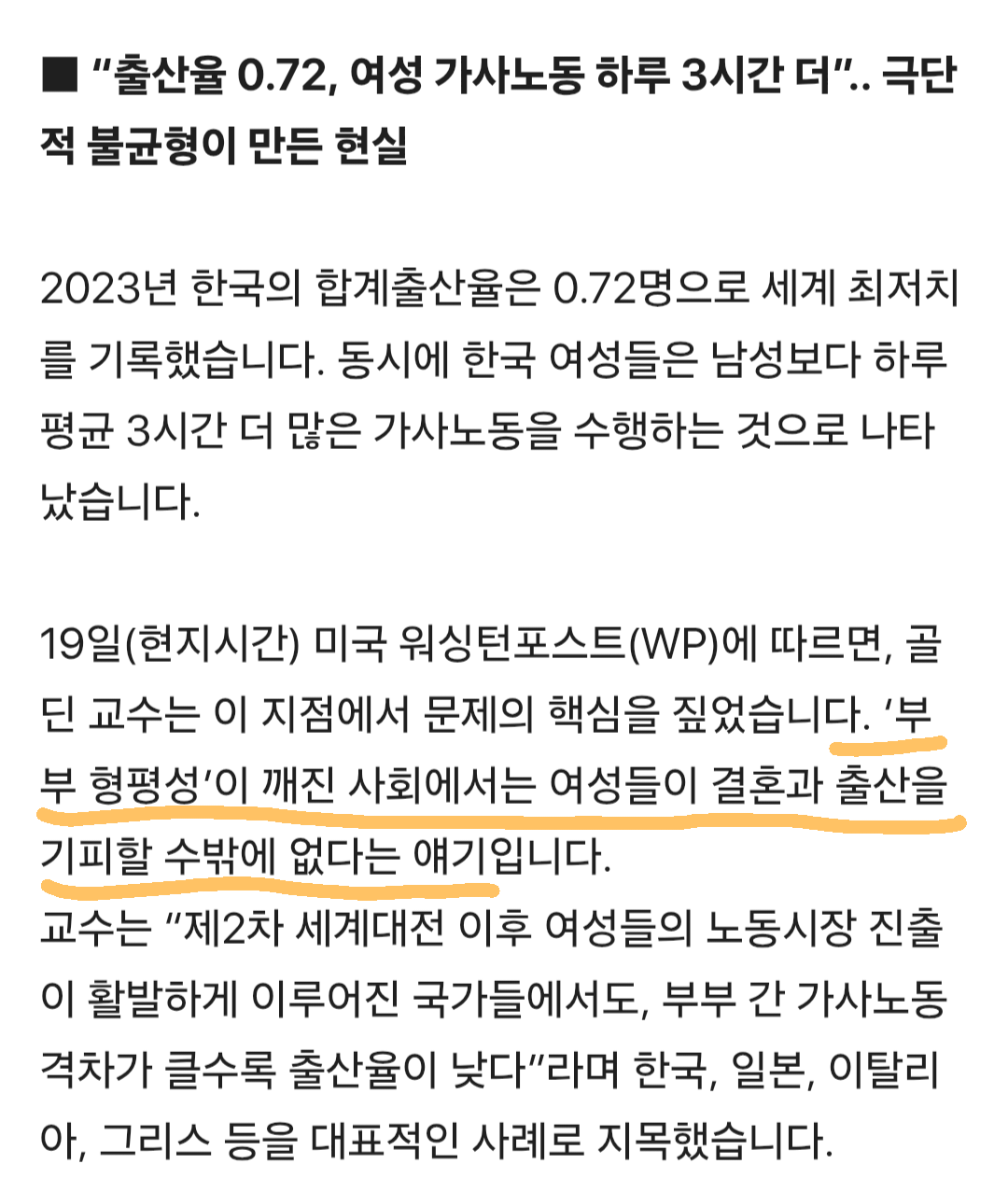
According to Goldin’s findings, which the TheQoo post highlights, Korean men are indeed among the least active globally when it comes to contributing to domestic labor. This isn’t just a minor imbalance; it’s a significant burden that falls almost entirely on women, even when both partners are working full-time. Imagine working a demanding job all day, then coming home to a second shift of cooking, cleaning, and childcare – with little to no help. It’s exhausting just thinking about it, isn’t it?
Goldin’s work suggests that for many women, the traditional expectation of being a "superwoman" – excelling in their careers while also single-handedly managing the home – simply isn’t sustainable or desirable. It’s not about a lack of desire for partnership or family; it’s about the overwhelming, often invisible, cost of that partnership in terms of personal time, energy, and career progression. This perspective frames the declining rates of marriage and childbirth not as a societal failing on the part of women, but as a logical, self-preserving response to an unfair system.
The Community Pulse: "My Heart is Broken, But I Understand"
The comments section on TheQoo is, as you can imagine, a wildfire of opinions. It’s rare to see such a strong consensus on a controversial topic, but the vast majority of comments resonate with Goldin’s analysis, sharing personal experiences and frustrations. Many women describe feeling trapped between societal expectations and the harsh reality of their daily lives, while some men express surprise or a call for introspection.
"This is exactly why I don’t want to get married. My friends who are married are basically single moms living with an extra child (their husband)." – A common sentiment echoing widespread frustration.
"Honestly, when I see my male colleagues bragging about ‘helping’ with housework, it just makes me laugh. Helping? It’s your responsibility too!" – Criticizing the mindset of domestic work as ‘help’ rather than shared duty.
"I always thought it was just my husband, but seeing this analysis makes me realize it’s a systemic issue. It’s disheartening." – A woman realizing her personal struggle is part of a larger pattern.
"It’s true. My wife works just as hard as I do, but she still does 90% of the housework. I need to do better." – A rare, but welcome, moment of male self-reflection.
The sheer volume of supportive comments, many sharing detailed anecdotes of their experiences, paints a vivid picture. It’s clear that this isn’t just academic theory; it’s the lived reality for countless Korean women. The thread has become a space for collective venting, validation, and a call for change. The raw honesty in the comments is truly something to behold, confirming that this "tea" has been brewing for a long, long time.
Debunking the "Clever Men" Narrative: A Reality Check
The original TheQoo post directly confronts a narrative that has, in recent years, tried to shift blame and redefine the issue. This narrative, which the post dismisses as "complete nonsense," suggests that Korean men are somehow strategically avoiding marriage with Korean women due to perceived flaws or demands. This isn’t just a minor disagreement; it’s a fundamental mischaracterization of the problem.
Instead, the post, backed by Goldin’s research, argues that the declining marriage and birth rates are a direct and rational response from women. When faced with the prospect of a "double burden" – maintaining a career while also shouldering nearly all domestic and childcare responsibilities – many women are simply choosing not to enter into such arrangements. It’s a calculated decision to protect their well-being, their careers, and their personal freedom, rather than a whimsical or emotional one. This isn’t about men being "clever"; it’s about women being "wise" to the unequal realities that often accompany marriage in Korea.
This perspective flips the script entirely. It moves away from blaming individuals or genders and instead points a finger at systemic issues and deeply ingrained cultural norms surrounding gender roles and domestic labor. It suggests that if society wants to encourage marriage and childbirth, the focus needs to be on creating genuinely equitable partnerships, not on shaming or blaming women for making choices that prioritize their own sanity and future.
The Double Burden: An Invisible Weight on Korean Women
Let’s talk about this "double burden" a bit more, shall we? It’s not just a cute phrase; it’s a heavy reality. Korean women are increasingly educated and career-driven, making significant strides in professional fields. Yet, traditional expectations regarding their role in the home persist with an almost iron grip. This means that even if a woman holds a demanding job, earns a substantial income, and contributes equally (or more) financially, the vast majority of housework, meal preparation, childcare, and elderly care often still falls squarely on her shoulders.
This isn’t just about physical labor; it’s about the mental load – the constant planning, organizing, and remembering all the details that keep a household running. This invisible labor is often unrecognized and undervalued, leading to burnout, stress, and a profound sense of unfairness. For many women, the prospect of taking on this additional, unpaid, and often unappreciated "second shift" after a full day’s work is simply too daunting to contemplate, especially when their partners are not expected to contribute equally.
The societal pressure to conform to these traditional roles, even in modern dual-income households, can be immense. Women might face criticism from in-laws, friends, or even their own families if they don’t fulfill these expectations. The lack of affordable and accessible childcare, combined with long working hours for both men and women, only exacerbates the problem, making it nearly impossible for women to balance both worlds without significant personal sacrifice. It’s a lose-lose situation that often forces women to choose between their career and their personal life, a choice many men are simply not asked to make.
The Looming Shadow: Implications for Korea’s Future
The insights from Goldin’s analysis and the fervent discussions on platforms like TheQoo aren’t just about individual relationships; they have profound implications for the future of Korean society. With the world’s lowest birth rate and a rapidly aging population, Korea is facing a demographic crisis of unprecedented scale. If women continue to rationally choose against marriage and childbirth due to unequal domestic burdens, these demographic trends are only set to worsen.
This isn’t merely an economic problem; it’s a social and cultural one. A shrinking workforce, an overburdened social welfare system, and a potential loss of cultural vitality are all on the horizon if these trends continue unchecked. The conversation needs to shift from blaming women or external factors to genuinely addressing the root cause: the persistent gender inequality within households and the societal structures that perpetuate it. It requires a fundamental re-evaluation of traditional gender roles and a commitment from all members of society – men, women, and institutions – to foster more equitable partnerships.
Ultimately, the tea spilled by Nobel laureate Goldin and amplified by Korean online communities is a bitter, yet necessary, truth. It’s a stark reminder that if Korea truly wants to encourage its women to marry and have children, it must first create a society where they are not expected to bear the brunt of both professional and domestic responsibilities alone. It’s a call for men to step up, for society to evolve, and for a more balanced future where "rational choice" leads to partnership and family, not away from it. The comments are going INSANE, and honestly, who can blame them?
—
*This article contains analysis and community discussions based on academic research and should be treated as a reflection of ongoing societal debate. SYNC SEOUL does not make definitive claims about individual experiences but reports on trends and discussions within Korean society.*