



Netflix Greenlights ‘Ordinary People’: A Deep Dive into Korea’s Controversial Past
The Korean film and drama landscape is never one to shy away from history, no matter how contentious. Yet, even by those standards, the recent buzz surrounding Netflix’s upcoming film, tentatively titled ‘Ordinary People’ (보통사람들), is generating a seismic ripple. With a cast list that reads like a who’s who of Korean cinema and a premise delving into the intertwined lives of Chun Doo-hwan and Roh Tae-woo, this project is poised to be more than just another historical drama; it’s shaping up to be a significant cultural event, demanding critical attention from the outset. Early reports confirm that the film will center on the complex relationship between these two figures, whose legacies remain deeply divisive in South Korea.
What makes this announcement particularly compelling is not just the subject matter, but the platform itself. Netflix, with its vast global reach and substantial production budgets, is committing to a narrative that is both profoundly local and universally relevant in its exploration of power, betrayal, and the human cost of political ambition. This isn’t merely a recounting of facts; it’s an artistic endeavor to dissect a period that continues to cast a long shadow over the nation’s collective memory. The decision to bring such a sensitive story to an international audience through Netflix signifies a bold move, promising a level of detail and scope that might be challenging for traditional broadcast networks.
The film’s working title, ‘Ordinary People,’ immediately catches the discerning eye. Cinematically speaking, titles are never accidental, especially when dealing with historical figures of such magnitude. This phrase, ‘보통사람들,’ famously served as Roh Tae-woo’s presidential campaign slogan, a strategic attempt to shed his military dictator image and present himself as a relatable civilian leader. The source data explicitly notes that the director’s intention is almost certainly to satirize this very notion, exposing the hypocrisy of those who wielded immense power under the guise of being ‘ordinary.’ It’s a title that, even before a single frame is shot, already sets a critical tone, suggesting a narrative that will peel back layers of carefully constructed public personas to reveal the darker truths beneath. This kind of nuanced, almost sarcastic, framing is exactly what elevates a historical retelling from mere documentation to incisive social commentary.

The Weight of History: A Director’s Unflinching Vision
The directorial approach to a film like ‘Ordinary People’ is paramount, perhaps even more so than the star power involved. Thankfully, the source information provides a crucial insight: the director’s known inclination ensures this will be anything but a beautification of the past. This is a vital piece of context, alleviating immediate concerns that the film might romanticize or soften the brutal realities of military dictatorship. Instead, we can anticipate a narrative that adheres to a critical perspective, unafraid to confront the controversial actions and profound impact of Chun Doo-hwan and Roh Tae-woo on Korean society. The director’s choice to tackle this period head-on, with an anti-beautification stance, suggests a commitment to historical accuracy and ethical storytelling, rather than a simplistic or revisionist portrayal.
Portraying figures as reviled and complex as Chun Doo-hwan and Roh Tae-woo presents a tightrope walk for any filmmaker. The narrative must navigate the fine line between humanizing its subjects enough for dramatic depth and ensuring their historical culpability is not diluted. This isn’t just about depicting events; it’s about dissecting the motivations, the power dynamics, and the psychological underpinnings of individuals who shaped a nation’s destiny through authoritarian rule. The writing here must be meticulously researched and unflinchingly honest, avoiding the pitfalls of easy villainy or, worse, sympathetic revisionism. A masterclass in this genre would manage to show the individuals without excusing the atrocities, presenting a chilling portrait of how power corrupts and absolves itself.
Such a project will inevitably ignite fervent public discourse. The online community is already buzzing, with the source post garnering over 55,099 views and 745 comments, reflecting the deep public interest and, likely, strong opinions surrounding this period. Koreans still carry the scars of the Gwangju Uprising and the subsequent military rule, and any depiction of these figures is met with intense scrutiny. The film’s success won’t just be measured by critical acclaim or box office numbers, but by its ability to provoke meaningful reflection and contribute to the ongoing historical reckoning. This isn’t just a film; it’s a cultural artifact that will weigh heavily on the national psyche.
“감독 성향 보면 미화 걱정은 안 해도 될 듯. 오히려 제대로 깔아뭉개줬으면 좋겠다.”
— A netizen on TheQoo
A Casting Coup: Ha Jung-woo, Son Seok-gu, and an Ensemble of Titans
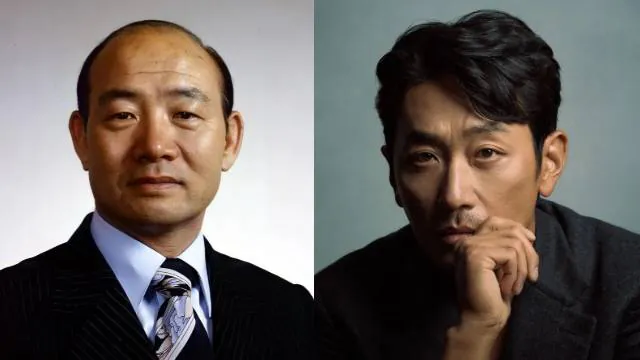
The casting of ‘Ordinary People’ is nothing short of a strategic masterstroke, assembling a lineup that guarantees both critical attention and widespread audience appeal. Ha Jung-woo, slated to play Chun Doo-hwan, is an actor renowned for his incredible range and ability to inhabit morally ambiguous characters with chilling conviction. His past performances, often portraying men driven by dark ambition or caught in desperate circumstances, suggest he possesses the gravitas and intensity required to tackle a figure as historically charged as Chun. What elevates his casting is his capacity to portray internal struggle and external ruthlessness simultaneously, which will be crucial for a nuanced portrayal that doesn’t simply caricature the dictator.
Opposite him, Son Seok-gu, cast as Roh Tae-woo, brings a different but equally compelling energy. Son’s recent surge in popularity and critical acclaim, particularly for his roles that blend charm with underlying menace or profound vulnerability, makes him an intriguing choice. His performances often hint at a complex interiority, an actor’s choice to reveal the layers beneath the surface. The dynamic between Ha Jung-woo’s Chun Doo-hwan and Son Seok-gu’s Roh Tae-woo will undoubtedly be the narrative’s central pillar. Cinematically speaking, the chemistry—or lack thereof, depending on the scene’s intent—between these two powerhouses will dictate much of the film’s emotional and political resonance. Their on-screen clash or insidious collaboration could be a masterclass in psychological drama.

Beyond the two leads, the announcement of Joo Ji-hoon and Ji Chang-wook joining the cast further solidifies the film’s star-studded appeal. Their involvement suggests a broad narrative scope, indicating that ‘Ordinary People’ won’t be confined to just the Chun-Roh dynamic but will likely explore the wider network of individuals caught in the political maelstrom of the era. Joo Ji-hoon has proven his versatility across genres, from historical epics to contemporary thrillers, while Ji Chang-wook brings a blend of charismatic screen presence and dramatic depth. Their inclusion not only adds significant star power but also promises a rich mise-en-scène of supporting characters who will flesh out the historical context, providing different perspectives and experiences of the authoritarian period. This ensemble signals a high-caliber production that aims for both depth and reach.
“하정우랑 손석구 조합이라니… 이건 무조건 본다. 연기 대결 기대돼서 미치겠네.”
— A netizen on TheQoo
Netflix’s Global Stage and Production Ambition
Netflix’s backing of ‘Ordinary People’ is a game-changer for a film of this nature. The platform offers not only substantial financial resources, enabling a high level of production quality, but also unparalleled global distribution. This means a story deeply rooted in Korean history will reach audiences worldwide, potentially educating and engaging viewers who might be unfamiliar with this complex period. The director’s choice to partner with Netflix speaks volumes about the ambition of the project—to tell a story without the traditional constraints often faced by local productions, allowing for greater creative freedom and a more expansive canvas for visual storytelling. This is a clear signal that ‘Ordinary People’ aims to be a definitive cinematic statement on the era.
Given the subject matter, the production design and cinematography will be crucial in transporting audiences back to the turbulent 1980s. Expect meticulous attention to detail in sets, costumes, and overall period accuracy. The visual language of the film will need to convey the oppressive atmosphere of military rule, the tension of political maneuvering, and the desperation of a populace yearning for democracy. Color grading, for instance, could be used to subtly shift tones between public facade and private machinations, or to emphasize the stark realities of the period. The use of specific framing or long takes could immerse viewers in the claustrophobic corridors of power or the chaotic streets of protest, making the historical context viscerally immediate.
Furthermore, Netflix’s track record with high-quality historical dramas and films suggests that ‘Ordinary People’ will benefit from top-tier technical execution. From the sound design that captures the echoes of dissent to the editing that dictates the narrative pacing, every element will be under scrutiny. The platform’s investment often translates into a cinematic experience that rivals big-screen productions, and for a story of this magnitude, such production value is not just a luxury but a necessity. It ensures that the weighty subject matter is delivered with the visual and auditory impact it deserves, allowing the historical narrative to resonate more profoundly with a diverse viewership.
The Unavoidable Discourse: Anticipating Public Reaction
Any film tackling the Chun Doo-hwan and Roh Tae-woo era is not merely a piece of entertainment; it’s an intervention into a still-unresolved chapter of Korean history. The film’s release will undoubtedly unleash a torrent of public discussion, debate, and, inevitably, strong emotional reactions. For many Koreans, the memories of the Gwangju Uprising, the suppression of democratic movements, and the subsequent authoritarian regimes are deeply personal and painful. The challenge for ‘Ordinary People’ will be to navigate this fraught emotional landscape with sensitivity and unflinching honesty, ensuring that the film contributes to a deeper understanding rather than simply reigniting old wounds without purpose. The director’s stated anti-beautification stance is a promising indicator, but execution will be everything.
The film’s global reach, courtesy of Netflix, adds another layer of complexity. While domestic audiences will approach the film with a wealth of pre-existing knowledge and personal connections to the history, international viewers will largely be introduced to this period through ‘Ordinary People.’ This presents both an opportunity and a responsibility. The film can serve as a powerful educational tool, shedding light on a critical juncture in Korea’s democratic journey. However, it also means the narrative must be robust enough to convey the nuances of this history without oversimplification, providing sufficient context for those unfamiliar with the specific political and social dynamics of 1980s Korea. The writing must find a way to be accessible without diluting the historical gravity.
“이런 영화는 필요하다고 생각하지만, 얼마나 섬세하게 다룰지가 관건이다. 자칫하면 또 논란만 커질 수도…”
— A netizen on TheQoo
Ethical considerations will loom large over the entire project. Filmmakers are not merely storytellers; they are interpreters of history, especially when dealing with such recent and traumatic events. The portrayal of victims, the depiction of violence, and the ultimate message conveyed about accountability will be under intense scrutiny. The film must tread carefully, ensuring that while it dissects the actions of its central figures, it never inadvertently glorifies or trivializes the suffering caused. The goal, ideally, is not just to entertain but to provoke introspection and reinforce the lessons learned from a dark period, making it clear why such events must never be repeated. This demands a level of journalistic integrity within the dramatic framework.
“제목 ‘보통사람들’ 자체가 이미 풍자잖아. 노태우의 그 슬로건을 비꼬는 거면 진짜 제대로 각 잡고 만들겠네.”
— A netizen on TheQoo
Leah’s Final Take: A Necessary, If Treacherous, Path
Unpopular opinion, but I believe a film like ‘Ordinary People’ is not just welcome but absolutely necessary. While the prospect of revisiting such a painful chapter of history can be daunting, cinema has a unique power to process national trauma and critically re-examine the past. The combination of a director committed to an anti-beautification narrative, a powerhouse cast, and Netflix’s global platform creates an unprecedented opportunity. This isn’t about providing unconditional praise without substance, but acknowledging the sheer ambition and critical importance of such a project. It’s a chance for Korea to continue its national conversation, and for the world to witness a pivotal moment in its democratic struggle.
What elevates this project beyond mere curiosity is its potential to be a masterclass in historical storytelling. If the writing maintains its critical edge, the direction employs thoughtful visual language, and the actors deliver the complex, nuanced performances they are capable of, ‘Ordinary People’ could transcend its controversial subject matter to become a landmark film. It faces immense challenges, undoubtedly, and the writing could falter if it tries to cover too much ground or sacrifices depth for breadth. However, the early signals suggest a project that understands the weight it carries. I’m cautiously optimistic, and will be watching closely to see if it lives up to its promise. This isn’t just a watch recommendation; it’s a call to engage with history through the lens of exceptional cinematic craft.
Watch if: You’re interested in Korean history, political thrillers, or appreciate nuanced character studies by top-tier actors.
Keep an eye on: The director’s final cut and the public reception, which will be a story in itself.