



OMG you guys!! I’m literally screaming right now, and not just because it’s 3 AM and I’m still scrolling TheQoo. This is BIG. Like, historically, culturally, ABSOLUTELY HUGE. I stumbled upon this viral post, ‘The moment the Korean Peninsula’s color changed on the world map of writing,’ and my jaw DROPPED. We need to talk about ‘The Spread of Writing’ video that’s blowing up, because it’s giving us the ultimate visual representation of King Sejong’s genius and Hangul’s iconic status. The post has almost 50,000 views and over 400 comments, and honestly? The hype is SO real. This is not a drill!
Before the Purple Reign: The Red Era
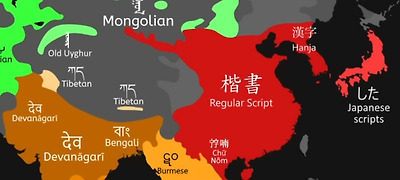
Okay, so picture this: the video, which is super popular on YouTube, maps out the different writing systems across the globe through history. And for centuries, like, all the way up until the early 1400s, East Asia – China, Japan, Vietnam, and yep, Korea – was pretty much painted in shades of RED. This wasn’t just a random color choice; this red basically symbolized writing systems derived from or heavily influenced by Chinese characters. Even though each country had its own adaptations, the core essence was still there, connecting them visually on this linguistic map.
Japan, for example, had a slightly different hue, but still firmly in the red family, showing its historical ties to Chinese script. It’s not a judgment, just a historical fact, right? But it does highlight a certain… linguistic alignment. Korea, for so long, navigated its identity within this East Asian script sphere, using Chinese characters, or *hanja*, for formal writing and scholarship. The sheer complexity of *hanja* meant that literacy was often limited to the elite, creating a huge barrier for the common people.
This early segment of the video is so crucial because it sets the stage. It visually represents a shared linguistic heritage, but also implicitly hints at the limitations and challenges it posed for a nation with its own distinct spoken language. And then, everything changed. We’re talking a full-on glow-up, a complete rebrand, a linguistic revolution that literally shifted the color of a nation on a global map. I’m getting chills just thinking about it. Get ready, because the purple is coming.

The Arrival of *That* Person: King Sejong and Hangul’s Debut
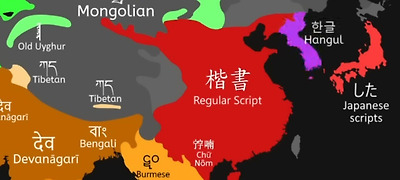
And then, THE moment. The video progresses, and suddenly, around the mid-15th century – specifically 1446, when the Hunminjeongeum was officially promulgated – the Korean Peninsula on the map does something WILD. It changes color. Not just a lighter red, not a slightly different shade, but a full-blown, undeniable, totally distinct PURPLE. I’m not kidding, you guys, it’s like a visual mic drop!
This isn’t just a minor tweak; it’s a declaration. The reason for this dramatic shift? Hangul. Unlike Japanese kana or Vietnamese Chữ Nôm, which were adaptations of Chinese characters, Hangul was a completely independent, phonetic alphabet, created from scratch with its own unique principles and structure. It’s not based on pictograms or ideograms; it’s a sound-based system designed to perfectly capture the nuances of the Korean spoken language.
This purple signifies that Hangul wasn’t just an improvement or a modification; it was a revolutionary, standalone writing system. It’s giving ‘main character energy’ on a global scale, honestly. And who do we have to thank for this iconic moment? None other than the legendary King Sejong the Great. He literally saw a problem – ‘Our country’s language is different from China’s,’ as the Hunminjeongeum Haeryebon famously begins – and invented a solution that would change Korea forever. He wanted his people, even the uneducated, to be able to read and write easily, to express their thoughts, and to understand the world around them. This wasn’t just about making things easier; it was about empowering an entire nation.
King Sejong: The Ultimate Visionary & Problem Solver
No but like, hear me out. King Sejong wasn’t just a king; he was a literal GENIUS. He recognized that the existing system, which relied heavily on complex Chinese characters, was super difficult for ordinary people to learn. It created a literacy barrier, making it hard for his subjects to express themselves, read laws, or even communicate effectively. He saw the struggle of his people, who wanted to write but couldn’t master the thousands of characters required, and he felt their pain.
So, what did he do? He didn’t just tweak the system; he *invented* a whole new one. A simple, logical, and easy-to-learn phonetic alphabet designed specifically for the Korean language. The scientific nature of Hangul is still celebrated today – its characters literally mimic the shape your mouth makes when you pronounce them! The consonants are designed to represent the articulatory positions of the tongue, lips, and throat, while the vowels are based on philosophical concepts of heaven, earth, and humanity. How iconic is that? It’s a system so intuitive and ingenious that it can be learned in a matter of hours.
And the foresight? The *Haebeon*, the explanation of the Hunminjeongeum, starts with ‘나랏말싸미 듕귁에 달아’ (‘Our country’s language is different from China’s’). This wasn’t just a statement; it was a pre-emptive strike, firmly establishing Hangul’s independent origin and purpose. It’s like he knew future generations might try to downplay its uniqueness or claim it was merely a derivative, and he shut that down from the jump. The way he cemented Hangul’s distinct identity from the very beginning is just… *chef’s kiss*. He understood the geopolitical landscape of Joseon and made sure to articulate Hangul’s independent creation and purpose, safeguarding its legacy for centuries to come. His wisdom and strategic thinking were truly mind-blowing.
Hangul’s Enduring Legacy: From Joseon to the Internet Age
Even though Chinese characters were still widely used during the Joseon era, especially for official documents and scholarly works, Hangul wasn’t just for the common folk. Oh no. The source post mentions that even kings were writing letters in Hangul! It was actively used in everyday correspondence, personal diaries, and even for teaching certain subjects. King Sejong’s efforts were absolutely NOT in vain. It was a slow burn, as cultural shifts often are, but the seeds of linguistic independence were firmly planted, growing quietly but steadily throughout the centuries.
Fast forward to the modern era, specifically the Republic of Korea, and Hangul truly blossomed, becoming the primary writing system for all vocabulary. Its simplicity and ease of learning were perfectly suited for mass education and national literacy campaigns. This transition was pivotal, making Korea one of the most literate nations in the world. The shift from *hanja* to Hangul as the dominant script was a defining moment in modern Korean history, solidifying its unique cultural and linguistic identity.
And in the 21st-century internet age? Hangul’s convenience and ease of use shine even brighter. Think about it: typing in Korean is SO much faster and more intuitive than trying to input thousands of characters. It’s literally the perfect script for the digital age, making communication seamless and accessible for everyone, from sending quick texts to writing complex academic papers. This video’s choice to highlight 1446 as the point of ‘establishment’ for a unique writing system is so powerful because it acknowledges this foundational shift. And honestly? The way it’s still purple on the map in 2026? It just proves Hangul’s everlasting impact and its continued relevance in our hyper-connected world. It’s a gift that keeps on giving, making life easier and more efficient for generations of Koreans.
The Fandom’s Reaction: “King Sejong, My Bias!”
The comments section on TheQoo post is, as expected, going absolutely WILD. Korean netizens are just as mind-blown as I am, celebrating King Sejong’s genius and the sheer audacity of creating something so revolutionary. It’s giving me all the feels to see so much love and appreciation for this historical figure and his incredible contribution. People are genuinely amazed by the visual representation of Korea’s linguistic independence.
Here are some of my favorite comments, translated, because y’all NEED to see this:
“King Sejong really said ‘My people deserve better’ and then invented the most scientific alphabet ever. A true original visual!”
“The way he put ‘Our language is different from China’s’ right at the beginning of the Haebeon? That’s not just genius, that’s legendary foresight. He shut down all future arguments before they even started.”
“I’m deceased. The map changing color is so satisfying. It’s like Korea finally got its own unique glow-up on the world stage. PERIOD.”
“Seriously, imagine creating a writing system so perfect that it’s still thriving almost 600 years later, especially in the internet age. King Sejong is literally the OG trendsetter, my bias forever!”
And honestly? Same. The comments are just *chef’s kiss*. Everyone’s collectively hyping up King Sejong, and it’s so wholesome to see this appreciation for history and culture. It’s moments like these that make me so proud to cover K-Pop and all aspects of Korean culture, because there’s just so much rich history and innovation to explore.
My Take: A Linguistic Masterpiece & Cultural Flex
For me, this isn’t just a historical tidbit; it’s a huge cultural flex. It’s giving ‘we stand on our own two feet’ energy. The purple isn’t just a color; it’s a symbol of Korea’s fierce independence and innovation. In a world where cultural exchange often means adaptation and assimilation, King Sejong created something entirely new, purely for the benefit of his people, solidifying their unique identity.
It’s a powerful reminder of how language shapes identity. Hangul didn’t just make literacy easier; it allowed Korean thought, literature, and culture to flourish in its own unique voice. It’s the reason K-Pop lyrics hit different, why Korean dramas resonate so deeply, because they’re expressed through a language designed for them, by them. This linguistic autonomy allowed for the development of a distinct Korean literary tradition, paving the way for the rich cultural content we enjoy today.
This video isn’t just a history lesson; it’s a celebration of Korean ingenuity. It’s a testament to the power of a leader who prioritized his people’s needs over tradition, and in doing so, gifted them a tool that would define their identity for centuries to come. The fact that it’s still thriving, still evolving, and still making communication effortless in 2026 is a testament to its timeless design. And honestly? We love to see it. We absolutely *love* to see it. This purple glow-up is everything, and it perfectly encapsulates the spirit of innovation and self-determination that continues to drive Korean culture today. It’s a legacy that truly slays.
So, what do you guys think? Did this video blow your mind as much as it blew mine? Are you also ready to stan King Sejong as the ultimate linguistic icon? I’m literally still buzzing from this discovery! Drop your thoughts in the comments! 👇 Let’s talk about the purple glow-up! ✨💜