
The Unforgiving Crown: Why Yeonsangun is K-Drama’s Ultimate Test
In the vast pantheon of K-drama characters, some roles are simply more demanding than others. We’ve seen actors transform for complex anti-heroes, nuanced villains, and protagonists navigating impossible odds. Yet, few roles carry the sheer historical weight, psychological depth, and performance pressure quite like that of Joseon’s infamous tyrant, King Yeonsangun. It’s not merely a role; it’s a gauntlet, a crucible where an actor’s true mettle is tested, often against the formidable shadows of legendary predecessors. Cinematically speaking, portraying Yeonsangun requires a masterclass in balancing vulnerability with cruelty, artistry with madness, and political acumen with unhinged paranoia.
Historically, Yeonsangun (reign 1494-1506) was a figure of profound contradictions. He was a monarch who fostered culture and art, penned exquisite poetry, and initially showed great promise. Yet, he descended into a brutal tyranny, marked by two bloody purges, extravagant hedonism, and a chilling disregard for human life, ultimately leading to his deposition. This duality – the sensitive artist capable of unimaginable cruelty – is precisely what makes him such a compelling, yet terrifying, character for any actor to embody. The challenge lies not just in depicting his madness, but in tracing the tragic, often subtle, psychological journey that leads him there. It’s a character arc that demands an almost Shakespearean depth of understanding, pushing actors to explore the darkest corners of the human psyche.
The Burden of Brilliant Precedent: Young Actors, Legendary Turns
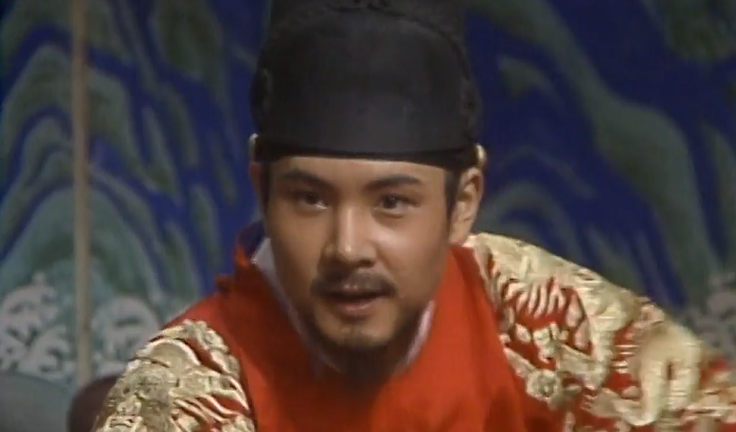
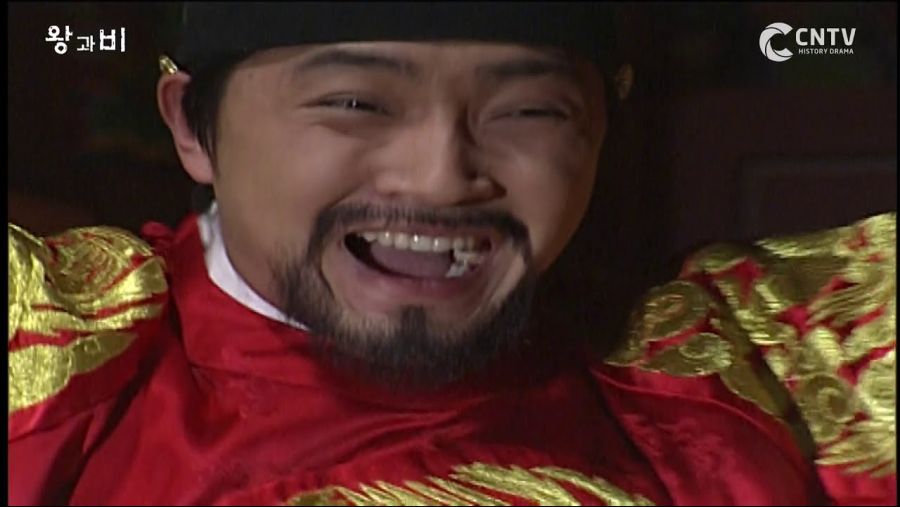
What truly elevates the challenge of playing Yeonsangun, however, is the incredibly high bar set by previous portrayals, often by actors who tackled the role at remarkably young ages. The Korean online community theqoo.net recently highlighted this very point in a viral post titled ‘Why it’s not easy to challenge the role of Yeonsangun,’ generating over 69,000 views and nearly 300 comments. The post specifically referenced three iconic performances: Lee Min-woo at 19, Ahn Jae-mo at 22, and Jung Tae-woo at 26. These actors, barely out of their teens or in their early twenties, delivered performances that remain etched in the collective memory of K-drama audiences, making any subsequent attempt a daunting task.
Lee Min-woo, at a mere 19 years old, delivered a portrayal of Yeonsangun that was raw and intensely vulnerable. His youth, paradoxically, lent a profound tragedy to the character’s early descent. He wasn’t playing a fully formed monster, but rather a tormented young man grappling with immense power and deep-seated trauma. The director’s choice to highlight his youth in those early scenes, often through tight close-ups on his expressive eyes, amplified the sense of a soul being gradually corrupted. What elevated his performance was the palpable sense of a broken boy beneath the burgeoning tyrant, making his acts of cruelty feel like desperate lashing out rather than calculated malice. It was a performance that leveraged his age to create a unique, almost sympathetic, path to tyranny.
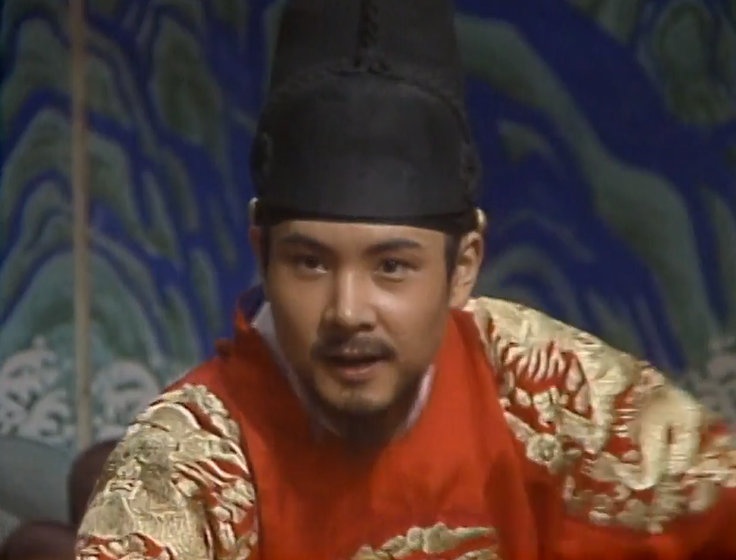
Just a few years later, Ahn Jae-mo, at 22, offered a starkly different, yet equally impactful, interpretation. His Yeonsangun was less about tragic vulnerability and more about a chilling, charismatic intensity. Ahn Jae-mo possessed a magnetic screen presence that allowed him to oscillate between moments of refined artistry and terrifying, unpredictable rage. His portrayal emphasized the king’s intellectual arrogance and his increasingly detached view of humanity. Cinematically speaking, the mise-en-scène often mirrored his growing isolation, with wide shots emphasizing his solitary figure in grand, empty halls, underscoring his internal void even as he exerted absolute power. His performance was a masterclass in controlled menace, making the audience question whether his madness was born of trauma or an inherent, terrifying inclination.
Then came Jung Tae-woo at 26, who brought yet another layer of psychological complexity to the role. His Yeonsangun was perhaps the most nuanced, portraying a gradual, insidious descent into tyranny. Jung Tae-woo excelled at showcasing the subtle shifts in the king’s demeanor, from a seemingly benevolent ruler to a paranoid dictator. His performance wasn’t about explosive outbursts, but rather a slow burn of suspicion and cruelty that simmered beneath a veneer of royal decorum. The writing here was crucial, allowing for extended scenes of internal monologue or quiet, unsettling conversations that revealed the depth of his character’s psychological deterioration. He made the audience witness the *process* of a king losing his mind, rather than just the aftermath. This layered approach cemented his place among the most memorable portrayals.
The Actor’s Gauntlet: Balancing Extremes and Avoiding Caricature
For any actor contemplating the role of Yeonsangun, the primary challenge is navigating the character’s extreme emotional and psychological landscape without veering into caricature. The king is a walking contradiction: a patron of the arts who executes scholars, a filial son obsessed with his mother’s fate who murders his concubines. An actor must embody both the poetic sensibility and the savage brutality, often within the same scene. This requires an exceptional emotional range, demanding shifts from profound sadness to unbridled rage, from calculated political maneuvering to childish petulance. The performance cannot be one-note; it must be a symphony of conflicting emotions, each played with precision.
Beyond the emotional demands, there’s the physical and vocal transformation. Yeonsangun’s descent into madness often manifests physically – a haunted gaze, a restless energy, a posture that oscillates between regal authority and desperate vulnerability. Vocally, the actor must find a voice that can convey both the reasoned arguments of a king and the chilling screams of a madman. The director’s choice to use specific camera angles, such as low-angle shots during his tyrannical pronouncements or high-angle shots during moments of despair, can greatly enhance these physical and vocal performances. What elevates a scene is when an actor can internalize these shifts so completely that they become indistinguishable from the character, making the madness feel organic rather than performed.
Unpopular opinion, but I think Ahn Jae-mo’s Yeonsangun was the only one who truly captured the terrifying charisma. Others just seemed angry, but he had that magnetic, unsettling quality that made you believe people would follow him even into madness. That’s the benchmark for me.
The Director’s Crucible: Visualizing a King’s Descent
The director plays an equally crucial role in shaping a successful Yeonsangun portrayal. It’s not enough for an actor to simply embody the character; the visual storytelling must support and amplify the psychological journey. The mise-en-scène becomes a critical tool. Imagine a scene where Yeonsangun is slowly losing his grip: the lighting could shift from warm, natural tones to harsh, desaturated blues, reflecting his internal turmoil. The use of mirrors or reflective surfaces could symbolize his fractured identity, his inability to reconcile his past with his present monstrosity. The framing of shots, too, can be incredibly impactful – isolating him in vast, empty spaces to underscore his paranoia, or using extreme close-ups to capture the subtle flickers of madness in his eyes.
Furthermore, the pacing of the king’s descent is vital. A director must meticulously craft the narrative rhythm, ensuring that the transition from a hopeful monarch to a depraved tyrant feels earned, not rushed. The use of long takes during his monologues can immerse the audience in his warped logic, while rapid cuts during moments of violence can heighten the visceral impact of his cruelty. The musical score, or OST drop, also contributes significantly, often employing dissonant melodies or haunting traditional Korean instruments to underscore the growing tension and psychological horror. The director’s vision, therefore, must be as nuanced and complex as the character himself, transforming a historical figure into a compelling, living nightmare.
The Writer’s Dilemma: Crafting a Narrative Arc Beyond Makjang
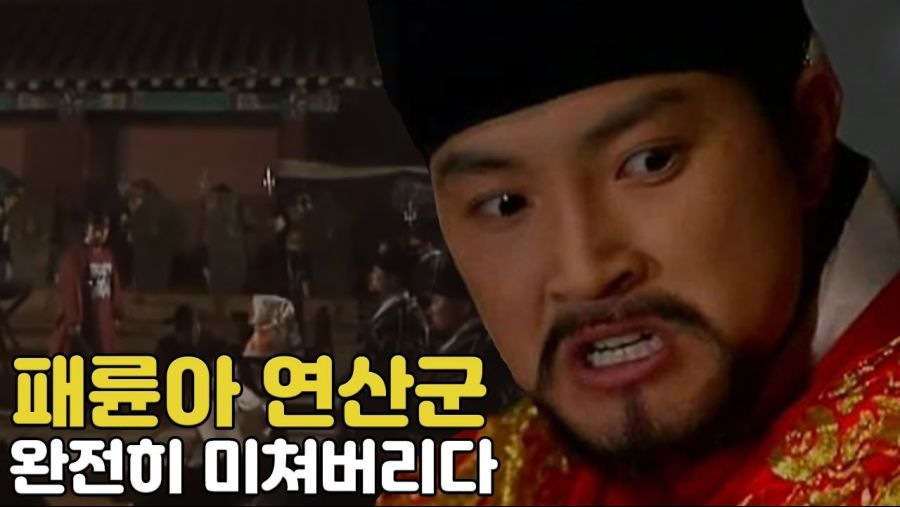
The writing for Yeonsangun is arguably the bedrock upon which any successful portrayal is built. A strong script must provide the actor with the material to explore the character’s motivations, however twisted they may be. This means crafting dialogue that is both historically resonant and psychologically insightful, avoiding the pitfalls of simplistic villainy or gratuitous makjang elements. The narrative structure needs to carefully build his character arc, showing the influences and events that contribute to his transformation, rather than simply presenting him as inherently evil.
A common criticism of less successful portrayals is when the writing falters, relying too heavily on sensationalism rather than character development. The best scripts for Yeonsangun delve into his complex relationship with his mother’s death, his insecurities, and his desperate attempts to assert control in a world he perceives as betraying him. They provide moments of quiet reflection and vulnerability that make his eventual cruelty all the more horrifying. The balance between historical accuracy and dramatic license is delicate; the writer must interpret history in a way that resonates with a contemporary audience while staying true to the essence of the historical figure. Without a robust, well-conceived script, even the most talented actor can struggle to bring depth to such a multifaceted character.
Seriously, when Lee Min-woo played Yeonsangun at 19, I remember my parents talking about it for weeks. They said his crying scenes were so gut-wrenching because he was just a kid, and it made the whole tragedy hit harder. That kind of raw emotion is hard to beat.
The Unforgiving Lens of Public Memory: Fan Expectations and Future Portrayals
The collective memory of K-drama fans is long and unforgiving, especially when it comes to iconic roles. The performances of Lee Min-woo, Ahn Jae-mo, and Jung Tae-woo are not just historical footnotes; they are active benchmarks against which every new Yeonsangun is inevitably measured. Social media platforms and fan communities like theqoo.net instantly light up with comparisons and critiques the moment a new actor is cast. This creates immense pressure, forcing new actors to not only meet a high standard but also to find a fresh perspective that justifies another iteration of the character.
A new portrayal in 2026 would need to do more than simply replicate past successes. Perhaps it could explore Yeonsangun through a more contemporary psychological lens, focusing on themes of inherited trauma or the corrupting influence of absolute power in a way that resonates with modern anxieties. The director’s choice to innovate with cinematography or narrative structure could also be key. For instance, a drama could experiment with non-linear storytelling to deepen the mystery of his madness, or use a limited, unreliable narrator to offer a fresh perspective. The challenge remains for actors and production teams to honor the formidable legacy while daring to redefine it.
Every time a drama announces a new Yeonsangun, I always think, ‘Good luck.’ The bar is just ridiculously high. Especially after Jung Tae-woo’s quiet madness – that was a psychological thriller in itself. I want to see someone brave enough to make it their own, not just copy.
The Enduring Appeal of the Tyrant’s Crown
Ultimately, the role of Yeonsangun remains one of the most coveted and daunting challenges in Korean historical dramas. It’s a role that demands not just acting prowess but also a deep understanding of history, psychology, and the delicate art of balancing light and shadow. The performances by Lee Min-woo, Ahn Jae-mo, and Jung Tae-woo serve as powerful reminders of the profound impact a truly exceptional actor can have, even when tackling a character so deeply ingrained in the public consciousness.
For any actor brave enough to don the dragon robes of Joseon’s most infamous tyrant, the path is fraught with both peril and immense potential. It requires courage to step into such a demanding role, especially with the weight of legendary performances looming large. Yet, it is precisely this challenge that makes each new portrayal of Yeonsangun a highly anticipated event, a true test of an actor’s artistry and a testament to the enduring power of complex storytelling in K-dramas. Who will be the next to seize the crown, and how will they leave their indelible mark on this most unforgiving of roles? Only time, and discerning critics like myself, will tell.
The problem is, these legendary actors played Yeonsangun when they were so young. It’s not just their acting, but the sheer impact of seeing someone that youthful portray such profound evil. It adds a whole different layer of tragedy that’s hard to replicate with an older actor.