


The 16-Million Milestone: A New Era for Chungmuro
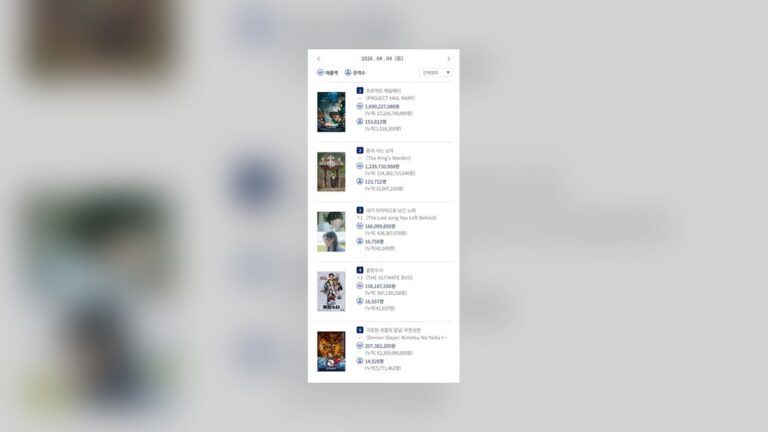
As of this morning, April 5, 2026, the Korean film industry has officially entered a new era. The numbers are in, and they are staggering. Wang Sa Nam has officially crossed the 16 million viewer threshold, currently sitting at 15,997,216 and guaranteed to clear the milestone by the afternoon screenings. Cinematically speaking, we aren’t just looking at a successful movie; we are looking at a tectonic shift in what the domestic audience demands from a blockbuster. While Myeong-ryang remains the untouchable king at 17.6 million, Wang Sa Nam has effectively dethroned Extreme Job to claim the second-place spot on the all-time box office list. This isn’t just about ticket sales; it’s about the reclamation of the theater experience in a post-streaming fatigue world.
Walking into a theater in 2026 feels different than it did even two years ago. We’ve been inundated with high-budget series that look like movies, but Wang Sa Nam reminds us why the silver screen exists. The director’s choice to shoot on 65mm large-format film provides a depth of field and a texture that simply cannot be replicated on a tablet or a smart TV. From the very first frame, the scale is oppressive in the best way possible. The story, a gritty reimagining of political betrayal, manages to avoid the tired tropes of the ‘healing drama’ or the over-the-top ‘makjang’ elements that have cluttered our screens lately. Instead, it offers a cold, calculated look at power—and clearly, that is exactly what 16 million people wanted to see.
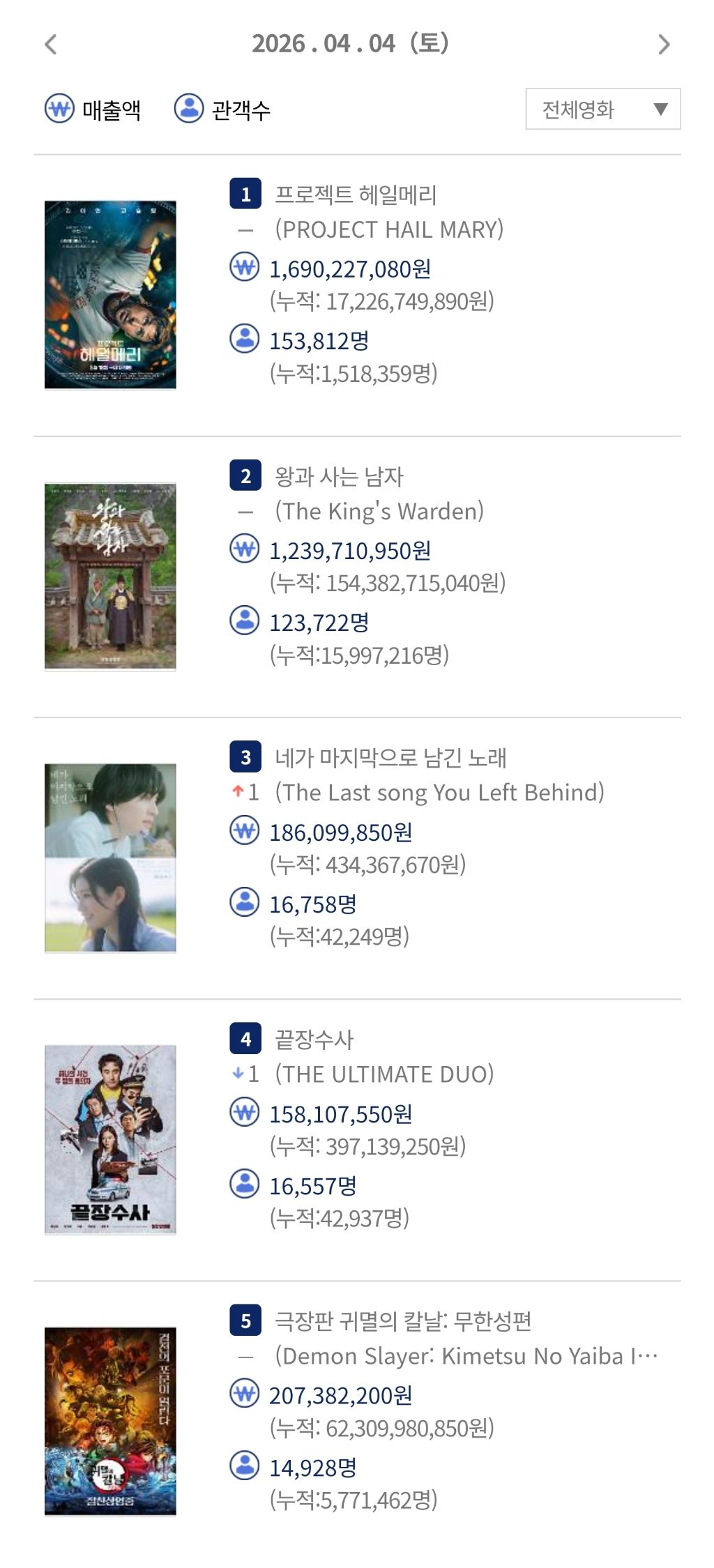
The sheer momentum of this film is what fascinates me as a critic. Usually, a film of this length—clocking in at nearly three hours—would see a significant drop-off after the third week. Yet, Wang Sa Nam has maintained a steady seat occupancy rate that defies traditional box office decay models. It suggests a high repeat-viewing rate, a phenomenon usually reserved for idol-led projects or massive Marvel-esque franchises. But here, the draw isn’t a specific fandom; it’s the craftsmanship. It’s the kind of film where you notice a different detail in the mise-en-scène every time you watch it. Whether it’s the historical accuracy of the silk weaving in the background or the way the sound design captures the haunting silence of the palace, the production value is a masterclass in spending a budget wisely.
Cinematic Language: Beyond the Period Piece Tropes
What elevates this film above its predecessors is its visual language. The cinematography doesn’t just record the actors; it interrogates them. The director uses a lot of low-angle shots and wide-angle lenses that distort the edges of the frame, creating a sense of claustrophobia despite the vastness of the sets. It’s a brilliant technical choice that mirrors the protagonist’s psychological state—trapped by the very power he spent his life seeking. The color grading, too, is a departure from the vibrant, saturated look we often see in historical epics. There’s a desaturated, almost metallic sheen to the film that makes the blood look darker and the gold look colder. It’s a visual palette that demands respect and sets a somber tone from the cold open.
“I’ve seen it four times now, and I still find myself holding my breath during the throne room confrontation. The way the director uses silence is more terrifying than any jump scare or loud OST drop. This is what real cinema feels like.” — @CinemaLover2026 on X (formerly Twitter)
The writing, while occasionally leaning into heavy exposition in the second act, is remarkably tight for a three-hour runtime. The dialogue feels period-appropriate without being so archaic that it alienates younger viewers. There’s a certain rhythm to the exchanges—a verbal fencing match where every word carries the weight of a death sentence. Unlike many recent K-dramas that suffer from ‘middle-episode sag,’ Wang Sa Nam keeps the stakes high by constantly shifting the political alliances. You never quite know who to trust, and the film trusts the audience to keep up with its complex web of motivations. It’s refreshing to see a blockbuster that doesn’t treat its viewers like they need every plot point explained twice.
The ‘Wang Sa Nam’ Fever: A Cultural Phenomenon
You can’t walk through Gangnam or Hongdae right now without seeing the impact of this film. It’s more than just posters; it’s a cultural takeover. The ‘Wang Sa Nam’ aesthetic—dark silks, minimalist traditional jewelry, and that specific ‘stoic’ makeup look—has already started influencing the spring 2026 fashion trends. We’re seeing a resurgence of interest in traditional Korean architecture and history, but through a darker, more modern lens. This is the power of a 16-million-viewer hit; it doesn’t just occupy theaters, it occupies the collective consciousness. Even the OST, which eschews the typical pop-ballad formula for a more haunting, orchestral score, is dominating the charts.
“Finally, a movie that treats the audience with intelligence. The 16 million count isn’t just luck; it’s a protest against the lazy writing we’ve been seeing on streaming platforms lately. We want quality, and Wang Sa Nam delivered.” — User ‘MovieBuff99’ on Instiz
Social media has played a massive role in this success, but not in the way you might think. It wasn’t just viral memes or short clips. Instead, we saw a wave of deep-dive video essays and long-form threads analyzing the historical parallels and the director’s hidden metaphors. The film invited discussion. It provoked debate. People are arguing about the ending in cafes and office elevators. When was the last time a movie did that? Most ‘hits’ these days are forgotten forty-eight hours after they drop on a platform. Wang Sa Nam has longevity because it leaves the viewer with questions rather than easy answers.
Breaking Down the Performance: A Masterclass in Restraint
We need to talk about the lead performance. To carry a film of this magnitude, you need an actor who can command the screen without saying a word. Our lead delivers exactly that. His portrayal of the titular ‘Wang Sa Nam’ is a lesson in micro-expressions. In the pivotal scene where he realizes his father’s betrayal, there are no histrionics. No screaming, no dramatic weeping. Just a subtle tightening of the jaw and a slight glassy look in the eyes. It is devastating. It’s the kind of performance that wins awards, but more importantly, it’s the kind of performance that earns the audience’s empathy despite the character’s morally grey actions.
The supporting cast is equally formidable. The chemistry between the lead and his primary antagonist—played with a chilling, quiet menace—is the engine that drives the film’s tension. Their scenes together are electric, often relying on subtext and what is not being said. The director’s choice to keep the camera close during these confrontations, capturing every twitch and every breath, makes the audience feel like they are intruding on a private, dangerous moment. It’s a testament to the actors’ skill that they can maintain that level of intensity throughout such a long runtime without it ever feeling repetitive or exhausted.
“I went in for the hype, but I stayed for the acting. The lead actor’s eyes in the final sequence… I don’t think I’ll ever forget that look. It’s the first time in years I’ve felt a movie was actually worth the 15,000 won ticket price.” — Comment from Naver Movie Cafe
The Writing Falters, But the Vision Holds
Unpopular opinion, but I do have to point out where the film stumbles. The writing in the final twenty minutes feels slightly rushed, as if the production realized they were hitting the three-hour mark and needed to wrap up several subplots simultaneously. Some of the secondary characters, who were built up with great care in the first act, are given somewhat perfunctory endings that don’t quite match the weight of the rest of the film. There’s also a specific CGI sequence involving a burning pavilion that, while visually impressive, felt a bit too ‘digital’ compared to the tactile, practical effects used in the rest of the movie. It briefly broke the immersion for me.
However, these are minor gripes when looking at the work as a whole. The film’s vision is so strong that it carries you over these small bumps. The director’s commitment to the tone is unwavering. Even when the plot gets a bit tangled, the emotional core remains clear. It’s a film about the cost of ambition and the loneliness of the top, and it never loses sight of that theme for the sake of a cheap action set-piece. The restraint shown in the direction—knowing when not to cut, when not to use music—is what ultimately makes Wang Sa Nam a superior piece of filmmaking.
Chasing Myeong-ryang: Can It Reach the Top?
The question on everyone’s mind now is whether Wang Sa Nam can actually beat Myeong-ryang. To be honest, it’s a tall order. Myeong-ryang had a specific kind of nationalistic fervor behind it that is hard to replicate. However, Wang Sa Nam is currently outpacing Myeong-ryang‘s day-by-day numbers in its sixth week. If the word-of-mouth continues at this rate, and if the upcoming holiday weekend provides the expected boost, we could be looking at a new number one by the end of the month. Even if it stays at number two, the fact that a somber, R-rated political thriller reached these numbers is a victory for the industry.
This success proves that the Korean audience hasn’t ‘given up’ on the theaters; they’ve just become more selective. They are no longer willing to pay for mediocre content that they can see on a streaming service three months later. They want an event. They want something that demands their full attention and rewards it with high-level artistry. Wang Sa Nam provided that event. It’s a reminder to producers and studios that ‘safe’ isn’t always the best bet. Sometimes, a challenging, dark, and technically complex film is exactly what the public is hungry for.
Final Verdict: A Masterpiece for the Ages
Writing: ⭐⭐⭐⭐☆
Direction: ⭐⭐⭐⭐⭐
Acting: ⭐⭐⭐⭐⭐
Production: ⭐⭐⭐⭐⭐
OST: ⭐⭐⭐⭐☆
Overall: 9.5/10
Wang Sa Nam is, without a doubt, the most important Korean film of the mid-2020s. It is a masterclass in visual storytelling, anchored by a career-defining performance and a directorial vision that refuses to compromise. While it has its minor flaws in pacing and a few CGI shots, the sheer weight of its cinematic achievement is undeniable. It is a film that demands to be seen on the largest screen possible, not just for the spectacle, but for the intimacy that the director manages to create within that spectacle. Whether it hits 17 million or stops at 16.5, its place in history is already secure.
Who is this for? Everyone who thinks they’ve ‘seen it all’ when it comes to historical dramas. Everyone who misses the days when movies felt like grand, shared experiences. If you haven’t seen it yet, you are missing out on a piece of cultural history. Just be prepared—it’s a long journey, and it’s not a happy one. But in 2026, perhaps a bit of cold, hard truth is exactly what we need. Wang Sa Nam isn’t just the movie of the year; it’s the movie of a generation.