



The Mystery of the Perfectly Aligned Sparkle
Okay, real talk—have you ever spent way too long staring at a 4K K-pop fancam, wondering how on earth an idol’s eyes stay looking so… magical? Even after three minutes of high-intensity choreography, sweat, and hair flips, their eyes look like they’ve stepped right out of a shojo manga. You might think it’s just the stage lights or some top-tier genetics, but there is a very specific K-beauty secret circulating right now that has the internet divided. We’re talking about ‘Axis-Fixed’ lenses (축고정 렌즈), and trust me, once you notice them, you’ll see them everywhere. This isn’t just another lens trend; it’s a technical evolution in how idols maintain that ‘watery eye’ aesthetic under the harshest conditions.
I’ve been diving deep into the recent buzz on community boards like TheQoo, where a post about these lenses recently racked up over 34,000 views and nearly 300 comments. People are genuinely obsessed—and a little conflicted—about this technology. As someone who has tried every circle lens from the classic ‘Barbie’ eyes of the 2010s to the ultra-natural ‘water’ lenses, I knew I had to break this down for you. Is it a game-changer for your daily look, or is it strictly for the stage? Let’s get into the nitty-gritty of what makes these lenses so special and why they’re currently the hottest debate in the beauty community.

What Exactly is an ‘Axis-Fixed’ Lens?
If you’ve ever worn ‘highlighter’ lenses—those beautiful contacts with a lighter, crescent-moon shape on one side to mimic a reflection—you know the struggle. You put them in, look in the mirror, and you look like a literal fairy. Then, ten minutes later, you look again and one lens has rotated 90 degrees. Suddenly, you look like you’re looking in two different directions, or worse, you have ‘lazy eye’ vibes because the highlights are mismatched. It’s a constant battle of poking your eye to rotate the lens back into place. Not exactly the vibe we’re going for, right? Especially not if you’re performing in front of thousands of fans.
This is where ‘Axis-Fixed’ technology comes in. Borrowing a concept from toric lenses (the ones used to correct astigmatism), these lenses are designed with a weighted bottom. In the industry, we call this a ‘ballast’ design. By making the lower part of the lens slightly heavier or thicker, gravity naturally pulls that specific part of the lens downward. This ensures that the ‘highlighter’ graphic stays exactly where the designer intended: usually at the 6 o’clock position. The result? A consistent, perfectly aligned ‘sparkle’ that doesn’t budge no matter how much you blink or move. It’s technical, it’s clever, and it’s saving idols from thousands of awkward screen-caps.
“I used to hate wearing highlighter lenses because they’d always spin around and make me look weird in photos. If this technology actually works for regular decorative lenses, it’s a total life-saver for my daily makeup!” — User on TheQoo
The ‘Idol Aesthetic’: Why the Obsession?
In the world of K-pop, the ‘eyes’ are the most important part of the face. Stylists go to incredible lengths to create a gaze that is ‘shimbiroun’ (mystical or mysterious). The goal is often to create a ‘geureung-geureung’ effect—that look of eyes that are perpetually welling up with tears, making them look bright, clear, and emotional. Lenses with a fixed highlighter graphic are the shortcut to this look. When the light part of the lens stays at the bottom, it creates an artificial ‘water line’ reflection that makes the eyes look larger and more three-dimensional under intense stage lighting.
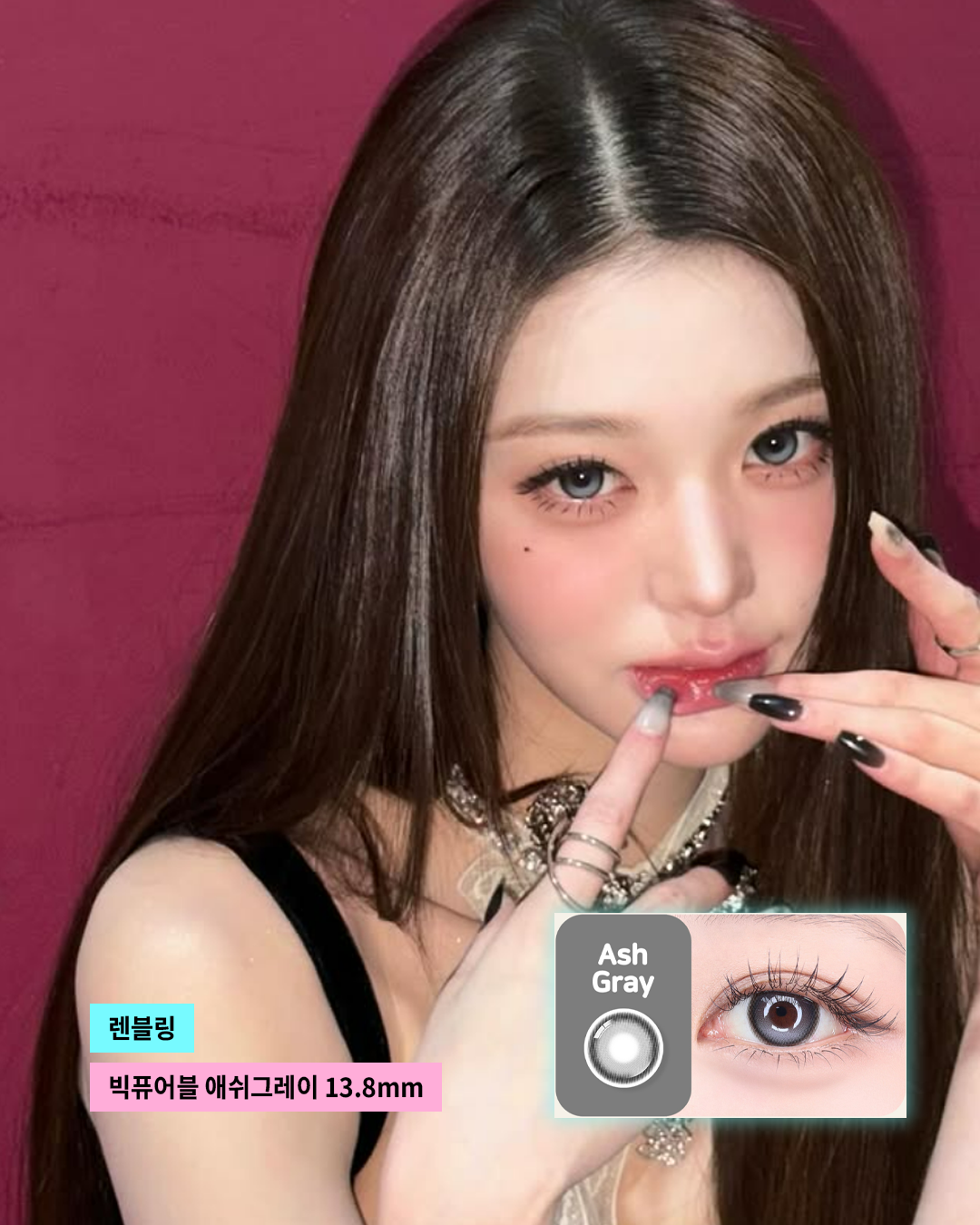
Think about it: when an idol is doing a close-up ‘ending fairy’ shot, the camera is inches from their face. If their lenses have rotated so that the highlight is at the top or sideways, it can break the illusion of a natural eye reflection. By fixing the axis, stylists ensure that every single frame of a 4K video looks curated. It’s that level of detail that separates a good stage look from a legendary one. I’ve noticed a huge uptick in these being used by recent generations of idols lately, especially those going for that ethereal, AI-adjacent concept that’s been dominating the charts.
The Great Debate: Mystical vs. Uncanny
However, it’s not all sunshine and sparkles. As that viral TheQoo post pointed out, the ‘Axis-Fixed’ look is surprisingly polarizing. While 34,000 people were curious enough to click, the comments section was a battlefield. The main criticism? The ‘Uncanny Valley’ effect. Because the highlight is fixed by gravity and not by the actual movement of your eye or the light source, it can sometimes look… well, fake. In real life, reflections in our eyes move as we move our heads. When the reflection stays perfectly still while the pupil moves around, it can give off a slightly ‘doll-like’ or ‘robotic’ vibe that some fans find unsettling.
“Sometimes it looks so pretty, like a manhwa character. But other times, when they look to the side and the ‘light’ stays at the bottom of the lens instead of moving with the eye, it looks like a glass marble. It’s a bit creepy if you stare too long.” — Anonymous Fan Comment
There’s also the issue of the ‘Goat Eye’ look. If the lens is weighted too heavily or if the graphic is too opaque, it can make the wearer look like they have a fixed, blank stare. I’ve seen some reviews saying that while it looks amazing from a distance or on a stage, it can be a bit much for a coffee date or a bright office setting. It’s a classic case of ‘Stage Makeup vs. Real Life.’ What works under 5,000 watts of LED light doesn’t always translate to the fluorescent lights of a subway station. As your trusted unnie, I have to tell you: balance is key here.

Mina’s Honest Take: My Experience with Weighted Lenses
I’ve been testing a pair of these weighted axis lenses for about two weeks now, and let me break down the reality for you. First, let’s talk comfort. Because one side is slightly thicker/heavier to facilitate the gravity-fix, you *can* feel it. It’s not painful—don’t worry!—but if you have very sensitive eyes, you might notice a slight ‘tugging’ sensation when you blink rapidly. It took me about three days to get used to the feeling. If you’re a long-time lens wearer, you’ll be fine, but beginners might find it a bit distracting at first.
In terms of visuals? *Chef’s kiss.* For photoshoots or a night out where you know there will be flash photography, these are unbeatable. I took some selfies at a cafe in Seongsu-dong last weekend, and my eyes looked incredible in every single shot. No more checking the mirror every five minutes to see if my ‘moonlight’ had migrated to my upper eyelid. However, I did notice that if I tilted my head too far to the side for a long time (like when I’m lounging on the sofa scrolling through TikTok), the lens would slowly try to re-adjust itself, which felt a little weird. Trust me on this one: these are ‘upright’ lenses for ‘upright’ activities.
“I saw an idol wearing these on a music show yesterday and I couldn’t stop looking at their eyes. It really does make them look like they’re about to cry in the best way possible. I need to find where to buy these ASAP!” — K-Beauty Blogger
Who Should Buy Them (And Who Should Skip)
So, is the hype real? If you’re someone who loves the ‘highlighter’ lens look but hates the maintenance, these are a 10/10 recommendation. They solve a genuine problem that has plagued the lens community for years. They are perfect for content creators, cosplayers, or anyone who spends a lot of time in front of a camera. Brands like Hapa Kristin and Olens have been leading the charge with more ‘natural’ versions of this tech, so you don’t necessarily have to look like a cyborg.
However, if you prefer a ‘no-makeup’ makeup look, or if you have extremely dry eyes, you might want to stick to traditional, non-weighted lenses. The added thickness for the axis-fix can sometimes reduce oxygen permeability slightly compared to ultra-thin daily disposables. Also, if the idea of a ‘fixed’ reflection feels too artificial for your style, the classic rotating lenses will give you a more organic (if slightly chaotic) look. Real talk: beauty is about what makes you feel confident, not just what’s trending on TheQoo.
The Verdict: A New Standard for K-Beauty?
As we move forward, I expect axis-fixed technology to become the standard for all patterned lenses. We’re already seeing it move beyond just ‘highlighter’ designs into complex multi-tonal graphics that require a specific orientation to look their best. It’s a testament to how K-beauty continues to innovate by solving small, annoying problems with high-tech solutions. While the ‘uncanny’ debate will likely continue, the visual impact on stage is undeniable. It’s one of those ‘secret’ tools that makes K-pop idols look so polished and otherworldly.
If you’re curious to try them, I suggest starting with a ‘natural’ brown or gray tone before jumping into the high-contrast ‘moonlight’ styles. Look for keywords like ‘Ballast Design’ or ‘Axis-Steady’ when shopping at Olive Young or browsing online. And remember, keep your head up—literally—to let gravity do its job! Have you noticed this look on your favorite idols recently? Or do you think the ‘moving’ highlight looks more natural? Let’s chat in the comments—I’m dying to know your take on this!
Stay glowing, stay curious, and I’ll see you in the next review!