

The ENA Powerhouse and the Arrival of ‘Climax’
As we navigate the first quarter of 2026, the K-drama landscape has felt somewhat stagnant, relying heavily on the same procedural tropes we’ve seen for a decade. However, ENA’s newest Monday-Tuesday offering, Climax, which premiered on March 16, 2026, has effectively shattered that monotony. While the series boasts heavyweights like Ju Ji-hoon and Ha Ji-won, the conversation following the first two episodes isn’t centered on the star-studded leads or the gritty legal-thriller plot. Instead, the internet is ablaze with a singular, fascinating debate: What on earth is Cha Joo-young doing with her voice? Playing the formidable Lee Yang-mi, Cha has made a creative choice so distinct and stylized that it has divided the viewership into two very vocal camps. Cinematically speaking, it is the most daring performance choice of the year so far, and as a critic, it’s exactly the kind of risk I live for.
We first saw the ripples of this discussion on community boards like Instiz, where a post titled ‘Cha Joo-young seems to have caught a unique dialogue tone’ garnered over 35,000 views within days of the premiere. The character of Lee Yang-mi isn’t your standard chaebol villainess or cold-hearted executive. She is something more eccentric, more theatrical. From her first appearance in Episode 1, where she interacts with Prosecutor Bang Tae-seop (played by Ju Ji-hoon), her vocal delivery is marked by an unusual cadence—a mixture of airy breathiness and sharp, staccato punctuations that feel almost rhythmic. It’s a departure from the grounded realism we usually expect in high-stakes legal dramas, and that’s precisely why it has become the focal point of the show’s early reception.
The Lee Yang-mi Enigma: Breaking Down the Vocal Choice
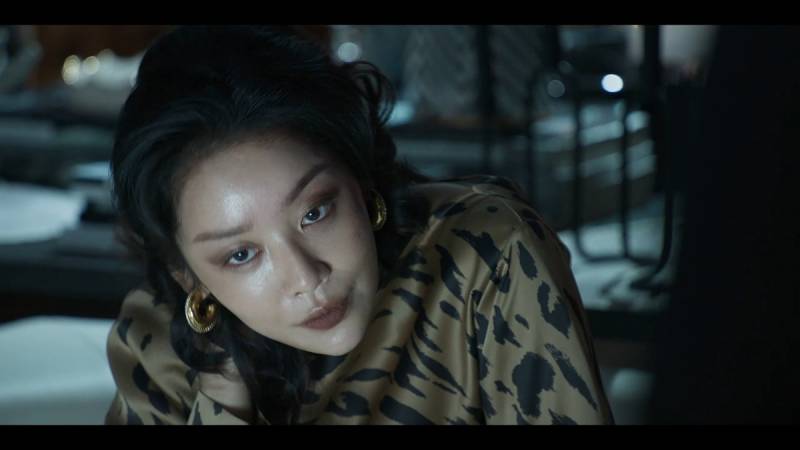
To understand why this tone is causing such a stir, we have to look at the technicality of the performance. Cha Joo-young isn’t just ‘acting’ a role; she is constructing a persona from the vocal cords up. Most actors aim for a naturalistic flow that disappears into the scene. Cha, however, leans into the artifice. Her tone for Lee Yang-mi sits in a higher register than her previous roles, often ending sentences with a slight upward lilt that feels both mocking and dangerously playful. It’s a ‘vocal mask’ that hides the character’s true intentions, creating a layer of artifice that matches the character’s impeccably tailored suits and razor-sharp bob.
“I was confused at first, but now I find myself replaying her lines. It’s weirdly addictive. She sounds like a villain from a stylized noir film rather than a 2026 drama, and it works for some reason.” — User @jujiholic on social media.
Unpopular opinion, but this is exactly what the genre needs. When you have a cast as strong as Climax—including the veteran gravitas of Ha Ji-won and the grounded intensity of Oh Jung-se—you need a wild card. Cha Joo-young is that wild card. If everyone plays the same ‘realistic’ frequency, the drama becomes flat. By choosing a tone that ‘stands out,’ as some critics have complained, she creates a friction in every scene. This friction forces the other actors to react differently, and it forces the audience to pay closer attention. Whether you find it jarring or genius, you cannot ignore her when she is on screen. That is the hallmark of a successful character construction.
Gravity and Menace: The Inversion Table Masterclass
If Episode 1 introduced the tone, Episode 2, which aired on March 17, 2026, cemented it as a piece of performance art. The scene in question features Lee Yang-mi delivering a threat while hanging upside down on a ‘Geokkuri’ (an inversion table). It is a bizarre, visually arresting moment that would have looked ridiculous in the hands of a lesser actress. Hanging upside down naturally affects one’s vocal resonance, yet Cha maintained her character’s hyper-specific tone even while gravity was working against her. The blood rushing to her face, combined with that eerie, melodic voice, created a sense of psychological instability that was genuinely unsettling.
The director’s choice to frame this scene in a tight close-up emphasizes the physical strain of the inversion, which contrasts sharply with the nonchalance of her delivery. This is where the mise-en-scène and performance align perfectly. The inversion table serves as a metaphor for Lee Yang-mi’s worldview—she sees the world from a different, perhaps distorted, angle, and she expects everyone else to adjust to her perspective. The fact that she can maintain such a controlled, stylized vocal performance while physically compromised speaks volumes about Cha’s technical discipline as an actor. It’s a masterclass in using physical constraints to enhance a character’s ‘otherness.’
A Divided House: The ‘Addictive vs. Jarring’ Debate
The reaction from the domestic audience has been a fascinating case study in viewer psychology. On one hand, you have the ‘Addictive’ camp, who argue that the tone is a breath of fresh air. They point to the way she says ‘Prosecutor Bang’ with a specific, lingering drawl that has already become a meme in fan communities. On the other hand, the ‘Jarring’ camp feels that her performance ‘breaks the immersion,’ suggesting that she sounds like she belongs in a different drama entirely. This divide is healthy; the worst thing a villain can be is boring. By being polarizing, Lee Yang-mi has already achieved a level of cultural penetration that a more standard ‘cold villain’ never would.
“She sounds like she’s in a different drama entirely. It breaks my immersion every time she speaks. I wish she would just use her natural voice like she did in ‘The Glory’.” — Comment from the Instiz community thread.
What the ‘Jarring’ camp might be missing is that the immersion break is likely intentional. In Climax, the world of high-level litigation and corporate maneuvering is presented as a performance. Everyone is wearing a mask. Lee Yang-mi is simply the only one honest enough to make her mask audible. When she speaks, she is reminding everyone in the room—and the audience at home—that this is all a game to her. Her voice is the sound of someone who has transcended the normal rules of social engagement. It’s supposed to be uncomfortable. It’s supposed to feel ‘off.’
Technical Precision: Direction and Lighting in ‘Climax’
Beyond the acting, we must credit the production team for supporting this bold performance. The cinematography in Climax uses a cold, high-contrast palette that complements the sharp edges of Cha’s performance. The lighting in her office scenes is often harsh and clinical, reflecting the lack of warmth in her character’s soul. When she speaks in that unique tone, the acoustics of the sets—often large, echoing marble halls—amplify the ‘unnatural’ quality of her voice. It’s a holistic approach to character building that involves the sound department just as much as the actress.
Furthermore, the writing by the Climax team provides the necessary linguistic playground for this tone. The dialogue is peppered with sophisticated barbs and intellectual posturing that suits a stylized delivery. If the writing were more colloquial, the tone would indeed feel out of place. But in a world where characters speak in metaphors and legal precedents, a ‘theatrical’ voice feels like a logical extension of the environment. The writer-director duo clearly gave Cha the green light to experiment, and that level of trust is visible in the final product. It’s a reminder that K-dramas are at their best when they allow actors to move beyond the ‘safe’ choices.
Comparative Study: Cha Joo-young’s Evolution
To truly appreciate what Cha is doing in 2026, we have to look back at her trajectory. Most audiences still associate her with her breakout role as Choi Hye-jeong in The Glory. In that series, her performance was visceral, grounded in desperation and vanity. It was a very ‘human’ performance. In Climax, she has stripped away that humanity to create something more like a force of nature. It’s a complete 180-degree turn. It shows an actress who is not content with repeating her previous successes but is instead looking for ways to challenge her own instrument.
“Whether you like the tone or not, you have to admit Cha Joo-young is the only one we’re talking about after the premiere. That’s a win for any supporting actor.” — Anonymous industry insider.
Comparing her to other ‘stylized’ villains in recent years, such as Kim Seo-hyung’s iconic Coach Kim in Sky Castle, we see a similar pattern. These characters become legendary not because they are realistic, but because they are hyper-real. They take one aspect of human nature—ambition, cruelty, or in Lee Yang-mi’s case, detached amusement—and amplify it until it becomes something iconic. Cha is swinging for the fences here, and even if she doesn’t hit a home run for every single viewer, the fact that she’s swinging at all is commendable in an industry that often favors the ‘safe’ and ‘marketable’ over the ‘experimental.’
Final Verdict: A Bold Risk That Pays Off
Cinematically speaking, Lee Yang-mi is the most interesting thing to happen to the ‘villain’ archetype in years. The writing falters slightly when it focuses too much on the dense legal jargon of the subplots, but it soars whenever Cha Joo-young enters the frame to disrupt the peace. Her vocal choice is a masterclass in character branding. You can close your eyes and know exactly who is speaking, and in a crowded market, that identity is priceless. While some may find it ‘too much,’ I would argue that in the context of a drama titled Climax, ‘too much’ is exactly the right amount.
The drama is currently trending with high engagement numbers, and the ‘addictive tone’ debate is a major driver of that buzz. As we move into the middle episodes, I’ll be watching closely to see if Cha modulates this tone as the character’s mask inevitably begins to slip. If she can maintain this level of control while adding layers of vulnerability or rage, we might be looking at the definitive performance of her career. For now, I’m firmly in the ‘Addictive’ camp. It’s weird, it’s jarring, and I can’t wait to hear what she says next.
Rating: 8.5/10
Writing: ⭐⭐⭐⭐☆
Direction: ⭐⭐⭐⭐⭐
Acting: ⭐⭐⭐⭐⭐
Production: ⭐⭐⭐⭐☆
Watch if: You appreciate bold acting choices and high-tension psychological thrillers.
Skip if: You prefer naturalistic, low-key performances and find stylized dialogue distracting.