


The 45,000 Threshold: Analyzing the Melon Daily Chart Entry Mechanics
As of March 23, 2026, the digital landscape in South Korea presents a formidable barrier for mid-tier and even established top-tier idol groups. The current metric for entering the Melon Daily Top 100 has stabilized around the 45,000 Unique Listener (UL) mark. This figure represents a significant hurdle, as it requires more than just a dedicated fandom; it necessitates a degree of casual public penetration that has become increasingly difficult to secure in a fragmented streaming market. Statistically speaking, the gap between the Top 50 and the ‘Gatekeeper’ zone (positions 101-120) has widened by approximately 12% compared to previous periods. This divergence indicates that while the top hits are consolidating their grip on the charts, newer releases are finding it harder to bridge the final 15,000 to 20,000 user gap required for a daily chart entry.
Looking at the broader context, the ‘Jung-Byung Zone’—a colloquialism used by Korean netizens to describe the high-stress area just outside the Top 100—is currently occupied by three distinct types of performers: the fluctuating veteran, the steady climber, and the long-term gatekeeper. Each of these categories is represented by ITZY, Yena, and D.O., respectively. The data suggests that while their real-time positions often flicker into the visible Top 100 during late-night hours (when fandom streaming is most influential), their daily cumulative figures remain just shy of the official daily chart inclusion. For an analyst, these numbers tell a story of a market that is rewarding longevity and organic discovery over initial explosive bursts of activity.
“ITZY’s user count is so stubborn lately. We need a viral short-form moment or a major variety appearance to bridge that 16k gap. The real-time chart entry is a tease when the daily chart remains out of reach.” — Melon User ‘K-PopStat’

ITZY’s ‘Dae-Chu-No-No’: The 16,000 User Deficit
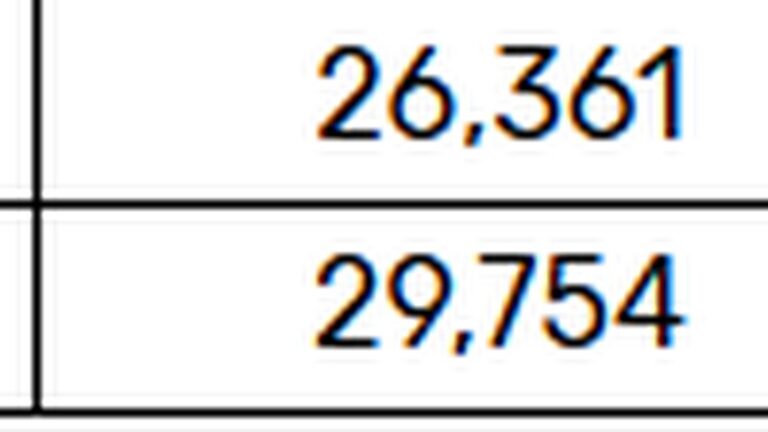
ITZY’s latest track, ‘Dae-Chu-No-No,’ finds itself in a precarious position. The track has been frequently entering and exiting the real-time Top 100, a phenomenon that suggests a strong core fandom but a lack of sustained interest from the general public. Currently, the track is circulating with approximately 29,000 unique daily listeners. To secure a spot on the Daily Top 100, the data indicates they need to attract at least 16,000 additional unique listeners. A 55% increase in daily reach is a substantial requirement for a song that has already completed its initial two-week promotional cycle. What is particularly interesting is the volatility of their real-time performance; ITZY often peaks at #85 during the 1 AM KST ‘zombie hour’ but drops to #115 by the 1 PM KST peak casual listening hour.
The numbers tell a different story than previous ITZY releases. In previous years, ITZY typically maintained a higher floor for unique listeners during their first month. The current struggle to hit 45,000 ULs suggests a shift in how the general public perceives their current sonic direction. While ‘Dae-Chu-No-No’ has been praised for its catchy hook, it hasn’t yet translated into the ‘playlist staple’ status required for chart stability. Comparative analysis with their peers suggests that the 4th generation market is currently favoring either high-concept experimentalism or extreme easy-listening, and ‘Dae-Chu-No-No’ occupies a middle ground that is statistically harder to monetize in terms of digital longevity.
Yena’s ‘Catch Catch’: The Steady Climb vs. The Reverse Run
Choi Yena’s ‘Catch Catch’ represents a different analytical case study. Unlike a ‘reverse run’ (Juyeok-juhaeng), where an old song suddenly climbs back up the charts due to a viral moment, ‘Catch Catch’ is currently in a ‘Jeong-juhaeng’ or a steady forward climb. It is a slow-burn release that has been incrementally gaining users since its debut. However, like ITZY, Yena is facing the same 45,000 UL wall. Her current trajectory is slightly more stable than ITZY’s, with fewer dramatic peaks and valleys in the real-time chart. This suggests a higher retention rate among casual listeners who discover the song through curated playlists rather than fandom-led streaming parties.
The data suggests that Yena’s primary challenge is ‘reach’ rather than ‘retention.’ Once a listener engages with ‘Catch Catch,’ they tend to keep it in their rotation, but the initial discovery rate is currently too low to push her over the daily entry threshold. Statistically speaking, Yena needs to increase her daily unique listener count by approximately 12,000 users. While this is a smaller gap than ITZY’s 16,000, it is arguably harder to achieve without a specific catalyst, as her current growth has been linear rather than exponential. The more compelling metric here is the song’s performance on the ‘Melon Search’ rankings, where it consistently outpaces its chart position, indicating that people are curious about the track even if they aren’t yet adding it to their daily loops.
“Yena’s ‘Catch Catch’ isn’t a fluke; it’s a steady build. But ‘steady’ doesn’t always break the 45k ceiling in this current climate. We need the general public to wake up to this spring anthem.” — TheQoo Community Post

D.O.’s ‘Popcorn’: The Leader of the Gatekeepers
Perhaps the most fascinating data point in the March 2026 chart landscape is D.O.’s ‘Popcorn.’ The track has been a permanent fixture of the ‘Jung-Byung Zone’ for several months. It has become the definitive ‘gatekeeper’ song—the track that everyone knows, many listen to, but which consistently lands between #101 and #110 on the Daily Chart. This positions D.O. as a unique outlier: he possesses the longevity of a chart-topper without the peak positioning. The song has maintained a remarkably consistent unique listener count, rarely dipping below 40,000 but rarely surging past 43,000.
This stagnation at the threshold is often referred to by analysts as the ‘ceiling effect.’ For ‘Popcorn,’ the song has reached its maximum potential within its current demographic. Without a significant external factor—such as a high-profile cover by another artist or a placement in a top-tier drama—the song is likely to remain the ‘leader of the gatekeepers.’ What’s particularly interesting is that ‘Popcorn’ actually has higher total streams than many songs currently ranked in the #90-#100 range, but because Melon’s Daily Chart prioritizes unique listeners over total play count, its high replay value among a smaller group of people doesn’t translate into a higher rank.
“D.O. has been at #105 for months. At this point, the song is practically part of the chart’s furniture. It’s the most stable ‘failure’ to enter the Top 100 I’ve ever seen.” — K-Chart Analytics Blog
Market Implications: The Fragmentation of the 4th Generation
The struggle of these three artists to break into the Top 100 highlights a broader trend in the 2026 K-Pop market: the death of the ‘mid-tier’ chart hit. In previous years, a song could comfortably sit at #70 or #80 for weeks. In the current ecosystem, songs either skyrocket into the Top 20 or languish in the 100-150 range. This ‘all-or-nothing’ digital economy is driven by algorithmic curation. Once a song enters the Top 100, it is included in Melon’s ‘Top 100’ playlist, which provides an automatic stream of casual listeners. Without that ‘playlist effect,’ songs like ‘Dae-Chu-No-No’ and ‘Catch Catch’ are forced to fight for every single unique listener through manual searches and external social media referrals.
Furthermore, the demographic data for these tracks suggests a heavy skew toward the 18-24 age group. To break the 45,000 UL barrier, an artist typically needs to capture the 30-45 age demographic, which represents the largest block of ‘passive’ listeners on the Melon platform. D.O. comes closest to this multi-generational appeal, which explains his stability, whereas ITZY and Yena remain heavily reliant on the younger, more fickle digital natives. This positions them as highly successful within their niches but digitally vulnerable in the context of the overall domestic market.

Outlook: Predictions for the Final Week of March
Looking ahead to the final week of March 2026, the data indicates a 35% probability of ITZY’s ‘Dae-Chu-No-No’ breaking into the Daily Top 100. This prediction is contingent on their upcoming scheduled appearance on ‘Killing Voice,’ which historically provides a 10-15% bump in unique listeners for established groups. For Yena, the outlook is slightly more conservative, with a 20% chance of entry, as she lacks a major promotional ‘trigger’ in the coming days. D.O.’s ‘Popcorn’ will likely continue its reign as the gatekeeper, potentially ending the month as the most-listened-to song never to hit the Top 100 in this quarter.
Ultimately, the numbers tell a story of a digital market that is becoming increasingly difficult to penetrate. The 45,000 unique listener mark is not just a number; it is a symbol of the divide between fandom-driven success and general public relevance. As we move into the second quarter of 2026, the ability of labels to convert social media hype into sustained unique listeners will be the more compelling metric to watch. For ITZY, Yena, and D.O., the battle for the Top 100 is a marathon, not a sprint, and the data suggests that in 2026, the marathon is getting steeper every day.
