


The Historical Scale of the Gwanghwamun Spectacle
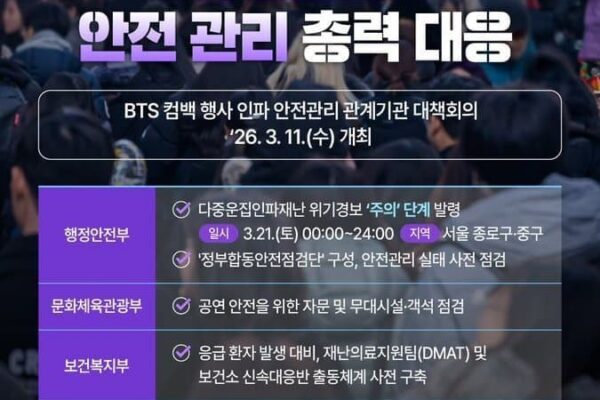
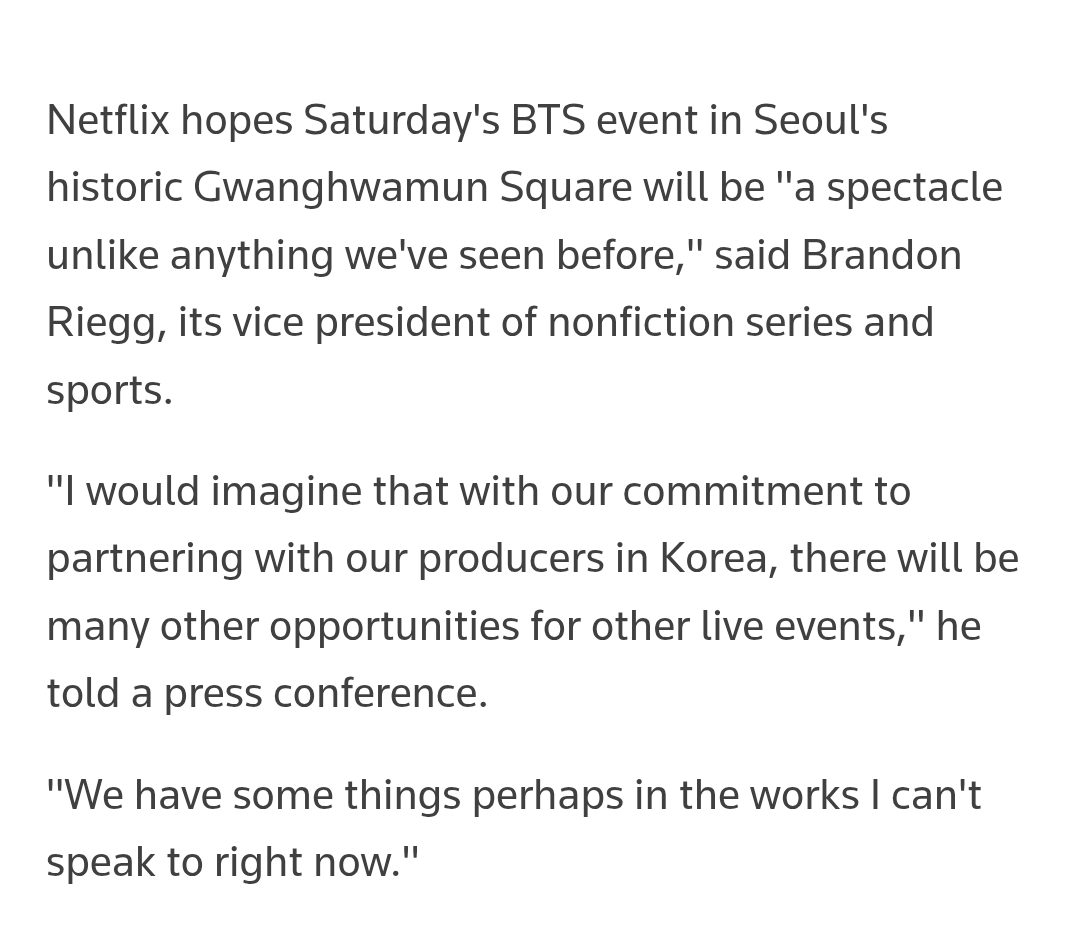
Seoul’s historic Gwanghwamun Square became the epicenter of a global media shift this past weekend as BTS marked their highly anticipated return with a performance that transcended traditional concert boundaries. Netflix, the world’s leading streaming service, took the unprecedented step of broadcasting the event live to 77 countries, signaling a major pivot in how the platform views live music entertainment. Brandon Riegg, Vice President of Non-fiction Series and Sports at Netflix, characterized the event as a landmark moment for the company’s expansion into the South Korean market. Speaking at a press conference in Seoul on March 20, 2026, Riegg emphasized that the scale of the Gwanghwamun event was designed to be a “spectacle never seen before,” blending the historical significance of the location with cutting-edge broadcast technology.
The logistics of the event required months of coordination with the Seoul Metropolitan Government and various cultural heritage departments. For Netflix, the broadcast was not merely a content acquisition but a demonstration of technical prowess. By utilizing a multi-cam 4K setup with low-latency global distribution, the platform managed to maintain a stable stream for millions of concurrent viewers, a feat that has historically challenged dedicated K-pop streaming platforms. This success has immediately sparked internal discussions at Netflix regarding the feasibility of making K-pop live events a permanent fixture of their programming slate.
Strategic Infrastructure and Long-term Investment
Netflix’s commitment to the South Korean entertainment ecosystem is entering a new phase that focuses heavily on live infrastructure. Riegg noted during his address that the company is actively increasing its investment in local production capabilities to support more frequent live broadcasts. “Our commitment to collaborating with Korean producers makes it natural to imagine many more opportunities for other live events,” Riegg stated. While he declined to name specific groups or agencies currently in negotiations, he hinted that several projects are already in the developmental pipeline. The emphasis is no longer just on scripted dramas or variety shows, but on capturing the immediate, high-energy engagement that only live K-pop can provide.
“Seeing BTS at Gwanghwamun in 4K without the typical platform lag is a total game changer. Netflix finally put their server infrastructure to work for fans. If this is the future of concerts, I’m never buying a separate PPV ticket again.” — User on TheQoo, March 20, 2026
Industry analysts point out that this move is a direct response to the plateauing of traditional subscriber growth in mature markets. By securing exclusive live rights to major K-pop events, Netflix creates a “sticky” environment for a younger, highly engaged demographic. The data from the BTS broadcast suggests a high retention rate, with viewers staying for the duration of the three-hour event and subsequently engaging with other Korean content on the platform. This synergistic effect is what Riegg refers to as the “deepening partnership” between Netflix and the Korean entertainment industry.
Beyond the ‘BTS Effect’: The Search for the Next Global Stream
While BTS remains the undisputed catalyst for this streaming revolution, the industry is now looking at which groups will follow in their footsteps. The success of the Gwanghwamun broadcast has set a high bar for production value and global reach. Agencies like HYBE, SM, YG, and JYP are reportedly re-evaluating their proprietary streaming strategies in light of Netflix’s massive distribution network. The challenge for Netflix will be identifying which artists possess the requisite global pull to justify the significant overhead of a live global broadcast. Riegg’s mention of “undisclosed projects” suggests that the platform is looking beyond the top-tier legacy acts to include high-growth fourth and fifth-generation groups who command massive digital-native audiences.
Market competition is also a factor. With platforms like Disney+ and Amazon Prime Video also increasing their Korean content budgets, Netflix is using live music as a differentiator. The “live” aspect creates a sense of urgency and community that VOD content lacks. For K-pop fans, the ability to watch a comeback showcase or a world tour kickoff simultaneously with millions of others—without the need for specialized apps or complex ticketing systems—is a significant value proposition. This streamlined access is expected to lower the barrier for casual listeners to become dedicated fans.
Technical Superiority and the Subscriber Retention Model
The technical execution of the Gwanghwamun event served as a stress test for Netflix’s live-streaming architecture in Asia. Unlike scripted content, which can be buffered, live events require instantaneous delivery across varying internet speeds globally. Netflix utilized its Open Connect Content Delivery Network (CDN) to localize traffic, ensuring that fans in South America and Europe experienced the same minimal delay as those in Seoul. This technical reliability is a major selling point for agencies who have previously struggled with server crashes during high-traffic comeback events. Riegg confirmed that the company will continue to enhance this infrastructure specifically for the Korean market.
“The scale of this production makes previous online concerts look like indie films. This isn’t just a stream; it’s a cinematic experience delivered in real-time. This is the new standard for the industry.” — Anonymous Industry Consultant
Furthermore, the integration of live K-pop content into the main Netflix interface allows for sophisticated algorithmic cross-promotion. A user who watches the BTS live event might immediately be served a documentary about the group’s training days or a variety show featuring the members. This ecosystem approach maximizes the lifetime value of a K-pop fan to the platform. Riegg’s comments about the “natural choice” to deepen partnerships reflect a data-driven confidence that K-pop is one of the most reliable drivers of platform engagement in 2026.
The Evolution of the Concert Film to the Live Spectacle
Historically, Netflix’s involvement with K-pop was limited to pre-recorded concert films and documentaries. These were often released months after the actual events, serving as a nostalgic recap for fans. However, the 2026 Gwanghwamun broadcast marks a shift toward “eventized” programming. By capturing the event as it happens, Netflix taps into the social media zeitgeist, where real-time reactions on platforms like X (formerly Twitter) and TikTok drive massive organic reach. This shift effectively turns a concert into a global cultural moment that exists both on and off the screen.

This evolution also benefits the artists by providing a professional, high-budget broadcast that can be archived and re-watched. The production quality seen at Gwanghwamun—utilizing specialized cranes, drone footage, and augmented reality overlays—is often cost-prohibitive for agencies to do alone. By partnering with Netflix, agencies gain access to Hollywood-level production resources while Netflix gains exclusive, high-demand content. It is a symbiotic relationship that is likely to redefine the economics of K-pop world tours in the coming years.
Global Reach: Analyzing the 77-Country Milestone
The fact that the BTS broadcast reached number one in 77 countries is a statistic that has reverberated through the media industry. It proves that K-pop is no longer a niche interest but a dominant force in global pop culture. The geographical diversity of the viewership—ranging from Brazil and Mexico to France and India—highlights the borderless nature of the genre. Riegg noted that this global footprint is exactly why Netflix is the ideal partner for K-pop’s next chapter. No other platform currently possesses the same combination of global reach and localized user experience.
“If other groups get this treatment, the barrier between ‘K-pop’ and ‘Global Pop’ officially disappears. We are seeing the total globalization of the industry in real-time.” — Fan community post on Weverse
As the industry moves forward, the focus will shift to how these live events are monetized and scheduled. While the Gwanghwamun event was a free broadcast for subscribers, there is speculation that Netflix may explore different tiers of access for future events, such as “backstage passes” or interactive fan-cam views. For now, the priority remains on building the habit of watching live K-pop on Netflix. With Riegg’s confirmation of ongoing investments and undisclosed projects, the “Netflix-ification” of K-pop appears to be just beginning.
Future Roadmaps: Undisclosed Projects in the Pipeline
Looking ahead to the remainder of 2026, the industry is buzzing with rumors about which group will be the next to receive the Netflix live treatment. While Riegg remained tight-lipped about specific names, he emphasized that the company’s investment in Korea is “continuously increasing.” This suggests that the Gwanghwamun event was not a one-off marketing stunt but the pilot for a broader strategy. The focus is expected to remain on high-impact, culturally significant locations that provide a visually stunning backdrop for the performances, much like Gwanghwamun Square did for BTS.
The implications for the K-pop industry are profound. As live streaming becomes more sophisticated, the traditional model of physical touring may be supplemented—or in some cases, enhanced—by these massive digital events. For fans who cannot travel to Seoul or major tour stops, these broadcasts provide a sense of inclusion and participation that was previously impossible. As Netflix continues to strengthen its infrastructure and deepen its ties with Korean producers, the line between a live concert and a global media event will continue to blur, ushering in a new era of accessibility and production excellence in K-pop.