



The Anatomy of a Syndrome: Why Some Dramas Own the Moment
In the fast-moving world of Korean entertainment, there is a distinct difference between a ‘hit’ and a ‘syndrome.’ A hit gets high ratings; a syndrome changes the way we talk, the way we dress, and the way we view society. As we sit here looking back at the trajectory of recent years, it’s clear that the landscape has shifted from traditional broadcast dominance to a fragmented yet explosive ecosystem of OTT platforms and viral social moments. A recent viral discussion on the K-netizen hub TheQoo, which garnered over 10,000 views in a matter of hours, perfectly encapsulated this sentiment. Users were asked to name the three things that felt like the biggest cultural shifts in recent memory, and the results were a fascinating blend of high-budget epics and unexpected sleeper hits. Cinematically speaking, the recent era has been one of extreme highs and lows, where the ‘middle class’ of dramas has largely vanished, replaced by either massive global events or niche cult favorites.
What elevates a piece of media to syndrome status is rarely just the budget. It’s the timing. Whether it was the collective catharsis of a revenge plot or the pure, unadulterated nostalgia of a high school romance, these works tapped into the zeitgeist with surgical precision. Looking at the list provided by K-netizens—which includes powerhouses like The Glory, Extraordinary Attorney Woo, and the more recent sensation Lovely Runner—we see a pattern of creators taking massive risks with tone and structure. As a critic, I’ve often found that the most enduring syndromes are those that challenge the viewer’s expectations of a genre. We aren’t just watching these shows; we are living through them, as evidenced by the ‘Sun-jae Syndrome’ that turned the year into a celebration of Byeon Woo-seok.
“I still can’t hear the name ‘Yeon-jin’ without wanting to clap my hands like a maniac. That wasn’t just a drama; it was a national event where everyone was a victim and a judge at the same time. The Glory really changed the air in Korea for months.” — TheQoo User #142
The Social Reckoning: From ‘The Glory’ to ‘Extraordinary Attorney Woo’
The early part of the decade was defined by two very different but equally potent social dramas. The Glory was more than just a Kim Eun-sook script; it was a visceral, almost agonizing exploration of school violence that forced a national conversation. From a technical standpoint, the director’s choice to use a cold, almost clinical color palette for Moon Dong-eun’s adult life contrasted sharply with the saturated, sickly-sweet warmth of the perpetrators’ worlds. This visual storytelling emphasized the emotional stasis of the victim. The writing didn’t offer cheap forgiveness, which is why it resonated so deeply. It was a masterclass in pacing, holding the tension for two parts across several months, a strategy that Netflix perfected during this period. The dialogue became part of the daily lexicon—’Bravo, Yeon-jin!’ wasn’t just a line; it was a meme, a warning, and a celebration of justice all rolled into one.
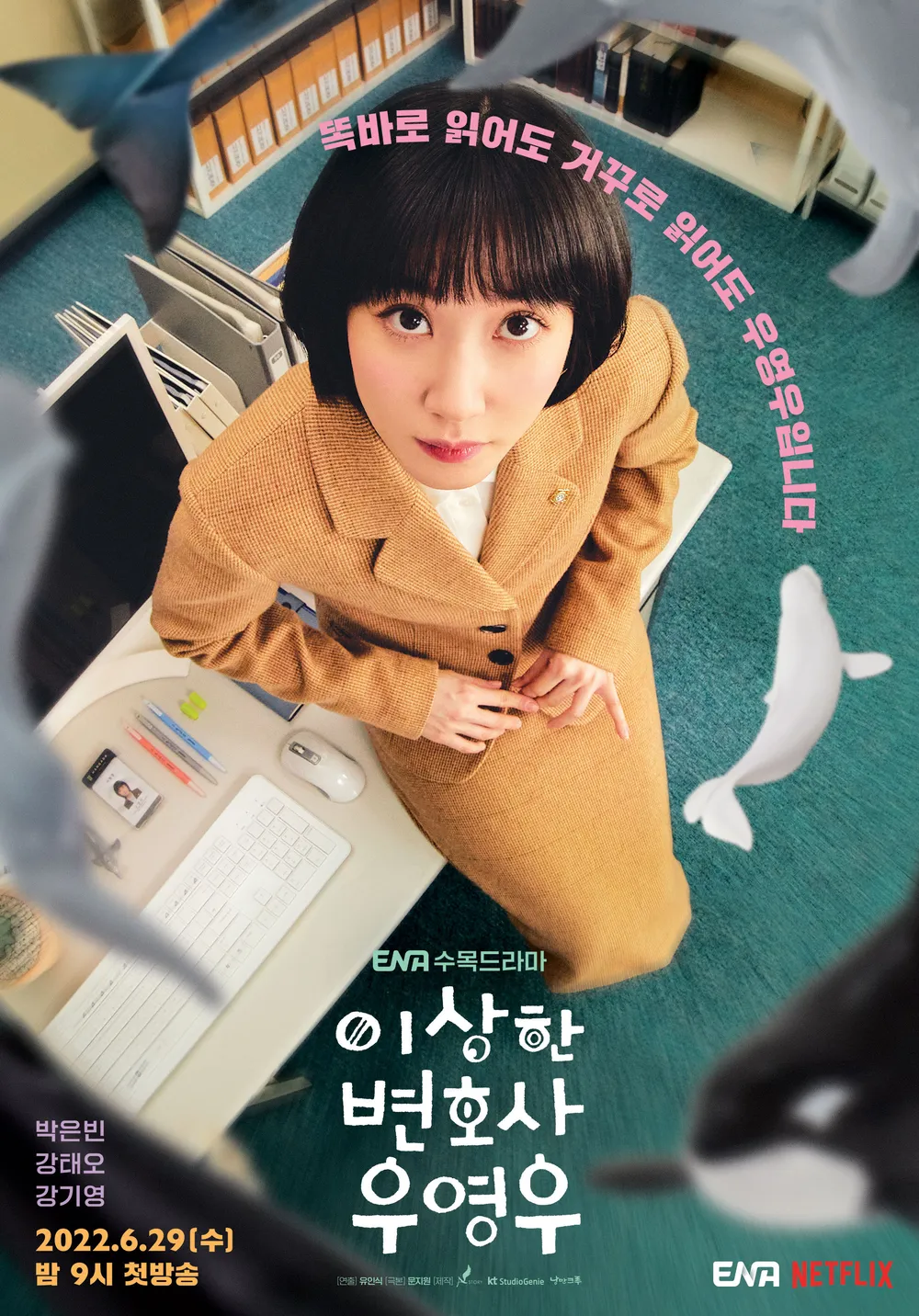
Then came Extraordinary Attorney Woo, a show that felt like a warm hug after the brutality of The Glory. Park Eun-bin’s performance was nothing short of miraculous. In lesser hands, the character of Woo Young-woo could have felt like a caricature, but Park’s meticulous research and subtle physical choices brought a level of humanity that transcended the ‘genius trope.’ The cinematography, particularly the ‘whale moments’ where Young-woo’s imagination would bleed into reality, provided a whimsical yet grounded look into a neurodivergent mind. It wasn’t just a legal drama; it was a ‘healing drama’ that actually healed. The ratings jump from 0.9% to nearly 18% is a statistic we will be talking about in film schools for decades. It proved that a compelling character and a strong moral heart could still beat the most expensive CGI spectacles.
Unpopular opinion, but I believe the success of these two shows actually made it harder for subsequent dramas. They set the bar for ‘social impact’ so high that many recent releases felt like they were trying too hard to capture that same lightning in a bottle. We saw a wave of legal dramas and revenge plots that lacked the nuance of their predecessors. The writing falters when the message becomes more important than the character arc, a trap that even veteran writers fell into. However, the legacy of these ‘social syndromes’ is undeniable; they proved that K-dramas could be the primary vehicle for national discourse, surpassing traditional news or documentary formats in their ability to provoke empathy and change.
The Cinematic Resistance: ‘12.12: The Day’ and the ‘Exhuma’ Fever
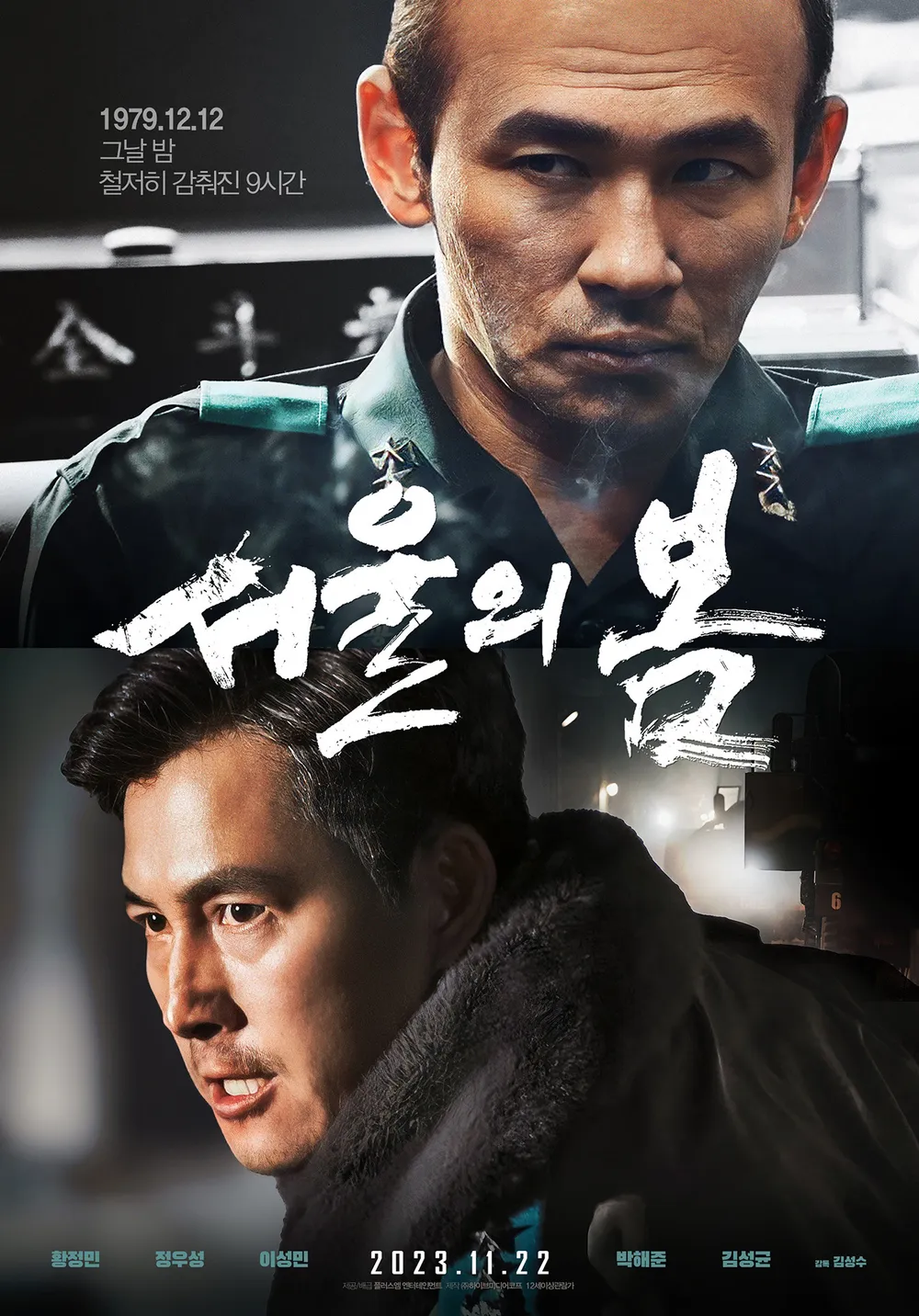
While dramas were dominating the small screen, the Korean film industry was undergoing a crisis of faith—until the release of 12.12: The Day (Seoul of Spring) and the phenomenon Exhuma (Pamyo). These weren’t just movies; they were reasons to go back to the cinema. 12.12: The Day was a masterclass in tension, taking a historical event everyone knew the ending to and making it feel like a ticking-time-bomb thriller. The mise-en-scène was claustrophobic, filled with smoke-filled rooms and frantic phone calls, capturing the desperation of a collapsing democracy. Hwang Jung-min’s performance was polarizing in its intensity, but it was exactly what the film needed to anchor its heavy themes. It sparked a ‘challenge’ among younger viewers to check their heart rates during the screening, a brilliant organic marketing moment that turned a historical epic into a Gen-Z trend.
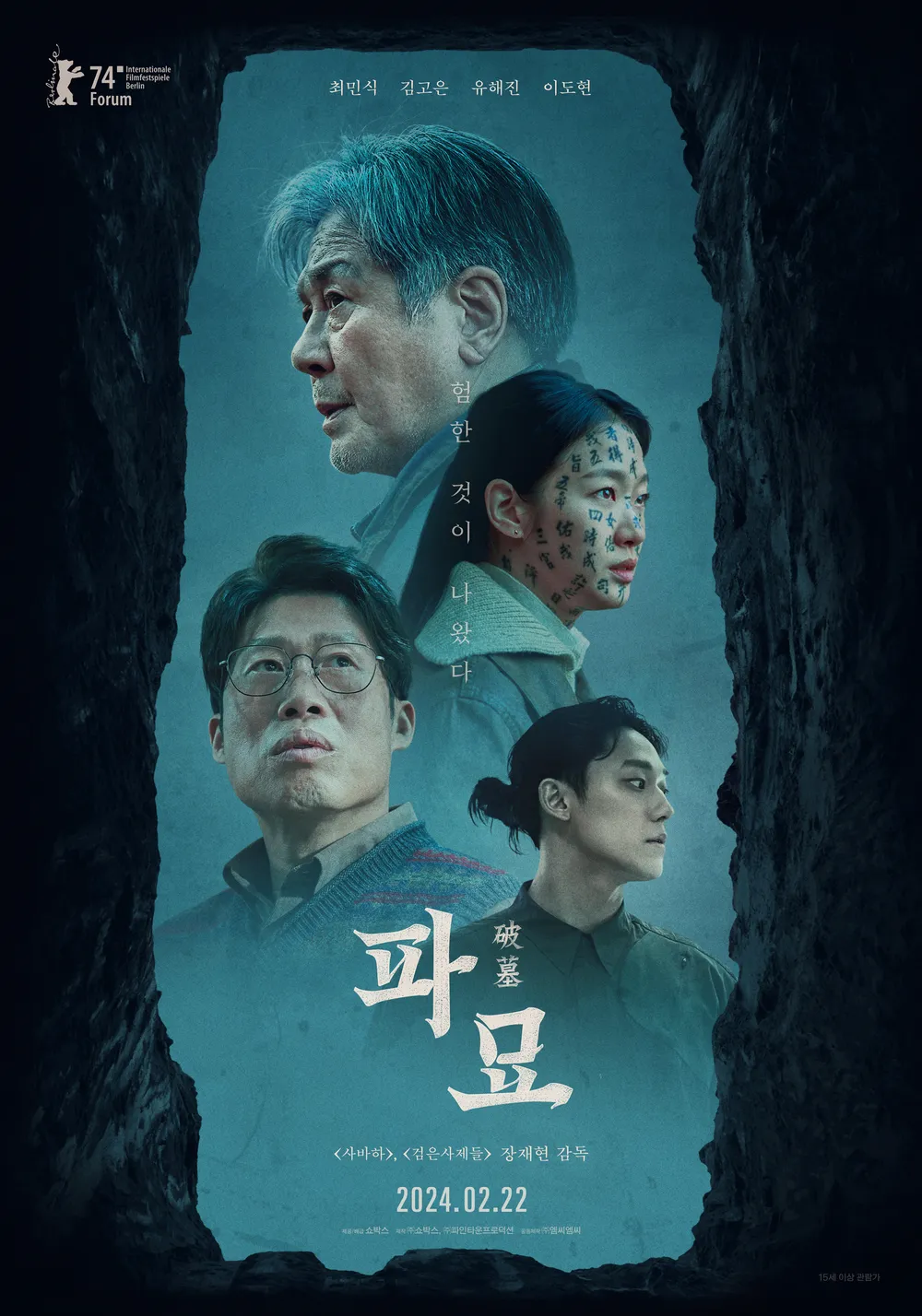
Then came Exhuma, which took the occult genre and made it mainstream. Director Jang Jae-hyun’s ability to weave Korean shamanism with modern-day thrills was breathtaking. The cinematography in the forest scenes—using natural light to create a sense of ancient, lurking dread—was some of the best we’ve seen in years. Kim Go-eun’s ‘Dae-sal’ ritual scene is already legendary; the way the camera circled her, capturing every frantic movement and guttural chant, was pure cinematic adrenaline. It wasn’t just about jump scares; it was about the weight of history and the literal ‘unearthing’ of national trauma. The ‘Pamyo’ syndrome even extended to social media, with fans photoshopping the characters’ facial tattoos onto themselves and visiting the filming locations in record numbers. These films proved that the big screen still has a unique power to create a collective experience that streaming cannot replicate.
“I went to see Exhuma three times just for Kim Go-eun’s ritual scene. The sound design in that theater made my bones shake. It’s been a long time since a movie felt like a physical experience rather than just something to watch.” — TheQoo User #882
The success of these films signaled a shift in what Korean audiences want from cinema. They are no longer satisfied with mid-budget comedies or standard action flicks; they want ‘events.’ They want movies that demand to be seen on a large screen with high-end sound systems. This has led to a fascinating polarization in the industry. As a critic, I worry about the smaller indie films that are getting lost in the shuffle, but there’s no denying that Exhuma and 12.12: The Day saved the theatrical experience in Korea. They reminded us that film is an art form of scale, one that requires our full, undivided attention in a darkened room.
The ‘Sun-jae’ Fever and the Return of the Pure Melodrama
If the previous season was defined by grit, the next was the year of the heart. Queen of Tears and Lovely Runner brought back the ‘syndrome-level’ romance in a way we hadn’t seen since the Crash Landing on You era. Queen of Tears, written by the legendary Park Ji-eun, was a masterclass in high-budget melodrama. The chemistry between Kim Soo-hyun and Kim Ji-won was the engine that drove the show, but it was the visual splendor that kept us hooked. The filming locations in Germany, the impeccable fashion, and the soaring OST drops were all designed to create a sense of aspirational longing. While the writing occasionally leaned too heavily into corporate intrigue, the emotional core remained unshakable. It was a reminder that when the ‘King of Melodrama’ Kim Soo-hyun cries, the whole nation cries with him.
However, the real surprise was Lovely Runner. On paper, it looked like a standard time-travel idol romance, but it became a cultural juggernaut. The ‘Sun-jae Syndrome’ was a fascinating case study in how a character can transcend the script. Byeon Woo-seok didn’t just play Ryu Sun-jae; he became the platonic ideal of the first love. The director’s choice to focus on small, tactile moments—the holding of an umbrella, a hesitant glance, the way a specific song triggers a memory—made the show feel incredibly intimate. It tapped into a deep well of nostalgia for the late 2000s, using flip phones and Cyworld references to anchor its time-travel mechanics. The show’s popularity wasn’t reflected in traditional ratings as much as it was in the sheer volume of online discourse, sold-out pop-up stores, and the instant stardom of its leads.
What elevates Lovely Runner above other rom-coms is its sincerity. It didn’t try to be ‘meta’ or cynical. It embraced the tropes of the genre with such earnestness that it felt fresh again. As a critic, I often find myself exhausted by the ‘deconstruction’ of romance, but Lovely Runner reminded me why we fell in love with K-dramas in the first place. It’s about the feeling of a moment being suspended in time. The ‘Sun-jae’ effect is still being felt, as every production house is currently scouring webtoons for the next nostalgic hit. But they should be careful—you can’t manufacture the kind of organic chemistry that Byeon Woo-seok and Kim Hye-yoon shared. That was a once-in-a-decade alignment of casting and character.
The Horizon: Webtoons and High-Budget Epics
As we move forward, the ‘syndrome’ landscape is shifting toward high-concept adaptations. Heavy Trauma Center: Golden Hour and K-Pop Demon Hunters are currently dominating the discourse. The transition from webtoon to screen has become more sophisticated; we are no longer just seeing literal translations, but cinematic reinterpretations. Trauma Center, in particular, has been praised for its technical accuracy and its unflinching look at the Korean medical system. The production value is staggering—the surgery scenes are filmed with a level of detail that rivals international medical dramas, yet the heart of the story remains uniquely Korean, focusing on the hierarchy and sacrifice inherent in the field.
We are also eagerly awaiting the full release of You Have Done Well (Pokssak Sokasuda), the IU and Park Bo-gum vehicle set in Jeju Island. The buzz surrounding this project has been building for years, and for good reason. The writer, Lim Sang-choon (of When the Camellia Blooms fame), has a knack for finding the extraordinary in the ordinary. Based on the early episodes, the cinematography is a love letter to Jeju, using a warm, grainy film stock that makes every frame look like a vintage postcard. It’s a ‘healing drama’ on a massive scale, proving that even now, we are still looking for stories that ground us in our shared history and humanity. The ‘syndrome’ here isn’t about shock value; it’s about a collective sigh of relief.
“Seeing IU and Park Bo-gum on screen together in that Jeju setting feels like a dream. It’s the kind of drama that makes you want to call your grandparents and ask about their first love. The year is starting off so strong.” — TheQoo User #1029
Looking at the trajectory from The Glory to You Have Done Well, it’s clear that the Korean audience’s palate has become more refined. We want the technical polish of a global blockbuster, but we refuse to sacrifice the emotional depth that is the hallmark of K-content. The syndromes of recent years have taught us that a great drama can be many things—a mirror to our flaws, a window into another’s life, or a time machine to our own past. As a critic, my final verdict is this: the ‘syndrome’ is the ultimate form of democratic art. It’s not decided by critics or networks, but by the millions of viewers who choose to let a story into their lives. Whether it’s a chef in a black-and-white uniform or a lawyer who loves whales, these characters are the milestones of our cultural journey. And if the current trends are any indication, the next few years will be just as unpredictable and just as brilliant.
Final Verdict: The Evolution of the Korean Syndrome
In the end, the list of ‘syndromes’ reflects a nation in transition. We’ve moved from the raw anger of The Glory to the nostalgic warmth of Lovely Runner, and now to the technical ambition of Trauma Center. The common thread is a relentless pursuit of excellence in storytelling. The directors are bolder, the writers are more experimental, and the actors are pushing themselves to new heights of physical and emotional expression. Cinematically, we are living in a golden age of Korean media, where the boundaries between film, drama, and variety are blurring into a single, vibrant stream of content.
Technical Breakdown:
Writing: ⭐⭐⭐⭐⭐ (Nuanced and daring)
Direction: ⭐⭐⭐⭐⭐ (Global standard visuals)
Acting: ⭐⭐⭐⭐⭐ (Career-defining performances)
Production: ⭐⭐⭐⭐☆ (High budget, high impact)
Overall: 9.5/10
Who it’s for: Anyone who wants to understand the heartbeat of modern Korea. These aren’t just shows; they are the cultural currency of our time. If you haven’t caught up on the ‘Sun-jae’ fever or the ‘Pamyo’ craze, you’re missing out on the conversation of the decade. Watch them not just for the plot, but for the craft. That is where the true syndrome lies.
