

A Crimson Transformation for the Capital
March 21, 2026, marks a pivotal moment in the promotional cycle for BTS’s highly anticipated return to the global stage. HYBE Corporation, in collaboration with the Seoul Metropolitan Government, has officially confirmed that several of the city’s most iconic landmarks will be illuminated in a deep crimson red to celebrate the group’s upcoming 2026 comeback. While Seoul has a long-standing history of turning purple—the group’s signature color—to welcome the septet, this year’s shift to a bold red palette represents a significant departure from established branding. Official sources indicate that the illumination schedule will span a two-week period, coinciding with the release of the lead single and the subsequent full-length album.
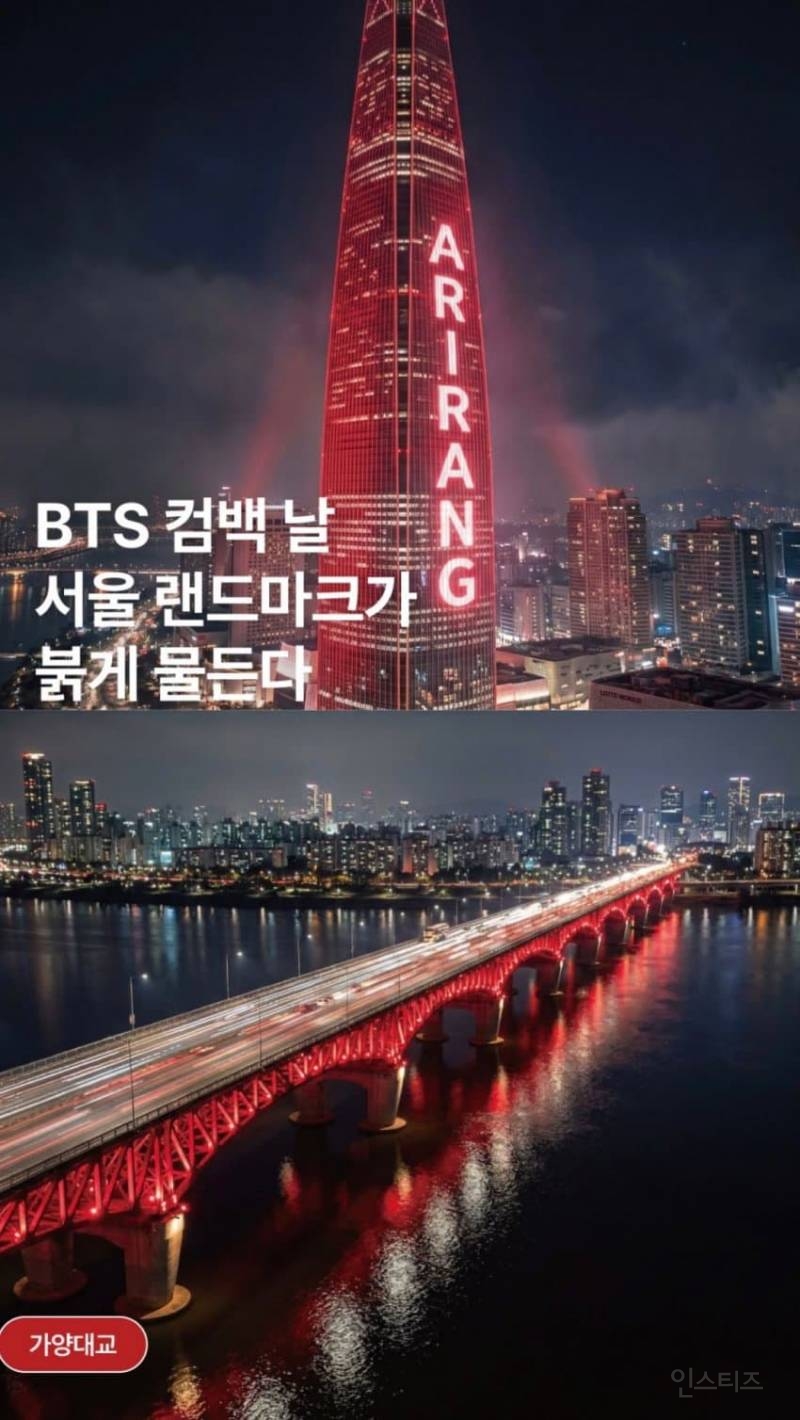
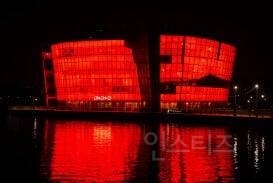
Landmarks scheduled for this visual overhaul include the N Seoul Tower, Lotte World Tower, the Sebitseom floating islands on the Han River, and the Dongdaemun Design Plaza (DDP). Representatives from the Seoul Metropolitan Government’s tourism division stated that the coordination required for such a large-scale event involves months of technical planning. Unlike previous years where lighting was localized to specific concert venues, the 2026 campaign aims to create a city-wide atmospheric experience that integrates the urban landscape into the group’s narrative universe. The decision to use red has been described by industry insiders as a thematic link to the album’s core concepts of passion, rebirth, and a new sonic direction that moves away from the softer tones of their previous era.
Deciphering the AI-Generated Visual Controversy
Marketing materials released early this morning have sparked an unexpected debate within the online community, particularly regarding the nature of the promotional assets. Several high-resolution images circulating on official channels, depicting the red-lit landmarks, have been identified as AI-generated renderings rather than actual photography. While HYBE clarified that these images were intended as conceptual previews to build anticipation, the use of generative AI in official K-pop promotion has become a point of contention for some fans and digital artists. Critics argue that for a group of BTS’s stature, the reliance on synthetic imagery feels disconnected from the high-production standards typically associated with their brand.
Visual assets used in the campaign show a surreal, hyper-saturated version of Seoul that many netizens found jarring. On the community platform Instiz, a post titled “Events that people say don’t really suit Seoul” quickly gained traction, amassing over 27,000 views in a matter of hours. The discourse centered on whether the aggressive red aesthetic harmonizes with the natural nighttime skyline of the city. While the lighting itself is confirmed to be physically happening, the gap between the AI-generated “ideal” and the reality of urban light pollution has led to skepticism about how the final result will appear to the naked eye.
“The red light looks like a scene from a sci-fi movie or a dystopian thriller, but I’m not sure if it fits the peaceful vibe of the Han River. It feels a bit too intense compared to the purple we are used to.”

Beyond ‘Borahae’: The Strategic Pivot to Red
Historically, the color purple—or ‘Borahae’ (I Purple You)—has been the unbreakable bond between BTS and their global fandom, ARMY. Every major milestone leading up to 2026 has been bathed in violet hues, making this sudden pivot to red a bold strategic move by HYBE’s creative team. From a branding perspective, this change suggests a desire to break away from the ‘legacy’ image of the group and establish a ‘Chapter 3’ that is distinctly more aggressive and experimental. Industry analysts suggest that the red theme likely mirrors a shift in musical genre, possibly leaning into rock, hip-hop, or high-energy performance-focused tracks that require a more visceral visual accompaniment.
Strategic shifts of this magnitude are rarely accidental in the K-pop industry. By claiming a new color, BTS is effectively signaling a metamorphosis. However, this transition is not without its risks. The ‘purple’ identity is worth billions in brand equity and merchandise. Moving to red requires the agency to re-educate the public and the fandom on the new symbolism. The red lighting of Seoul is the first physical manifestation of this rebrand, acting as a massive, city-sized billboard for the group’s evolution. It is a declaration that the BTS of 2026 is not the same as the BTS of the early 2020s.
“Why red? Purple was their identity. This feels like a complete reset for the 2026 era. It’s exciting but also a bit sad to see the purple era officially ending in the city’s skyline.”
Navigating Public Sentiment and Aesthetic Friction
Social media platforms have become a breeding ground for mixed reviews regarding the aesthetic choice. While many international fans expressed excitement at the ‘dark and moody’ vibes, local residents in Seoul have voiced concerns about the visual impact on the city’s nighttime environment. Some netizens noted that red lighting on such a massive scale can feel ‘ominous’ or ‘unnatural’ when applied to architectural landmarks like the DDP. The tension between a commercial promotional event and the public’s right to a harmonious cityscape is a recurring theme in urban planning, and this BTS campaign is no exception.
Community feedback on platforms like Instiz highlighted a specific cultural nuance: the color red in Korean urban contexts can sometimes be associated with warnings or heat. One popular comment suggested that the AI-generated images made the city look like it was “on fire,” which some found unsettling. Despite these critiques, the engagement levels remain unprecedented. The controversy itself serves as a powerful marketing tool, ensuring that even those who are not fans of the group are aware of the impending comeback. In the attention economy of 2026, even ‘aesthetic friction’ is a form of success.
“Using AI images for official promotion feels a bit lazy for a group of this stature. We want to see the real Seoul, not a computer-generated fantasy that doesn’t account for how light actually reflects off the buildings.”
Logistics of a City-Wide Illumination Event
Executing a lighting project of this scale requires a sophisticated synchronization of the city’s power grid and smart lighting systems. The Seoul Metropolitan Government utilizes a centralized control system for landmarks like the N Seoul Tower, which can be programmed to display millions of color variations. For the 2026 BTS comeback, the city has approved the use of a specific hex code of red that was provided by HYBE’s design team to ensure consistency across all physical locations. This level of bureaucratic cooperation underscores the group’s status as a ‘national treasure’ and a key driver of the city’s soft power.
Safety remains a top priority for the authorities during the illumination period. Previous BTS-related events have seen hundreds of thousands of fans congregating at landmark sites to take photographs. To manage the expected crowds, the Seoul Police Department has announced plans to deploy additional personnel to the Han River parks and the base of the Lotte World Tower. Traffic restrictions may also be implemented in high-density areas to prevent congestion. The city is essentially treating the comeback as a major public festival, comparable to the annual Seoul International Fireworks Festival.
Economic Projections for the 2026 Comeback Season
Data from the Seoul Tourism Organization suggests that the ‘Red Seoul’ campaign could generate upwards of 500 billion KRW in economic impact through increased domestic and international tourism. With the 2026 comeback being the first full-group activity in some time, fans from across the globe are expected to descend upon the capital. Hotels in the Myeongdong and Jamsil areas have already reported a 40% surge in bookings for the period surrounding the announced lighting dates. This ‘BTS Effect’ continues to be a vital component of South Korea’s post-service economic recovery plan.
Retailers are also capitalizing on the red theme. Major department stores like Shinsegae and Hyundai have reportedly secured partnerships to release limited-edition ‘Red Era’ merchandise that mirrors the city’s new aesthetic. From high-end fashion collaborations to simple lightsticks, the color shift is being integrated into every possible consumer touchpoint. While some netizens may find the red lighting ‘unfitting’ for the city’s vibe, the financial reality is that such events provide a massive boost to the local service and hospitality industries, which often outweighs aesthetic concerns in the eyes of city officials.
Future Implications for K-Pop Tourism Partnerships
Looking ahead, the success or failure of the ‘Red Seoul’ campaign will likely set a precedent for how K-pop agencies and municipal governments collaborate on large-scale urban branding. If the public eventually embraces the red aesthetic, it could open the door for more diverse and experimental color-coded events for other artists. However, if the backlash against the AI-generated imagery and the ‘aggressive’ color choice persists, agencies may return to more traditional, less polarizing promotional methods. The 2026 BTS comeback is, in many ways, a massive experiment in urban psychology and brand evolution.
As a reporter who has covered the industry for years, I find this move toward ‘aesthetic disruption’ fascinating. HYBE is clearly no longer content with just following the rules of K-pop promotion; they are attempting to rewrite the visual language of the city itself. Whether the citizens of Seoul agree with the choice of red or not, one thing is certain: the world will be watching when the lights go up. The transition from the comforting purple of the past to the challenging red of the future is the story of a group that refuses to stand still, even when they have already conquered the world. The official lighting ceremony is expected to begin at 6 PM KST on the first day of the promotional window, marking the official start of the 2026 era.