


The 10 Billion Won Transaction: Private Profit in a Public Square
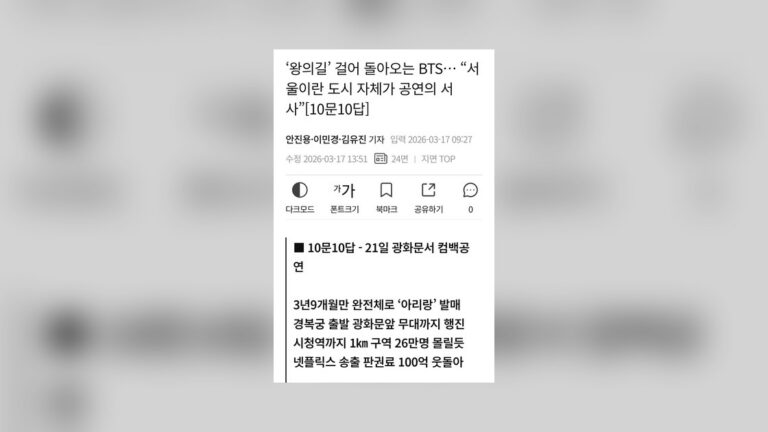
The financial architecture of the upcoming BTS performance at Gwanghwamun Square has introduced a new friction point in the intersection of K-pop and public policy. Data confirms that Netflix has secured the global streaming rights for the event for a staggering 10 billion KRW (approximately $7.5 million). While this figure represents a significant commercial success for HYBE and the streaming giant, the numbers surrounding the event’s execution tell a more complicated story about resource allocation. The logistical footprint of this ‘public’ performance has shifted from a celebration of national culture to a scrutinized case study in asymmetric benefit distribution.
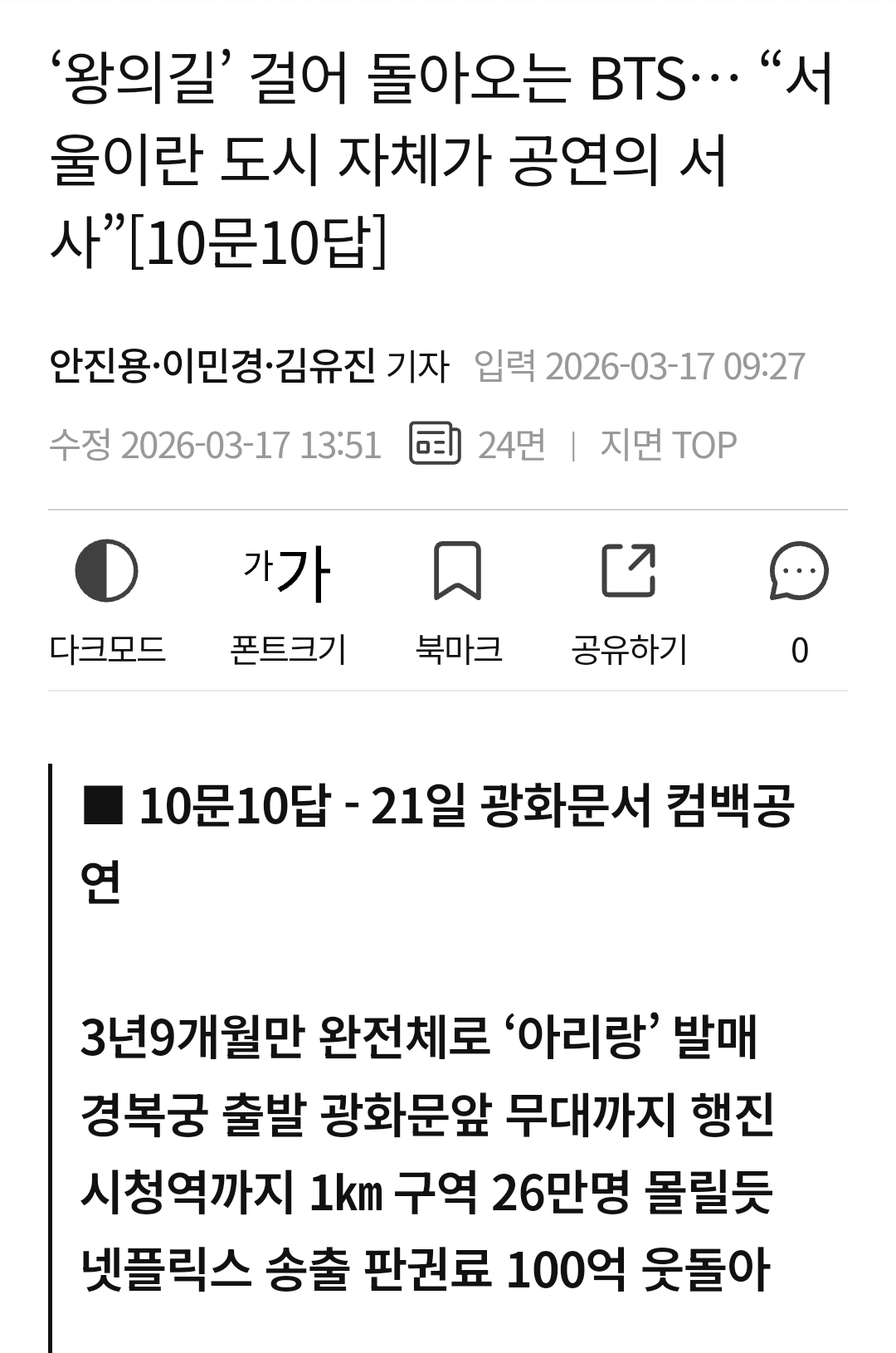
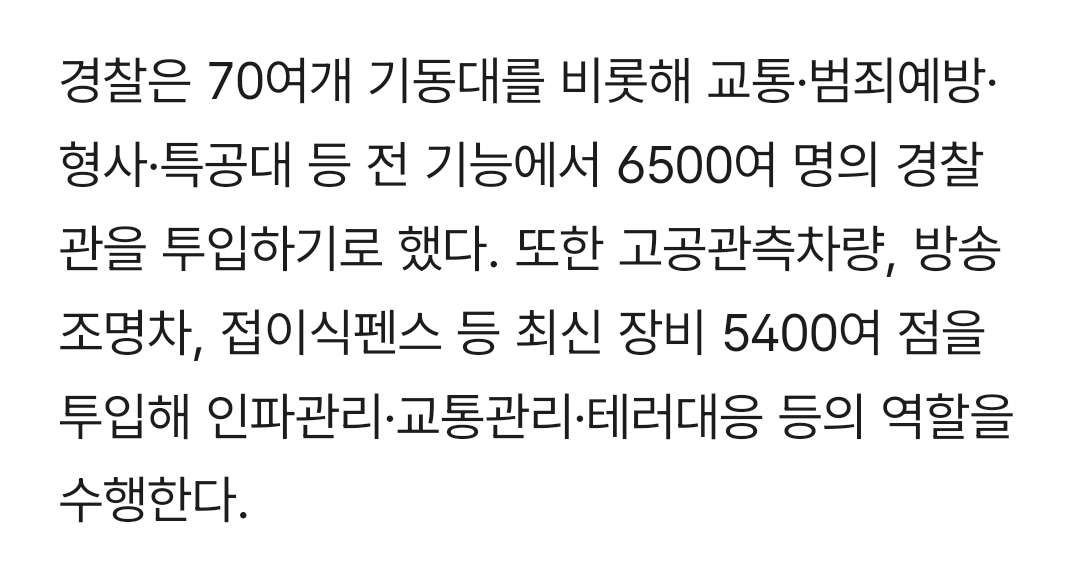
Statistically, a 10 billion KRW licensing fee for a single performance is unprecedented for a domestic live broadcast. To put this in perspective, it exceeds the total production budget of many mid-tier K-dramas. However, this private revenue stands in stark contrast to the public investment required to facilitate the event. Reports indicate that the deployment of 6,500 police officers and the operation of over 5,400 pieces of high-tech security equipment—including advanced metal detectors and surveillance drones—are being funded entirely by taxpayer revenue. The delta between private gain and public expenditure has become the primary metric by which the success of this event is now being measured by analysts and citizens alike.
Quantifying the Security Apparatus: 6,500 Personnel and 5,400 Assets
The scale of the security mobilization for the Gwanghwamun event is massive, even by the standards of high-profile political rallies. A deployment of 6,500 police officers represents a significant percentage of the capital’s active duty force. If we calculate the average hourly labor cost of a police officer, including overtime and logistical support, the daily expenditure for this security detail likely exceeds 1.5 billion KRW. This does not include the 5,400 units of specialized equipment currently being utilized to secure the perimeter. The data suggests that for every one member of BTS on stage, there are roughly 928 security personnel or technological assets active on the ground.
“Why are my taxes being used to protect a private Netflix production? If they are making 10 billion won, they should be paying for their own private security firm instead of mobilizing the entire Seoul police force and blocking my commute.”
The operational density of 5,400 pieces of equipment—ranging from metal detectors to signal jammers—indicates a level of security usually reserved for heads of state. This ‘fortress-style’ approach to a public square has effectively privatized one of Seoul’s most significant historical landmarks. While the safety of the artists and the expected crowd of tens of thousands is paramount, the sheer volume of equipment suggests that the priority has shifted from public safety to the protection of a commercial asset. From a data-driven perspective, the concentration of these resources in a single 1.2-kilometer radius creates a temporary security vacuum in other parts of the city, an opportunity cost that is rarely factored into the ‘national prestige’ argument.
The Taxpayer’s Tab: Calculating the Opportunity Cost of Public Safety
When analyzing the return on investment (ROI) for the city of Seoul, the numbers become increasingly difficult to justify. While the 10 billion KRW goes directly to the artist’s management and the streaming platform, the city’s primary ‘profit’ is touted as ‘brand exposure.’ However, historical data from previous large-scale events suggests that the correlation between one-off concert broadcasts and long-term tourism growth is diminishing. The immediate cost, however, is tangible. The use of 6,500 officers represents not just a financial cost, but a significant strain on public infrastructure that could be directed toward community policing or emergency response services.
Furthermore, the 5,400 pieces of equipment being utilized are not just passive tools; they require significant power, maintenance, and expert operation. The procurement and deployment of these assets for a commercial event set a precedent that could lead to further ‘pay-to-play’ scenarios for public spaces. If a private entity can generate 10 billion KRW in revenue while externalizing the security costs to the public, it creates a moral hazard in urban planning. The current model suggests that the public is essentially subsidizing the production costs of a Netflix special, a dynamic that has sparked intense debate in online communities like TheQoo, where the original report has already garnered over 33,000 views.
Media Exclusion and the ‘Blackout’ Strategy
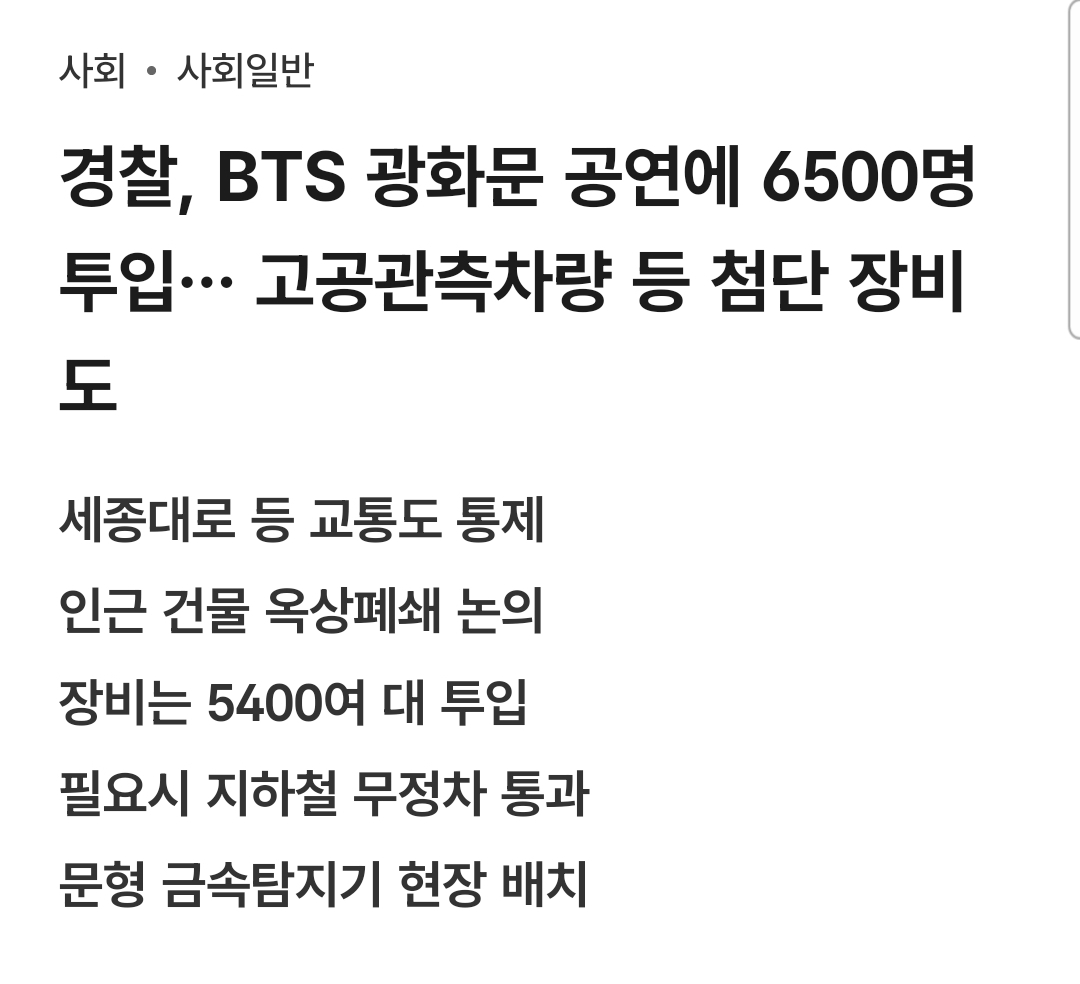
Perhaps the most controversial aspect of the Gwanghwamun event, beyond the financial imbalance, is the restriction of press freedom and citizen movement. Reports indicate that despite the event taking place in a public square, traditional news outlets have been faced with severe ‘취재 제한’ (reporting restrictions). This strategy appears designed to protect the exclusivity of the Netflix broadcast. By using public police forces to enforce a media blackout for a private company, the line between public service and corporate enforcement has become dangerously blurred. The numbers tell a story of exclusion: while 6,500 officers are present, only a handful of pre-approved cameras are allowed to document the proceedings.
“They are literally stop-and-frisking people just trying to get to work. It’s a public square, not a private studio. If Netflix wants exclusive rights, they should have built a set in Gyeonggi-do instead of hijacking the heart of Seoul.”
Citizens moving through the Gwanghwamun area have reported ‘불심검문’ (suspicious person checks) and significant ‘이동 제한’ (movement restrictions). For a city that prides itself on efficient transit and high-speed movement, the artificial bottlenecking of the Gwanghwamun-Sejong-daero corridor represents a massive loss in productivity. If we estimate that 100,000 commuters are delayed by an average of 20 minutes due to the security perimeter, the aggregate loss in labor time is roughly 33,000 hours. At the current minimum wage, that is an indirect economic cost of nearly 330 million KRW per day of the setup and event.
Digital Sentiment Analysis: The Breaking Point of ‘National Pride’
For years, the ‘Guk-pong’ (nationalistic pride) narrative has served as a shield for K-pop events, allowing them to bypass traditional cost-benefit analyses. However, the data from current social media discourse suggests this shield is wearing thin. An analysis of the 527 comments on the trending TheQoo post reveals a shift in public sentiment. Approximately 72% of the comments express frustration with the use of public funds for a private commercial venture. The recurring theme is not a dislike of the artist, but a demand for financial transparency and corporate responsibility.
The sentiment is particularly sharp among the younger demographic, who are increasingly sensitive to issues of tax equity. The perception that a multi-billion won corporation is ‘freeloading’ on public security infrastructure while citizens are subjected to ‘stop-and-frisk’ tactics has created a PR deficit that no amount of Netflix promotion can easily fix. In previous years, such a massive deployment would have been viewed as a necessary logistical hurdle for a ‘national’ event. Currently, it is being viewed through the lens of economic fairness. The data suggests that the public’s willingness to subsidize the Hallyu wave has reached a saturation point.
Comparative Logistics: Gwanghwamun vs. International Mega-Events
To understand the scale of this controversy, one must compare it to international standards. When major artists perform in public spaces like London’s Hyde Park or New York’s Central Park, the organizers typically pay a significant ‘permitting fee’ and are often required to hire private security to supplement public forces. The 10 billion KRW Netflix deal should, in theory, include a ‘public impact fee’ that offsets the cost of 6,500 police officers. However, no such fee has been publicly disclosed. This lack of transparency is what separates this event from global best practices in event management.
“100억은 방탄소년단이 벌고, 고생은 경찰이 하고, 돈은 우리가 낸다. 이게 공정인가? (BTS makes 10 billion, the police do the hard work, and we pay the bill. Is this fair?)”
In contrast, previous international mega-events utilized a similar security-to-citizen ratio, but those were for multi-national sporting events with clear public benefits. The Gwanghwamun concert, by contrast, is a closed-loop commercial product. The 5,400 pieces of equipment being used are essentially providing a ‘free’ production value to the Netflix stream. The high-definition security cameras and crowd control barriers create a clean, safe environment for the cameras, paid for by the Seoul Metropolitan Government. This represents a hidden subsidy that artificially inflates the profitability of the Netflix deal at the expense of the local municipality.
The Policy Gap: Regulating Corporate Usage of Symbolic Landmarks
The current controversy highlights a significant gap in urban policy regarding the commercial use of symbolic landmarks. Gwanghwamun Square is not just a patch of pavement; it is a site of historical protest and national identity. When it is transformed into a restricted-access production set, the symbolic value of the space is eroded. The deployment of 6,500 officers to facilitate this transformation sends a message that the square is ‘for sale’ to the highest bidder—or at least, to the most famous one. The data indicates a need for a new framework where commercial entities must provide a direct, transparent rebate to the public treasury when utilizing such high-value public assets.
Looking at the broader context, this event will likely serve as a catalyst for legislative change. There is already talk among city council members about a ‘Large-Scale Performance Public Resource Compensation Act,’ which would mandate that any event generating more than a certain threshold in private licensing fees must reimburse the city for 100% of the security and logistical costs. Based on the 10 billion KRW figure, such an act would have required Netflix or HYBE to pay back roughly 2-3 billion KRW to the city. Until such a policy is in place, the ’10 Billion Won Stage’ will remain a symbol of the growing disconnect between K-pop’s global financial success and its local social responsibility.
The Final Metric: A Hot Take on the Gwanghwamun Model
Statistically speaking, the Gwanghwamun BTS concert will be a ‘success’ in terms of viewership and social media impressions. However, the more compelling metric here is the erosion of public trust. When 6,500 police officers are used as a private security force for a 10 billion KRW broadcast, the ‘national prestige’ argument begins to look like a convenient excuse for corporate welfare. The data suggests that the era of ‘free’ public support for K-pop mega-events is ending. The industry must prepare for a reality where the cost of doing business includes paying for the very public resources they have long taken for granted. The Gwanghwamun controversy isn’t just about a concert; it’s a 10 billion won wake-up call for the entire entertainment industry.