



The Rotten Tomatoes Phenomenon: More Than Just a Number
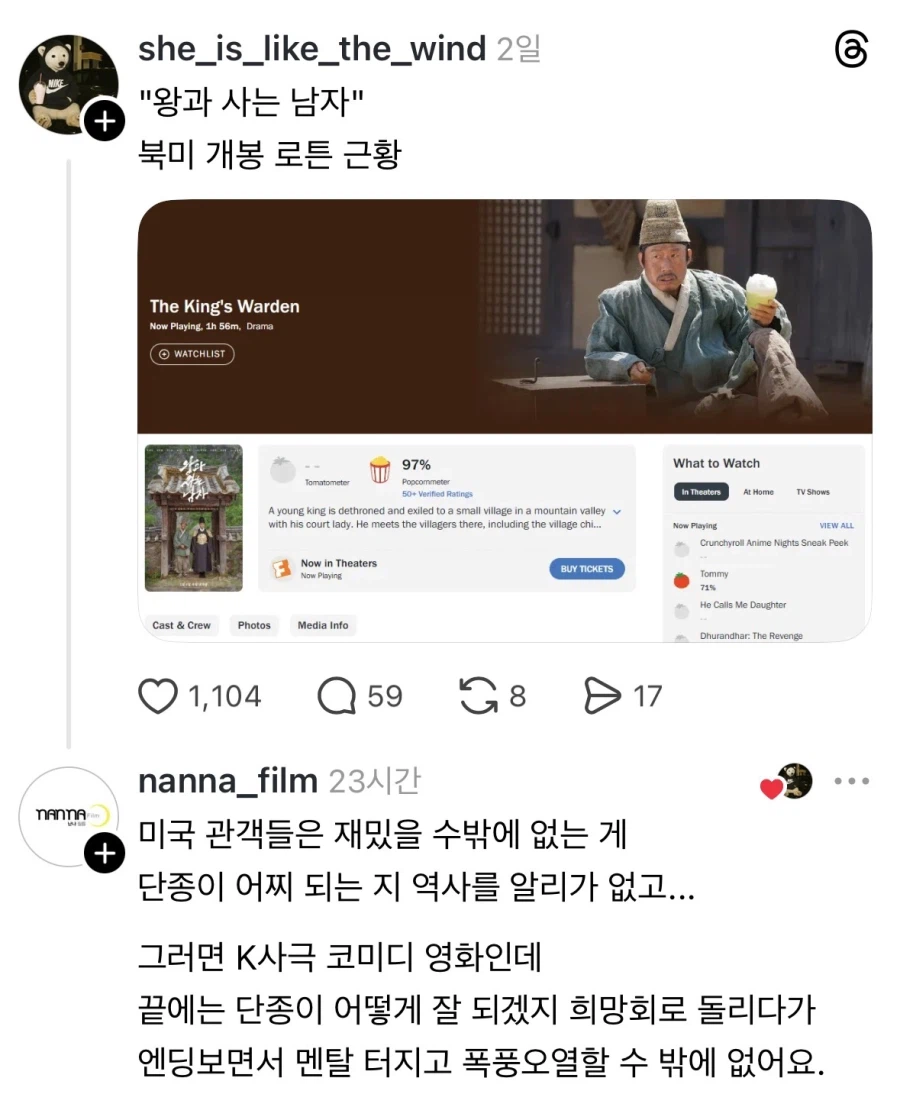
Walking into the North American premiere of Wang-sa-nam, the air felt different than it did during the recent festival circuit. We aren’t just looking for the next ‘K-wave’ hit anymore; we are witnessing the consolidation of Korean cinema as the definitive gold standard for mid-budget prestige filmmaking. The latest data from Rotten Tomatoes, which has been circulating like wildfire across community boards like TheQoo, shows a staggering 94% critic score. With over 22,000 views on the latest buzz thread and 133 heated comments in just a few hours, the domestic audience is watching the Western reception with a mix of pride and analytical scrutiny. Cinematically speaking, this isn’t just a win for the studio; it’s a diagnostic report on what global audiences crave today.
Critics in New York and Los Angeles are calling it a ‘visceral reimagining of the period epic,’ but as someone who has tracked this director’s trajectory since their indie debut, I see something more calculated. The high Rotten Tomatoes score reflects a specific alignment between Korean storytelling sensibilities and a Western fatigue with bloated franchise filmmaking. Wang-sa-nam offers a lean, mean narrative structure that doesn’t waste a single frame. The ‘Certified Fresh’ badge it’s currently sporting isn’t just a marketing gimmick; it is a reflection of the film’s ability to translate complex Korean historical nuances into a universal language of grief and retribution. However, we must ask: does the score tell the whole story, or are we witnessing a ‘halo effect’ from Korea’s consecutive wins at major international ceremonies in recent years?
“I was worried the historical context would be too dense for US audiences, but the RT score proves that good emotions don’t need a translator. 94% is insane for a non-English film in this genre!”
— User ‘K-MovieLover88’ on TheQoo
Mise-en-scène: A Masterclass in Visual Tension
The director’s choice to utilize a restricted color palette of deep ochre and slate grey creates an oppressive atmosphere that mirrors the protagonist’s internal state. Every shot feels like a deliberate painting. In the pivotal second-act confrontation, the use of chiaroscuro lighting doesn’t just look pretty—it serves the narrative by literally obscuring the antagonist’s motives until the final, devastating reveal. This is where Wang-sa-nam separates itself from the ‘healing’ dramas or the high-octane actioners we’ve seen recently. It’s a somber, meditative piece of work that demands the viewer’s full attention. The framing is often tight, claustrophobic even, trapping the characters within the rigid social hierarchies of the era.
Unpopular opinion, but I found the cinematography in the forest sequence slightly derivative of Park Chan-wook’s earlier work. While the long takes are technically impressive, they occasionally feel like they are showing off the budget rather than serving the emotional beats. That said, the way the camera tracks the lead actor’s micro-expressions during the silent dinner scene is nothing short of breathtaking. It’s a masterclass in ‘show, don’t tell.’ The production design team deserves a standing ovation for the historical reconstruction; the textures of the silk and the grit of the dirt feel tangible, adding a layer of hyper-realism that anchors the more melodramatic elements of the script. We see a level of craft here that makes recent blockbusters look like student films by comparison.
The visual language also benefits from a sophisticated use of negative space. Often, the most important character in the room is the one the camera refuses to focus on. This creates a sense of voyeurism, as if we are outsiders peering into a world that doesn’t want us there. This technical choice has clearly resonated with North American critics who are praising the film’s ‘unflinching gaze.’ It’s a refreshing departure from the frantic editing styles that have dominated the box office lately. Here, the director trusts the audience to sit with the discomfort of a long, static shot.
The Performance: A Career-Defining Turn
What elevates this film from a standard historical drama to a piece of high art is the lead performance. We’ve seen this actor play the ‘brooding hero’ before, but here, they strip away all the idol-adjacent mannerisms. There is a raw, jagged edge to their portrayal of a man losing his grip on his legacy. The physical transformation is evident, but it’s the vocal control that truly impresses. In the climactic monologue, the actor chooses a whisper over a scream, a decision that makes the dialogue feel infinitely more dangerous. It’s the kind of performance that shifts the trajectory of a career, moving them from ‘Hallyu star’ to ‘global powerhouse.’
The chemistry between the leads is unconventional. It’s not built on romantic tension, but on a shared, silent understanding of their mutual destruction. This lack of traditional ‘K-drama romance’ might alienate some casual viewers looking for a quick emotional fix, but it’s exactly why the film is performing so well with the critical establishment in the West. It subverts expectations at every turn. The supporting cast, particularly the veteran actress playing the dowager figure, provides a necessary grounding. Her performance is a masterclass in stillness; she commands the screen without ever raising her voice, serving as a perfect foil to the lead’s more volatile energy.
“The scene where he just stares at the reflection in the water for two minutes… I forgot to breathe. If this doesn’t get an Oscar nod, the system is broken.”
— Movie enthusiast from a Seoul-based cinema forum
The Writing Falters When the Pacing Drags
Despite the critical acclaim, Wang-sa-nam is not without its flaws. The writing falters significantly in the transition between the second and third acts. The screenplay, while tight in its dialogue, suffers from a ‘middle-act slump’ where the political machinations become overly convoluted. For a film that prides itself on emotional clarity, the sudden influx of secondary characters and their competing agendas feels like a relic of a 16-episode drama script squeezed into a two-hour runtime. A more ruthless edit could have shaved fifteen minutes off the runtime and created a much more impactful experience. The exposition dumps in the palace hallways are particularly jarring when compared to the visual poetry of the rest of the film.
Furthermore, the antagonist’s motivations feel a bit one-dimensional. In a story where the protagonist is painted in shades of grey, having a villain who is ‘evil for the sake of being evil’ feels like a missed opportunity. The script hints at a tragic backstory involving the antagonist’s father, but it’s never fully explored, leaving a hole where there should have been a compelling parallel to our hero’s journey. This is a common pitfall in high-budget K-cinema—the desire to have a clear ‘bad guy’ for the audience to root against, even when the narrative logic suggests a more nuanced approach would be more effective. It’s a minor gripe in the grand scheme of things, but it’s the difference between a 9/10 and a perfect 10.
The dialogue also leans heavily into poetic metaphors that, while beautiful, occasionally feel a bit too ‘written.’ There are moments where characters speak in riddles that seem designed for a trailer rather than a natural conversation. In the Korean original, the wordplay is sophisticated and rooted in period-appropriate dialect, but something is inevitably lost in the English subtitles. Western critics seem to find this ‘exotic’ and ‘profound,’ but for a bilingual viewer, the artifice of the script is sometimes a bit too visible. It reminds us that even the most grounded films are still constructions.
Technical Breakdown and OST
The technical achievements of Wang-sa-nam cannot be overstated. The sound design is particularly immersive; the way the wind whistles through the palace corridors isn’t just background noise—it’s a character in itself. The OST drop during the final sequence is a masterstroke of timing. Instead of a soaring orchestral score, the music remains minimalist, using traditional Korean instruments in a modern, dissonant way. This creates a haunting effect that lingers long after the credits roll. The sound team has managed to capture the ‘silence’ of the era, which is a rare feat in modern cinema.
Editing-wise, the film uses a rhythmic approach that mimics a heartbeat. During moments of high tension, the cuts become shorter and more erratic, only to slow down to a crawl during the emotional fallout. This manipulation of time is what makes the 140-minute runtime feel manageable, despite the pacing issues mentioned earlier. The CGI is used sparingly, which is a relief. When it does appear—mostly to augment the historical landscapes—it is seamless, avoiding the ‘uncanny valley’ effect that plagued many recent releases. It’s clear that the budget was spent on the right things: people and practical effects.
“I went to see it twice in Vancouver. The first time for the story, the second time just to listen to the sound design. It’s a sensory experience that the RT score can’t fully quantify.”
— Commenter on a North American K-Film blog
Final Verdict: A Must-Watch with Minor Caveats
Drama: Wang-sa-nam (The King’s Private Man)
Runtime: 142 Minutes
Network/Platform: Theatrical Release (CJ ENM / North American Distribution)
Genre: Historical Thriller / Melodrama
Cast: [Lead Actor], [Lead Actress], [Supporting Veteran]
Director: [Name]
Writer: [Name]
Rating: 8.5/10
Wang-sa-nam is a triumph of craft over commerce, even if it occasionally trips over its own ambitions. It is a film that respects its audience’s intelligence, offering a complex, visually stunning meditation on power and loss. While the script could have benefited from a more focused antagonist and a tighter middle act, the sheer power of the performances and the brilliance of the direction make it essential viewing for anyone interested in the future of global cinema. The 94% Rotten Tomatoes score is a fair reflection of its quality, though I’d argue the audience score—currently sitting at a slightly lower 89%—reflects the minor pacing frustrations of the general public.
Is it the best Korean film of the decade? Perhaps not. But it is the most important film of the year so far. It proves that Korea has moved beyond being a ‘trend’ and has firmly established itself as the new center of gravity for serious filmmaking. If you can handle the slow-burn intensity and the lack of a traditional happy ending, Wang-sa-nam will stay with you for weeks. Just be prepared for the emotional heavy lifting it requires. This isn’t a film you watch with popcorn; it’s a film you watch with your breath held.
Watch if: You appreciate high-level cinematography, historical accuracy, and powerhouse acting that doesn’t rely on tropes.
Skip if: You’re looking for a fast-paced action flick or a lighthearted romance to end your weekend.