


The Administrative Foundation of the Gwanghwamun Takeover
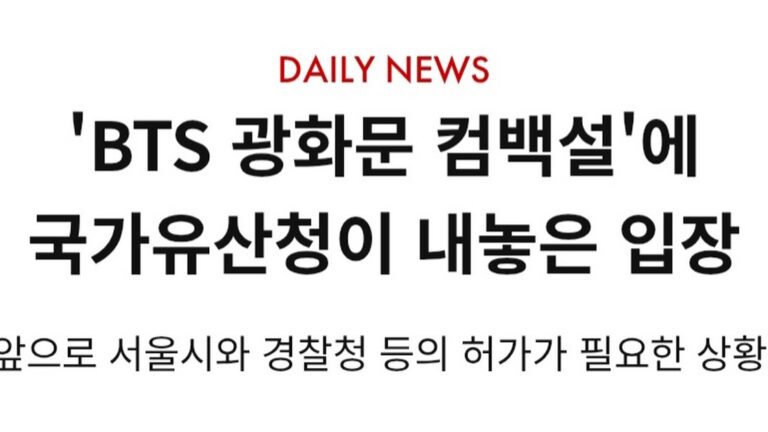
As the dust settles following the unprecedented announcement of BTS’s performance at Gwanghwamun Square, a closer look at official government records has corrected a widely circulated narrative regarding the event’s approval process. While initial public discourse suggested that the Seoul Metropolitan Government was the primary catalyst and first responder to the proposal, recently surfaced administrative documents confirm a different hierarchy of authorization. The scale of this event, which effectively transforms the historical heart of Seoul into a global stage, required a multi-layered verification process that began not with city hall, but with the central government’s heritage preservation authorities.
Understanding the gravity of a performance at this specific location requires acknowledging Gwanghwamun’s status as more than just an urban plaza. It is a site of immense historical sensitivity, adjacent to Gyeongbokgung Palace, and falls under the strict jurisdiction of the National Heritage Administration (NHA), an agency under the Ministry of Culture, Sports and Tourism. For a group like BTS, whose global influence is frequently leveraged as a tool of South Korean soft power, the logistical hurdles are as much about diplomatic protocol as they are about public safety and urban management. The involvement of the NHA from the earliest stages underscores the state-level significance of the event.
Chronology of the January Permits
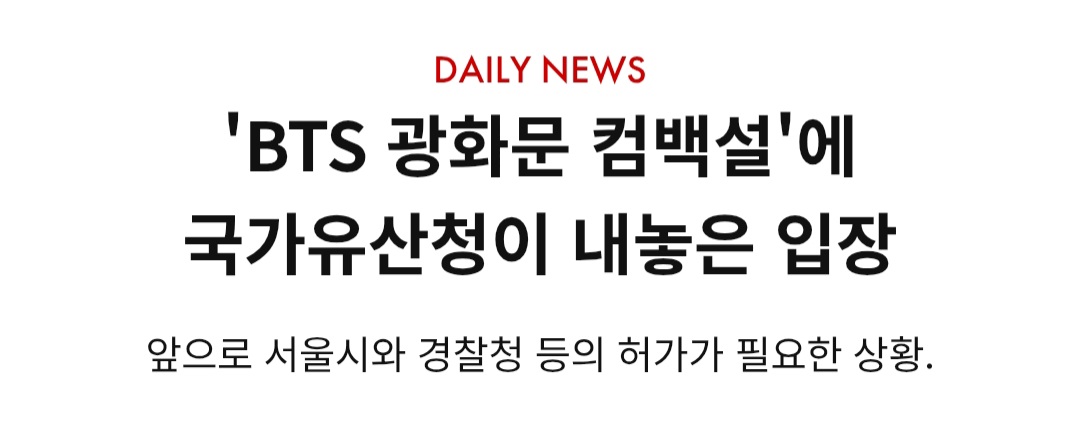
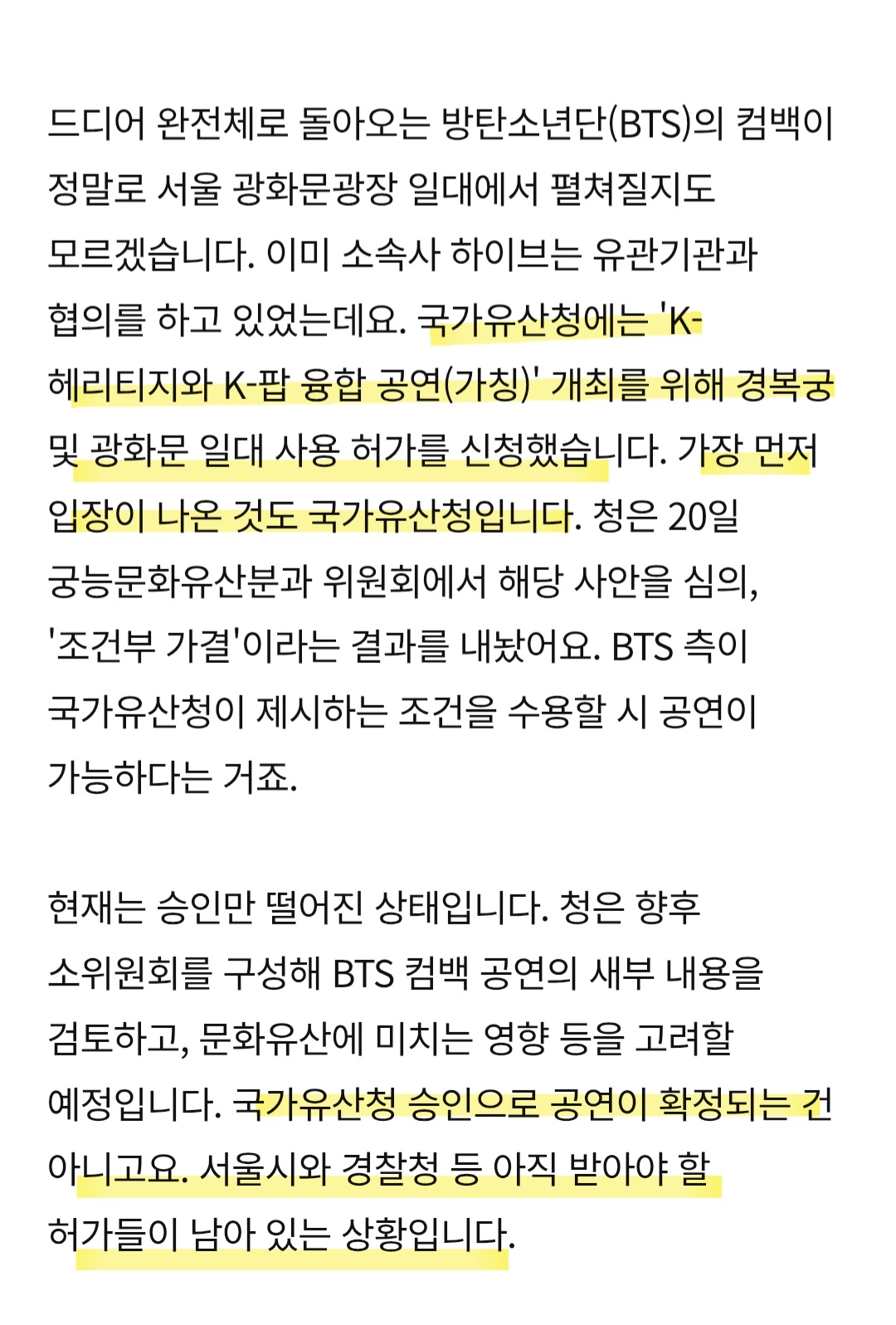
The timeline of official approvals is critical to understanding the internal mechanics of how such a massive undertaking is greenlit. According to official records, the National Heritage Administration granted its formal approval for the use of the heritage-adjacent space on January 20, 2026. This initial permit was the essential ‘domino’ that allowed subsequent administrative steps to proceed. Without the NHA’s clearance regarding the protection of historical assets and the visual integrity of the palace backdrop, no other city-level permits could have been legally finalized. This highlights a top-down approach where national interests in cultural heritage were prioritized before local urban logistics were addressed.
Following the NHA’s decision, the Seoul Metropolitan Government issued its own approval two days later, on January 22, 2026. While the city’s role in managing the physical square, traffic flow, and public safety is indispensable, the two-day gap proves that the city was responding to a primary authorization from the central government. This sequence of events has become a point of intense discussion among industry analysts and fans alike, as it clarifies the official ‘starting gun’ for the production. The coordination between HYBE and these two distinct government bodies suggests a meticulously planned strategy that began months before these dates were recorded.
“I always thought the Mayor of Seoul had the final say in these matters, but seeing the National Heritage Administration approved it two days earlier changes the perspective on how much ‘national’ backing this really has. It wasn’t just a city event; it was a state-sanctioned cultural moment from the start.”
The National Heritage Administration’s Strategic Role
The National Heritage Administration’s involvement is particularly noteworthy given their historically conservative stance on pop culture events near Gyeongbokgung. The agency’s mandate is to protect and preserve, often leading to strict limitations on sound levels, lighting, and heavy equipment in the vicinity of historical structures. The fact that they were the first to sign off on January 20, 2026, indicates that the production plan submitted by the organizers was exceptionally rigorous. It likely included detailed environmental impact assessments and preservation strategies that satisfied the NHA’s stringent criteria for ‘national heritage’ protection.
This early approval also signals a shift in the NHA’s approach to cultural promotion. By prioritizing the BTS performance, the agency appears to be acknowledging the role of modern K-pop in creating ‘new heritage’ and its ability to draw global attention to traditional Korean sites. The permit wasn’t just a technicality; it was a statement of cultural policy. For the NHA to lead the approval process ahead of the city government speaks to the event’s categorization as a matter of national cultural importance rather than a standard commercial performance or public assembly.
Seoul Metropolitan Government’s Secondary Protocol
While the Seoul Metropolitan Government (SMG) followed the NHA’s lead, their approval on January 22 was the final hurdle for the physical transformation of the square. The SMG’s role focuses on the ‘Plaza Usage Committee,’ which reviews how large-scale events affect the daily lives of Seoul citizens. Their approval covers the closure of Sejong-daero, the management of the Gwanghwamun subway station, and the deployment of thousands of safety personnel. Although the SMG is often the public face of such events, their secondary position in the permit timeline reflects the complex bureaucracy involved in managing a site that is both a city park and a national treasure.
Public perception often simplifies these processes, attributing the success of such events to the most visible political figures. However, the data suggests that the SMG’s approval was contingent upon the technical and historical clearances already secured from the central government. This distinction is vital for future event organizers who may look to Gwanghwamun as a potential venue. The path to the square clearly runs through the Ministry of Culture and the NHA before it reaches City Hall. This hierarchy ensures that the historical integrity of the capital remains the priority, even when the world’s largest musical act is involved.
“The timeline is clear now. Jan 20 was the real hurdle. Once the heritage experts cleared it, the city’s approval was just a formality. It’s interesting to see how the bureaucracy actually works when the stakes are this high for the country’s image.”
Debunking the ‘Seoul-First’ Narrative
The narrative that the city of Seoul ‘pioneered’ this event has been widely debunked by the emergence of these specific dates. The 49,751 views and over 500 comments on recent community reports indicate a high level of public interest in getting these facts right. Many observers had previously credited the city’s leadership for ‘winning’ the event for Seoul, but the January 20 permit from the NHA suggests that the national government was the primary negotiator. This correction is not merely a matter of administrative trivia; it reframes the BTS Gwanghwamun performance as a coordinated effort by the Republic of Korea, rather than a localized municipal project.
Misinformation regarding government permits often stems from the timing of press releases. If the city government is more vocal about its preparations, the public naturally assumes they are the lead agency. However, journalistic integrity requires looking past the press conferences to the actual filing dates. The January 20 and January 22 dates provide an objective record that overrides any political posturing. This clarification serves to give credit where it is due—to the specialized heritage officials who had to balance modern entertainment needs with the preservation of a five-century-old legacy.
Logistical Implications for HYBE and BTS
For the agency and the artists, navigating this dual-layered approval system was likely one of the most complex logistical challenges of their career. Securing a ‘National Heritage’ permit requires a level of transparency and planning that far exceeds standard concert venues like the Seoul Olympic Stadium or the Gocheok Sky Dome. Every piece of equipment, from the stage height to the decibel levels of the sound system, had to be vetted by the NHA to ensure no structural vibrations would affect the palace walls. The January 20 approval was the culmination of months of technical submissions and negotiations.
Once the NHA permit was secured, the focus shifted to the urban logistics handled by the city. The two-day window between the NHA and SMG approvals suggests that HYBE had their plans ready for both agencies simultaneously, but the legal structure required the NHA to act first. This efficiency in the permit process—with only 48 hours separating the two major authorizations—points to a high degree of backstage cooperation between the central government, the city, and the private sector. It is a testament to the ‘BTS effect’ that such a complex bureaucratic machine could move with such synchronized precision.
“It makes sense that the Ministry of Culture would be the primary driver for an event of this scale. They see the bigger picture of K-pop as a national asset. The city just handles the traffic, but the NHA handles the soul of the location.”
Precedent for Future Historical Site Performances
The successful navigation of this permit timeline sets a significant precedent for the future of K-pop and historical preservation in South Korea. By establishing a clear pathway from the National Heritage Administration to the local city government, this event provides a blueprint for other high-profile cultural moments. It proves that with the right level of planning and government support, even the most sensitive historical sites can be integrated into modern global culture. The January 2026 permits will likely be cited in administrative manuals for years to come as the standard for ‘National Heritage’ event management.
As we look forward to the actual performance, the transparency regarding these permits adds a layer of official weight to the event. It is no longer just a concert; it is a verified, state-approved cultural milestone. The involvement of the NHA ensures that while the world watches BTS perform in the heart of Seoul, the historical significance of the location remains protected and respected. This balance of the old and the new is what makes the Gwanghwamun performance a unique chapter in the history of K-pop and a defining moment for South Korea’s administrative capabilities in 2026.
