


The Post That Broke the Internet (or at least TheQoo)
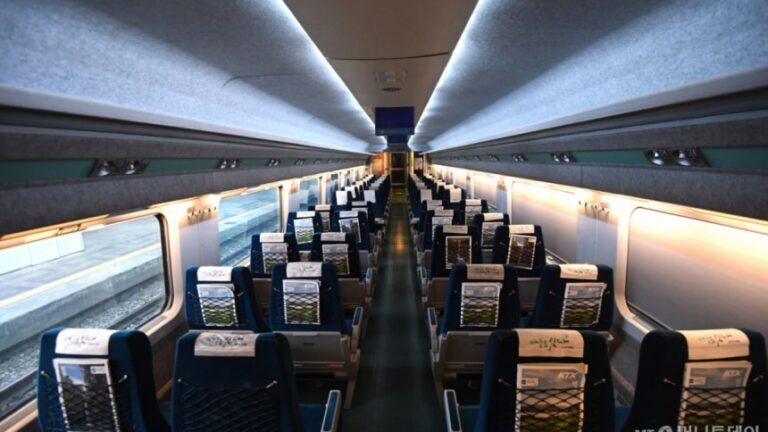
So… my little birds have been BUSY today, and honestly, the tea is absolutely SCALDING. While most of us are out here worrying about comeback schedules and dating rumors, a massive war broke out on the Korean internet over something much more… relatable. I’m talking about the great KTX Burger Debate of 2026. On March 14, a seemingly innocent post dropped on the community board TheQoo, and let’s just say the comments section turned into a battlefield faster than you can say “extra pickles.”
The original poster (OP) shared a photo of a burger on a KTX train, asking a simple question: “My last train ride was five years ago… is it still okay to eat a burger on here?” It sounds like a harmless inquiry from someone trying to be a polite citizen, right? Wrong. The post exploded, racking up over 15,000 views and hundreds of heated comments within hours. It seems that in 2026, the line between “personal freedom” and “being a public nuisance” is thinner than a McDonald’s fry. People are taking sides, and the claws are coming out.
“If I have to smell your onion rings and grease for two hours all the way to Busan, I’m filing a civil suit. It’s common sense—eat at the station before you board!” – Anonymous TheQoo User
Look, I get it. We’ve all been there—stuck in a confined space with a smell that just won’t quit. But the intensity of this reaction is what really caught my eye. It’s not just about the burger; it’s about what we consider acceptable behavior in public spaces in this post-pandemic era. Some netizens are calling for the “burger-eaters” to be kicked off the train entirely, while others are defending their right to a quick meal on the go. The drama is real, and it’s dividing the nation one bite at a time.
Smells Like Trouble: The Case Against the KTX Whopper
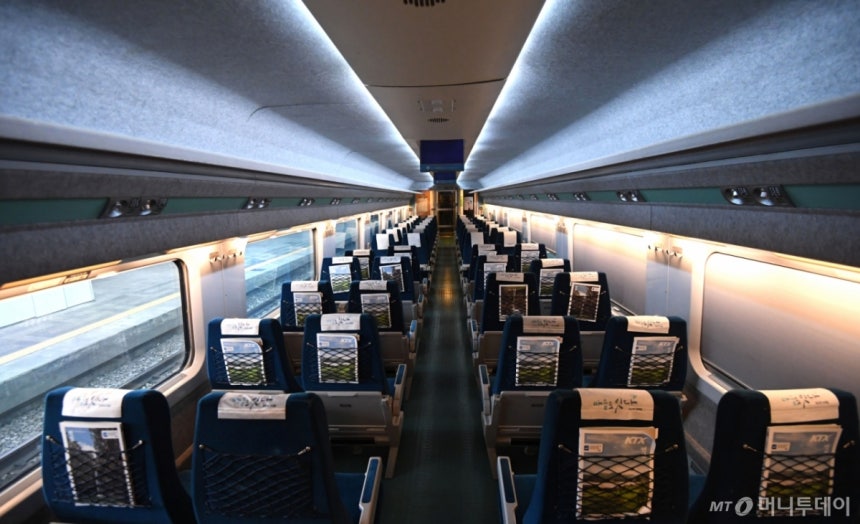
The “No-Smell” camp is arguably the loudest in this controversy. For many Korean commuters, the KTX is a place for rest, work, or quiet contemplation. When the distinct, heavy aroma of processed meat and frying oil hits the recycled air of a train cabin, it’s like a sensory assault. Critics argue that while the rules might technically allow it, the social contract should forbid it. They claim that the smell lingers in the seat fabric and makes the journey unbearable for those with sensitive stomachs or those who simply didn’t sign up for a fast-food experience.
I’ve seen comments suggesting that passengers who bring “stinky” food should be reported to the train crew. One particularly viral comment suggested that the smell of a burger is essentially “second-hand grease smoke.” It sounds dramatic, but that’s the vibe of the Korean internet right now. There’s a growing segment of the population that is increasingly intolerant of any behavior that spills over into someone else’s personal bubble. In a crowded society like ours, the “nuisance” (min-pae) label is the ultimate social death sentence.
“People are so incredibly selfish these days. Just because you’re hungry doesn’t mean fifty other people should have to suffer through the smell of your cheap dinner. Have some respect for the shared space.” – Top-voted comment on SNS
The debate has even spiraled into discussions about what constitutes a “strong smell.” Is a sandwich okay? What about a kimbap roll? Some netizens are drawing the line at anything warm, claiming that heat amplifies the scent. It’s reaching a level of micro-analysis that only the Korean internet could achieve. You have people literally debating the volatile organic compounds of a Bulgogi Burger versus a Tuna Mayo Kimbap. It’s peak 2026 behavior, and I am here for the chaos.
High-Speed Dining: Why Some Say It’s a Basic Right
On the flip side, we have the “Let Them Eat” brigade. These folks argue that the KTX is a transportation service, not a meditation retreat. If you’re paying for a ticket on a high-speed train that takes hours to cross the country, you should be allowed to sustain yourself. They point out that many people are traveling for work or family emergencies and simply don’t have the luxury of a 30-minute sit-down meal at the station. For them, the burger is a necessity, not a provocation.
One of the most popular counter-arguments involves a comparison to air travel. “The people saying ‘no’ to burgers are the same ones who would eat a full tray of airplane food without blinking,” one user pointed out. It’s a fair point. If we can handle the smell of Salisbury steak and heated-up rolls at 30,000 feet, why is a burger at 300 km/h such a scandal? The inconsistency is what drives the pro-eating side wild. They see the “No-Smell” crowd as overly sensitive and “precious” about a public service.
“If you’re that sensitive to smells, buy a private car or wear a mask. It’s a public train, not your living room. The rules say we can eat, so we’re going to eat!” – Supportive netizen
There’s also a sense of nostalgia being brought into the mix. Older commuters remember a time when train travel was synonymous with eating. Whether it was the classic boiled eggs and cider or the more modern bento boxes, eating on the tracks is a long-standing tradition. To these passengers, the sudden crackdown on food smells feels like an erasure of Korean travel culture. They argue that we’re becoming a “No-Everything” society, where every minor inconvenience is treated like a human rights violation.
What the Rulebook Actually Says (Spoiler: You’re Safe)
Now, let’s get down to the facts, because your girl Sua always does her homework. Despite the internet’s collective meltdown, the official stance from Korail and SRT is actually quite clear. According to the current regulations as of March 2026, eating is absolutely permitted on board. The restrictions that were put in place during the height of the pandemic were officially lifted way back in April 2022. Since then, it’s been fair game for snacks, drinks, and yes, even full meals.
The official guidelines state that passengers can consume food as long as it doesn’t have an “excessively strong odor” or risk damaging the train’s facilities. This is where the gray area lies. What does “excessively strong” even mean? To a hungry person, it’s the scent of heaven; to a nauseous commuter, it’s a biohazard. Korail generally suggests that items like sandwiches, kimbap, and bottled drinks are the gold standard, but they haven’t explicitly banned burgers or fried chicken. They mostly rely on the “good sense” of passengers—which, as we know from this controversy, is in short supply.
It’s also worth noting that the trains themselves are designed to handle some level of food consumption. The ventilation systems are constantly cycling air, and the cleaning crews are used to dealing with crumbs. The reality is that the “legal” battle was won years ago, but the “social” battle is just getting started. Just because you *can* do something doesn’t mean the person sitting next to you won’t give you the death stare for the next two hundred miles.
The Ghost of Lotteria Past: When Trains Were Food Courts
For my younger readers who might not believe this, there was a time when the train itself *wanted* you to eat burgers. Let’s take a trip down memory lane to the late 2001 era. Back then, Korail actually partnered with Lotteria to put literal fast-food outlets inside the Saemaeul-ho dining cars. I’m not joking—you could walk to the dining car and order a burger and fries while zooming through the countryside. They even offered a delivery service to your seat! Imagine the chaos that would cause in today’s comment sections.
This historical context is a major weapon for the pro-eating side. They argue that the very infrastructure of Korean rail was built around the idea of food. If the national rail service thought it was a good idea to fry potatoes on a moving train twenty-five years ago, why are we acting like a cold cheeseburger is the end of the world now? It shows how much our social standards have shifted toward extreme individualism and a low threshold for “discomfort.”
Back in the early 2000s, the smell of food was seen as a sign of life and travel excitement. Today, it’s seen as an intrusion. It’s a fascinating look at how Korean society has evolved. We’ve become more efficient and cleaner, sure, but have we also become a bit more… well, grumpy? The Lotteria cars are long gone, replaced by more passenger seats to maximize profit, but the memory of that “freedom to eat” still lingers for many who are now defending the OP on TheQoo.
The “K-Etiquette” Police: A 2026 Social Phenomenon
This whole situation is a perfect example of what I call the “K-Etiquette Police.” In 2026, social media has turned every citizen into a potential judge, jury, and executioner. One photo of a burger, shared without the eater’s permission, can spark a national debate that lasts for days. It’s a form of soft surveillance where we’re all constantly monitoring each other for any slip-up in “public manners.” While it keeps our streets clean and our queues orderly, it also creates a high-pressure environment where even eating a snack feels like a gamble.
The speed at which this story moved from a community post to a major news headline (shoutout to Money Today for the deep dive) shows just how obsessed we are with these social friction points. We love to argue about the “correct” way to live in a shared society. Is it the burger-eater’s responsibility to fast, or the neighbor’s responsibility to tolerate? There is no middle ground in the comments section. You’re either a “uncivilized monster” or a “sensitive snowflake.”
I’ve also noticed that these controversies often target younger people or those who seem “unaware” of the unwritten rules. The OP in this case mentioned they hadn’t ridden the train in five years—a detail that some used to sympathize with them, while others used it to mock them for being “out of touch.” It’s a tough crowd out there, babes. If you’re planning on traveling this week, you might want to pack a very, very quiet salad just to be safe.
Sua’s Scalding Take: Where Do We Draw the Line?
Okay, it’s time for my two cents, because I know you’re dying to hear it. Is eating a burger on the KTX a crime? Legally, no. Socially? It’s complicated. Personally, I think we all need to take a collective deep breath. We live in a world that is already stressful enough—do we really need to start a civil war over a piece of grilled meat and a bun? If someone is sitting there eating quietly and cleans up after themselves, I say let them live. Hunger is a real thing, and sometimes the schedule just doesn’t align with a fancy sit-down meal.
That being said, if you’re the person bringing a full bucket of extra-garlic fried chicken or a bubbling pot of kimchi stew (yes, I’ve heard rumors of it happening!), then you’re definitely pushing your luck. There’s a difference between a quick burger and a full-on banquet. The key word here is *consideration*. If the OP had checked the vibe of the carriage or maybe waited until the train wasn’t at peak capacity, maybe the internet wouldn’t have exploded. But then again, if they hadn’t posted it, I wouldn’t have anything to talk to you about today!
The bottom line is this: the KTX burger controversy isn’t really about the burger. It’s about a society that is trying to figure out how to be “together” without getting on each other’s nerves. As we move further into 2026, I expect we’ll see more of these “micro-controversies.” Whether it’s phone volume, seat reclining, or fast food, the K-Etiquette Police are always on duty. My advice? Eat your burger, but maybe keep the wrapper closed between bites. And for the love of everything, don’t forget to throw away your trash.
What do you think, my little birds? Is the burger-eater a hero for the hungry or a public nuisance? Would you say something if the person next to you started unwrapping a Big Mac, or would you just vent about it on TheQoo later? The comments are going INSANE, and I want to know where you stand. Stay tuned for more tea, because I have a feeling this isn’t the last time we’ll be talking about train etiquette. 🍵👀
—
*This article contains unconfirmed reports and should be treated as rumor until officially confirmed. SYNC SEOUL does not make claims about the personal lives of celebrities beyond what is reported by credible sources.*